47° and Clear
Image



Anoka County, MN.
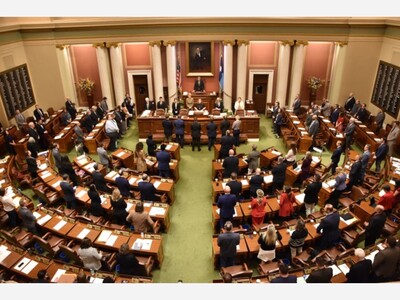
January 12, 2026 - The Anoka-Hennepin School District Board of Education opened the year with a meeting that revealed both the fragility and the persistence of governance in Minnesota’s largest school district. Convening just days after a major teacher strike was narrowly avoided, the session blended procedural necessity with deeply personal public testimony, underscoring a system under strain yet searching for stability.
The board’s most consequential action came during its annual reorganization, when members elected new officers amid renewed debate over how power should be structured in a closely divided body.
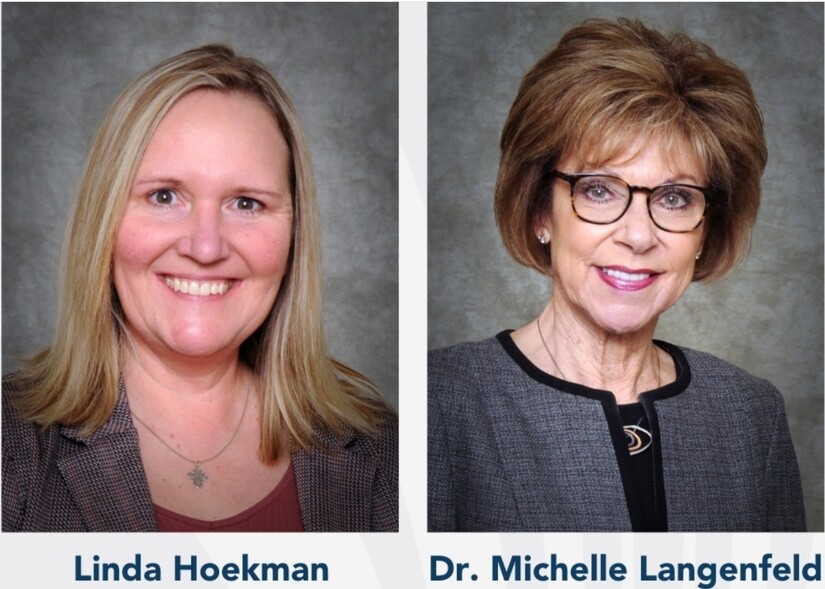
After competing nominations and extended discussion, Directors Michelle Langenfeld and Linda Hoekman were elected as co-chairs of the board. They succeed Zach Arco and Kacy Deschene, who had shared the leadership role for the previous two years during a period marked by ideological deadlock and heightened public scrutiny.
The first motion, which sought to reappoint Arco and Deschene, ended in a tie vote and failed. A second nomination, naming Langenfeld and Hoekman, passed with four votes in favor.
The debate reflected deeper tensions about governance. Some directors argued for a return to a single-chair model, contending that unified leadership could streamline decision-making and strengthen coordination with the superintendent. Others defended the co-chair system as a pragmatic response to a board that has, in recent years, split evenly on key issues. Shared leadership, they argued, distributes responsibility and ensures broader representation in a district serving nearly 40,000 students.
In addition to the co-chair election, Matt Audette was appointed treasurer, and Jeff Simon was re-elected as board clerk.
During the public comment portion of the meeting, the board heard from community members whose concerns cut to the core of student well-being.
Maryanne Yuma, a district parent, spoke about the safety of students with disabilities, particularly nonverbal learners who may be unable to communicate distress. She emphasized that safety is not ancillary to education but foundational to it.
Yuma urged the district to strengthen training and accountability around restrictive procedures, including seclusion and restraint. She cautioned against treating staff training as a compliance exercise rather than a lived practice and called for consistent, practical instruction that reflects the realities faced by vulnerable students.
She also asked the board to formally allow safety technologies such as AngelSense, a GPS and voice-monitoring device, within the Individualized Education Program process. For families of nonverbal students, she said, such tools can provide an added layer of reassurance and protection. Her remarks framed safety as a shared moral obligation, not merely a regulatory requirement.
Later in public testimony, Kathleen Seccon, a longtime district resident and parent, addressed the district’s financial trajectory. Drawing on her family’s history with Anoka-Hennepin schools, Seccon encouraged the board to turn toward voters to help close looming budget gaps.
She proposed pursuing an operating levy or referendum, arguing that community members are often willing to support schools directly when the stakes are clearly communicated. Her comments came against the backdrop of the district’s recently announced $8.1 million budget reduction plan for the 2026–27 school year, a proposal that has raised concerns about staffing levels and program sustainability.
Seccon’s remarks reflected a broader anxiety across the district, where rising costs and constrained state funding have forced difficult tradeoffs.
Superintendent Cory McIntyre and Chief Human Resource Officer Dr. Jennifer Cherry provided updates on labor relations and district operations, offering a snapshot of a workforce still recovering from months of uncertainty.
Cherry presented a newly ratified contract with the Anoka-Hennepin Educational Office Professionals Association, representing school office supervisors. The agreement includes a 2 percent annual increase to the base wage rate and adjustments to medical insurance contributions, resulting in a total compensation increase of 5.99 percent. The board approved the contract unanimously.
Cherry also confirmed that a tentative agreement had been reached on January 7 with Anoka-Hennepin Education Minnesota Local 7007, which represents approximately 3,200 teachers and licensed staff. That agreement averted a strike planned for January 8. Ratification by union members is pending, after which the contract will return to the board for formal approval.
McIntyre also highlighted an upcoming hiring event scheduled for February 11, aimed at filling critical vacancies in para-educator, custodial, and food service positions. He encouraged prospective applicants to apply in advance.
Addressing community concerns about safety, McIntyre reaffirmed that there have been no immigration enforcement activities on school grounds and that the district continues to work closely with local law enforcement to maintain established safety protocols.
The January 12 meeting illustrated the complexity of governing a district as large and diverse as Anoka-Hennepin. Leadership structure, labor stability, student safety, and financial sustainability are not isolated issues but interlocking pressures that shape daily life in classrooms and homes across the region.
As new co-chairs assume their roles and contract negotiations move toward resolution, the board’s challenge will be not only to manage systems and budgets, but also to rebuild trust with families and staff who are watching closely for signs of steadiness, clarity, and care.



Sunny, with a high of 61 and low of 40 degrees. Sunny during the morning, clear overnight.