51° and Overcast
Image




The numbers released by the Blaine Police Department and the Minnesota Department of Public Safety at the close of 2025 tell a story Minnesota has been waiting to hear for years.
After a prolonged and troubling surge in traffic deaths following the COVID-19 pandemic, the state appears to have reached a turning point.
In 2025, 370 people lost their lives on Minnesota roads, a 22 percent decline from the 475 deaths recorded in 2024 and the lowest statewide total since 2019. For transportation officials, law enforcement, and public safety advocates, the figure represents more than a statistical improvement. It signals that the post-pandemic era of heightened recklessness behind the wheel may finally be receding.
But the data also carries a sobering reminder: progress is uneven, fragile, and incomplete.
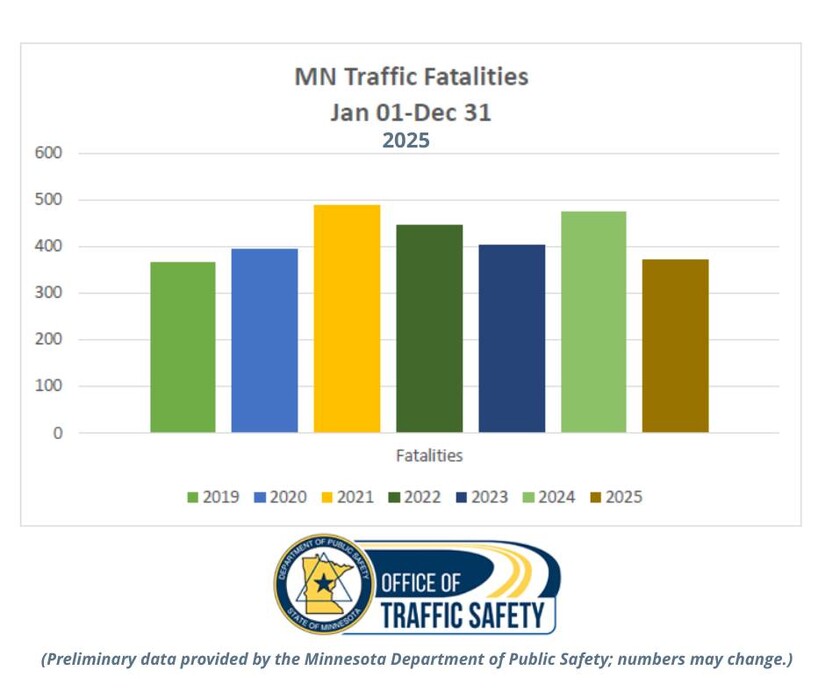
Traffic fatalities rose sharply across Minnesota and much of the nation in the years immediately following the pandemic, driven by speeding, impaired driving, and widespread disregard for basic safety laws. By contrast, 2025 shows measurable improvement across nearly every major risk category tracked by the state.
According to the Minnesota Office of Traffic Safety, fatalities tied to the so-called “Big Four” behaviors declined significantly:
Together, these behaviors account for roughly 90 percent of fatal crashes in Minnesota. Their decline in 2025 suggests that enforcement, education, and infrastructure investments are beginning to align in ways that save lives.
While statewide numbers tell the broad story, the data becomes more personal at the local level.
Blaine officials point to a year of sustained, visible enforcement as a key factor. In a representative month like October 2025, Blaine police officers conducted more than 1,270 traffic stops and responded to nearly 200 crashes, reflecting a strategy focused on early intervention rather than reaction after tragedy strikes.
Police leaders describe this approach as “proactive enforcement,” aimed at correcting dangerous behavior before it becomes fatal. It is labor-intensive, often unglamorous work, but the local results mirror the broader statewide trend.
State officials and traffic safety experts cite three overlapping forces behind the 2025 improvement.
1. Targeted funding and enforcement
In 2023, the Minnesota Legislature allocated $20 million for traffic safety initiatives, enabling expanded patrols, overtime enforcement, and focused campaigns targeting speeding, impaired driving, and seat belt use. That funding carried through 2025, giving agencies the capacity to sustain pressure rather than relying on short-term blitzes.
2. Infrastructure that forgives mistakes
Minnesota has accelerated investments in roundabouts, cable median barriers, and “Safe Road Zones,” designs proven to reduce deadly head-on and high-speed intersection crashes. These changes reflect a growing recognition that human error is inevitable and that road design must account for it.
3. The “Safe System” shift
Rather than framing crashes solely as the result of bad drivers, the state has increasingly embraced a “Safe System” philosophy. The goal is not perfection from drivers, but a transportation network resilient enough that mistakes do not automatically result in death.
Amid the encouraging news, one statistic stands out starkly.
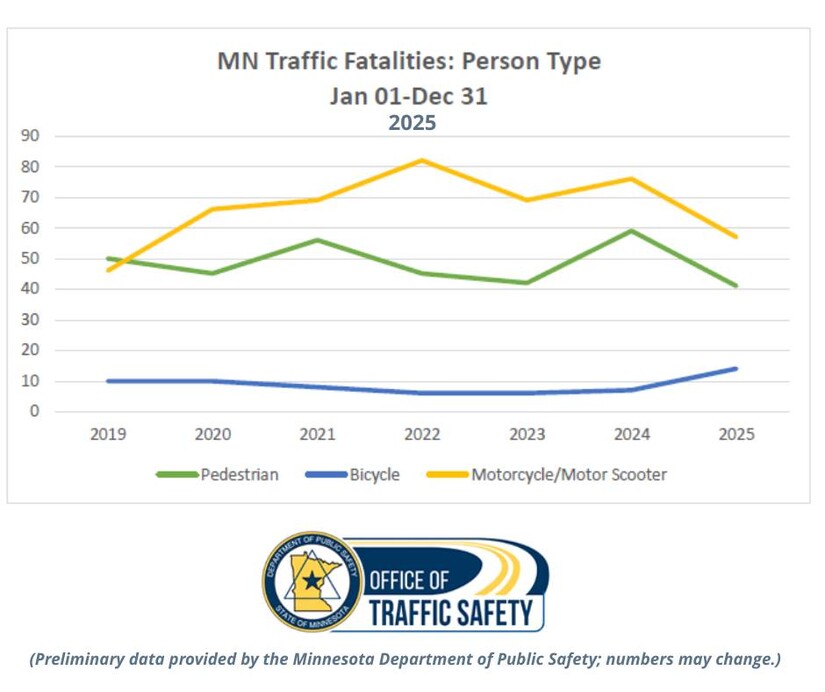
Bicycle fatalities doubled in 2025, rising to 14 deaths statewide, up from 7 in 2024.
Safety advocates point to several likely contributors: increased bicycle and e-bike use, gaps in infrastructure that leave cyclists unprotected on high-speed roads, and visibility challenges during dawn, dusk, and winter months. While overall vehicle-only deaths declined, the rise in cyclist fatalities underscores how unevenly safety gains are distributed across road users.
The data reinforces a growing consensus among planners and advocates: progress for drivers does not automatically translate into safety for everyone else.
Minnesota’s long-term goal remains Toward Zero Deaths (TZD). Under the state’s 2025–2029 Strategic Highway Safety Plan, officials have set an interim target of no more than 225 fatalities by 2030. The 2025 data suggests that target is no longer aspirational rhetoric, but it is also far from guaranteed.
For Blaine and communities across the state, the lesson is clear. Enforcement works. Infrastructure matters. Culture matters most of all.
As the Blaine Police Department put it in sharing the data:
“Every trip, every decision, and every choice behind the wheel matters.”
In 2025, those choices saved lives. The challenge now is ensuring the trend holds and that it extends to every person who uses Minnesota’s roads, whether behind a wheel, on a bike, or on foot.


Overcast, with a high of 65 and low of 49 degrees. Overcast in the morning, cloudy in the afternoon and evening, overcast overnight.