Image
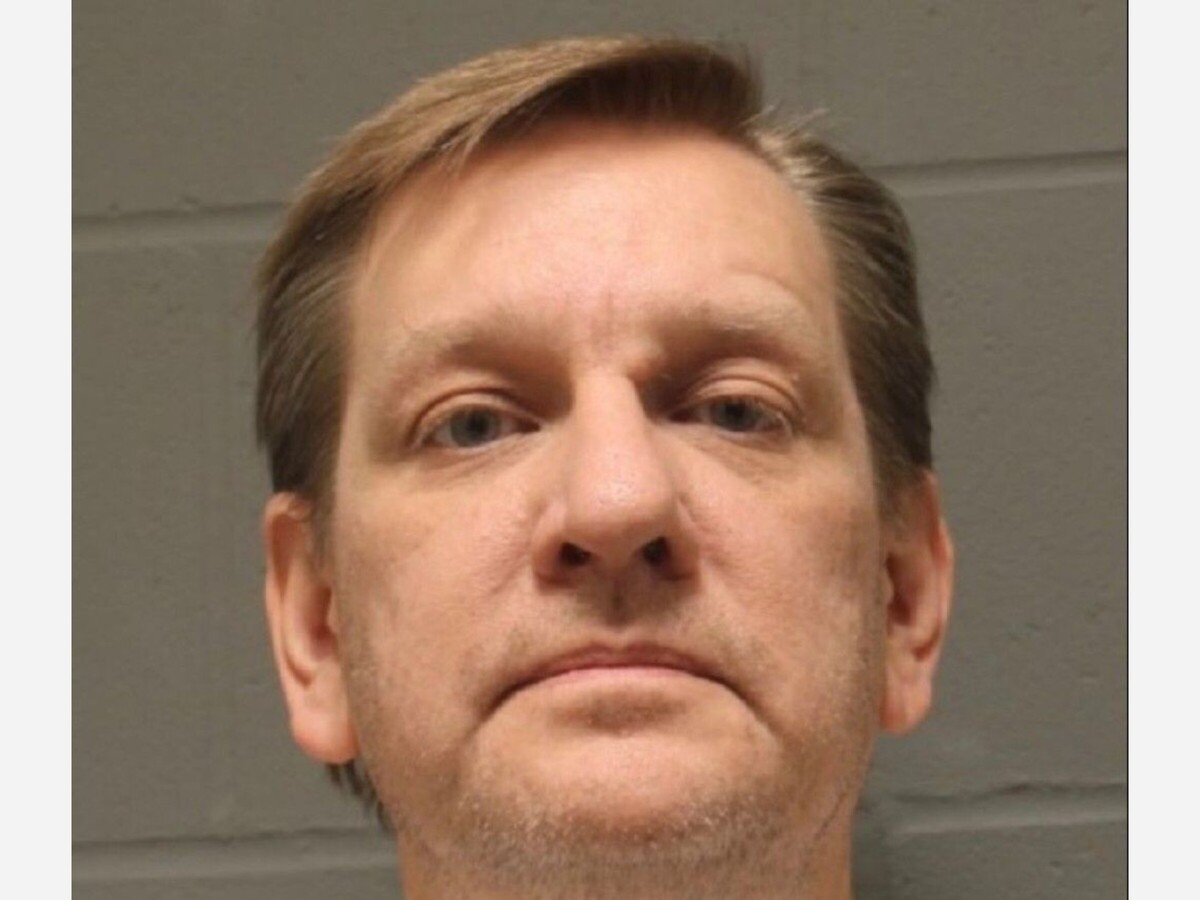



ROCHESTER, Minn. Nearly four decades after an act of violence that permanently altered Minnesota’s legal, psychological, and moral landscape, David Brom has been granted parole.
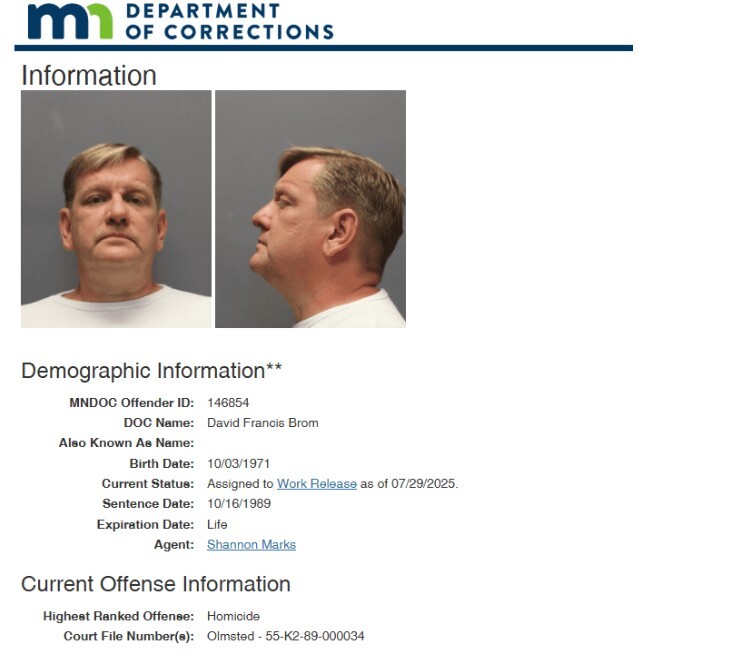
In a 5–2 vote on Tuesday, the Minnesota Supervised Release Board approved Brom’s supervised release, determining that he met the statutory requirements for parole eligibility and no longer poses a risk to public safety. Brom, now in his mid-50s, will serve his parole in Anoka County, under close monitoring by the Minnesota Department of Corrections.
The decision marks the end of one of the most infamous chapters in Minnesota criminal history and the beginning of a quieter, closely watched reintegration into a society vastly different from the one Brom entered prison in as a teenager.
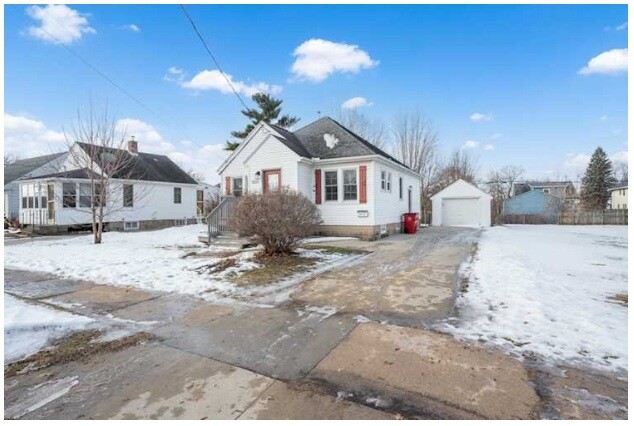
On February 18, 1988, in a modest home in northwest Rochester, 16-year-old David Brom used an axe to kill four members of his family. The victims were his parents, Bernard and Paulette Brom, and his younger siblings, Diane, 14, and Rick, 9.
The brutality of the crime reverberated far beyond Olmsted County. At a time when juvenile violent crime was rarely prosecuted at this scale, the case captured national attention and ignited debates over adolescent mental health, criminal responsibility, and whether youth could commit acts so extreme and still be rehabilitated.
Brom was arrested shortly after the killings and charged as an adult.
Brom’s trial would become legally significant not only for its facts, but for what it clarified about Minnesota’s standard for criminal responsibility.
His defense team argued that Brom suffered from severe mental illness and could not appreciate the wrongfulness of his actions. The court, however, applied Minnesota’s long-standing adherence to the M’Naghten Rule, which requires proof that a defendant did not understand the nature of the act or that it was wrong at the time it was committed.
Jurors ultimately concluded that while Brom may have been emotionally disturbed, he understood what he was doing. He was found legally sane.
Brom was convicted on four counts of first-degree murder and sentenced to life in prison. Though the sentence was effectively permanent at the time, his age would later become central to future legal reconsideration.
Over the decades, U.S. Supreme Court rulings, including Miller v. Alabama and related cases, reshaped how states sentence individuals who committed crimes as juveniles. Mandatory life sentences without the possibility of parole for minors were ruled unconstitutional, requiring states to provide meaningful opportunities for release based on demonstrated rehabilitation.
Minnesota revised its statutes accordingly, making individuals like Brom eligible for parole review after serving decades in custody.
That review process was slow, deliberate, and highly scrutinized.
In July 2025, after 37 years in prison, Brom was approved for work release and transferred to a supervised halfway house in the Twin Cities metropolitan area. Corrections officials cited consistent institutional behavior, participation in required programming, and compliance with release conditions.
At a parole hearing held January 27, 2026, board members questioned Brom at length about accountability, coping strategies, and his ability to function outside prison walls.
Brom told the board he had been working in cabinetry and woodworking, skills he developed while incarcerated, though he is currently between jobs. He acknowledged that reentry has been difficult, particularly adjusting to modern technology.
Entering prison in 1988 meant missing the entire digital revolution. There were no smartphones, no internet, no online job applications, and no GPS. Brom described the experience as stepping out of a “time capsule,” a challenge familiar to many individuals serving long or natural life sentences.
He also spoke candidly about emotional strain, telling board members that during moments of uncertainty he relies on a structured support system and faith-based practices to maintain stability.
After deliberation, the board voted 5–2 in favor of parole. Dissenting members cited the severity and permanence of the original crimes.
Brom’s parole will be governed by strict conditions, including regular reporting to a parole agent, employment requirements, geographic restrictions, and compliance with all programming directives. Any violation could result in his immediate return to custody.
Corrections officials emphasized that parole does not erase the crime, nor does it signal leniency. Instead, it reflects a legal determination that continued incarceration is no longer required under state law.
For many Minnesotans, the parole of David Brom will reopen wounds that never fully healed. The loss endured by extended family members, first responders, and a community forever altered by violence remains unchanged.
What has changed is the law and the state’s understanding of youth, punishment, and the possibility, however fraught, of rehabilitation.
Brom’s release does not rewrite history. It closes a legal chapter while leaving unanswered questions about justice, mercy, and the limits of punishment in cases where harm cannot be undone.



Sunny, with a high of 95 and low of 66 degrees. Sunny for the morning, patchy rain nearby during the afternoon and evening, clear overnight.