73° and Moderate or heavy rain shower
Image
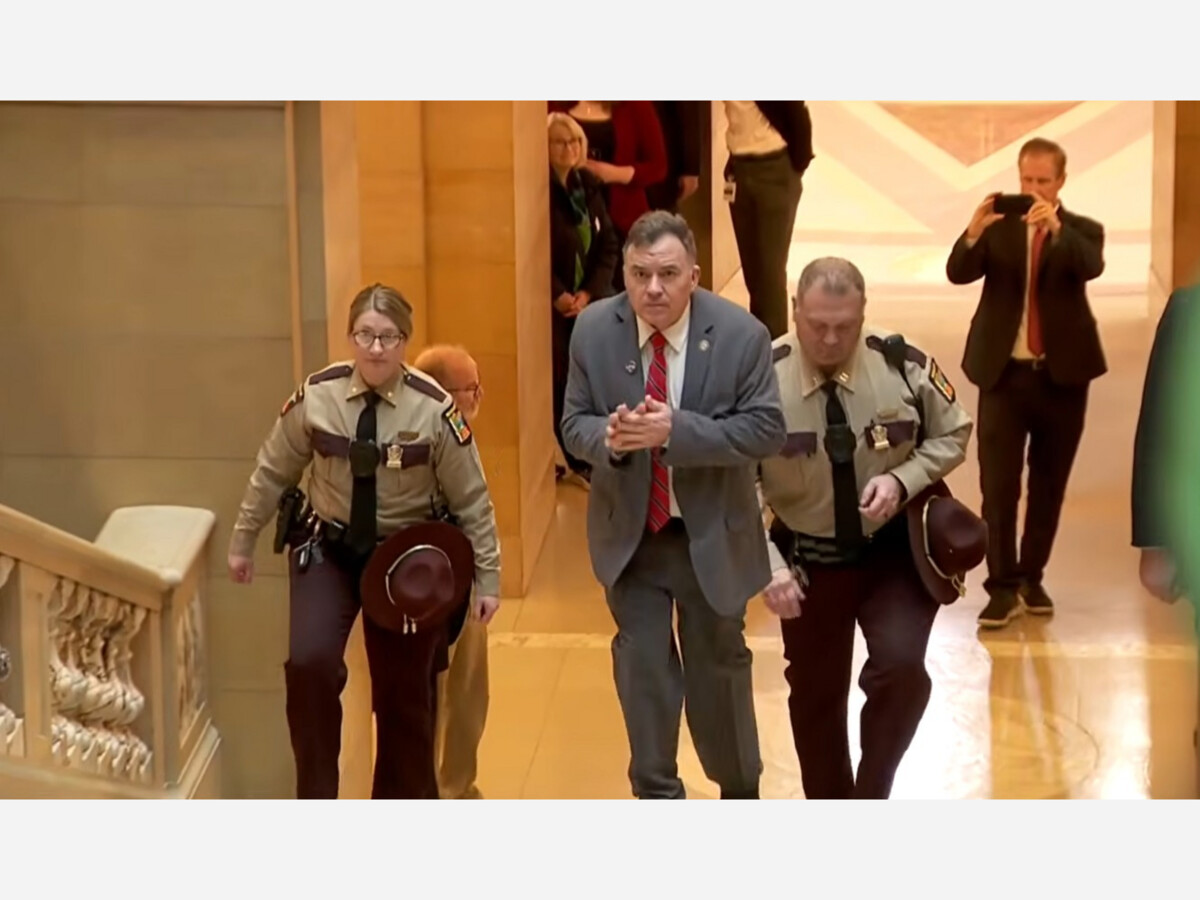



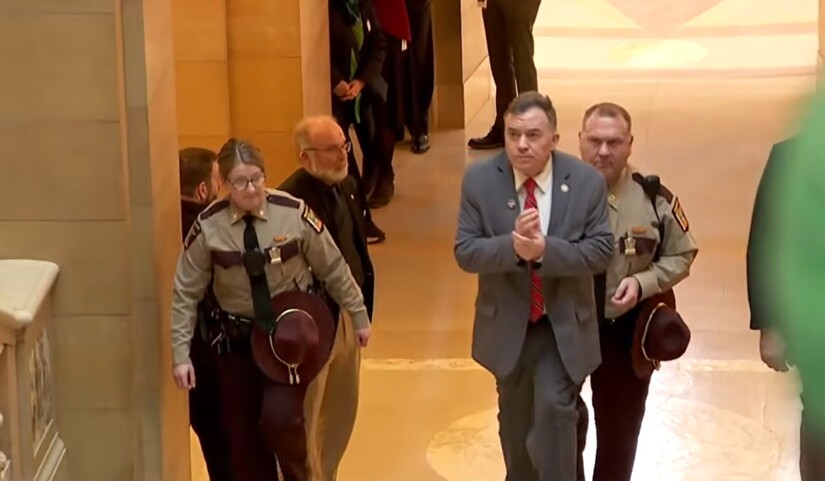
On February 17, 2026, the chamber of the Minnesota State Senate rose in sustained applause as Sen. John Hoffman walked slowly to his desk, eight months after a gunman’s bullets nearly ended his life.
Escorted up the marble steps of the Minnesota State Capitol by the Minnesota State Patrol, Hoffman entered the chamber alongside his wife, Yvette, and their daughter, Hope. It was a return shaped not by politics alone, but by survival.
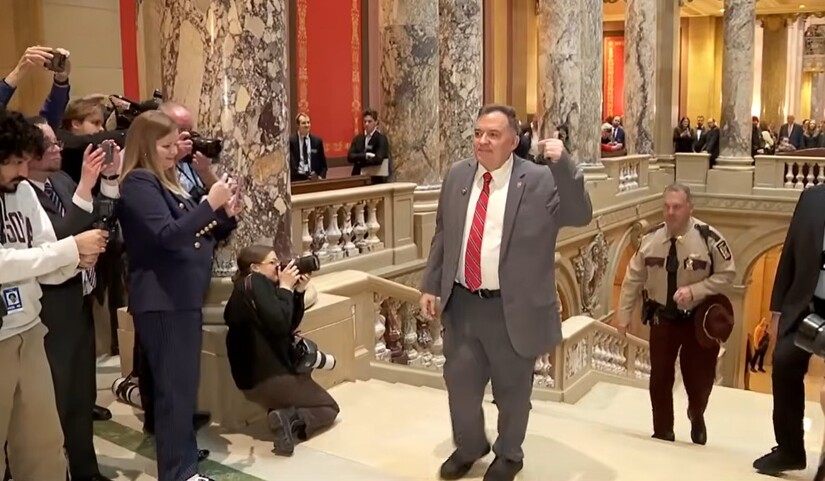
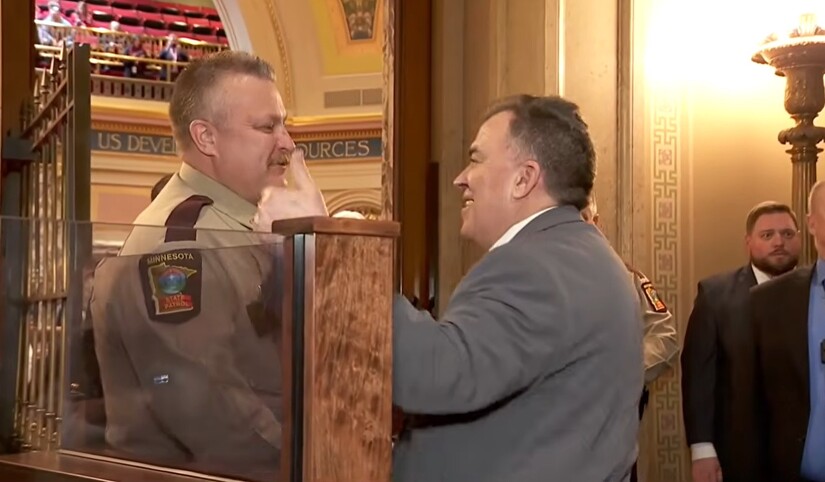
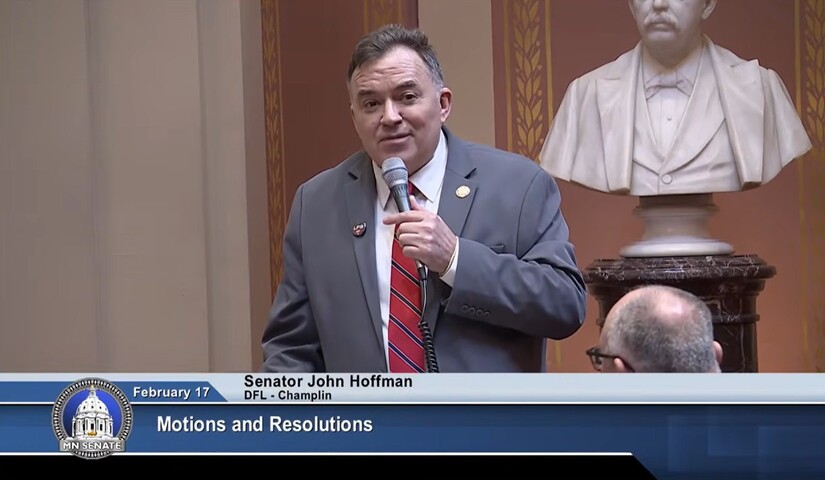
“Members, let’s rise above the noise and let us govern with humility,” Hoffman said in brief remarks that were at once restrained and resolute. “And let us prove through our actions that the word Democracy is stronger than fear… It feels really good to be back here.”
The moment marked the formal opening of the 2026 legislative session. It also marked the first time Minnesota’s Capitol reconvened with Hoffman physically present since the early morning of June 14, 2025, when coordinated, politically motivated attacks targeted elected officials in their homes.
According to federal charging documents and statements from the U.S. Department of Justice, the violence began shortly after 2 a.m. on June 14, 2025, at the Hoffmans’ Champlin residence.
Authorities allege that 57-year-old Vance Luther Boelter arrived disguised as a law enforcement officer, wearing a silicone mask and tactical gear. When the family answered the door, prosecutors say, he opened fire. Hoffman was struck nine times; Yvette Hoffman was struck eight times. Their daughter was present but physically unharmed, shielded by her parents.
Roughly 90 minutes later, investigators say the same gunman went to the Brooklyn Park home of House Speaker Emerita Melissa Hortman, using a similar ruse of a welfare check. Hortman and her husband, Mark, were shot and killed. Their family dog, Gilbert, was also killed in the attack.
After a 43-hour manhunt that spanned multiple jurisdictions, Boelter was apprehended on June 15, 2025. Federal officials later said investigators recovered a manifesto and a list of additional potential targets that included state and federal officials and abortion rights advocates.
The attacks reverberated far beyond the Capitol complex. They forced Minnesota to confront a reality increasingly visible across the country: that political rhetoric, when weaponized, can turn deadly.
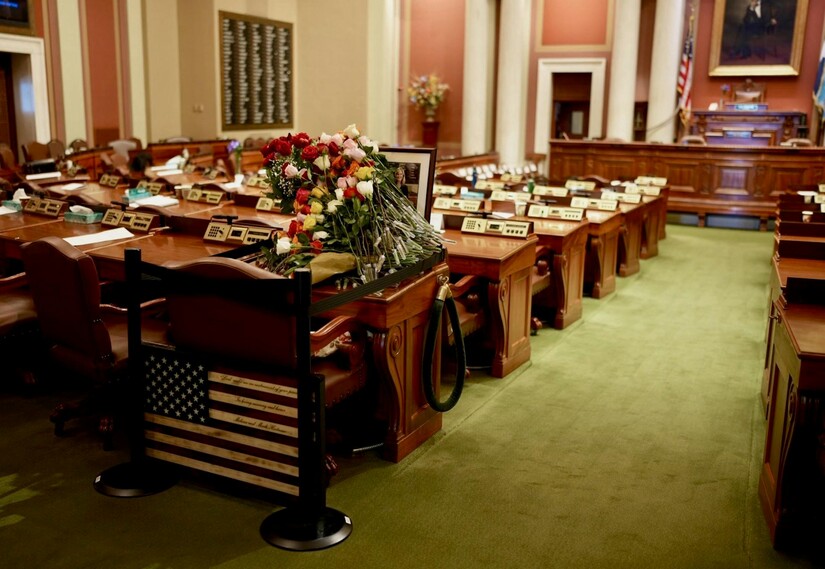
Tuesday’s proceedings were both a homecoming and a memorial.
After the Senate’s opening ceremonies, members of the House and Senate gathered for a joint tribute to Melissa and Mark Hortman. Lawmakers read from a joint resolution honoring Hortman’s two decades in the Legislature and her tenure as the longest-serving female Speaker in Minnesota history.
Under her leadership, the House passed landmark legislation, including paid family and medical leave, a state child tax credit, and universal free school meals for Minnesota students. Colleagues described her as methodical, pragmatic, and unflinching in negotiations.
Gov. Tim Walz, who worked closely with Hortman during a historic period of Democratic-Farmer-Labor control, recalled her as both a governing partner and a personal friend. At a prior memorial, Walz held up a copy of Getting to Yes, the negotiation classic Hortman once gave him to encourage bipartisan compromise.
In June 2025, Hortman became the first woman to lie in state at the Minnesota Capitol, an honor typically reserved for governors and nationally significant figures. Thousands filed past her casket in the rotunda, a bipartisan procession of lawmakers, civic leaders, and ordinary Minnesotans.
The symbolism of that moment lingered in the chamber Tuesday. The Senate’s return to routine business was tempered by visible grief and an undercurrent of vigilance.

Hoffman’s reappearance followed months of surgeries, intensive rehabilitation, and physical therapy. In a statement earlier this month, he said the support of constituents and colleagues “carried us through one of the most difficult chapters of our lives” and reaffirmed his commitment to public service.
On Tuesday, his message was less about personal endurance and more about institutional responsibility.
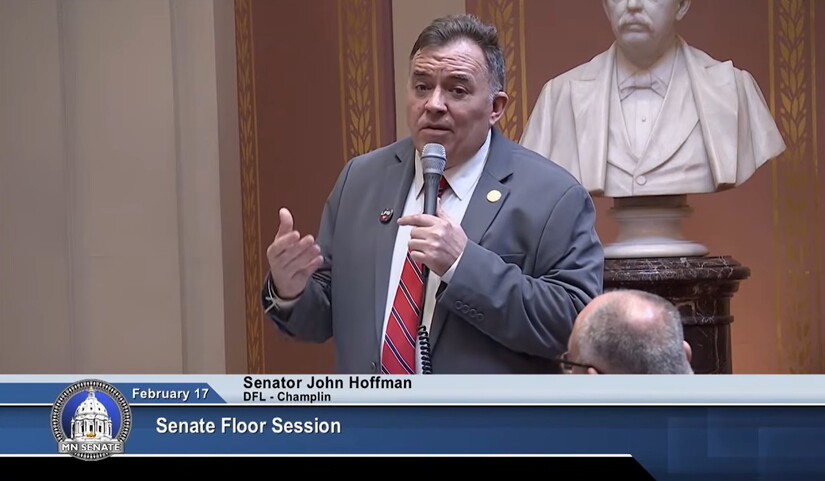
“When you survive an attempted assassination, you look at the world differently,” he told colleagues, according to remarks delivered on the floor. “The noise fades. What remains is family, community, and the responsibility we have to care for one another.”
The 2026 session will unfold under the shadow of June 14. Security at the Capitol has been heightened. Conversations about civic discourse, political extremism, and public safety are no longer abstract.
Hoffman is expected to resume his leadership role on health and human services policy, including work connected to the Senate’s Human Services Committee. Colleagues across party lines have said they intend to honor Hortman’s legacy not only through resolutions, but through the tone and substance of debate.
Minnesota’s Legislature has weathered tragedy before. But rarely has the violence felt so personal, so targeted, so proximate to the democratic process itself.
Tuesday’s image, a wounded lawmaker walking back into the chamber with his family at his side, carried its own quiet argument: that democracy persists not because it is immune to fear, but because it chooses to continue despite it.
Hoffman’s closing words were not soaring rhetoric. They were simple.
“Let us govern with humility,” he said.
In a Capitol still marked by grief, humility may prove to be the most radical act of all.



Patchy rain nearby, with a high of 84 and low of 63 degrees. Don't forget your umbrella! Sunny during the morning, clear for the afternoon and evening,