55° and Sunny
Image
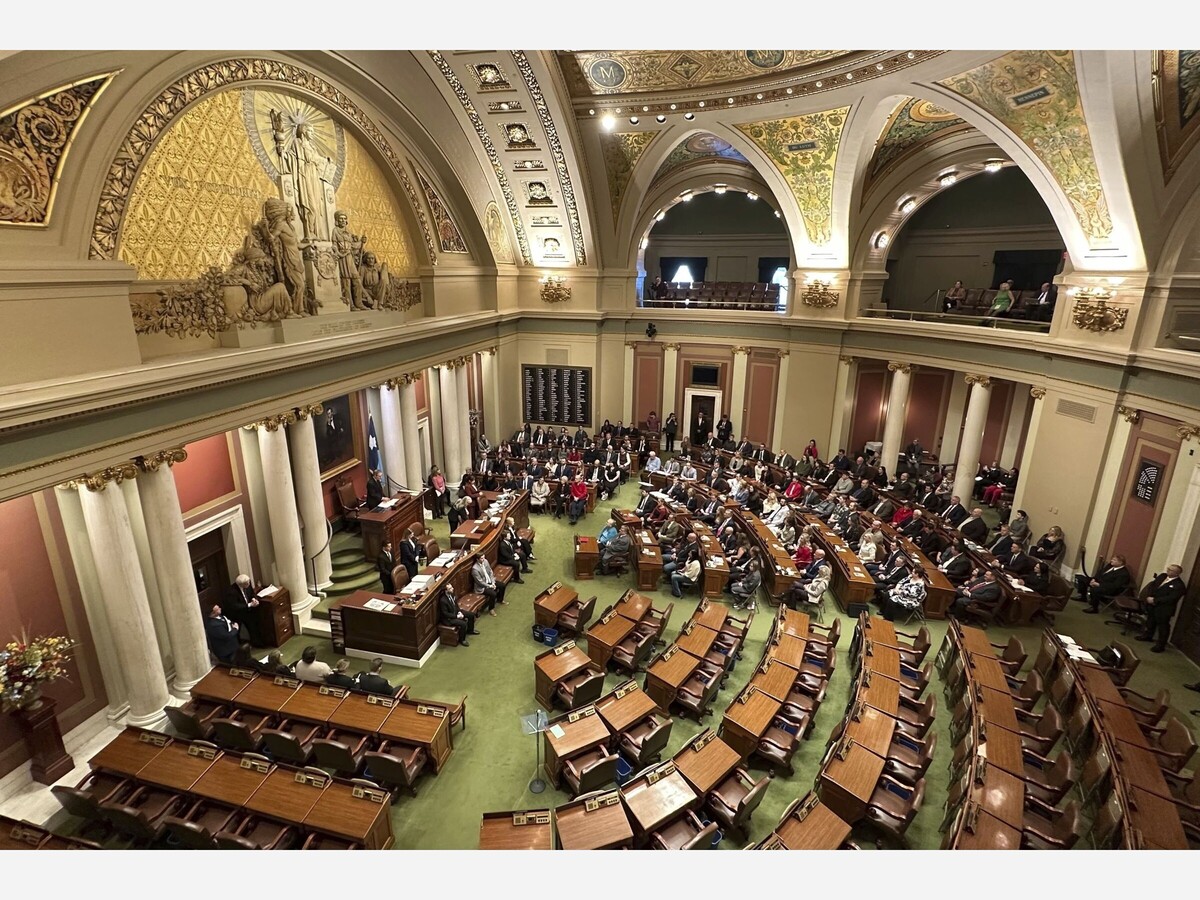



In a Capitol increasingly defined by razor-thin margins and rising federal scrutiny, Minnesota lawmakers are confronting a question that sits at the intersection of hunger, accountability, and fiscal risk: how to reduce errors in the state’s Supplemental Nutrition Assistance Program without restricting access to families who depend on it.
In early 2026, Republican legislators led by Nolan West of Blaine and Pam Altendorf of Red Wing introduced legislation aimed at overhauling how Minnesota administers SNAP, the federal anti-hunger program once known as food stamps.
Their argument is rooted in a number.
According to the U.S. Department of Agriculture, which oversees SNAP nationally, Minnesota’s fiscal year 2024 payment error rate was 8.98 percent. Federal law requires states to keep that rate below 6 percent to avoid heightened corrective action and potential fiscal liability. While USDA emphasizes that the “payment error rate” is not a direct measure of fraud, it is the primary accountability metric used to evaluate whether benefits are issued accurately.
For West, the number signals urgency.
“The fraud issue is a humongous problem, but the error rate, regardless, some of those are administrative, as you mentioned, we have to address that,” West said in a recent interview. He argues that preventing improper payments before they are issued is essential to protect taxpayers and the long-term viability of the program.
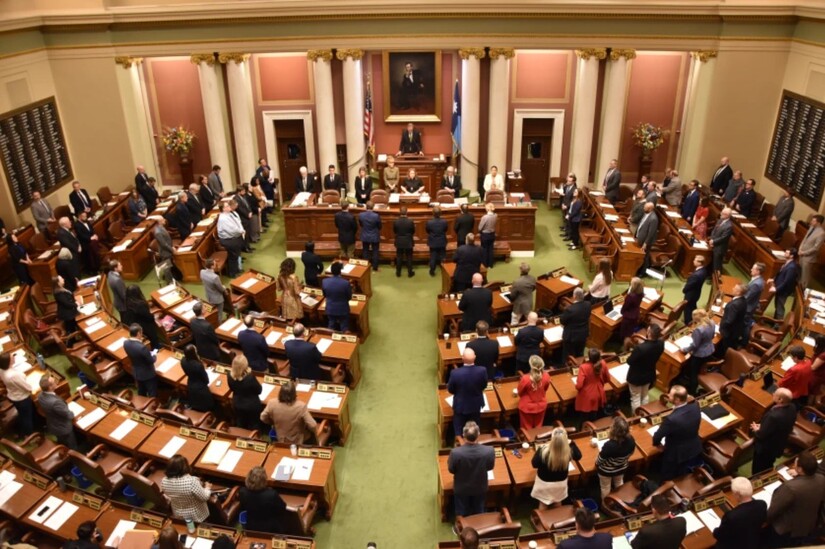
SNAP is not a marginal program in Minnesota. As of 2025 to 2026, approximately 440,000 Minnesotans, roughly one in 13 residents, rely on SNAP benefits to help pay for groceries.
The 8.98 percent error rate places Minnesota above the 6 percent federal benchmark. However, it is not an outlier nationally. USDA data show the national average error rate hovered near 10.9 percent in the same period, meaning Minnesota’s performance, while noncompliant with the federal threshold, is below the national average.
Still, new federal policy changes are raising the financial stakes.
Under provisions tied to the 2025 federal reconciliation law, beginning in fiscal year 2028, state financial liability for SNAP benefits will be linked more directly to payment accuracy tiers:
At roughly 9 percent, Minnesota would fall into the 8 to 10 percent bracket. Legislative estimates suggest that could translate to approximately $86 million in annual state liability if the rate is not reduced before the new enforcement window begins.
For a program that distributes more than $800 million annually in federal food assistance in Minnesota, even small percentage shifts carry significant fiscal consequences.
A central tension in the 2026 debate is how to interpret the error rate itself.
USDA has repeatedly clarified that payment error rates include both overpayments and underpayments and do not equate to confirmed fraud. Errors can stem from fluctuating income, reporting delays, documentation issues, or agency miscalculations.
Data from the Minnesota Department of Children, Youth, and Families indicate that roughly 60 percent of identified errors are administrative, including caseworker data-entry mistakes or system limitations. About 40 percent are attributed to participant reporting issues, such as failing to timely report changes in income or household composition.
Republican lawmakers argue that even if most errors are not criminal, they expose the state to financial penalties and erode public trust.
West has proposed enhanced data-sharing authority, stricter front-end verification protocols, and expanded real-time eligibility checks. Altendorf’s measure, branded the “Stop Welfare for the Wealthy” Act, would revisit Minnesota’s use of Broad-Based Categorical Eligibility, a policy pathway that allows states to modify certain income and asset thresholds within federal limits.
Supporters contend that tightening eligibility verification would reduce improper payments and position Minnesota below the 6 percent benchmark before federal penalties intensify.
The debate unfolds against a backdrop of federal-state tension.
In late 2025, Keith Ellison filed a lawsuit against the United States Department of Agriculture, challenging a federal directive requiring in-person recertification of more than 100,000 SNAP households within 30 days. Ellison characterized the demand as administratively unworkable and inconsistent with federal law governing benefit continuity.
The lawsuit underscored a deeper concern among state officials: that heightened federal compliance demands, combined with staffing shortages and aging eligibility systems, could ironically increase error rates if implemented abruptly.
The Republican-backed legislation, its sponsors say, is meant to preempt that risk by modernizing systems before penalties attach. Proposals include transitioning to updated digital eligibility platforms, strengthening cross-agency data matching, and improving reporting transparency so that Minnesota’s error figures more accurately reflect real-time corrections.
For families using SNAP, the debate can feel distant and technical. But policy changes ripple quickly.
Stricter verification requirements can reduce improper payments. They can also increase “churn,” a phenomenon in which eligible households temporarily lose benefits due to paperwork or procedural hurdles and must reapply, increasing administrative workload and potential food insecurity.
Hunger advocates caution that payment accuracy and access are not mutually exclusive goals. They argue that investment in caseworker staffing, training, and technology upgrades may be as critical as enforcement measures in reducing errors.
Republican lawmakers counter that safeguarding program integrity ensures long-term sustainability and protects benefits for those truly in need.
Minnesota’s Legislature remains closely divided, meaning any overhaul of SNAP administration will require negotiation across party lines.
The numbers, however, are not abstract. If Minnesota’s error rate remains near 9 percent when new federal enforcement tiers take effect, the state could assume tens of millions of dollars in additional costs annually.
For West and Altendorf, the message is straightforward: lower the error rate now, before the fiscal consequences become structural.
For others at the Capitol, the challenge is more delicate: how to tighten oversight without tightening the lifeline itself.
In a state where nearly half a million residents depend on SNAP to put food on the table, the outcome of this debate will not only determine compliance percentages. It will shape how Minnesota balances fiscal stewardship with the moral imperative to prevent hunger.



Patchy rain nearby, with a high of 77 and low of 50 degrees. Sunny for the morning, thundery outbreaks in nearby during the afternoon and evening, clear overnight.