48° and Sunny



Image
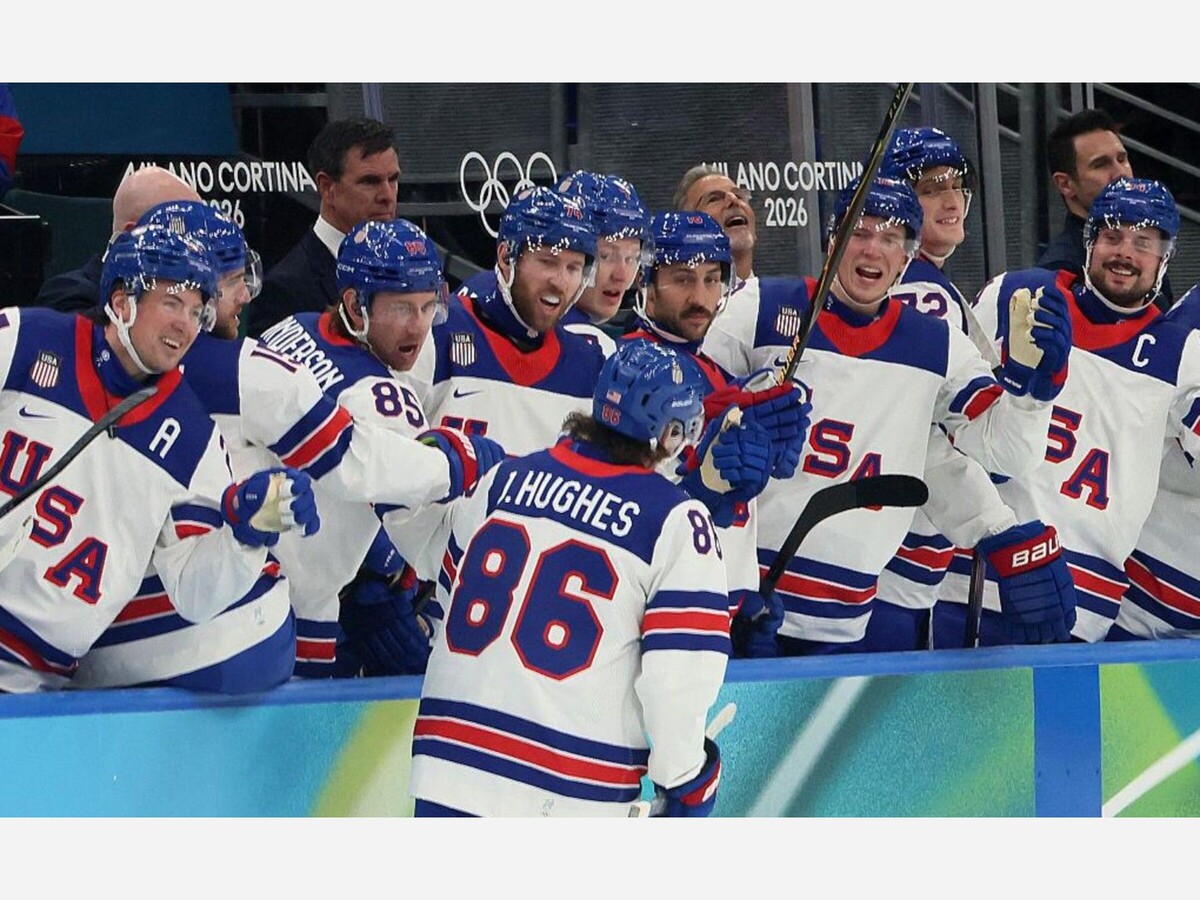
The United States men’s hockey team will face Canada for the gold medal at the 2026 Winter Olympics in Milan, marking the first time since the Vancouver Games in 2010 that the American men have reached the Olympic final. For a generation of players who grew up watching Sidney Crosby’s overtime winner in Vancouver, this is both sequel and reckoning.
The puck drops at 3:10 p.m. local time in Milan, which translates to 7:10 a.m. in Minnesota and 8:10 a.m. on the East Coast. The game will be broadcast nationally on NBC and streamed on Peacock.
The Americans punched their ticket to the final with authority Friday night at Milano Santagiulia Arena, overwhelming Slovakia 6–2 in a performance that blended speed, depth and discipline.
Led by Jack Hughes, the New Jersey Devils center who scored twice, the United States seized control early and never surrendered it. Hughes’ second goal, a slick deke through traffic in the second period, extended the American lead to 3–0 and quieted any hint of a Slovak comeback.
Defenseman Zach Werenski orchestrated the offense from the blue line, recording three primary assists and repeatedly turning defensive stops into transition opportunities. The Americans outshot Slovakia 39–24, a statistical reflection of territorial dominance.
Goals also came from Dylan Larkin, Tage Thompson, Jack Eichel and Brady Tkachuk, underscoring the roster’s scoring depth. In net, Connor Hellebuyck turned aside 22 shots, steady rather than spectacular, the kind of semifinal performance built on composure.
It was not merely a win but a statement. The United States, which has often been characterized as talented but inconsistent in global tournaments, looked cohesive. The forecheck arrived in waves. The defense closed gaps quickly. The puck movement was crisp, direct, modern.
For head coach and management alike, the blueprint held.
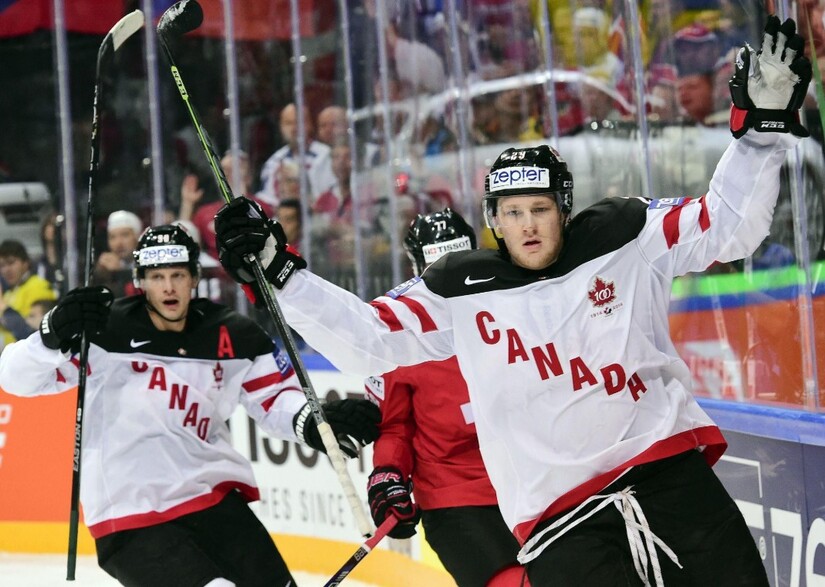
If the American semifinal was decisive, Canada’s path was dramatic.
Canada rallied from a 2–0 deficit to defeat Finland 3–2 in the late semifinal, completing the comeback with 35.2 seconds remaining in regulation. The decisive power-play goal came from Nathan MacKinnon, who snapped a shot past the Finnish goaltender in a moment that felt inevitable the longer Canada pressed.
The Canadians had trailed deep into the second period before scoring three unanswered goals. It was the kind of surge that has defined Canada’s Olympic identity for decades, equal parts patience and pressure.
Notably absent from the semifinal lineup was captain Sidney Crosby, who suffered a lower-body injury in the quarterfinals. Team officials described him as a game-time decision for Sunday’s final, adding another layer of uncertainty to an already combustible matchup.
There are rivalries in sport, and then there is United States versus Canada in Olympic hockey.
The two nations share not just geography but a century of intertwined hockey culture. Canada’s program carries the weight of tradition and expectation. The American roster represents the evolution of a system that has steadily closed the developmental gap, producing high-skill forwards and mobile defensemen built for today’s tempo.
This gold medal meeting is the first Olympic final between the men’s teams since Vancouver in 2010, when Canada prevailed on home ice. That memory lingers, particularly among American fans who have waited 16 years for another opportunity at the sport’s highest international prize.
Sunday’s game will hinge on more than stars. It will be about special teams execution, defensive structure and goaltending poise. The Americans have demonstrated scoring balance and puck possession control. Canada has shown late-game resolve and power-play precision.
Because Milan sits seven hours ahead of U.S. Central Time, American viewers will need an early alarm:
For hockey communities across Minnesota, long considered the heartbeat of American youth hockey, Sunday morning will carry a familiar electricity. Youth rinks and living rooms alike will tune in before coffee cools.
Olympic gold remains hockey’s most compressed crucible. There is no seven-game series to recalibrate mistakes, no margin for prolonged slumps. One afternoon decides legacy.
For the United States, this is an opportunity to redefine its modern Olympic narrative. For Canada, it is a chance to reaffirm its historical standard.
The ice will be neutral. The stakes will not be.
When the puck drops in Milan, the world’s oldest hockey rivalry will once again determine who stands atop it.



Patchy rain nearby, with a high of 73 and low of 48 degrees. Don't forget your umbrella! Patchy rain nearby in the morning, clear overnight.