Image
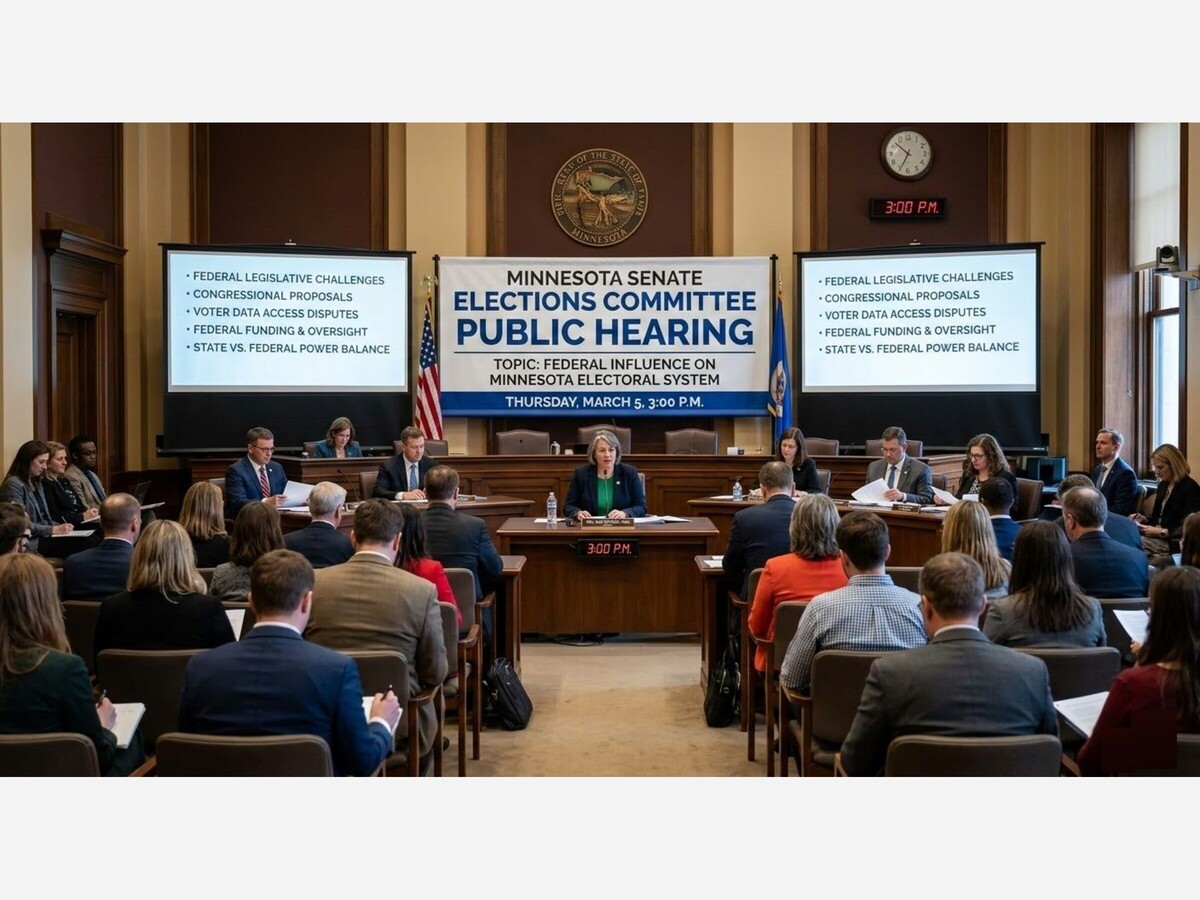



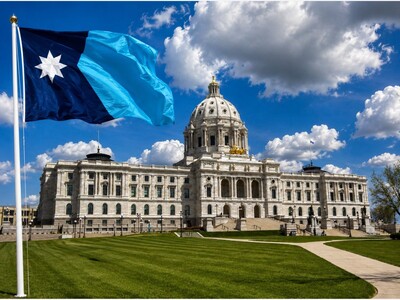
The hearing arrives amid a growing confrontation between federal officials and several states over access to voter registration data and the scope of federal authority over election administration.
Minnesota officials say the discussion is intended to evaluate how evolving federal policies could affect the state’s election infrastructure, voter privacy protections, and longstanding voting procedures ahead of the next election cycle.
The hearing will be livestreamed through Minnesota Senate Media Services’ YouTube channel, with additional documents and testimony available through the committee’s webpage.
At the center of the debate is a dispute involving federal requests for detailed voter registration information.
In early 2026, the U.S. Department of Justice sought access to voter records from multiple states, including Minnesota. The requests focused in part on data connected to same day voter registration and residency verification practices.
Minnesota election officials declined to provide the requested data, arguing that federal authorities had not demonstrated legal authority to compel the release of sensitive voter information.
Minnesota Secretary of State Steve Simon has warned that providing unredacted voter data could expose private information such as dates of birth or partial Social Security numbers and undermine voter privacy protections established under state law.
The dispute reflects a deeper constitutional tension.
While federal law can regulate certain aspects of elections and enforce civil rights protections, the day to day management of elections, including voter registration systems, remains primarily a state responsibility.
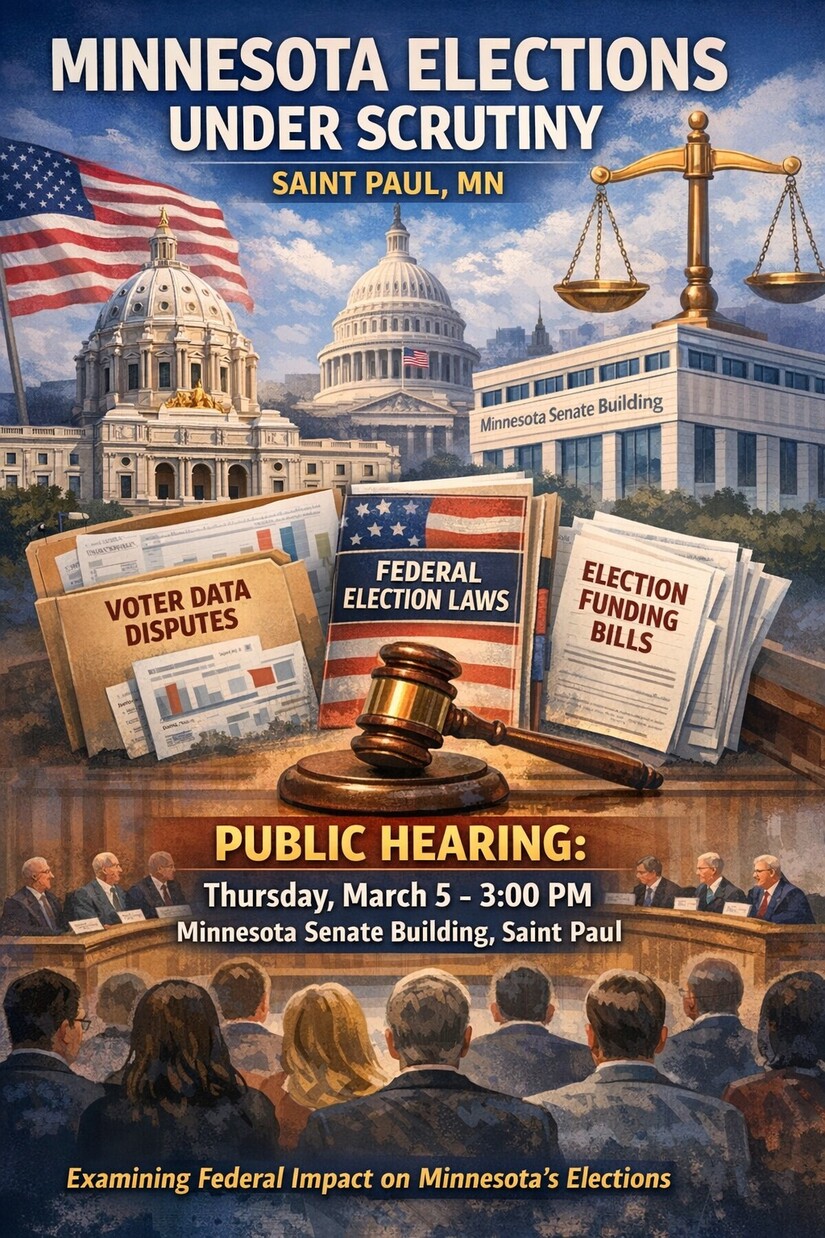
Election administration in the United States has long operated through a shared system of state control and federal oversight.
Congress has historically intervened during moments when access to the ballot was threatened.
The most significant example remains the Voting Rights Act of 1965, one of the most far reaching civil rights laws in American history. The law prohibited discriminatory voting practices and empowered the federal government to enforce the Fifteenth Amendment’s protection against racial discrimination in voting.
Over time, federal laws have expanded protections for voters while states have continued to design and administer the systems used in elections.
Minnesota’s election framework reflects that balance.
The state is widely recognized for policies that emphasize access to voting, including same day voter registration, which was first adopted in Minnesota during the 1970s and has been credited with contributing to the state’s consistently high voter turnout.
But as federal scrutiny intensifies and new legislation is proposed in Washington, lawmakers say it is increasingly necessary to examine how those changes might affect the state’s system.
To help lawmakers understand the broader implications of federal actions, the committee has invited several national election law experts.
The panel includes:
Lata Nott
Director of Voting Rights Policy, Campaign Legal Center
Focus: state voting rights protections and election law.
Jess Marsden
Director of Impact Programs and Counsel, Protect Democracy
Focus: civic institutions and democratic governance.
Jasleen Singh
Senior Counsel, Brennan Center for Justice
Focus: election law, federal oversight, and voting access.
The committee will also hear from Minnesota Secretary of State Steve Simon, who oversees election administration across the state.
Simon’s office manages Minnesota’s statewide voter registration database, coordinates election security, and certifies election results.
Understanding the stakes of the current debate requires examining the historical evolution of voting law.
Below is a simplified timeline of major developments shaping Minnesota elections.
1965
Voting Rights Act enacted by Congress. The landmark federal law prohibits racial discrimination in voting and establishes federal enforcement authority.
1970s
Minnesota adopts same day voter registration. Minnesota becomes one of the first states to allow voters to register at the polls on Election Day, dramatically increasing participation.
1984
Voting Accessibility for the Elderly and Handicapped Act requires polling places to provide accessible voting options for elderly and disabled voters.
2002
Help America Vote Act provides federal funding to modernize election infrastructure nationwide following the disputed 2000 presidential election.
2016
Election infrastructure designated as part of the nation’s critical infrastructure sector following foreign cyber interference attempts in U.S. elections.
2024
Minnesota Voting Rights Act signed into law, strengthening protections against discrimination in voting and codifying voting rights protections within state law.
2026
Federal investigations and legislative proposals intensify scrutiny over voter registration systems and state election administration.
Minnesota maintains a Statewide Voter Registration System (SVRS) that serves as the central database used by local election officials.
The system performs several key functions:
Voter Registration Records
The database stores registration information submitted by voters through online forms, mail registration, or in person registration.
Identity and Residency Verification
Election officials verify voter eligibility using documentation such as proof of residence or identification requirements established under state law.
Election Day Updates
Because Minnesota allows same day registration, voter records can be created or updated directly at polling locations.
Local Election Administration
County and municipal election officials access the database to verify eligibility, manage absentee ballots, and maintain voter rolls.
Cybersecurity and Federal Cooperation
Election infrastructure is considered part of the United States critical infrastructure sector, allowing collaboration between state election offices and federal cybersecurity agencies.
Disputes arise when federal authorities request large scale access to these databases or to sensitive personal information contained within them.
The United States election system operates under a shared constitutional structure in which both states and the federal government have defined roles.
State Authority
States administer elections. This includes:
• voter registration systems
• polling place operations
• ballot design
• vote counting procedures
• certification of election results
State legislatures establish most election rules and procedures.
Federal Authority
The federal government intervenes primarily in three areas:
Civil Rights Enforcement
Federal laws such as the Voting Rights Act prohibit discrimination in voting.
Election Security
Federal agencies assist states with cybersecurity protection for election infrastructure.
Federal Election Standards
Congress may regulate federal elections under the Constitution’s Elections Clause.
This division of authority creates the ongoing balance between state autonomy and federal oversight that lies at the center of many election law disputes today.
Minnesota’s Senate Elections Committee hearing reflects a national debate over how elections should be governed in a federal system.
Some policymakers argue that stronger federal oversight is necessary to ensure consistent election standards across states.
Others insist that state control over elections remains essential to constitutional federalism and voter privacy protections.
For Minnesota lawmakers, the question is not simply theoretical.
It affects how voter data is protected, how elections are administered, and how the state prepares for future election cycles.
As the 2026 elections approach, the outcome of these debates could shape the rules governing the democratic process for years to come.


Sunny, with a high of 67 and low of 42 degrees. Sunny in the morning, partly cloudy during the afternoon and evening, clear overnight.