Image



In much of rural Minnesota, the hospital is more than a building. It is the place where children are born, where strokes are treated, where addiction recovery begins, where elderly residents receive the final care of their lives.
Many of those institutions exist today because of a program created sixty years ago in Washington and adopted quickly by Minnesota: Medicaid.
For more than a million Minnesotans, the program known in the state as Medical Assistance provides health coverage for doctor visits, mental health care, addiction treatment, disability services, and long term care.
Today that system stands at the center of a major legal and political dispute.
In early 2026, the federal government moved to withhold approximately $243 million in Medicaid reimbursements from Minnesota, according to statements from Minnesota state officials and reporting on the dispute surrounding federal oversight of state administered programs. Minnesota officials responded by filing a lawsuit in federal court arguing that the action violates the statutory framework governing how Medicaid funds are distributed to states.
The dispute represents a significant conflict between federal and state authorities over the administration of Medicaid.
More than 1.3 million Minnesotans are enrolled in Medical Assistance or related Medicaid programs, according to recent enrollment figures reported by the Minnesota Department of Human Services. Roughly half of those beneficiaries are children.
For those families Medicaid is not an abstraction. It is the insurance coverage that allows a parent to bring a sick child to the doctor. It funds addiction treatment, autism therapy, and long term care for elderly residents who have exhausted their savings.
The legal arguments will unfold in courtrooms.
But the consequences of the dispute extend far beyond the courtroom.
A Legacy Written in Law
To understand how Minnesota arrived at this moment requires looking back more than half a century.
Minnesota has long played a notable role in shaping the American social safety net.
Few figures embodied that legacy more than Hubert H. Humphrey, the Minneapolis mayor who later served as Vice President of the United States.
Humphrey rose to national prominence after delivering a speech at the 1948 Democratic National Convention urging the Democratic Party to “get out of the shadow of states’ rights and walk forthrightly into the bright sunshine of human rights.” Historians frequently describe the speech as a turning point in the party’s embrace of civil rights.
Two decades later, serving as Vice President under President Lyndon B. Johnson, Humphrey helped advance the Great Society legislative agenda, including the Social Security Amendments of 1965, which created Medicare and Medicaid.
Medicaid established a joint federal state program designed to provide health coverage for low income Americans, people with disabilities, and many seniors requiring long term care.
Minnesota adopted the program quickly.
The state launched Medical Assistance in 1966, becoming one of the early participants in the federal initiative.
Over the following decades Minnesota repeatedly expanded access to public health coverage.
In 1992, the state created MinnesotaCare, a program designed to cover working families whose incomes were too high for Medicaid eligibility but too low to afford private insurance.
Minnesota has consistently ranked among the states with the highest rates of health insurance coverage in the United States, according to analyses from the U.S. Census Bureau and the Kaiser Family Foundation.
But the scale and complexity of that system also created vulnerabilities.
How Medicaid Works
Medicaid is often described as a federal program.
In practice it operates as a partnership between states and the federal government.
States administer the program and pay providers for services delivered to eligible residents. They then submit those expenditures to the federal government for reimbursement.
The share paid by Washington is determined by a formula known as the Federal Medical Assistance Percentage, or FMAP.
In Minnesota, federal funds typically cover slightly more than half of total Medicaid costs, according to program guidance from the Centers for Medicare and Medicaid Services.
Because Medicaid operates through reimbursement, states rely on predictable federal payments to sustain health care infrastructure.
When federal funds are delayed or withheld, the financial effects reach hospitals, clinics, nursing homes, and treatment providers across the state.
Fraud Investigations and Public Trust
Fraud in social service programs is not unique to Minnesota. Federal investigators have long pursued cases involving improper billing and misuse of funds across many states.
However, several high profile cases in Minnesota have drawn national attention in recent years.
The most widely known involved Feeding Our Future, a nonprofit organization connected to the federal Child and Adult Care Food Program.
Federal prosecutors alleged that individuals associated with the organization participated in a scheme to fraudulently obtain more than $250 million in federal child nutrition funds intended to provide meals to children during the COVID 19 pandemic.
According to the U.S. Department of Justice, more than 70 individuals were charged in connection with the investigation.
Several defendants have been convicted in federal court, while additional cases remain pending.
The case has become one of the largest pandemic related fraud prosecutions in the United States.
Separate investigations have also examined alleged fraud involving autism therapy providers, addiction treatment programs, and other social services funded through state and federal programs, according to federal indictments and public reporting.
These investigations intensified scrutiny of oversight systems responsible for monitoring publicly funded services.
State officials have responded by expanding audits, increasing investigative staffing, and implementing additional verification procedures for providers participating in state programs.
Federal Pressure and the Current Dispute
Federal officials argue that stronger oversight measures are necessary to prevent fraud within publicly funded programs.
The funding dispute now before the courts centers on whether the federal government has the authority to withhold Medicaid reimbursements as part of that enforcement effort.
Minnesota’s lawsuit contends that such action exceeds federal authority under the statutory framework governing Medicaid.
Legal scholars note that conflicts between federal and state governments over Medicaid policy have occurred repeatedly since the program’s creation.
The Supreme Court addressed one such dispute in National Federation of Independent Business v. Sebelius (2012), ruling that the federal government could not compel states to expand Medicaid coverage by threatening to withdraw existing funding.
The current dispute may become another test of federal state authority within the Medicaid system.
The Geography of Health Care
Beyond the legal questions lies the reality of how health care functions across Minnesota’s geography.
Rural communities face particular challenges in maintaining medical infrastructure.
Across the United States more than 140 rural hospitals have closed since 2010, according to research from the University of North Carolina Sheps Center for Health Services Research.
Rural hospitals often depend heavily on Medicaid reimbursements because rural populations are older and more likely to rely on publicly funded health coverage.
When funding streams become uncertain, hospitals and clinics operating on narrow margins face significant financial risk.
Health policy researchers have warned that disruptions to Medicaid funding can have cascading effects on rural health systems, including longer travel times for emergency care and fewer available treatment options.
Mental Health and Public Health Pressures
Minnesota has also faced increasing mental health challenges in recent decades.
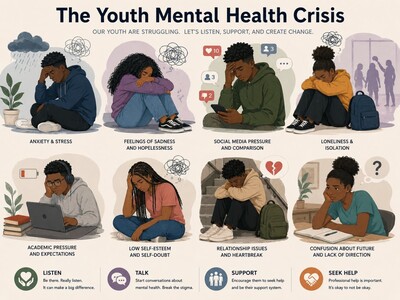
According to the Minnesota Department of Health, suicide has become one of the leading causes of death among young people in the state.
Mental health providers, particularly in rural areas, frequently rely on Medicaid reimbursements to sustain their practices.
Public health researchers have noted that maintaining access to behavioral health services requires stable funding structures for clinics and treatment providers.
Disruptions to those systems can affect access to care for vulnerable populations including adolescents, individuals living with serious mental illness, and people seeking addiction treatment.
Timeline: Minnesota’s Health Safety Net
1965
The Social Security Amendments establish Medicaid.
1966
Minnesota launches Medical Assistance.
1992
Minnesota creates MinnesotaCare.
2014
The Affordable Care Act expands Medicaid eligibility nationwide.
2020–2022
Pandemic policies temporarily increase Medicaid funding and enrollment protections.
2022–2025
Major fraud investigations involving social service programs receive national attention.
2026
Minnesota challenges the federal government’s withholding of Medicaid reimbursements in federal court.
Humphrey’s Test
Hubert Humphrey once described what he believed was the ultimate measure of government.
“The moral test of government is how that government treats those who are in the dawn of life, the children; those who are in the twilight of life, the elderly; and those who are in the shadows of life, the sick, the needy and the handicapped.”
Minnesota built much of its public health infrastructure around that principle.
Today the state is confronting a dispute that may shape the future of that system.
The fraud investigations are real.
The legal questions are real.
But so too are the lives shaped by the programs now under scrutiny.
The challenge facing policymakers, courts, and communities alike is whether those systems can be strengthened without abandoning the people they were created to protect.
History will record the outcome.
The consequences will be felt long before the record is written.


Sunny, with a high of 76 and low of 42 degrees. Sunny during the morning, clear overnight.