68° and Patchy rain nearby
Image




The legislation, Senate File 3548, is authored by Senator Bonnie Westlin, a Democrat from Plymouth. The bill would require head coaches and assistant coaches working with Minnesota student athletes to complete emergency response training designed to help them recognize and respond to cardiac emergencies during practices or competitions.
Supporters say the measure addresses a critical gap in Minnesota’s athletic safety framework.
More than 230,000 students participated in school sports last year, according to the Minnesota State High School League. The high participation rate places Minnesota among the top ten states nationally for student athletic involvement.
Yet despite that level of participation, Minnesota remains one of only a handful of states that does not mandate CPR or AED training for school athletic coaches.
“What we do know is that with all sudden cardiac arrests, time is of the essence,” Westlin said during testimony supporting the bill.
As of March 2026, SF 3548 is moving through the Minnesota Senate with bipartisan support.
The legislation was unanimously approved by the Senate Education Policy Committee on March 9, 2026, signaling broad agreement among lawmakers that emergency preparedness should be strengthened in school athletics.
The bill has since been referred to the Senate Judiciary and Public Safety Committee, where it will undergo further review before potentially advancing to the full Senate.
If enacted, the training requirement would take effect beginning in the 2027 to 2028 school year.
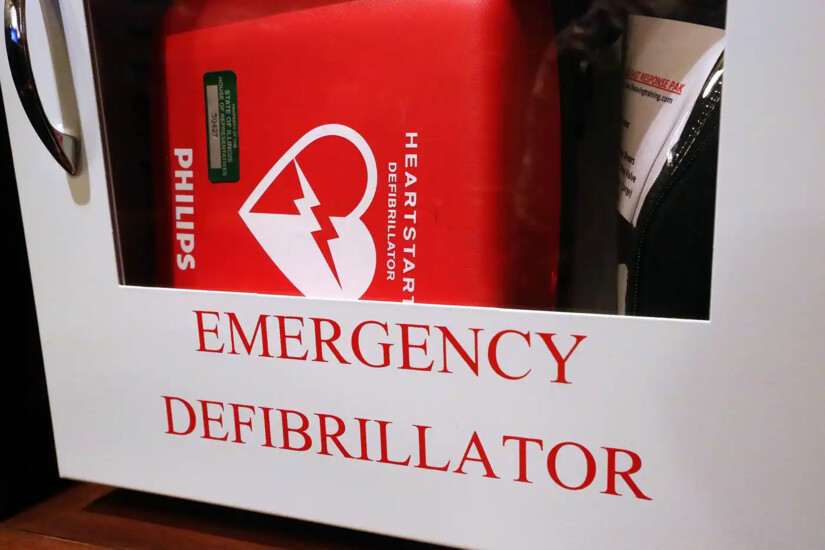
The legislation is designed to remove barriers that might prevent coaches from obtaining emergency response training.
Training at no cost
CPR and AED instruction would be provided free of charge through partnerships with medical organizations, ensuring school districts do not bear additional costs.
Expanded scope
The requirement would apply to both high school and middle school head coaches and assistant coaches, broadening the pool of trained adults supervising student athletics.
Liability protections
The bill includes Good Samaritan style legal protections, shielding coaches from civil liability when performing CPR or using an AED in good faith, provided they do not act with gross negligence.
Regular certification
Coaches would be required to renew their training at least once every two calendar years, ensuring skills remain current and effective.
Supporters say the combination of free training and legal protections removes two of the most common barriers that schools cite when implementing emergency preparedness programs.
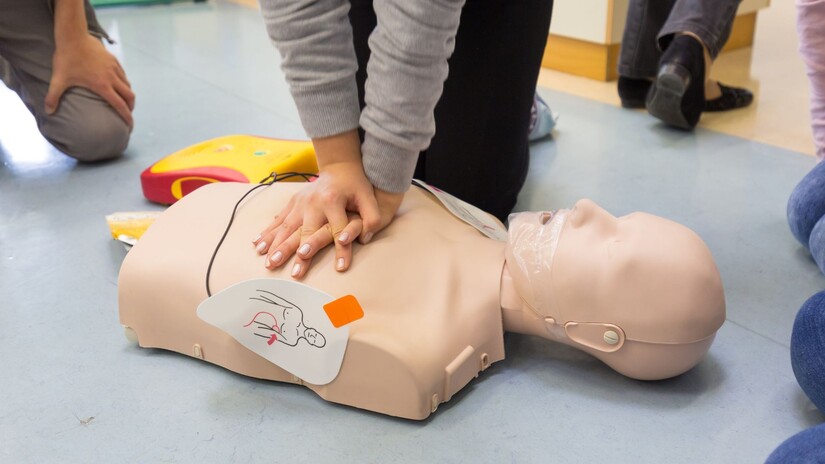
Medical experts consistently emphasize that sudden cardiac arrest requires immediate action within minutes.
Sudden cardiac arrest is the leading cause of death for student athletes nationwide.
Without intervention, survival chances drop rapidly.
Research cited during legislative hearings underscores the urgency:
|
Key Fact |
Impact |
|
Survival probability |
Decreases by about 10 percent for every minute without CPR or defibrillation |
|
Student participation |
230,000 Minnesota students play school sports annually |
|
National ranking |
Minnesota is Top 10 nationally in high school athletic participation |
Advocates often refer to the first moments following cardiac arrest as a critical survival window, when rapid chest compressions and defibrillation can restore a normal heart rhythm.
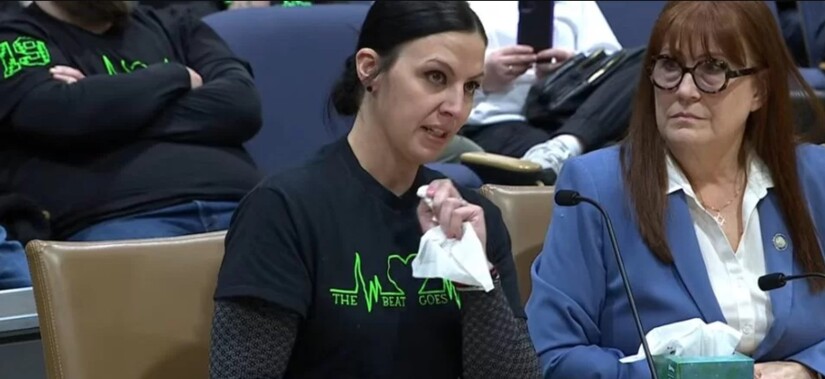
During a March 9 hearing before the Senate Education Policy Committee, lawmakers heard emotional testimony from Danielle Tirevold, whose daughter Gia suffered sudden cardiac arrest during a softball game in Lakeville last August.
“I watched her face and lips go white,” Tirevold said through tears. “My child was pulseless.”
Tirevold, a registered nurse, rushed onto the field and began performing CPR immediately. No automated external defibrillator was available nearby.
For more than ten minutes she continued chest compressions in the dirt near third base, her knees bleeding from the time spent on the ground.
“No one there was trained to assist me,” she told lawmakers, recalling how those gathered nearby could only watch and pray.
When first responders arrived with an AED, the result was immediate.
“All it took was one shock and Gia was in a normal rhythm,” Tirevold said.
Gia made a remarkable recovery and returned to the softball field seven weeks later.
Doctors later determined that she had no known underlying heart condition, highlighting how sudden cardiac arrest can strike even the healthiest athletes.
“She has the healthiest heart of an athlete,” Tirevold said. “She had zero symptoms on that day.”
Lawmakers also heard testimony from Norm Okerstrom, a Plymouth resident whose family experienced a similar crisis years earlier.
In 2009, his son Teddy collapsed during football practice at Wayzata High School after suffering sudden cardiac arrest.
“For every minute that passes from sudden cardiac arrest, collapse to fibrillation, the chance of survival decreases ten percent per minute,” Okerstrom told the committee.
In Teddy’s case, the difference was preparation.
His coach, Matt Lombardi, had already received emergency training and immediately began chest compressions while an AED was brought to the field.
Okerstrom credits that preparation with saving his son’s life.
Today, Teddy is 32 years old and works as a middle school teacher in Denver.
His father has since become active with Minnesota SCA Advocates, an organization that supports families affected by sudden cardiac arrest and promotes improved emergency preparedness in schools.
Despite unanimous committee approval and bipartisan support from lawmakers, the proposal faces skepticism from the Minnesota State High School League, which governs high school athletics in the state.
Westlin said the organization has historically opposed similar measures.
“I have carried bills related to this topic multiple years now,” she said during the hearing. “And every single year a strange thing happens. The Minnesota State High School League opposes my bills but hasn’t come to talk to me once about them. Not once.”
She described the lack of dialogue as “baffling.”
Athletic events often occur far from immediate medical care. In many cases, coaches are the first adults able to respond when a student athlete collapses.
Supporters of the legislation argue that equipping those coaches with CPR and AED training could transform bystanders into lifesavers.
For families like the Tirevolds and the Okerstroms, the stakes are not theoretical.
They are measured in minutes, in heartbeats, and in the difference between tragedy and survival.
MinneapoliMedia
Community. Culture. Civic Life.



Overcast, with a high of 72 and low of 57 degrees. Overcast in the morning, partly cloudy overnight.