59° and Sunny
Image
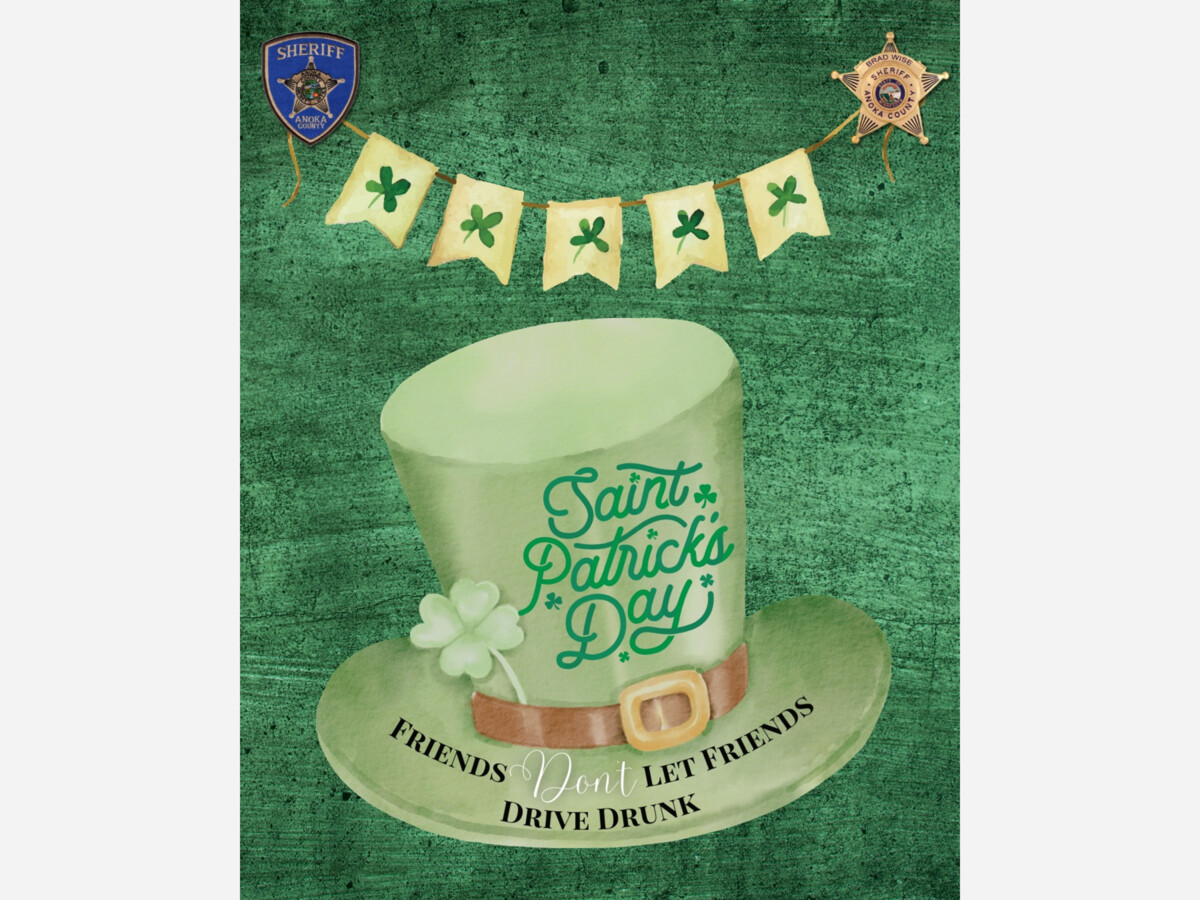



ANOKA COUNTY, MN: The message arrived with a touch of humor, the kind meant to land softly on a day built around celebration.
“Happy St. Patrick’s Day. The green beer may bring a lot of cheer, but you’ll quickly ruin the vibe with a DWI.”
Behind the light tone of the Anoka County Sheriff's Office was something far more serious: a reminder that one of Minnesota’s most widely celebrated holidays is also one of its most dangerous.
Because every year, without fail, the pattern repeats.
Celebration turns into excess.
Excess turns into risk.
And risk, too often, turns into tragedy.
Across the United States, St. Patrick’s Day is consistently associated with a measurable rise in impaired driving. According to the National Highway Traffic Safety Administration, hundreds of people are killed nationwide in alcohol-related crashes during St. Patrick’s Day holiday periods each year.
Minnesota reflects that same pattern with striking consistency.
Data from the Minnesota Department of Public Safety and its Office of Traffic Safety shows:
These are not anomalies. They are seasonal certainties.
Law enforcement officials describe St. Patrick’s Day not as an outlier, but as a predictable surge event, one that demands preparation, coordination, and heightened vigilance.
In Minnesota, the legal threshold for intoxication is clear: a blood alcohol concentration of 0.08 percent or higher constitutes impairment for most drivers.
But the law goes further than numbers.
A driver can be charged even below that threshold if an officer determines they are impaired.
Minnesota’s DWI structure reflects escalating consequences:
And the consequences extend far beyond the courtroom.
State estimates show that a single DWI can cost up to $20,000, once legal fees, fines, ignition interlock requirements, and long-term insurance increases are factored in.
It is a financial burden that often lingers for years.
During holidays like St. Patrick’s Day, enforcement is not passive. It is deliberate.
The Minnesota Office of Traffic Safety coordinates Extra DWI Enforcement campaigns, deploying additional officers across the state.
In Anoka County, that translates into:
The strategy is simple: increase presence, deter behavior, and intervene before a crash occurs.
The message repeated across agencies is equally direct:
“Buzzed driving is drunk driving.”
Because impairment begins well before the legal limit is reached.
Statistics, on their own, can feel distant.
But behind every number is a moment. A decision. A life altered or ended.
Law enforcement officers across Minnesota routinely speak of the emotional weight carried long after the holiday ends. Not the arrests, but the aftermath.
The late-night calls.
The crash scenes.
The conversations with families who expected someone home.
Young adults, particularly those between 21 and 34, represent a significant share of impaired drivers involved in fatal crashes during these periods. But the consequences extend far beyond those behind the wheel.
Passengers. Other drivers. Pedestrians. Entire families.
Alcohol-related crashes in Minnesota result not only in fatalities, but hundreds of serious injuries each year, many of them permanent.
What makes these tragedies particularly difficult to accept is their preventability.
Every impaired driving incident begins with a choice. And every one of those choices has alternatives.
Across the Twin Cities region and Anoka County, those alternatives are accessible:
Each option represents a simple shift. A plan made before the first drink. A conversation among friends. A moment of accountability.
The Sheriff’s Office message, brief and almost playful, is designed to reach people before the consequences do.
Because once a driver is stopped, or a crash occurs, the moment for prevention has already passed.
What remains then are outcomes that cannot be undone.
St. Patrick’s Day will continue to be celebrated across Minnesota with energy, tradition, and community spirit. That will not change.
But the difference between a night remembered and a life altered often comes down to something far smaller than the celebration itself.
A single decision.
A short drive.
A belief that “I’m fine.”
The green may symbolize luck.
But on Minnesota roads, safety has never been a matter of chance.
MinneapoliMedia
Community. Culture. Civic Life.

Mist, with a high of 74 and low of 59 degrees. Mist during the morning, overcast in the afternoon, mist overnight.