78° and Sunny
Image

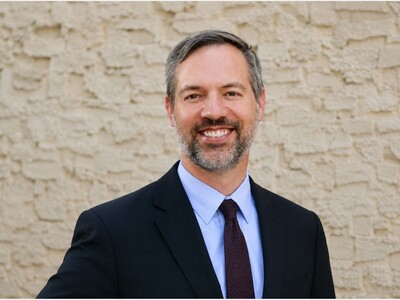
Sam Mars, Founder/ CEO, Firnela | Courtesy Firnela



The answer that followed stayed with him.
The man explained that he worked there, though it was his day off. If the bartender did not return soon, he said, he would step behind the bar himself, make their drinks, and then rejoin the room as a customer. It sounded unusual at first, but the explanation revealed something more significant. He was already moving between multiple venues across the city, filling shifts informally wherever gaps appeared. The system was unstructured, but it was functioning out of necessity.
For Mars, the moment was less about the novelty of the encounter and more about what it exposed. A visible breakdown in service pointed to a deeper, less visible issue: staffing in hospitality was not just strained. It was disorganized.
That realization became the starting point for Firnela.
Hospitality is one of the most visible sectors of the economy, yet much of its operational strain remains hidden from public view. Diners see the finished experience. They do not see the last-minute shift changes, the absent staff, or the effort required to maintain consistency across unpredictable schedules.
Mars began to explore that gap more deliberately. Without a background in hospitality, he approached the industry as an outsider, which shaped how he asked questions and what he noticed. Over several months, he visited restaurants, bars, and event spaces across Minnesota and beyond, speaking directly with workers and managers.
He asked a consistent question: if you were asked to work a shift in a new venue with no prior experience there, what would you need to know to be successful?
The answers were practical and repetitive. Workers needed to understand the menu, the layout of the space, the flow of service, and where essential items were located. While each establishment presented itself as unique, the underlying structure of operations was largely consistent.
That pattern suggested something important. If the core elements of the work were predictable, then the process of preparing workers for that work could also be structured.
 Image of Firnela. Courtesy of Firnela
Firnela did not emerge fully formed. The platform that exists today is the result of multiple iterations, including several that were abandoned entirely.
Mars built an early version of the product only to realize it could not accommodate the real complexity of large venues. A single Minneapolis location with multiple floors, bars, and service environments exposed the limitations of his design. The system had to be rethought.
A later version revealed a different issue. Without a clear vetting process, there was no reliable way to ensure the quality of workers joining the platform. Businesses were unlikely to trust a system that did not provide transparency into who they were hiring. That version was also discarded.
“I built this app three times and failed twice,” Mars said during our conversation. “Each time, I realized something fundamental was missing.”
The current version of Firnela reflects those lessons. The platform allows hospitality businesses to post shifts and receive applications from vetted workers. Businesses can review profiles, evaluate experience, and select who they want to hire. Workers, in turn, gain access to flexible opportunities across multiple venues.
The model is straightforward, but its implications are broader than a typical staffing tool.
At a surface level, Firnela operates as a marketplace connecting businesses and workers. At a deeper level, it attempts to address several structural challenges within hospitality.
One of those challenges is preparation. Workers entering a new environment often rely on on-the-spot guidance, which can slow service and create friction. Firnela incorporates features that allow businesses to share key operational information in advance, including menus, service expectations, and layout details. The goal is not to replace experience, but to reduce the learning curve.
Another challenge is trust. Traditional staffing agencies assign workers to shifts with limited input from the business. Some gig platforms automate the process entirely, removing the employer’s ability to choose. Firnela takes a different approach by keeping decision-making with the business while maintaining transparency around worker qualifications and reliability.
Mars emphasizes that distinction.
“We don’t send someone to you,” he said. “You choose who you want. That’s a big difference.”
The broader context for Firnela is a changing labor environment. Hospitality businesses continue to face staffing shortages, while workers have more options than in previous years. Flexible work, digital income streams, and alternative employment models have altered expectations around schedules and commitment.
Mars believes the industry has not fully adapted to that shift.
“For a long time, staff have been competing for shifts,” he said. “I think that’s changing. I think businesses are going to have to compete for staff.”
That idea challenges a long-standing dynamic in hospitality, where workers are typically expected to adjust to the needs of the business. A more flexible system introduces the possibility of workers choosing when and where they work, potentially across multiple employers.
Firnela does not resolve that tension, but it operates within it. By allowing workers to move between venues while giving businesses control over hiring decisions, the platform attempts to balance flexibility with reliability.
 Sam Mars, Founder/ CEO, Firnela | Courtesy Firnela
Firnela is being built in Minnesota, a state not widely associated with early-stage technology startups outside of specific sectors such as healthcare. Mars has experienced both the advantages and limitations of building locally.
Minnesota offers access to a strong hospitality ecosystem and a network of business owners willing to engage in conversation. At the same time, the funding environment can be more conservative than in coastal markets, often requiring demonstrated traction before investment.
Mars sees that as both a challenge and a filter.
“If you can make something work here, it’s real,” he said. “It’s not just an idea.”
The company’s early traction has focused on catering and event businesses, where consistent demand for staffing creates a stable foundation for the platform. From there, Firnela is expanding into restaurants and other hospitality segments.
The process of building Firnela has not been linear. Mars describes it in practical terms, without attempting to smooth over the difficulties.
In recent weeks, a technical error resulted in the loss of user data across the platform, including staff profiles and some business accounts. The issue occurred shortly before a planned launch event, creating immediate pressure to rebuild both sides of the marketplace.
The response involved direct outreach to users, re-engagement with businesses, and an accelerated effort to restore the platform’s functionality.
“These are the problems you don’t plan for,” Mars said. “The ones you cause yourself.”
It is a reminder that early-stage companies operate with limited margins for error. Progress often depends on the ability to recover quickly when something goes wrong.
Firnela is still in its early stages. Its long-term impact will depend on adoption, execution, and the broader evolution of the hospitality industry.
For now, the platform represents an attempt to introduce more structure into a system that has historically relied on informal solutions. It also reflects a larger question about the future of work in hospitality.
What happens when flexibility becomes an expectation rather than an exception?
And how do businesses adapt when workers have more control over where and how they work?
Mars does not frame Firnela as a complete answer to those questions. Instead, he positions it as a step toward a different model, one where staffing is more transparent, preparation is more accessible, and the relationship between businesses and workers is less rigid.
Whether that model takes hold remains to be seen.
What is clear is that the conditions that led to its creation are not going away.
MinneapoliMedia
Community. Culture. Civic Life.


Sunny, with a high of 92 and low of 60 degrees. Sunny in the morning, clear in the afternoon and evening,