72° and Overcast
Image
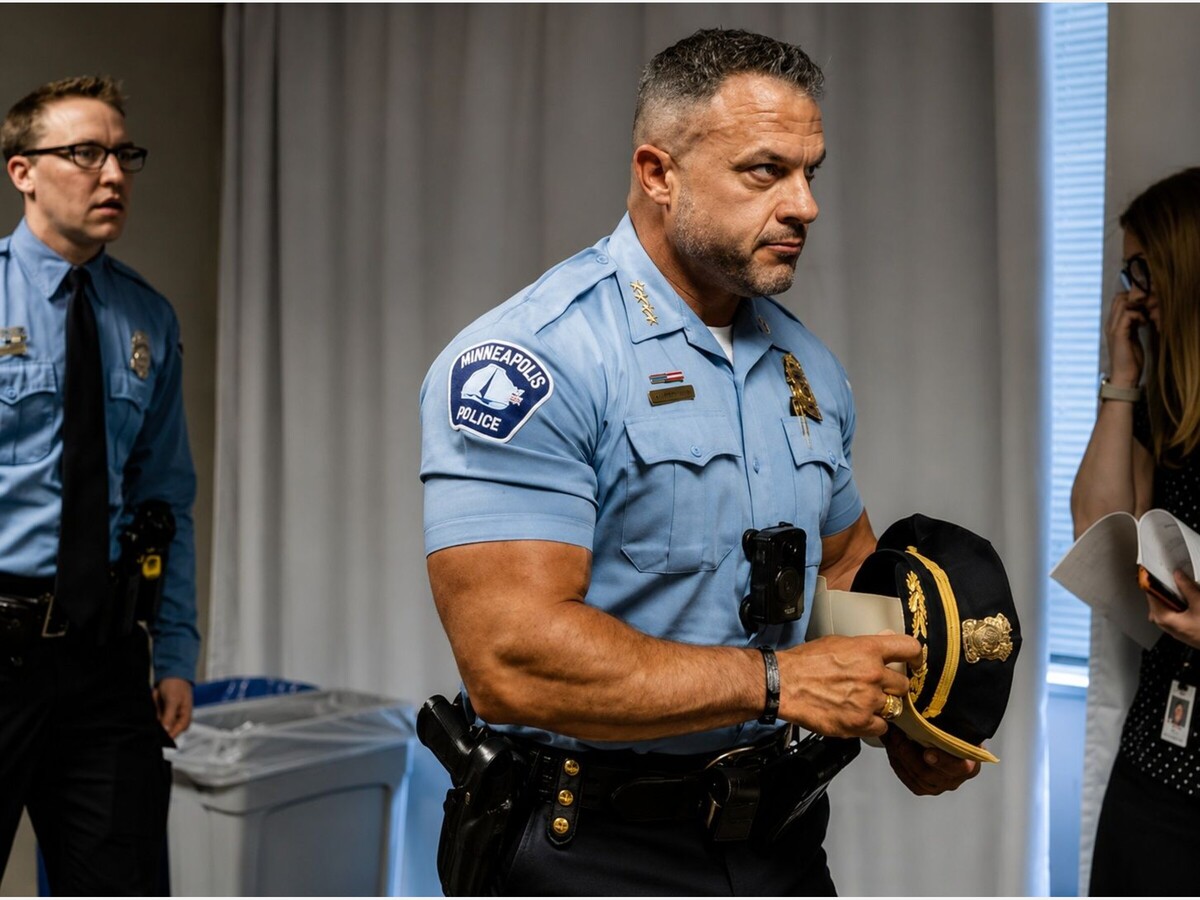



The city was still living in the long institutional aftermath of George Floyd’s murder. Public trust in the Minneapolis Police Department had collapsed. Officer departures had accelerated. Violent crime had surged during the pandemic-era years. Federal and state investigators were scrutinizing departmental culture. Political leaders were divided over the future of policing itself. Residents simultaneously demanded accountability, reform, visibility, responsiveness, and safety, often with deep disagreement over what those goals actually required in practice.
Few police chief positions in the United States carried greater symbolic weight.
O’Hara, a former Newark public safety official known for media fluency and reform-oriented language, was hired to stabilize an institution that had become both nationally infamous and internally fractured. The assignment extended far beyond ordinary crime management. He was expected to help restore operational confidence inside the department while also rebuilding civic legitimacy outside it.
For a period of time, there were signs that Minneapolis was beginning to regain some footing.
Violent crime numbers improved from the sharp spikes that defined the immediate post-2020 years. Staffing losses slowed. City leaders publicly pointed to reductions in shootings and homicides. Mayor Jacob Frey repeatedly defended O’Hara’s leadership during contentious political debates surrounding policing, reform mandates, and public safety funding.
That trajectory makes O’Hara’s resignation on May 26, 2026, more consequential than the typical departure of a municipal official.
He did not resign because investigators substantiated allegations that he engaged in intimate relationships with city employees. Those allegations were not substantiated during the course of the independent investigation. He resigned after investigators concluded that he interfered with the integrity of the investigative process itself.
This distinction shifts the scandal from a private lapse in judgment to a public institutional failure.
The central issue now confronting Minneapolis is not simply whether the former chief exercised poor judgment in his personal or professional conduct. The deeper issue is that the leader tasked with helping rebuild institutional trust inside the Minneapolis Police Department was ultimately accused of undermining transparency during an official investigation into his own behavior. For a police department operating under continuing reform pressure and looming federal oversight obligations, that reality carries implications far beyond one resignation.
As documented by the independent inquiry, which stemmed from an anonymous complaint filed in 2024 alleging that O’Hara had inappropriate intimate relationships with city employees, the city retained outside investigators through the law firm Forsgren Fisher to examine the allegations.
While investigators did not substantiate the alleged sexual relationships, the inquiry uncovered other conduct that proved professionally damaging and ultimately career-ending.
Among the most serious findings was the deletion of a contact card belonging to a key female witness from O’Hara’s city-issued phone. Investigators determined that the Minnesota Bureau of Criminal Apprehension had imaged the device twice. Between the first incomplete extraction and a later imaging, only one contact out of roughly 600 stored contacts had been removed: the witness in question.
The precision of that deletion became central to the city’s conclusions.
Investigators also concluded that O’Hara discussed details of the ongoing investigation with city employees despite explicit instructions not to do so. According to investigative findings, a whistleblower later provided recorded audio that confirmed internal discussions regarding the confidential inquiry.
The city additionally concluded that O’Hara provided inconsistent explanations regarding his communications with the employee connected to the deleted contact information. Mayor Frey ultimately informed O’Hara that he would face severe disciplinary action, including potential termination. O’Hara resigned shortly afterward.
The political timing of the collapse immediately intensified scrutiny surrounding City Hall.
Only weeks earlier, on May 8, Frey had publicly nominated O’Hara for a second four-year term as police chief. At the time, the mayor praised his leadership and credited him with helping guide the department through a difficult reform era. Following the resignation, Frey acknowledged the contradiction directly, stating publicly that had he known then what he knew now, there would not have been a reappointment.
That statement raises a critical political question for the administration. How close was the city to understanding the seriousness of the investigation before the renomination occurred? Was the administration caught off guard by rapidly developing findings? Or does the episode reflect deeper weaknesses in how Minneapolis evaluates and monitors executive leadership inside its most sensitive public institutions?
These questions are vital because the Minneapolis Police Department remains one of the most politically, socially, and symbolically scrutinized law enforcement agencies in America. Every leadership failure now carries amplified consequences.
This resignation also lands at a uniquely delicate moment for reform efforts inside the city.
For years, Minneapolis officials have argued that systemic reform requires both structural accountability and leadership stability. The city has spent enormous political, financial, and institutional energy attempting to rebuild confidence in policing while navigating officer shortages, rising public expectations, federal investigations, lawsuits, consent decree negotiations, and deep polarization over public safety policy.
That process remains unfinished.
The Department of Justice investigation into the Minneapolis Police Department concluded that there was reasonable cause to believe the department engaged in patterns of unconstitutional policing practices. State-level investigations and reform agreements added additional layers of scrutiny and mandated change.
Implementing those reforms was never going to depend solely on policy documents; it required public credibility.
That is why O’Hara’s resignation matters beyond the specifics of the allegations themselves. Reform-era leadership operates under a higher level of ethical expectation precisely because the institution is attempting to regain public trust after historic failure. The problem facing Minneapolis now is not merely that its chief violated policy. The problem is that the allegations directly involve transparency, investigative integrity, and the handling of evidence connected to an active inquiry.
Those are foundational issues in modern policing.
Police departments routinely discipline rank-and-file officers for dishonesty, evidence manipulation, incomplete reporting, or interference with investigations. Prosecutors rely heavily on officer credibility. Courts evaluate truthfulness. Internal Affairs systems depend on truthful cooperation. Public legitimacy rests partly on whether departments appear willing to apply accountability standards consistently across rank and authority.
This creates an unavoidable tension. If ordinary officers face discipline or termination for manipulating evidence, obscuring information, or interfering with investigative processes, the police chief cannot reasonably expect exemption from those same expectations.
Mayor Frey acknowledged this dynamic directly when discussing the resignation, stating that trust is not secondary to the job but central to it. He was correct.
Police chiefs do not simply manage patrol deployment schedules or oversee administrative budgets. They function as symbolic custodians of institutional credibility. Their authority depends heavily on whether the public, city government, courts, officers, and investigators believe they operate within the same accountability framework imposed on everyone else.
That is why the details of this investigation became so politically damaging even though the underlying allegations regarding intimate relationships were not substantiated. The resignation was driven not by the alleged misconduct itself, but by the city’s conclusion that O’Hara attempted to manage or obstruct the investigation surrounding that misconduct. This distinction sharply alters the public meaning of the scandal.
There is also a deeply self-inflicted dimension to the collapse of O’Hara’s tenure.
Operationally, there were measurable areas where city leaders and even some critics acknowledged improvement under his leadership. Homicides declined significantly from the peak violence levels seen during the pandemic-era years. Shootings fell in key areas of the city. Public safety coordination improved in some respects. Staffing losses, while still serious, began stabilizing after years of heavy departures. O’Hara maintained relatively stronger communication relationships with some elected officials compared to previous eras of tension between City Hall and police leadership.
Even critics who disagreed with aspects of his policing philosophy acknowledged that he inherited one of the most unstable moments in modern Minneapolis governance.
That makes the ending particularly damaging not only institutionally, but personally. O’Hara survived the political turbulence of post-George Floyd Minneapolis, navigated national media scrutiny, managed reform pressures, and maintained enough political support to receive renomination from the mayor weeks before his resignation.
In the end, however, his downfall emerged not from citywide unrest or reform opposition, but from decisions investigators concluded reflected dishonesty and interference. That reality will shape how his tenure is remembered.
The resignation has also reopened broader questions about Minneapolis’ continuing inability to achieve durable stability in police leadership.
Over the last decade, the city has experienced repeated cycles of institutional disruption involving policing, leadership turnover, reform battles, public distrust, officer morale crises, and political conflict. Chiefs and interim leaders have repeatedly inherited unstable conditions only to depart amid controversy, exhaustion, political disagreement, or structural crisis.
At some point, Minneapolis must confront whether the position itself has become nearly unmanageable under modern conditions.
The contemporary Minneapolis police chief is expected to function simultaneously as a law enforcement executive, reform architect, political communicator, labor negotiator, media strategist, civil rights diplomat, public therapist, and symbolic representative of institutional change. Those demands often conflict directly with one another.
Communities demanding aggressive reform may distrust traditional policing approaches. Officers frustrated by morale concerns may resent reform pressures. Political leaders want crime reduction alongside accountability progress. Activists demand transparency. Residents want visible public safety improvements. Courts demand compliance. Media scrutiny remains constant.
The chief becomes the pressure point where all of those competing expectations collide.
That does not excuse misconduct, but it does explain why leadership stability has become increasingly fragile inside major American police departments, particularly in cities carrying the level of national symbolic weight that Minneapolis now carries.
Still, the structural pressures surrounding the position cannot obscure the fundamental accountability issue now facing the city. Institutional reform becomes impossible if leadership itself appears unwilling to follow transparency standards.
The federal reform era surrounding the Minneapolis Police Department was built largely around one core premise: that systems lacking accountability inevitably lose public legitimacy. That lesson emerged not only from George Floyd’s murder, but from years of accumulated mistrust surrounding use-of-force complaints, disciplinary inconsistency, reporting failures, and perceptions that officers were protected differently depending on status or internal relationships.
The danger now is that scandals involving executive leadership risk reinforcing precisely the same skepticism reform efforts were designed to overcome. Public trust is extraordinarily difficult to rebuild once communities begin believing accountability standards are selectively applied.
That concern extends beyond activists or critics of policing. Even inside the department, reports following the resignation suggested frustration and embarrassment among officers who viewed the controversy as another destabilizing distraction during a period when MPD is already under extraordinary public pressure.
That frustration is understandable. Departments attempting long-term reform require consistency and credibility from leadership. Internal morale suffers when scandals at the executive level generate fresh controversy after years of institutional turbulence. Officers working difficult patrol assignments often resent leadership crises that overshadow operational progress or intensify political scrutiny.
At the same time, reform advocates will argue that the city’s response demonstrates accountability systems functioning as intended. That argument also deserves acknowledgment.
The investigation moved forward despite O’Hara’s status as chief. The allegations were examined through outside investigators. The city imposed consequences once investigators concluded there had been misconduct connected to the investigation itself. The mayor publicly accepted the resignation rather than attempting to shield the chief politically.
Those facts matter. Minneapolis would face even deeper credibility problems had city leadership ignored the findings or minimized the allegations because of O’Hara’s operational accomplishments.
A mature civic response requires holding multiple truths simultaneously.
Brian O’Hara inherited one of the hardest police leadership jobs in America. Under his tenure, several important public safety indicators improved from the most unstable post-2020 periods. He also, based on the investigative findings released by the city, exercised deeply flawed judgment regarding transparency and investigative integrity.
Those realities coexist. Reducing the story into simplistic hero-or-villain narratives ultimately obscures the deeper institutional lessons.
The broader concern for Minneapolis now involves what happens next.
Assistant Chief Katie Blackwell has assumed interim leadership responsibilities while the city begins a search for a permanent replacement. Whoever ultimately becomes the next chief will inherit not only ongoing reform mandates and operational pressures, but also a department once again dealing with executive instability during a period when consistency remains critically important.
The city’s next decisions will matter enormously. Minneapolis cannot afford another appointment process driven primarily by political symbolism or short-term crisis management. The next chief will need operational competence, political intelligence, reform credibility, emotional discipline, and above all, demonstrable respect for transparency obligations.
The city also needs a more honest public conversation about the scale of the challenge facing modern police leadership.
There remains a tendency in American civic life to treat police chiefs either as singular saviors or singular villains. In reality, they operate inside systems shaped by political conflict, institutional culture, labor dynamics, public fear, media scrutiny, federal oversight, and deeply polarized public expectations.
No individual chief alone can permanently solve Minneapolis’ policing challenges. But leadership conduct still matters profoundly.
Culture inside institutions is shaped partly by what leaders tolerate, what they model, and whether accountability appears authentic or selective. That is especially true inside law enforcement agencies attempting to rebuild legitimacy after historic institutional failures.
The public does not merely evaluate crime statistics when judging police leadership. Residents also evaluate credibility, transparency, consistency, honesty, and institutional behavior during moments of pressure.
That is where this resignation becomes especially damaging. The controversy surrounding O’Hara’s departure did not emerge from a split-second operational decision made during a dangerous emergency. It emerged from allegations that the chief interfered with an investigative process examining his own conduct.
Those are fundamentally different categories of failure. One involves difficult judgment under chaotic circumstances. The other involves integrity.
That distinction explains why the political fallout became immediate and severe despite O’Hara’s operational accomplishments. In many ways, the scandal also illustrates one of the hardest realities facing public institutions during reform periods: measurable performance improvements alone cannot restore legitimacy if ethical confidence collapses.
Minneapolis has spent years attempting to convince residents that institutional accountability inside the police department is real, durable, and enforceable. That project cannot survive if executive leadership appears exempt from the standards imposed elsewhere inside the organization.
The city now faces the difficult task of preserving reform momentum while simultaneously confronting another destabilizing leadership controversy. That will require discipline from political leaders, honesty from the department, seriousness from investigators, and restraint from those tempted to reduce the situation into partisan simplifications.
Minneapolis is neither a city where reform has failed completely nor a city where reform has already succeeded. It remains in transition.
That transition will continue long after Brian O’Hara’s resignation.
The ultimate significance of this moment may depend less on the scandal itself than on how Minneapolis responds to it. If the city treats the resignation merely as an embarrassing personnel controversy, little will be learned. But if officials recognize it as another warning about how fragile institutional trust remains inside modern policing, the episode may yet carry civic value beyond political fallout.
Public trust is not rebuilt through speeches alone. It is rebuilt through consistent institutional behavior over time, especially during uncomfortable moments involving powerful people.
That principle now applies not only to the officers patrolling Minneapolis streets, but to the leadership structure governing the department itself.
The city’s next chief will inherit more than an agency. They will inherit a credibility test.
MinneapoliMedia | Community. Culture. Civic Life.


Overcast, with a high of 65 and low of 49 degrees. Overcast in the morning, clear for the afternoon and evening, overcast overnight.