66° and Partly cloudy
Image



On any given morning, the true measure of a state’s economic health is not found in the sterile briefing rooms of the state capitol, but on places like the factory floor of a precision manufacturer in Brooklyn Park, or inside a newly opened, immigrant-owned market in downtown Blaine. In these spaces, economy is not a concept; it is a calculation of survival, risk, and structural support.
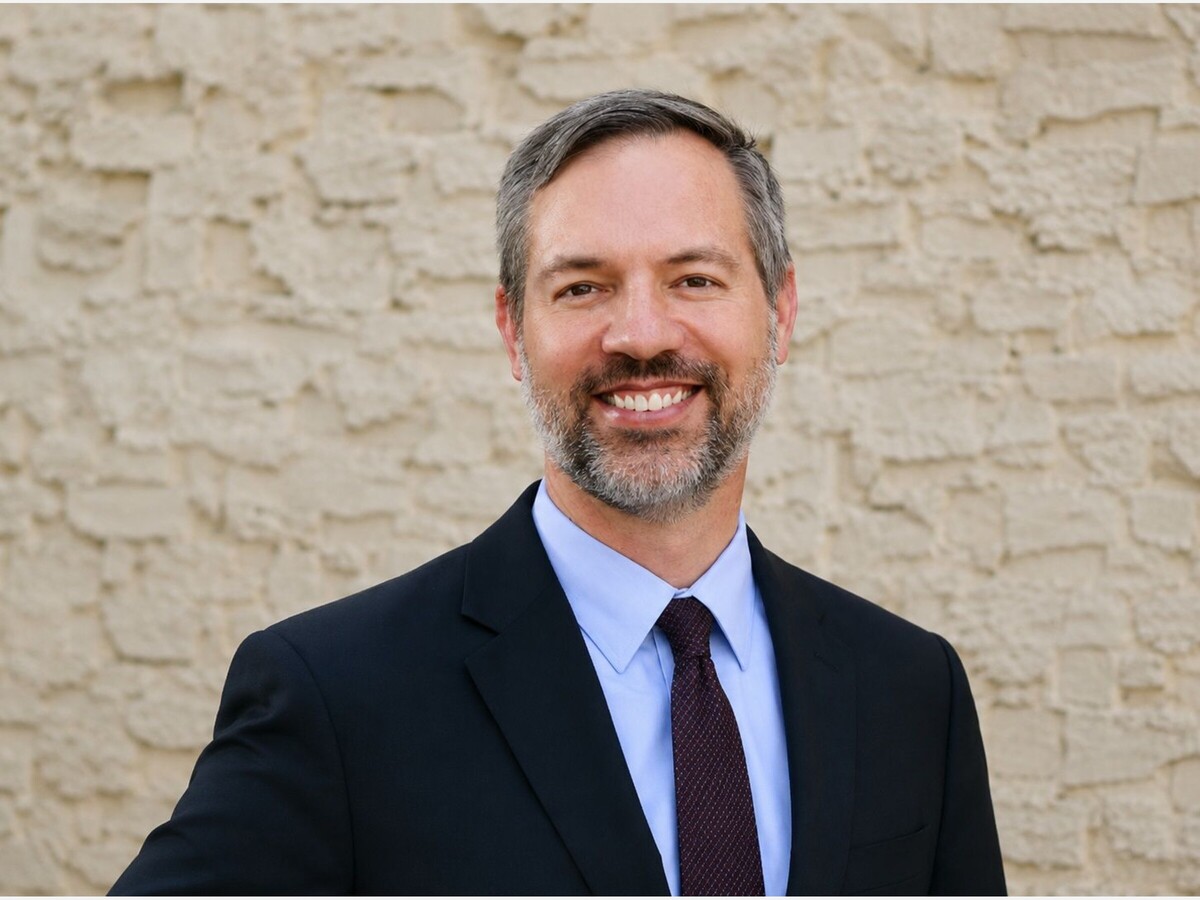
There are public officials whose names dominate headlines, and there are public officials whose work quietly reshapes the conditions under which these ordinary calculations are made. Matt Varilek belongs firmly to the second category.
For much of the public, the commissioner of the Minnesota Department of Employment and Economic Development (DEED) operates outside the daily rhythms of celebrity politics. There are no campaign rallies attached to the office, no primetime television appearances that turn bureaucratic stewardship into spectacle. Yet few positions in Minnesota government touch as many dimensions of ordinary life. Jobs. Wages. Small-business financing. Workforce development. International trade. Redevelopment grants. Childcare workforce shortages. Export growth. Broadband expansion. Paid leave implementation. Economic resilience in rural towns and urban corridors alike.
When Matt Varilek became commissioner of DEED in June 2023, he stepped into one of the most consequential institutional roles in Minnesota government at a moment of significant economic uncertainty. Inflation pressures still lingered nationally. Labor shortages persisted across multiple sectors. Global supply chains remained unstable. Employers struggled to fill openings. International trade patterns were shifting beneath the weight of geopolitical tensions and post-pandemic recalibrations.
The assignment before him was immense: help maintain Minnesota’s economic momentum while positioning the state for the future.
To understand Varilek’s approach to leadership is to first understand the peculiar nature of economic development itself. It is work that often becomes visible only when it fails. A shuttered factory. A downtown corridor hollowed out by vacancies. A community unable to attract employers. A young graduate leaving the state because opportunity appears elsewhere. Economic development officials spend much of their careers trying to prevent absences from occurring. Their successes are often diffuse, cumulative, and difficult to dramatize.
And yet under Varilek, DEED has become one of the most visibly active agencies in Minnesota government.
The labor-market numbers alone tell part of the story. In January 2025, Minnesota employers added 9,600 jobs, the strongest monthly gain since March 2024. Labor-force participation climbed to 68.1 percent, significantly above the national average. The state’s unemployment rate held at 3.0 percent. Months earlier, in August 2024, Minnesota added 14,400 jobs, the largest monthly gain in nearly two years. Education and Health Services, Professional and Business Services, Construction, Manufacturing, and Leisure and Hospitality all contributed to the expansion. Wage growth continued to outpace inflation in several reporting periods.
These statistics are often discussed abstractly in policy circles. But their real meaning exists elsewhere.
They exist in households where parents regain stability after layoffs. They exist in immigrant-owned businesses opening storefronts on commercial corridors once lined with vacancies. They exist in small towns fighting demographic decline and searching for economic viability. They exist in manufacturers attempting to modernize while competing in an unforgiving global economy.
Varilek’s governing philosophy is rooted in the conviction that economic development cannot be separated from human infrastructure. Workforce participation. Childcare access. Rural investment. Housing development. Education pipelines. Broadband connectivity. Trade relationships. The pieces are interconnected.
That perspective did not emerge accidentally.
Born and raised in South Dakota, Varilek built a career that moved through federal government, economic policy, philanthropy, and regional development before arriving in Minnesota’s cabinet. He served as economic development director and speechwriter for U.S. Senators Tom Daschle and Tim Johnson, later becoming regional administrator for the U.S. Small Business Administration’s Region VIII and eventually chief operating officer for the SBA nationally.
Before joining DEED, he spent years leading the Initiative Foundation in Little Falls, one of Minnesota’s most influential regional philanthropic and economic-development organizations. There, he worked across fourteen counties and two sovereign tribal nations in central Minnesota, helping support entrepreneurship, workforce development, childcare initiatives, community financing, and regional investment strategies.
Those experiences matter because they shaped the way he views the state itself. Varilek does not speak about Minnesota’s economy as a collection of disconnected sectors. He speaks about systems.
In a 2023 interview shortly after becoming commissioner, he described explaining the new role to his children by telling them he would now have the opportunity to help workers find good jobs, help businesses secure financing, and help communities develop infrastructure “but with even more resources, and in all of Minnesota instead of just part of it.”
That framing is revealing. For Varilek, economic development is less about transactional dealmaking and more about statewide ecosystem construction.
Under his leadership, DEED has aggressively pursued both domestic growth and international engagement. The Minnesota Trade Office has expanded trade outreach, facilitated export support, and strengthened foreign market relationships. Trade missions to Ireland, the Netherlands, Germany, and Switzerland have sought to position Minnesota businesses inside increasingly competitive international markets.
The stakes are significant. In 2024, Minnesota exported more than $26 billion in goods globally. Manufactured products accounted for the overwhelming majority of those exports, supporting tens of thousands of jobs across the state. Medical technology, precision manufacturing, agricultural processing, machinery, and advanced industrial sectors remain central to Minnesota’s economic identity.
But export economies are fragile ecosystems. Minnesota’s trade figures experienced sharp volatility in 2025 after fuel and mineral exports to Canada dropped dramatically, contributing to a significant decline in overall export totals. Those fluctuations illustrated the limits of state-level influence inside global markets shaped by commodity prices, geopolitical instability, and shifting demand patterns.
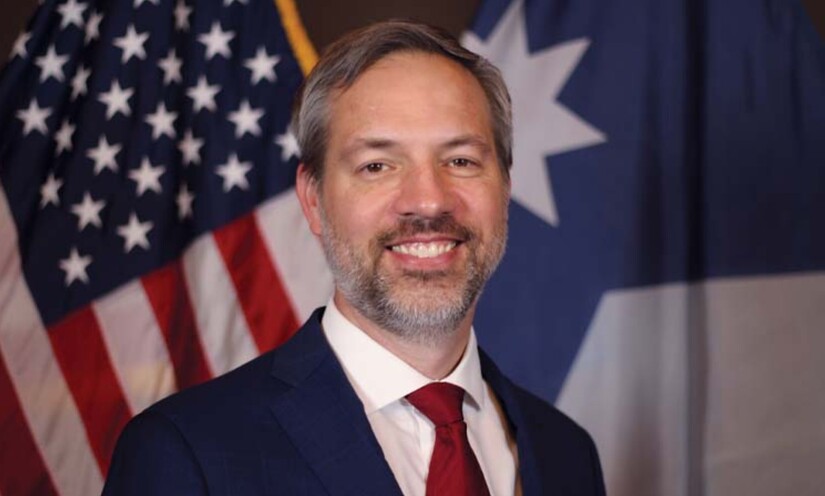
Leadership in such an environment becomes less about controlling outcomes and more about increasing resilience. That is where much of Varilek’s work has concentrated itself.
Under DEED’s various funding mechanisms, the agency has directed millions into redevelopment projects, workforce initiatives, business expansions, and local economic infrastructure. Grants awarded through the Minnesota Investment Fund and Job Creation Fund have leveraged hundreds of millions in private investment while supporting job creation and retention across the state. Redevelopment grants have targeted underused land and blighted properties for housing and commercial revitalization. Youth workforce programs have attempted to connect younger Minnesotans, including youth with disabilities and historically underserved communities, to long-term career pathways.
This is not glamorous work. It is spreadsheets, compliance reviews, financing structures, stakeholder meetings, labor-market reports, and long negotiations that unfold far from public attention. Those who work alongside Varilek note that this is precisely where his intensity manifests. In multi-hour legislative hearings and closed-door infrastructure briefings, he is known not for rhetorical flourishes, but for an exhaustive command of local match requirements, job-retention metrics, and compliance timelines. It is a leadership style defined by granular mastery rather than grandstanding.
Yet beneath the administrative language lies a larger question: what kind of economy does Minnesota intend to become?
That question increasingly defines Varilek’s tenure. His leadership arrives during a transitional period for the American Midwest itself. States like Minnesota are competing not merely for employers, but for workers, talent pipelines, technological investment, and long-term demographic sustainability. The competition is global now. Young workers can relocate. Companies can move capital rapidly. Industries evolve faster than public institutions traditionally adapt.
In response, DEED under Varilek has attempted to move with unusual breadth. The agency’s work now touches semiconductor workforce preparation, paid family and medical leave implementation, broadband expansion, immigrant workforce integration, childcare workforce shortages, entrepreneurship ecosystems, and advanced manufacturing competitiveness.
This breadth has created both momentum and strain.
The clearest institutional challenge emerged in 2025 when the Office of the Legislative Auditor released findings identifying weaknesses in DEED’s grant administration systems. Monitoring inconsistencies, incomplete documentation, and uneven oversight practices raised legitimate questions about whether the agency’s internal systems were adequately keeping pace with its expanding portfolio. Public trust, especially when hundreds of millions of taxpayer dollars are involved, depends not simply on ambition but on accountability.
Varilek publicly acknowledged the audit’s concerns and committed the agency to corrective reforms, including updated grant-management policies, increased monitoring capacity, and stronger reporting procedures. The episode served as a reminder that modern governance is not measured solely by activity levels, but by institutional durability.
Similarly, the MinnesotaWorks data breach reinforced another uncomfortable reality of twenty-first century governance: economic development increasingly depends upon cybersecurity competence. Workforce systems, unemployment platforms, grant portals, and labor databases now operate as critical infrastructure. The breach was addressed quickly, but it underscored the vulnerabilities that accompany digital government administration.
These challenges complicate any simplistic portrait of success. And that is precisely why Matt Varilek belongs inside a series like Minnesota Finest.
Minnesota Finest was never intended to celebrate flawless individuals. It was designed to document Minnesotans whose work meaningfully shapes the civic, cultural, institutional, or economic life of the state. The strongest subjects in such a series are rarely uncomplicated heroes. They are builders. System navigators. Institutional stewards. Individuals carrying large responsibilities inside imperfect structures.
Varilek fits that definition.
What distinguishes him is not charisma in the conventional political sense. In fact, much of his public presence is strikingly understated. There is little evidence of performative self-promotion in his public style. Instead, colleagues and institutional partners describe a leader whose focus is entirely operational.
That reputation surfaced publicly in small but revealing moments. In one widely shared internal DEED video, Varilek fulfilled a promise made during a Combined Charities campaign by jumping into the Mississippi River in December after agency employees surpassed fundraising goals. The gesture was humorous and self-deprecating, but it also revealed something essential about organizational culture: accountability matters to him, even in symbolic form.
Likewise, his public remarks on immigration and workforce development consistently emphasize Minnesota’s dependence on people who choose to build their lives in the state. In one LinkedIn post, he wrote that Minnesota is fortunate “that so many people born elsewhere now call Minnesota home.” That perspective is not incidental. It reflects a broader understanding that modern economic competitiveness depends heavily on openness, talent attraction, and demographic vitality.
Under Governor Tim Walz, DEED has operated with unusually expansive ambitions. The Walz administration’s economic philosophy emphasizes workforce participation, infrastructure investment, inclusion, business expansion, and long-term competitiveness. Varilek has become one of the principal architects translating those priorities into operational systems and measurable initiatives.
The relationship between governor and commissioner is rooted less in political theatrics than in administrative alignment. Walz provides broad strategic direction; Varilek operationalizes. Together, they have attempted to position Minnesota as simultaneously business-competitive, worker-centered, internationally engaged, and socially stable.
Whether history ultimately judges that strategy as transformative remains to be seen. But the scale of the ambition itself is unmistakable.
And ambition, especially in public service, matters. Because the easiest thing for institutions to do is contract. Retreat. Manage decline quietly. The harder task is expansion. Rebuilding. Adapting. Preparing for economic futures not yet fully visible.
Matt Varilek’s tenure at DEED reflects a state attempting precisely that kind of adaptation.
The outcomes remain incomplete. Some programs will succeed more than others. Some forecasts will prove optimistic. Some institutional weaknesses will require deeper correction. That is the nature of governance inside a rapidly changing economy.
But viewed in totality, the record already reveals something significant: sustained effort, broad strategic vision, and unusual administrative intensity directed toward Minnesota’s economic future.
That matters. Because behind every labor-force statistic is a worker. Behind every export figure is a factory floor. Behind every redevelopment grant is a struggling community attempting reinvention. Behind every workforce initiative is a young person searching for stability.
Economic development, at its best, is not merely about growth curves. It is about possibility. And for much of the past several years, Matt Varilek has stood near the center of Minnesota’s attempt to expand that possibility statewide.
History will eventually render its own verdict on the long-term effects of this period. The data will continue evolving. Markets will shift again. Administrations will change. New crises will emerge.
But at this moment, in this chapter of Minnesota’s civic and economic life, one conclusion already feels difficult to dispute: Matt Varilek has approached the work with seriousness, discipline, and relentless commitment.
In an era when public confidence in institutions often feels fragile, there remains something deeply important about leaders willing to immerse themselves fully in the difficult mechanics of governance. Not simply talking about growth, but building systems meant to sustain it. Not simply celebrating Minnesota, but working continuously to strengthen it.
That kind of stewardship rarely becomes viral. But it matters enormously. And in Minnesota’s evolving economic story, Matt Varilek has already become part of the architecture.
MinneapoliMedia | Community. Culture. Civic Life.



Sunny, with a high of 87 and low of 64 degrees. Sunny in the morning, patchy rain nearby overnight.