66° and Partly cloudy
Image



But throughout May, the City of Coon Rapids has spent the month asking residents to look more closely at the systems, standards, and people that help keep communities functioning safely every day.
Officially recognized by the Coon Rapids City Council, May 2026 has been observed locally as Building Safety Month, part of a nationwide public awareness initiative led annually by the International Code Council. The 2026 national theme, “Built to Last,” focuses on the long-term durability, sustainability, resilience, and accessibility of modern infrastructure, while also highlighting the often-overlooked work of municipal building inspectors, engineers, code officials, architects, contractors, and emergency planning professionals.
According to the International Code Council, Building Safety Month was established to help communities better understand how updated building codes and modern safety standards reduce risks from fires, structural failures, severe weather events, and other hazards that increasingly affect American communities.
In Coon Rapids, city officials organized the month-long campaign into four weekly themes, each designed to connect national safety principles with practical local awareness.
The final week of the campaign, labeled “Communities Without Limits,” focuses specifically on accessibility and inclusive design, emphasizing that true public safety must include environments that are welcoming, intuitive, and usable for people of all ages and physical abilities.
The city’s public messaging notes that accessibility extends far beyond wheelchair ramps alone. Modern safety and accessibility planning increasingly includes sensory navigation, predictable layouts, emergency communication systems, visual wayfinding tools, cognitive accessibility considerations, and designs that help residents navigate spaces safely during both ordinary daily life and emergencies.
The campaign highlights compliance with nationally recognized accessibility standards, including the Americans with Disabilities Act’s 2010 ADA Standards for Accessible Design, Fair Housing Accessibility Guidelines, and ICC A117.1 accessibility standards incorporated into modern International Building Codes. These standards help shape requirements for step-free entrances, accessible parking access, maneuvering clearances, automatic door systems, grab bar reinforcement in bathrooms, ramp protections, tactile signage, visual alarms, and emergency communication systems designed for broader public use.
Accessibility advocates and planners increasingly argue that universal design benefits extend far beyond disability accommodation alone. Features originally intended for accessibility often improve everyday life for parents pushing strollers, older residents aging in place, individuals recovering from injuries, delivery workers, emergency responders, and visitors unfamiliar with public spaces.
In emergency situations, accessible design can also become a life-safety issue.
Experts note that intuitive layouts, unobstructed exits, visual notification systems, tactile navigation tools, and two-way communication systems can significantly improve evacuation efficiency during fires, severe weather events, or other emergencies. Modern building codes increasingly integrate accessibility and emergency preparedness into the same broader framework of community resilience.
That broader concept of resilience formed the foundation of Coon Rapids’ entire month-long campaign.
During Week 1, titled “Safe Homes, Strong Communities,” city officials focused on residential safety awareness, encouraging homeowners and tenants to secure permits for renovation projects, inspect smoke and carbon monoxide alarms, test ground-fault circuit interrupters in wet areas, and remove blocked emergency exits that can become deadly during house fires.
Week 2, “Voices of the Built Environment,” shifted attention toward the infrastructure professionals whose work is often unnoticed by the public but critical to community safety. Building inspectors, permit reviewers, engineers, plan examiners, and code officials were recognized for overseeing construction compliance and identifying hazards before failures occur.
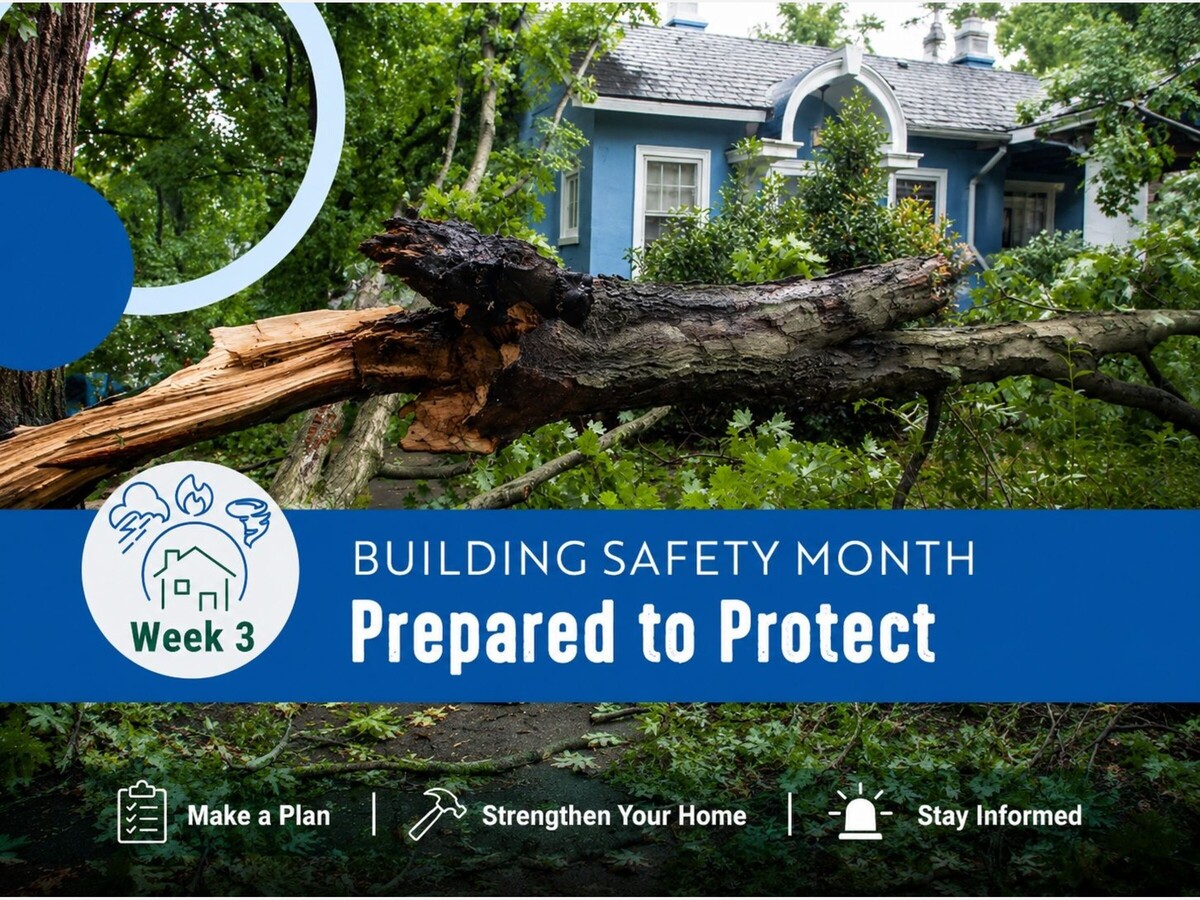
Week 3, “Prepared to Protect,” centered on disaster preparedness and structural resilience, particularly relevant in Minnesota, where communities routinely face severe thunderstorms, tornadoes, flash flooding, extreme winter conditions, and rapidly shifting seasonal weather patterns.
The city highlighted the role modern construction standards now play in disaster mitigation, including reinforced roofing systems, impact-resistant materials, flood-resistant construction methods, emergency preparedness planning, and updated building codes intended to reduce long-term damage during natural disasters.
Federal emergency preparedness agencies, including Federal Emergency Management Agency and Ready.gov, have increasingly emphasized that resilient construction standards can significantly reduce both economic losses and fatalities during major disasters.
Nationally, Building Safety Month arrives during a period of growing conversation around aging infrastructure, housing accessibility, climate resilience, and the long-term sustainability of American communities.
The International Code Council has argued that modern code adoption is no longer simply about regulatory compliance, but about preparing cities for increasingly complex environmental, demographic, and technological challenges.
In communities like Coon Rapids, the campaign serves as both a public education effort and a reminder that many of the systems protecting residents operate quietly in the background long before emergencies ever occur.
For most people, a safe building is simply expected.
The inspections, codes, measurements, engineering calculations, accessibility clearances, drainage standards, electrical reviews, and structural reinforcements behind that safety are rarely seen.
But city officials say those unseen systems remain among the most important foundations of public safety itself.
Additional information about Building Safety Month and the City of Coon Rapids’ local campaign is available through the International Code Council and the City of Coon Rapids Building Safety Month page.
MinneapoliMedia | Community. Culture. Civic Life.



Sunny, with a high of 87 and low of 64 degrees. Sunny in the morning, patchy rain nearby overnight.