Image
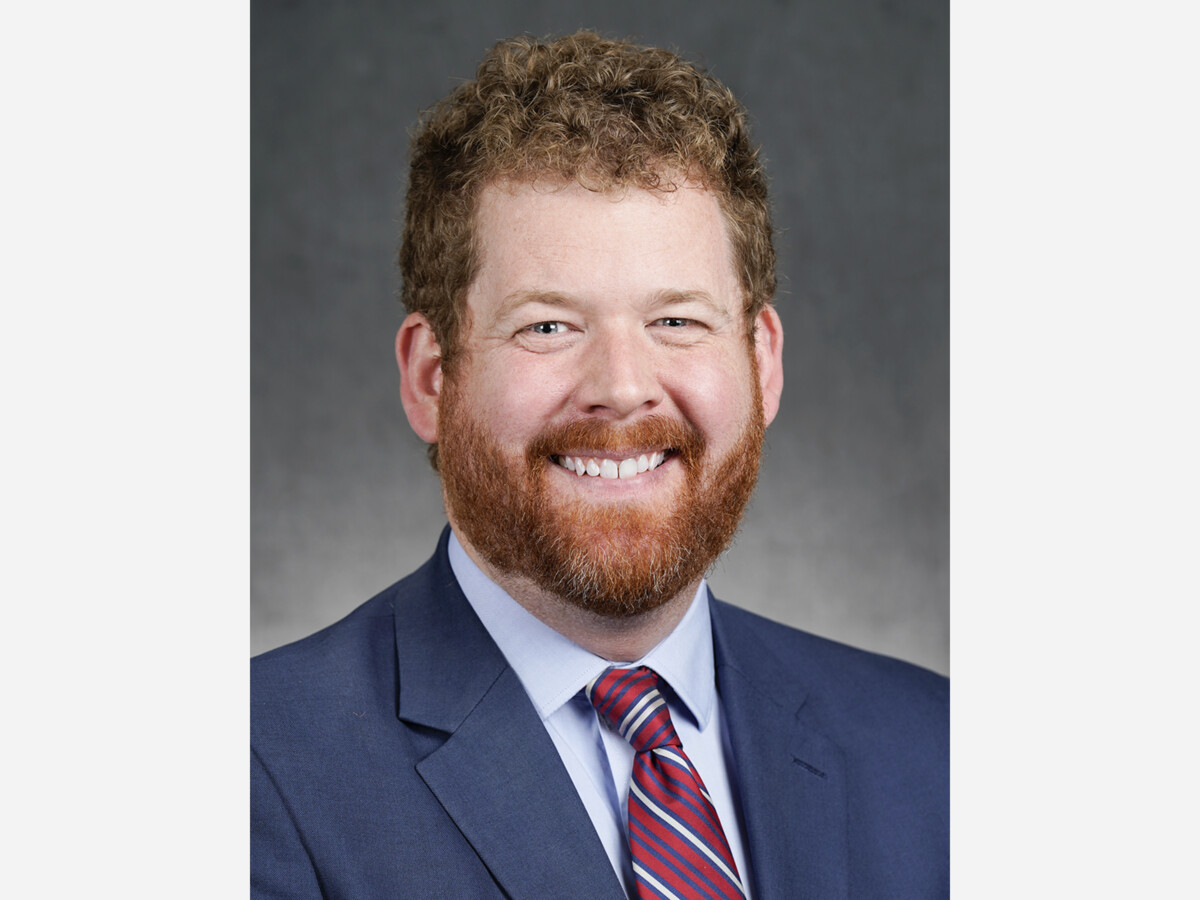



Stephenson, a fourth-term lawmaker, was selected by his colleagues in a closed-door caucus meeting, positioning him to guide House Democrats into the 2026 legislative session. His election follows the death of former House Speaker Emerita Melissa Hortman, whose leadership and influence shaped the modern direction of the Democratic-Farmer-Labor caucus.
The change in leadership comes at a moment when the Minnesota House remains evenly divided, forcing Democrats and Republicans into a rare power-sharing structure that demands negotiation on nearly every major decision.
Stephenson enters the role with a legislative record built on detailed policy work and committee leadership. Born and raised in Coon Rapids, he serves as a prosecutor in Hennepin County and holds a law degree from the University of Chicago.
At the Capitol, he previously chaired the House Commerce Finance and Policy Committee and later served as co-chair of the Ways and Means Committee, placing him at the center of budget negotiations in a closely divided chamber.
He was a leading figure behind several high-profile laws passed in recent years. Stephenson was the chief architect of Minnesota’s adult-use cannabis legalization framework, one of the most complex policy overhauls undertaken by the Legislature. He also led efforts to eliminate the state’s long-standing marital rape exception, closing a legal gap that had drawn criticism for decades. In energy policy, he authored the Energy Conservation and Optimization Act, aimed at modernizing how utilities approach efficiency and long-term planning.
Colleagues have often described him as a policy-focused legislator, known more for detailed negotiation and technical understanding than for public-facing rhetoric. That approach is expected to shape how he leads in a chamber where progress depends on agreement across party lines.
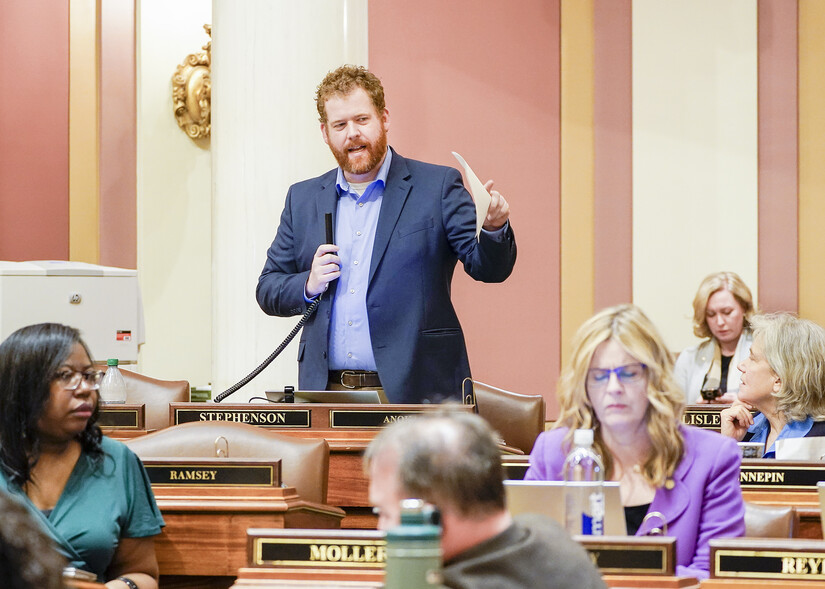
Stephenson’s elevation to caucus leader carries personal significance. His relationship with Hortman began long before their time together in the Legislature. At age 20, he served as her campaign manager during her first successful run for the House in 2004.
Over the years, that relationship evolved into a close political and personal bond. Following her death in 2025, Stephenson served as a pallbearer at her funeral, held at the Basilica of Saint Mary in Minneapolis.
His leadership is widely viewed within the caucus as a continuation of Hortman’s approach to governance, particularly her emphasis on discipline, coalition-building, and long-term policy strategy. Stephenson has repeatedly cited her as a central influence on his work.
In a statement following his election, he acknowledged both the responsibility of the role and the moment in which he assumed it.
“While I’ve been chosen to lead, it will take all of us, working together, to move forward, honor Speaker Hortman’s legacy, and build a Minnesota where everyone can succeed,” Stephenson said.
Stephenson takes over at a time when the Minnesota House is split evenly between Democrats and Republicans, leaving neither party with full control. The 67-67 divide has required a power-sharing agreement that includes co-chaired committees and negotiated legislative agendas.
That structure places added importance on relationships across the aisle. Stephenson has pointed to his working relationship with Republican House Speaker Lisa Demuth as a foundation for navigating the session ahead. The two lawmakers entered the Legislature in the same year and have previously worked together on budget negotiations.
The model, while fragile, has already demonstrated that bipartisan coordination is possible under tight margins. Maintaining that balance will be central to Stephenson’s leadership.
House Democrats will also enter the session with several new members elected in recent special elections, adding to the evolving composition of the caucus.
Among them are XP Lee, who brings experience in health advocacy and community services; Shelley Buck, a nonprofit leader and former president of the Prairie Island Indian Community; and Meg Luger Nikolai, a labor attorney with a background in education policy.
Their additions reflect a caucus that continues to draw from a range of professional and community-based experiences as it prepares for a session expected to focus heavily on policy outcomes.
Looking ahead, Stephenson has outlined a set of priorities that reflect both ongoing legislative debates and emerging concerns.
Public safety remains a central issue, including proposals aimed at regulating certain firearms and addressing enforcement practices tied to federal immigration operations. Stephenson has indicated support for measures that would limit immigration enforcement activities in sensitive locations such as schools and places of worship.
The caucus is also expected to pursue additional steps on gun violence prevention, including restrictions on high-capacity magazines and untraceable firearms.
On fiscal policy, Stephenson has emphasized the need for stronger oversight of state spending and fraud prevention, arguing that public resources should be directed toward core services such as housing support and care for vulnerable populations.
Infrastructure will be another key area, with discussions underway around a potential bonding bill to fund statewide construction and maintenance projects. At the same time, Stephenson has cautioned against using infrastructure legislation as a vehicle for unrelated policy provisions.
Affordability is expected to cut across much of the session’s work. Rising costs in housing, healthcare, energy, and food have become a defining concern for lawmakers in both parties. Stephenson has pointed to the role of insurance and pharmaceutical pricing as areas where the state may seek greater accountability.
Stephenson’s leadership begins at a moment when the Minnesota House is not only politically divided but still adjusting to a loss that reshaped its leadership structure.
The task ahead is both procedural and personal. It requires managing negotiations in an evenly split chamber while guiding a caucus that continues to measure itself against the legacy of a leader who defined its direction for years.
For House Democrats, the transition to new leadership is now complete. What remains is the work of governing under conditions that leave little room for error and even less room for division.
MinneapoliMedia | Community. Culture. Civic Life.



Patchy rain nearby, with a high of 80 and low of 68 degrees. Don't forget your umbrella! Patchy rain nearby during the morning, clear for the afternoon and evening,