70° and Heavy rain at times
Image
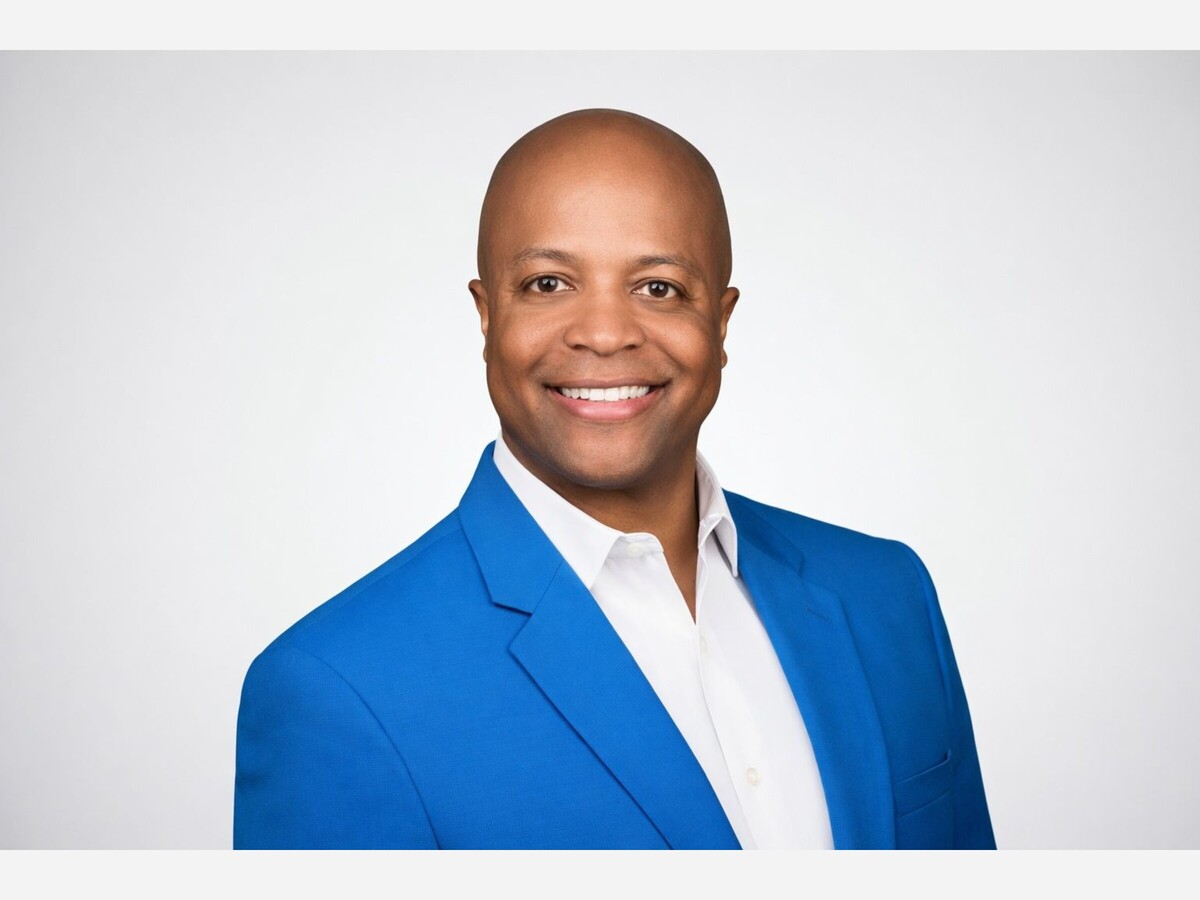



The night air had the kind of Minnesota cold that does not ask for permission. It settles into your coat, into your hands, into the part of the evening most people are trying to escape on their way home.
After my conversation with Chief Medaria Rondo Arradondo on March 24, 2026, I did not head for a quick summary or move to the next item on my schedule. I walked. I kept walking because some encounters do not end when the formal interview does. They continue in the mind. They ask more of you. They force reflection.
That was the effect of Chief Arradondo.
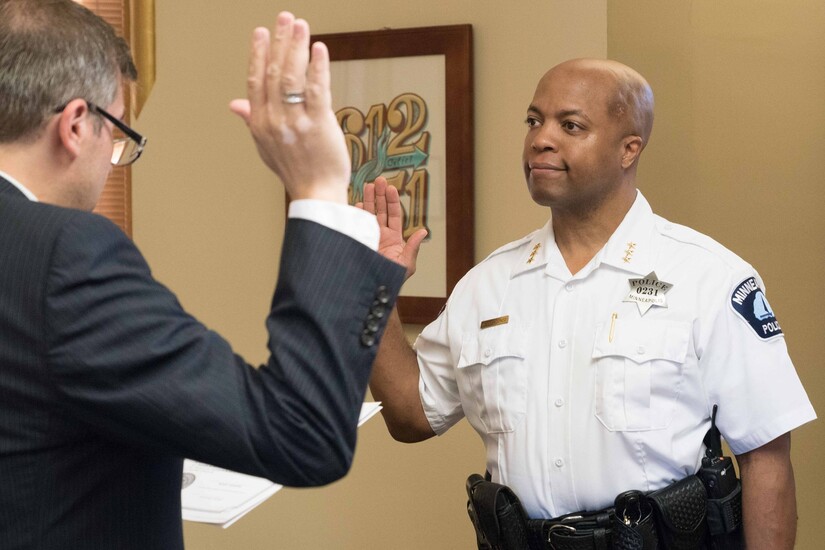
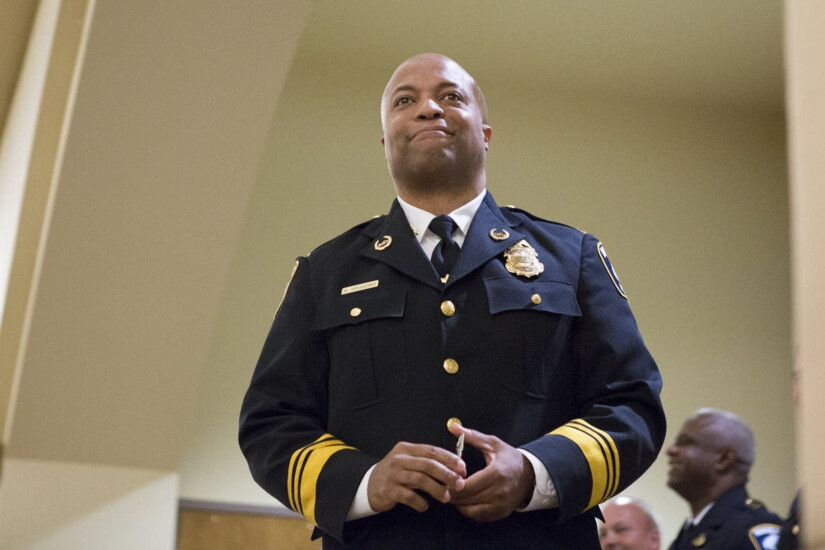
This inaugural feature in Minnesota Finest is not an extension of that podcast conversation, and it is not an attempt to retell it. The interview belongs to Work-A-Holics. What belongs here is something different: the recognition that behind the public biography, behind the historic titles, behind one of the most scrutinized careers in modern Minnesota civic life, stands a man whose seriousness of purpose, steadiness of conscience, and regard for human dignity left a lasting impression.
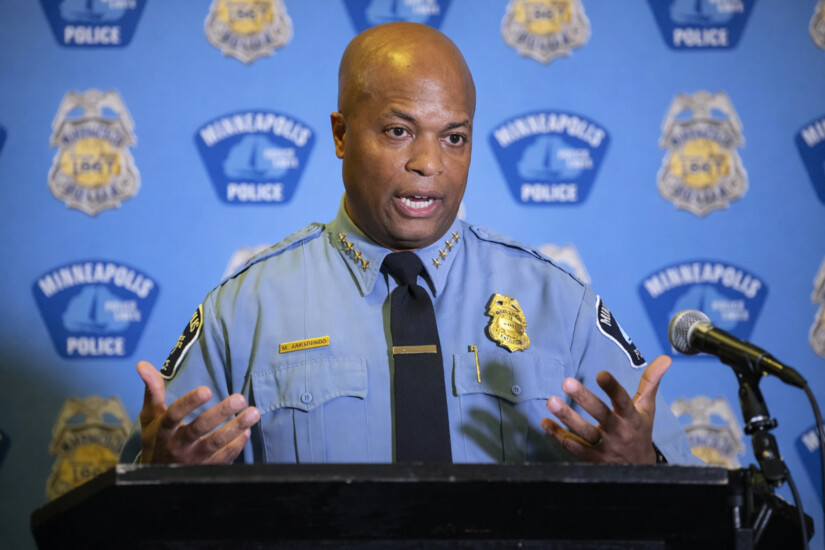
That is what this series must be for. Not celebrity. Not convenience. Not an easy parade of recognizable names. If Minnesota Finest is to matter, it has to identify people whose public record is substantial and whose inner architecture appears strong enough to bear the weight of service. Chief Arradondo is a fitting inaugural subject because his career sits at the intersection of history, public trust, and moral pressure. He served more than three decades in the Minneapolis Police Department, joined the force in 1989, rose through its ranks, became its first African American chief in 2017, and led the department through the most searing institutional crisis in its history after the murder of George Floyd in May 2020.
Those facts alone would justify serious attention. But facts, by themselves, do not explain why a person stays with you.
Public life has a way of flattening people. It compresses them into labels, clips, headlines, arguments, and counterarguments. It turns a full human being into an emblem for a side. Over time, the public starts speaking about figures such as Arradondo almost entirely through the crisis points attached to their names. In his case, that flattening has been especially severe. His tenure is often read through a single historical moment, which is understandable, but incomplete. It leaves out the longer discipline of his life in service, the institutional realities he inherited, the path he took through a department with a deeply contested history, and the character traits that shaped how he moved through power.
The record matters. Arradondo was appointed police chief in 2017 and reappointed in 2019. In a 2022 honorary resolution marking his retirement, the City of Minneapolis recognized him as the first African American chief in the department’s history and described the values that defined his vision as trust, accountability, and professional service. That same resolution noted that he led the department during the worst crisis in its history after George Floyd’s murder.
That history is not incidental. It is central.
To lead the Minneapolis Police Department was never going to be a neutral administrative assignment. The department Arradondo inherited had long been shadowed by strained relationships with residents, recurring questions about culture and accountability, and a broader national debate over what policing is, what it should be, and who bears the cost when it fails. Long before 2020, those pressures were present. His appointment as chief was historic, but it was also structurally difficult. Historic firsts in public institutions often carry a double burden. The symbolic significance is obvious. The operational burden is less visible. The person in the role is expected to represent change while working inside a system that may resist it.
What distinguishes some leaders is not whether they avoid that tension, but whether they face it honestly.
That question became inescapable after George Floyd was murdered on May 25, 2020. Reuters reported that Arradondo requested an FBI inquiry after Floyd’s death and later testified at Derek Chauvin’s 2021 murder trial that Chauvin’s use of force was unreasonable and violated department policy. The Associated Press reported that Arradondo immediately fired the four officers involved and later became one of the most prominent police chiefs in the country to testify against a former officer from his own department.
That matters because public institutions often protect themselves first. Leaders often do the same. In moments of institutional catastrophe, the usual reflex is caution, hedging, procedural language, delay. Arradondo’s public record in that period shows something more difficult: a willingness to move toward accountability in a system where that choice carries risk. It would be dishonest to suggest that one leader, even one chief, could somehow resolve the long and painful crisis of policing in Minneapolis. He could not. No chief could. But it would be equally dishonest to ignore what it meant for the city’s police chief to testify under oath that the conduct of one of his own officers violated policy and the department’s core values.
This is where a serious profile must resist simplification.
To feature Arradondo as one of Minnesota’s finest is not to pretend that his tenure passed without criticism, conflict, or unresolved questions. It did not. The period after Floyd’s murder brought devastation, intense scrutiny, and continuing disagreement over the city’s response, the department’s culture, the pace of reform, staffing, public safety, and the future of policing itself. Reuters reported that the U.S. Department of Justice opened a sweeping civil investigation into the Minneapolis Police Department in April 2021, underscoring that the questions raised by Floyd’s murder extended well beyond one officer or one incident.
A piece built for the archives cannot dodge that tension. It has to hold it.
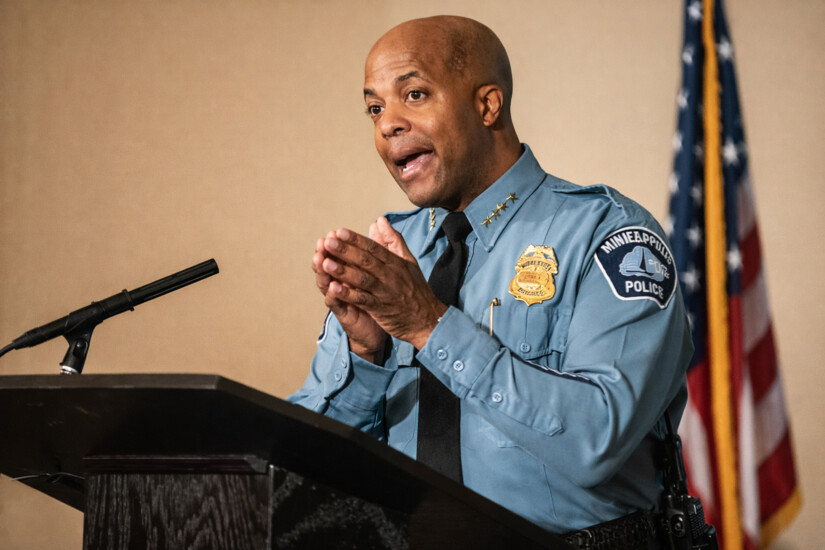
The strongest leadership profiles do not become stronger by removing complexity. They become stronger by facing it directly. Arradondo led through a period in which every move could be read as too slow by one side and too far by another. He served a city in trauma while carrying the burden of an institution whose failures had become globally visible. He operated under legal, political, and bureaucratic constraints that the public often does not see, yet the moral burden of the office still sat with him. Leadership at that level is not only public. It is interior. It is lonely. It requires decisions under pressure that are later judged in calmer rooms by people who did not have to make them.
This is why character matters.
Character is one of the most abused words in public writing because it is often asserted without evidence. Here, the evidence lies not only in the historical milestones of Arradondo’s career but in the patterns visible across them. He stayed in one profession for more than three decades. He remained inside an institution many people regarded as deeply troubled and rose to lead it. He did so while maintaining a public emphasis on trust and accountability. He made decisions in the Floyd aftermath that aligned the office of the chief with institutional accountability rather than reflexive denial. And when his tenure ended in January 2022, the Associated Press noted that he left after 32 years with the department, having served in roles ranging from patrol officer to chief.
That kind of arc does not prove sainthood. It proves seriousness.
There is another reason Arradondo belongs in this series, and it has to do with the distinction between authority and stewardship. Authority can be granted by title. Stewardship has to be practiced. One can occupy a powerful office without bringing a steward’s temperament to it. A steward understands that institutions are not possessions. They are responsibilities. They are held temporarily and judged by what they protected, what they damaged, what they repaired, and whether they left the ground more stable for those who come next.
In Minneapolis, that question has enormous weight. The city has spent years living in the aftershocks of Floyd’s murder, the unrest that followed, and the wider civic reckoning that continues to shape debates about justice, law enforcement, public trust, and democratic accountability. An inaugural Minnesota Finest profile should not go to someone who simply occupied a big chair. It should go to someone whose public life forces Minnesotans to ask hard questions about leadership itself.
What does a conscientious leader do inside a compromised institution?
What does public trust require when trust has been violated?
What does accountability look like when it costs something?
What remains of a person after the title is gone?
Those are not small questions. They are Minnesota questions. They are American questions. And Arradondo’s life in public service brings them into focus.
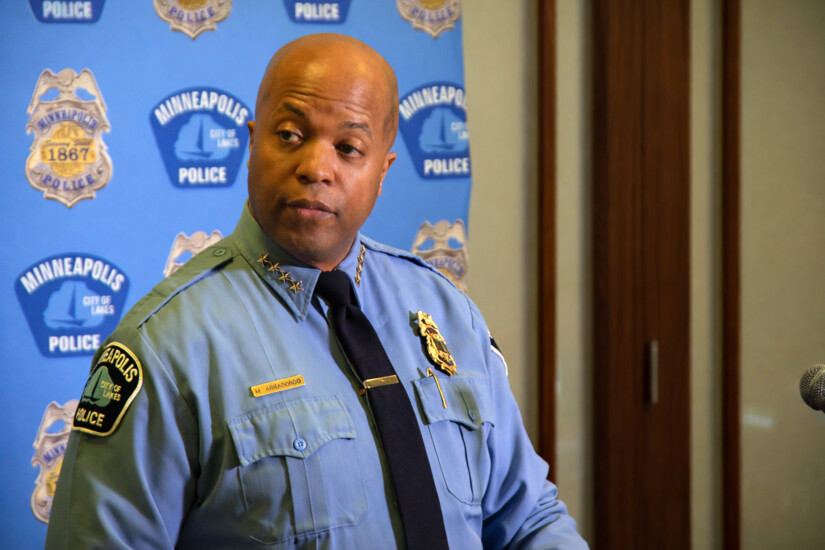
There is also the matter of memory. States often remember themselves selectively. They celebrate the polished parts and downplay the harder ones. But a truthful civic memory has to account for the people who stood inside moments of rupture and tried, however imperfectly, to push institutions toward decency, stability, and moral recognition. Arradondo’s place in Minnesota history is secure in one obvious sense: he was the first African American chief of the Minneapolis Police Department. But historical significance does not automatically equal moral significance. The latter has to be earned in conduct. It has to be visible in how one uses power when power is tested.
That is the more important standard.
In 2025, on the approach to the fifth anniversary of Floyd’s murder, the Associated Press reported Arradondo’s recollection of first seeing the video and described his role in the aftermath, including his testimony against Chauvin and his stated regret that he had not pushed harder earlier to change the department’s culture. That detail matters not because it flatters him, but because it points to a quality rarely seen enough in public officials: reflection without self-exoneration.
A weaker leader protects legacy first. A stronger leader is willing to revisit it honestly.
That quality helps explain the effect some people have in person even when their public biography is already widely known. You can meet two accomplished people with similar résumés and leave moved by only one of them. The difference is often not polish. It is moral texture. It is the feeling that the person sitting in front of you has not allowed office to hollow out the self. That is difficult to fake. In Chief Arradondo, that quality is part of what stayed with me after the interview ended and the cold night began.
For this series, that matters. Minnesota Finest cannot become a decorative label. It has to mean that the person featured has given Minnesota something sturdier than visibility. In Arradondo’s case, that gift is not reducible to any one press conference, trial appearance, or title line. It is the larger example of a public servant who appears to have understood that leadership without humanity is failure, that trust is built before the crisis arrives, and that conscience, if it is real, must survive contact with power.
There will be readers who remember the pain of 2020 first and foremost. They are right to do so. There will be readers who examine Arradondo’s tenure through a reform lens, a public safety lens, a race lens, a legal lens, or a political one. They are right to bring those frames. But this series exists to do something slightly different. It exists to identify the human quality at the center of consequential public lives and to ask whether that quality deserves record.
Here, the answer is yes.
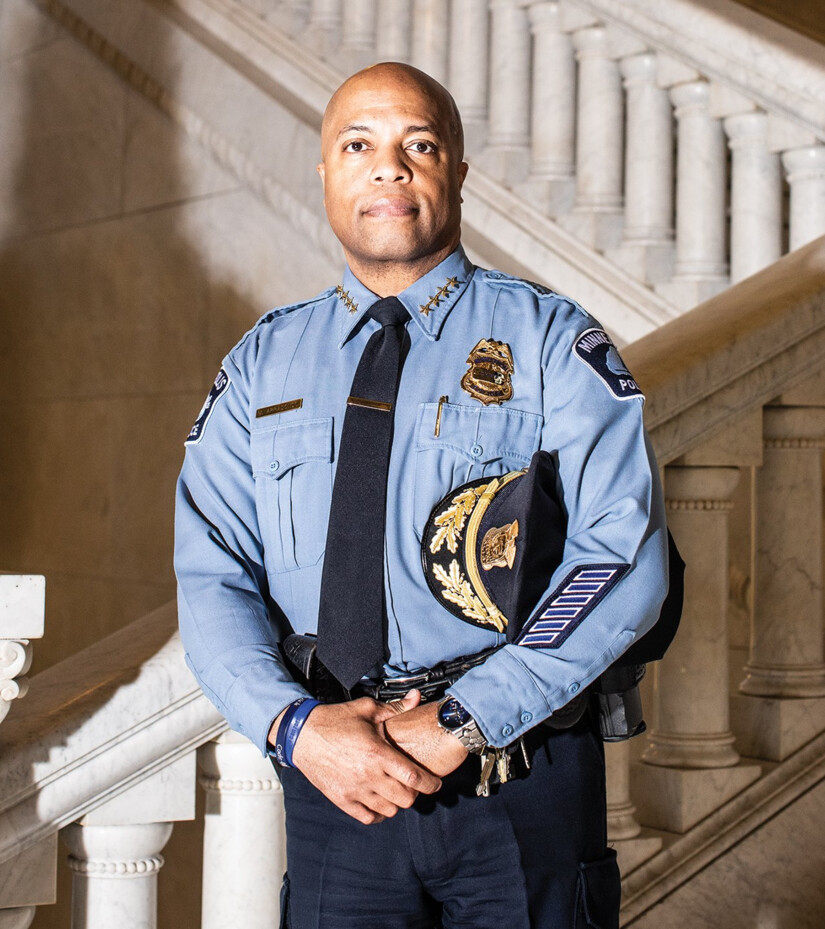
Chief Medaria Rondo Arradondo belongs in the inaugural installment of Minnesota Finest because he represents a demanding form of public leadership. Not easy leadership. Not perfect leadership. Serious leadership. Leadership shaped by history, tested by catastrophe, constrained by bureaucracy, judged under unforgiving light, and still answerable to conscience.
That is not common.
And if Minnesota is going to preserve an honest record of the people who have shaped its civic life, then it must make room for figures like this one: leaders who remind us that the measure of a life in service is not only what office a person held, but what remained intact inside them while they held it.
Chief Arradondo’s public life will be debated for years. It should be. That is part of what democratic memory requires. But beneath the debates, beneath the institutional arguments, beneath the public noise, there is something more durable worth recording at the outset of this series.
A kind man can still be a strong one.
A conscientious leader can still carry command.
And in one of Minnesota’s hardest chapters, Chief Medaria Rondo Arradondo stood in that difficult space where history, duty, and humanity collided and tried to lead with all three in view.
That is why he is Minnesota Finest.
MinneapoliMedia | Community. Culture. Civic Life.



Patchy rain nearby, with a high of 91 and low of 68 degrees. Sunny during the morning, clear overnight.