70° and Heavy rain at times
Image



In St. Paul's Rondo neighborhood, history is not abstract. It is layered into streets, into homes, into the spaces that remain and those that do not.
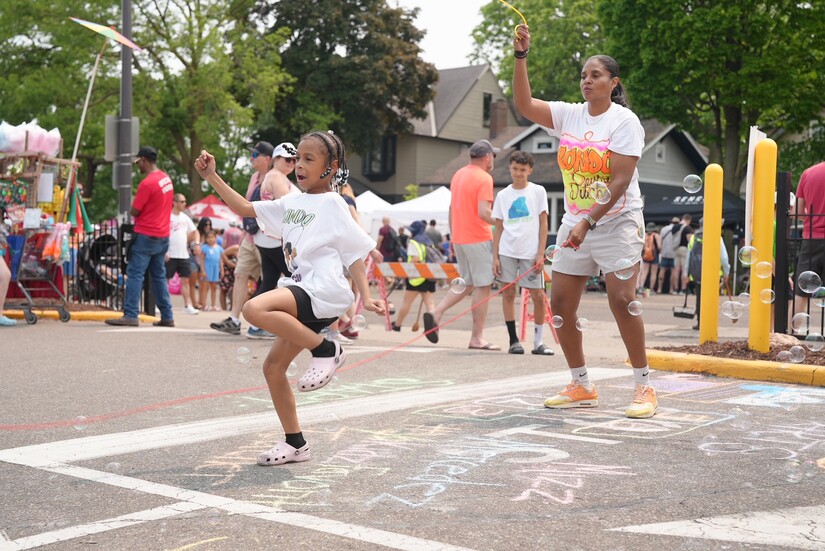
On a given afternoon, that history shares space with something else. The sound of ropes turning in rhythm. Children stepping forward, hesitating, then trying again. Laughter breaking tension. Movement repeating until it becomes instinct.
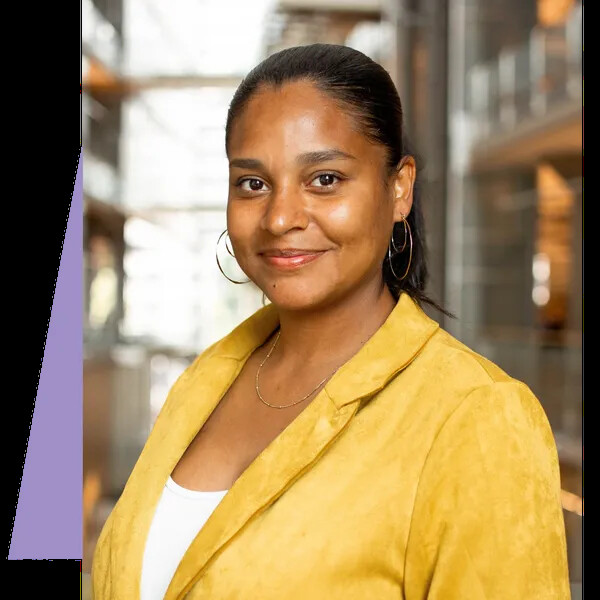
At the center of it is Mercedes Yarbrough.
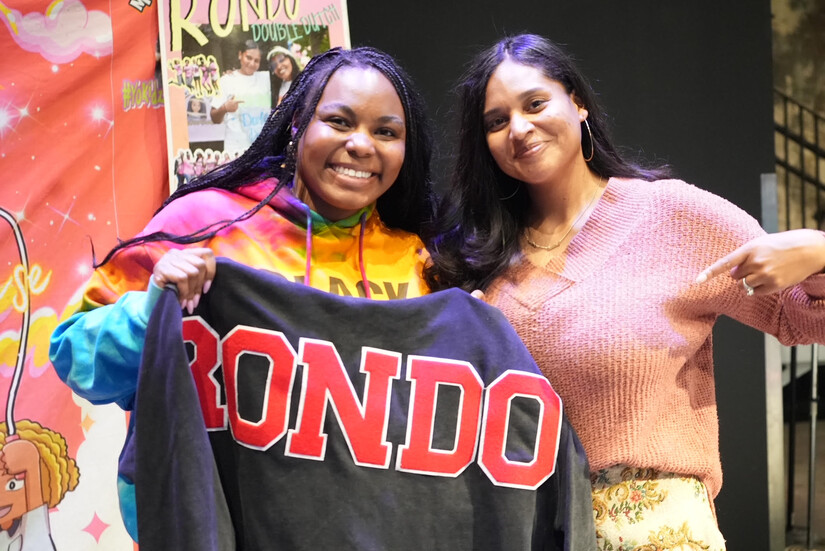
Known in community spaces as Mizz Mercedez, Yarbrough is an educator, cultural organizer, and creative builder whose work spans classrooms, parks, and neighborhood institutions. Through initiatives such as Rondo Double Dutch, curriculum-based comic projects, and her leadership role at 825 Arts, she has developed an approach to engagement that merges learning, movement, and cultural memory.
What emerges from that work is not easily categorized.
In a neighborhood shaped by the construction of Interstate 94, which displaced a once-thriving African American community, questions of continuity and belonging remain active. Yarbrough's work does not address those questions through formal policy or institutional planning. It operates at the level of daily interaction, drawing people into shared spaces and shared activity.
Children are invited to participate, to speak, to try, and to repeat. The structure is simple. The repetition is intentional. Confidence is practiced. Language is reinforced. Movement becomes coordination, and coordination becomes trust.
"I always tell them to say they can," Yarbrough said. "Once they say it, they try it."
Her work reflects a broader shift in how young people engage with the world around them. Attention has moved beyond traditional classrooms, shaped by digital platforms and informal learning spaces. Rather than resist that shift, Yarbrough has adapted to it, creating work that meets young people where they are while grounding them in place.
That place, increasingly, is Rondo.
After returning to the neighborhood in 2021, Yarbrough began reconnecting with its history through conversations with elders and longtime residents. Those exchanges reshaped her understanding of both her work and her responsibility within the community.
"I started learning my own story," she said. "And once you know that, you move differently."
That awareness did not remain abstract. It pushed her toward action, toward building, toward creating spaces that did not exist in the way she believed they should.
When she reflects on where that shift began, she traces it back to a moment that, at the time, did not feel strategic. It felt urgent.
"I had a spiritual awakening in 2020," she said. "And what I heard was, 'Mercedes, our kids are in danger.'"
The Awakening
That moment did not arrive with a plan. It arrived as a realization.
In 2020, as classrooms moved online and daily routines were disrupted, Yarbrough began to see a shift in how young people were learning and who was shaping that learning. Students were spending more time on digital platforms, absorbing content from influencers and creators whose priorities were not always aligned with development, identity, or responsibility.
"I was seeing a whole generation learning from YouTubers and TikTok," she said. "And a lot of what they were being influenced by wasn't about becoming a good person or understanding who they are. It was about clout."
At the same time, her experience inside the school system revealed a different concern. Structure was present, but inspiration was not always sustained.
"I saw their light being dimmed," she said. "School should inspire you. You should be dreaming. You should be figuring out who you are."
The response was not incremental. It required a redefinition of her role.
She stepped back and began building something new.
Reinvention
That process led to the creation of Mizz Mercedez, not as a persona, but as a method.
The approach was rooted in a simple recognition. If young people were already engaging through digital spaces, then education needed to meet them there. But it also needed to extend beyond the screen and reconnect them to physical experience, community, and identity.
"Everything you see online," she said, "you can engage with in real life."
This dual structure became foundational to her work. Digital content served as an entry point, but the objective was always movement, participation, and presence.
Reframing Learning
Her first major project under that model was Black to the Future, a comic-based educational series designed to make history accessible, engaging, and relevant.
The concept emerged from direct observation.
"Black and brown kids didn't want to read," she said. "And the books we had didn't feel cool. They didn't feel fun."
At the same time, she recognized what held their attention.
"They loved anime. They loved graphic novels."
Rather than resist that reality, she built from it.
The series introduced young readers to inventors, innovators, and cultural figures often absent from traditional curriculum, presented through visual storytelling that aligned with how students were already consuming content. Local businesses, familiar environments, and cultural references were embedded intentionally, turning the material into something that could be experienced beyond the page.
"I wanted kids to see themselves," she said. "To see their city. To go to the places in the story."
Disruption and Identity
That same thinking expanded into Broken Robots, developed in response to something she was watching inside her own home.
Her children, like many others, were increasingly drawn to watching others live through screens rather than engaging directly.
"I started seeing kids watching other kids play with toys," she said. "Not playing themselves. Watching."
"A robot is something that's controlled," she said. "It doesn't have a mind or a soul. It just follows."
The concept of a "broken robot" became a counterpoint.
"To be a broken robot means you do have a mind. You do have a soul. You do have a conscience."
Returning to Rondo
While her work was evolving, her environment shifted as well.
In 2021, Yarbrough moved back to Rondo, the St. Paul neighborhood where both she and her husband had roots. Living in close proximity to Central Village Park, she found herself surrounded by elders who had lived through the neighborhood's earlier eras. Conversations that began casually quickly became formative.
"They would tell me stories about my family just from hearing my last name," she said.
One neighbor told her that her great-grandmother had lived on the same block.
That connection reframed her understanding of the place. It was no longer simply where she lived. It was where her history lived.
Memory, Change, and Responsibility
That awareness sharpened her perspective on what she was seeing in real time.
"I didn't know my neighbors," she said. "My kids couldn't move the way I used to."
She described a childhood in Rondo that included freedom of movement, shared space, and informal connection, elements that felt diminished in the present.
"I wanted that for my kids," she said.
The gap between memory and reality became a point of action.
Activation
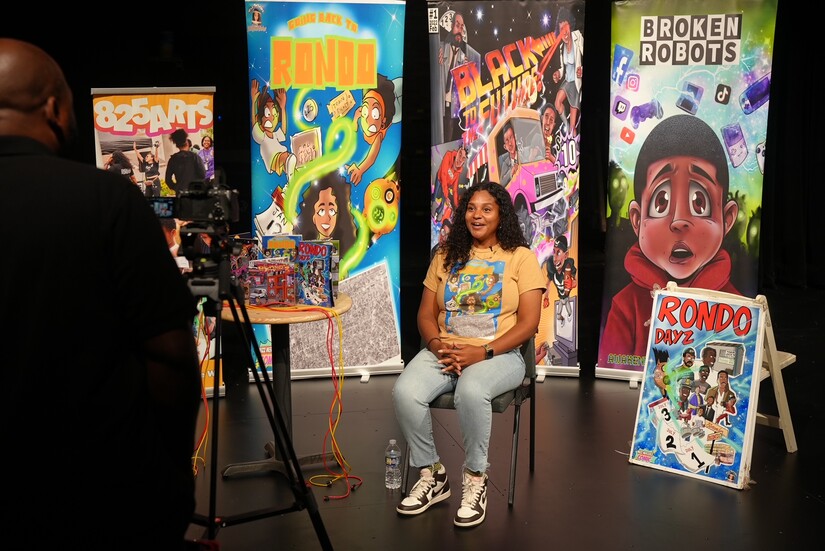
Her response began at the ground level.
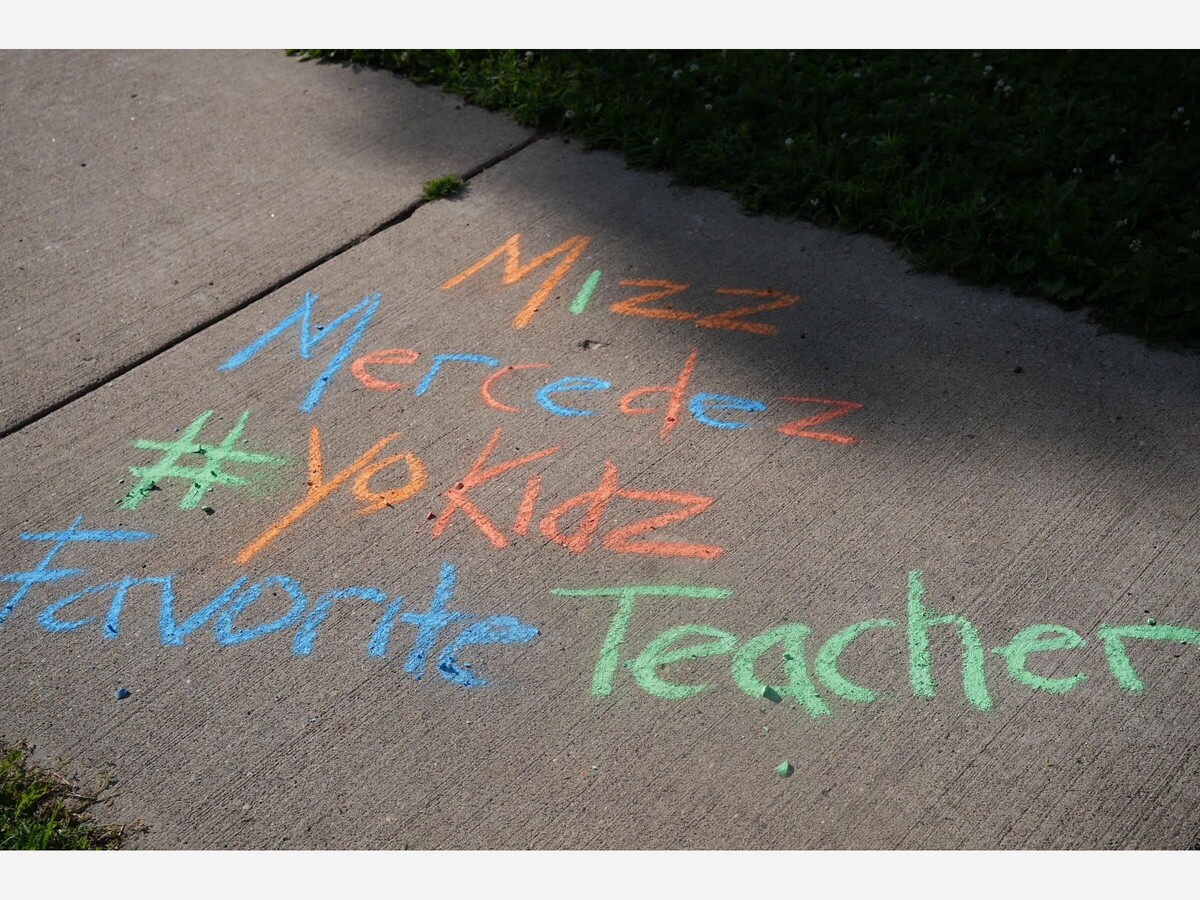
She organized small, visible acts. Cleaning spaces. Bringing music into parks. Writing messages on sidewalks. Creating energy where there had been disconnection.
"I believe energy changes environments," she said.
She also began engaging directly with children in those spaces, asking a question that became central to her work: "What is your superpower?"
At first, the answers reflected imagination. Flight. Invisibility. But through conversation, the definition shifted. Helping people. Making others laugh. Bringing joy.
"They start to realize they already have power," she said.
Double Dutch and Collective Movement
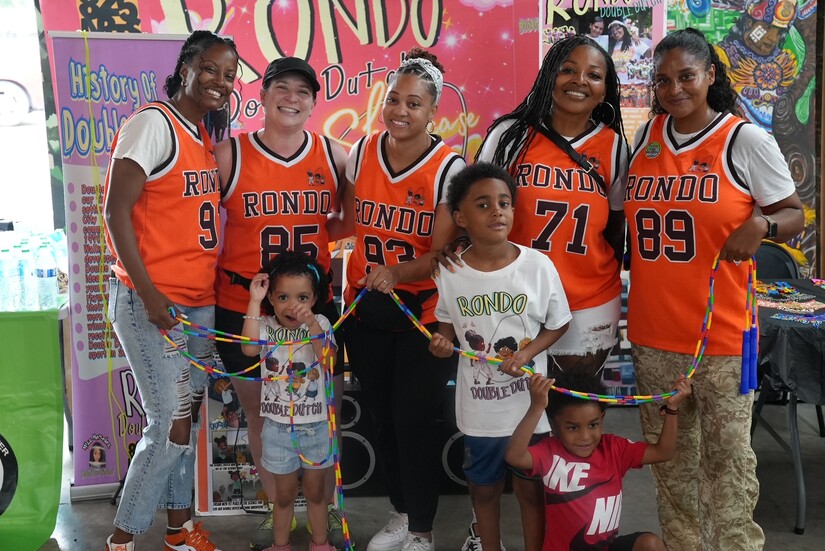
The introduction of Double Dutch emerged from that same pattern of attention and response.
"I didn't even know how to do it," she said.
The idea appeared repeatedly, and she followed it. The first event drew people. The response revealed its potential.
"It brought everybody together," she said.
Children, adults, and elders entered the same space, engaging in a shared activity that required coordination, rhythm, and cooperation. What appeared simple carried layered outcomes.
What the Work Teaches
For Yarbrough, Double Dutch operates as a structured learning environment.
"We teach confidence," she said.
Children arrive uncertain. They say they can't. The intervention is immediate.
"We tell them, 'Say you can.'"
The shift from language to action becomes the lesson. Listening. Coordination. Teamwork. Trust. And underneath it all, repetition. The same movement, practiced until it becomes internal.
"If you don't listen, you miss the rhythm," she said.
Holding Cultural Space
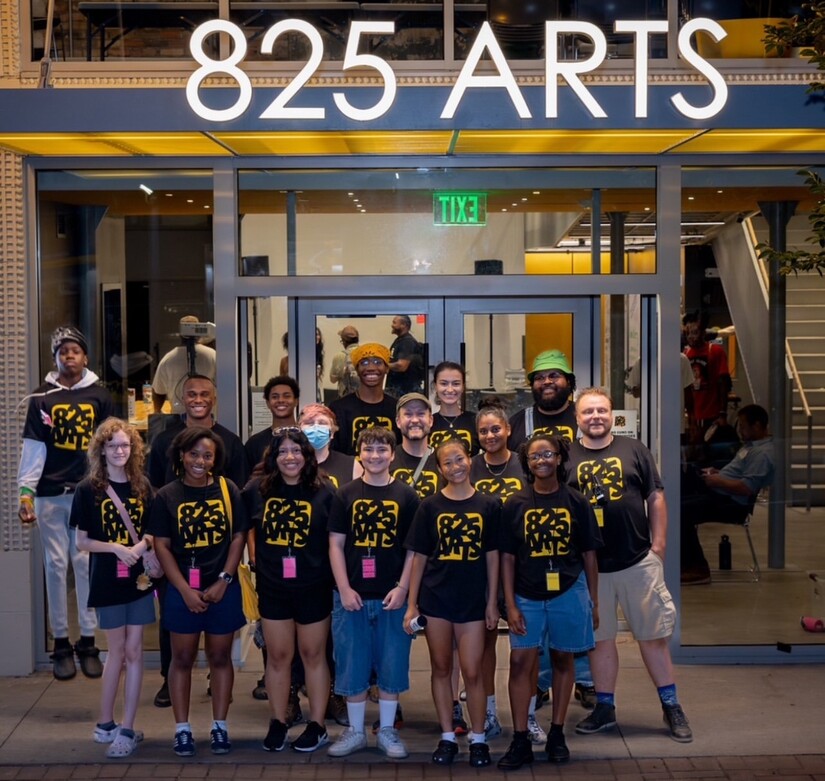
As her work expanded in public spaces, it also began to take shape within institutions.
That transition led her to 825 Arts, located inside the historic Victoria Theater building on University Avenue. Once a cultural hub, it stood at risk of demolition before community-led efforts preserved it over more than a decade.
For Yarbrough, the significance was immediate.
"I drove past that building every day and never noticed it," she said. "Then when I learned the history, I was like, this is different."
What drew her in was not only the role, but the story behind it. A 15-year effort by community members to protect the structure and reimagine its purpose.
"I'm big on dreaming big," she said. "The fact that this was just a dream, and now it's real, that meant something."
Her position as Community Engagement Director required translation between community and institution, between history and present-day use, between vision and access.
"I pay attention," she said. "I look for people who don't even realize what they're doing is art."
Rather than importing programming, she identifies and elevates what already exists within the community.
"I know where the magic is," she said. "It's in my blood."
Systems and Accountability
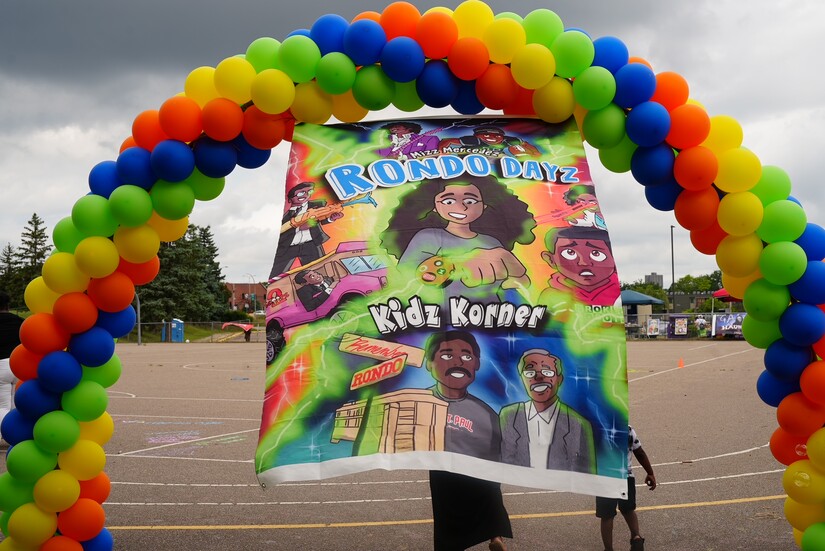
Operating within an institutional framework introduced a different set of challenges.
"I'm a disruptor," she said. "I don't like systems. They feel like control."
But the work requires negotiation. Grant funding demands documentation. Outcomes must be measured. Processes must be defined. She has adapted, but not without resistance.
"I'm learning it," she said. "Because you have to. But I'm not going to let it take away from the work."
What remains central is accountability, particularly in a neighborhood where outside interest has increased.
"People are coming into Rondo for the stories, for the culture," she said. "But I tell them, don't come here unless you're giving something back."
She points to the broader history: a thriving African American community with strong homeownership and business ownership, disrupted by infrastructure development.
"There was a time when most of this was Black-owned," she said. "Now it's a small percentage."
"This community has already lost a lot," she said. "So if you're coming here, there has to be a return."
Memory and Preservation
Her perspective extends beyond programming into how physical space is treated.
"It's easier to tear something down and build new," she said. "But when you do that, you lose everything that was there before."
For her, buildings are not simply structures. They hold memory, energy, and history. She points to spaces that no longer exist, places tied to personal and collective memory.
"You can't drive by and remember anymore," she said. "It's just gone."
"We're losing the connection," she said. "We're losing the feeling."
Her work is an attempt to counter that erosion. Not through preservation alone, but through activation, by creating new memories in spaces that still remain.
The Unseen Work
While much of her work is visible, the sustaining effort behind it is not.
Planning events. Securing resources. Navigating partnerships. Managing expectations.
"It's a lot," she said.
But she does not frame it as a burden.
"I always say love is power," she said.
Her four sons and the daily routines of home life provide grounding that allows her to continue.
"Even after a long day, I come home and my son wants me to read to him," she said. "That's what keeps me going."
"When you know your purpose, you move differently," she said. "You're not just surviving."
Purpose and Disruption
Her language around purpose is consistent. She sees it as something inherent, not assigned.
"I believe we all have superpowers," she said.
Her work with young people often centers on helping them identify those abilities.
"They start to realize they can help people," she said. "They can bring joy. They can lead."
"If you don't know who you are, you can be controlled," she said.
The goal is not conformity. It is awareness.
Measuring What Matters
When asked about impact, Yarbrough does not reference attendance numbers or program metrics. She focuses on something less tangible.
"Alignment," she said.
"I need to feel it," she said. "I need to know we're doing this for the right reasons."
Success is not defined solely by scale. It is defined by intention and outcome at the individual level.
A Broader Vision
If her model were expanded, she believes the effects would be visible over time.
"We would see more dreamers," she said.
A generation that is more confident, more connected, and more aware of its potential.
"A lot of this could change if people just cared," she said.
That statement is not rhetorical. It reflects her experience working at the ground level, where small interventions can produce visible change.
Identity and Power
At the center of her work is identity formation.
Particularly for young girls, she emphasizes confidence and self-definition in a landscape shaped by external influence.
"They don't always feel good about themselves," she said. "Especially with social media."
"I want them to love themselves," she said.
"When you're fearless, you become powerful."
Fear as limitation. Confidence as access.
Naming Others
When asked to identify women doing impactful work in Minnesota, Yarbrough points first to Georgia Fort.
"She's telling the truth," Yarbrough said. "And that matters."
She also names Jelahn Prentiss, known as Da Twist Mastr, her partner in Rondo Double Dutch.
"She helped me step into who I am," she said. "Her confidence is strong."
The recognition reflects her broader approach to leadership. It is not individual. It is collective.
Closing
The work Mercedes Yarbrough is building does not follow a single model.
It moves between spaces, between education and culture, between structure and improvisation. It is shaped by observation, by response, and by a consistent focus on young people and the environments they move through.
At its core, it is an effort to create conditions where confidence can develop, where identity can be formed with intention, and where community is experienced as something active rather than abstract.
That work continues, not as a finished system, but as an evolving practice.
Final Close
On a recent afternoon in Rondo, the ropes were turning and the kids were doing what they usually do at first. Watching. Standing just outside the rhythm. Saying they couldn't do it.
Mercedes Yarbrough didn't rush them.
She told them what she always tells them. Say you can.
Some said it quietly. Some laughed it off. A few stepped in too early and missed. Then tried again.
After a while, the hesitation started to wear off. The timing got better. The movement got easier. The ones who were unsure at the beginning stayed with it the longest.
Mercedes stayed nearby, paying attention, stepping in when she needed to, but mostly letting them work through it on their own.
That's how she teaches it.
Not by forcing it. Not by overexplaining it. Just repetition. Presence. Letting them figure out that they can.
By the end, no one was asking anymore.
They were already in the ropes.
MinneapoliMedia | Community. Culture. Civic Life.


Patchy rain nearby, with a high of 91 and low of 68 degrees. Sunny in the morning, clear overnight.