71° and Partly Cloudy
Image
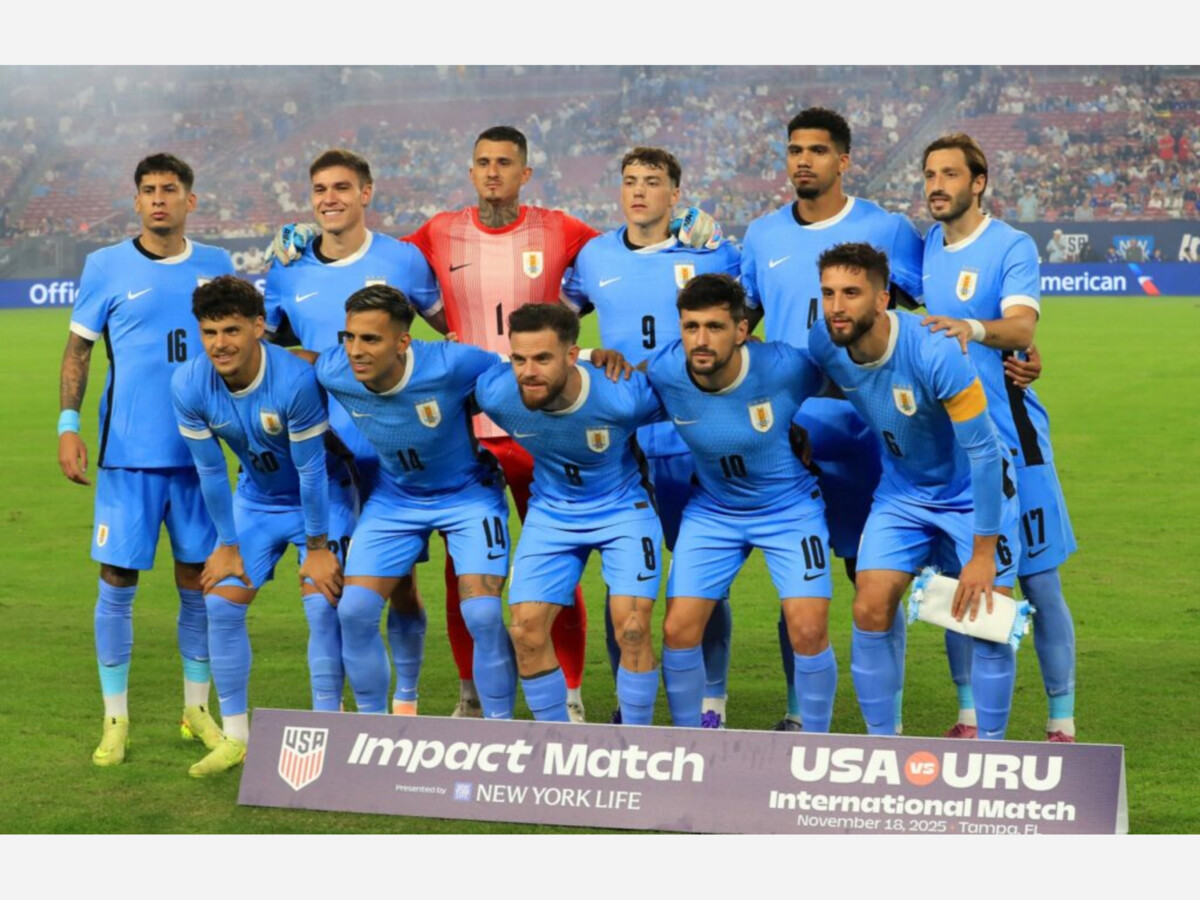



There are football nations that dominate by scale, by population, by economic gravity, by institutional reach.
And then there is Uruguay.
A country of just over three million people, geographically small, economically modest in global terms, and yet permanently present in the highest levels of world football. Uruguay does not arrive at the World Cup as an anomaly. It arrives as a contradiction that has endured for nearly a century.
In a tournament increasingly shaped by scale and systems, Uruguay remains one of the few nations that still carries something older and more difficult to quantify. It carries a sustained competitive identity that refuses dilution.
As the 2026 FIFA World Cup approaches, Uruguay once again enters the field not as a sentimental participant, but as a nation whose history demands to be taken seriously. The question is not whether Uruguay belongs. That argument has long been settled.
The question is how a country of its size continues to produce teams capable of confronting, unsettling, and at times defeating nations with exponentially greater resources.
This is not a romantic story. It is a structural one.
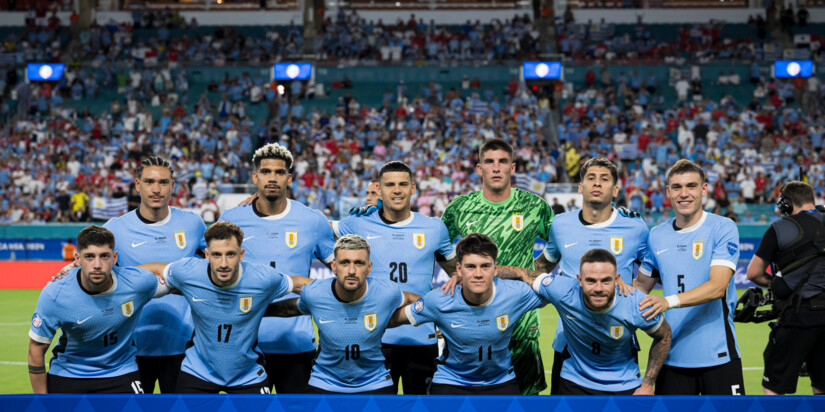
Any serious examination of Uruguay’s place in world football must begin at the beginning.
Uruguay did not inherit football prestige. It established it.
The country won the inaugural FIFA World Cup in 1930, hosted in Montevideo, defeating Argentina 4 to 2 in the final. That victory was not symbolic. It was definitive. It positioned Uruguay as the sport’s first global authority at a time when international competition itself was still being formalized.
Twenty years later, Uruguay did something even more consequential.
At the 1950 World Cup in Brazil, Uruguay defeated the host nation in the decisive final match at the Maracanã Stadium. That result remains one of the most significant upsets in football history. That match, often referred to as the Maracanazo, was not merely a victory. It was a moment that reshaped the psychological landscape of international football.
Uruguay established two enduring principles in those early decades.
That football is not governed by size.
That belief, structure, and competitive discipline can outweigh expectation.
These principles did not fade. They hardened into identity.
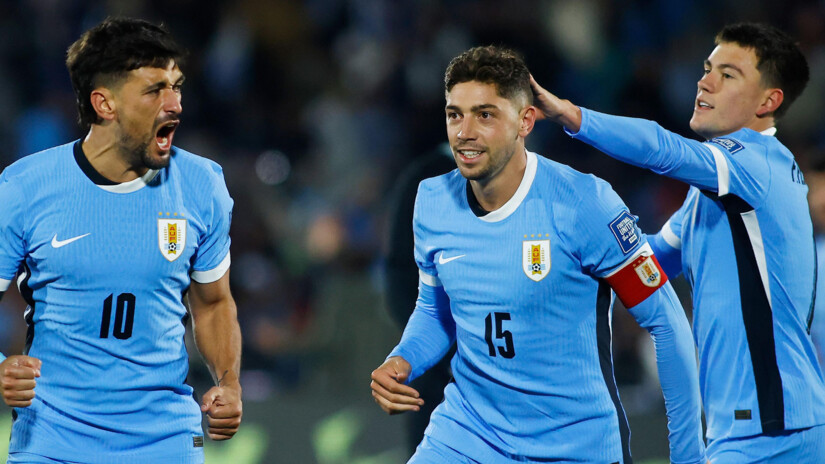
Uruguay’s continued relevance in global football is often framed as improbable.
It is not.
It is the product of a consistent national approach to the game that treats football not as entertainment, but as a form of cultural continuity.
Unlike larger nations, Uruguay cannot rely on volume. It must rely on efficiency. Player development is not a broad system of mass production. It is a targeted, culturally embedded process where technical skill, tactical awareness, and competitive mentality are developed simultaneously.
The result is a national team that is rarely superficial.
Uruguay does not overwhelm opponents with numbers. It engages them with structure, discipline, and a refusal to concede psychological ground.
This is not an aesthetic choice. It is necessity transformed into advantage.
To understand Uruguay’s football culture, one must engage with a concept that resists easy translation. Garra charrúa.
The term is often simplified as fighting spirit, but that description is insufficient. Garra charrúa is not merely effort or intensity. It is a collective expectation of resilience that defines how Uruguay approaches competition.
It manifests in specific ways.
Defensive organization under sustained pressure.
Tactical patience when possession is limited.
Emotional control in hostile environments.
Willingness to extend matches beyond comfort.
This identity is not optional. It is foundational.
Players who represent Uruguay are not simply selected for ability. They are evaluated for compatibility with this competitive framework.
This is why Uruguay’s teams, across generations, often feel continuous even when personnel changes.
One of the most remarkable aspects of Uruguay’s football history is its ability to regenerate without experiencing prolonged collapse.
Many nations outside the traditional superpowers cycle through periods of relevance followed by extended absence. Uruguay does not follow that pattern.
Since the 21st century, Uruguay has reached the semifinals of the 2010 World Cup, won the Copa América in 2011, consistently qualified for World Cups, and produced elite-level players across multiple positions.
These are not isolated achievements. They reflect a system that maintains competitive standards across generations.
Even when Uruguay transitions between squads, the decline is rarely severe. The team remains structurally sound, tactically coherent, and psychologically resilient.
As Uruguay approaches the 2026 World Cup, it does so with a squad that reflects both continuity and change.
The traditional attributes remain.
Defensive discipline.
Midfield compactness.
Tactical awareness.
But there has been a noticeable evolution in recent years.
Uruguay’s modern players are more technically versatile, more comfortable in possession, and more exposed to high-level club competition across Europe. This has expanded the team’s tactical options.
Uruguay is no longer solely reactive. It can control phases of play, dictate tempo, and adapt to different match scenarios.
This flexibility is critical in a modern World Cup environment where predictability is punished.
The appointment of Marcelo Bielsa introduced a new dimension to Uruguay’s development.
Bielsa is not a conservative coach. His philosophy emphasizes intensity, verticality, and proactive pressing. Under his influence, Uruguay has shown an increased willingness to engage opponents higher up the pitch and transition more aggressively.
This represents a significant shift.
Uruguay’s traditional identity is rooted in control and containment. Bielsa’s approach adds expansion and acceleration.
The challenge is integration.
Can Uruguay maintain its structural discipline while embracing a more dynamic, forward-oriented style.
Early indications suggest that the answer is cautiously affirmative. Uruguay has demonstrated the ability to apply pressure without losing defensive coherence.
This balance will be central to its performance in 2026.
Uruguay’s greatest strength lies not in any single tactical approach, but in its relationship with tournament football.
Uruguay understands elimination football at a fundamental level.
Matches are approached with clarity.
Avoid unnecessary risk early.
Maintain structural integrity.
Capitalize on moments of opportunity.
Manage emotional tempo.
This approach does not always produce dominant performances. It produces effective ones.
In World Cups, effectiveness is currency.
Uruguay does not avoid strong opponents. It confronts them with a specific methodology.
Against larger nations, Uruguay prioritizes defensive compactness, controlled transitions, set-piece efficiency, and game management.
This allows Uruguay to remain competitive even when possession or territorial advantage is limited.
Historically, this approach has produced results.
Uruguay’s victories over higher-ranked teams are not anomalies. They are outcomes of a consistent competitive framework.
The expanded World Cup format introduces new variables.
Increased number of matches.
Greater tactical diversity among opponents.
Extended tournament duration.
For Uruguay, these changes present both opportunity and challenge.
Opportunity, because Uruguay’s depth and structural clarity allow it to navigate varied opposition.
Challenge, because sustained intensity across a longer tournament requires careful management.
The margin for error remains small.
If Uruguay’s identity explains its endurance, its system explains its continuity.
Uruguay’s sustained relevance in global football is not accidental. It is engineered through a development system that prioritizes cohesion over volume.
Unlike larger nations, Uruguay does not produce talent in overwhelming numbers. It produces it with intention. Youth development is structured around technical discipline, tactical awareness, and psychological readiness from an early stage.
Clubs across Uruguay operate within a shared understanding of what a national team player must be.
Technically secure under pressure.
Positionally disciplined.
Competitive in both physical and mental dimensions.
This alignment reduces fragmentation. Players progressing through the system are not learning conflicting football languages. They are learning variations of the same one.
The result is a national pool that, while limited in size, is remarkably consistent in profile.
This consistency is critical.
When players are called into the national team, they are not adapting to a new identity. They are reinforcing an existing one.
Uruguayan players leave the domestic league early. They move to Europe, South America’s larger leagues, and other competitive environments. This outward flow is necessary.
But while players leave, identity does not.
This is one of Uruguay’s defining strengths.
Players gain exposure to different tactical systems abroad, but when they return to the national team, they operate within a familiar framework.
External development enhances individual capability. Internal structure maintains collective coherence.
This dual system allows Uruguay to evolve without losing itself.
The 2010 FIFA World Cup in South Africa marked Uruguay’s return to the highest level of international competition.
Uruguay reached the semifinals, demonstrating defensive resilience, tactical discipline, and clinical efficiency.
This campaign reintroduced Uruguay as a serious tournament force.
At the 2018 World Cup in Russia, Uruguay advanced to the quarterfinals with controlled performances, eliminating Portugal and reinforcing its tactical maturity.
The 2022 World Cup revealed the difficulty of generational transition. Uruguay exited in the group stage, highlighting the need for integration and tactical evolution.
Against France, Uruguay relies on structure.
Against Brazil, Uruguay relies on discipline.
Against Argentina, Uruguay relies on resilience.
Against England, Uruguay relies on emotional control.
For Uruguay to advance:
Defensive consistency must hold.
Finishing must be efficient.
Midfield balance must be maintained.
Emotional discipline must persist.
Squad management must be precise.
Uruguay plays without the burden of expectation.
This freedom allows clarity.
Limited depth.
Narrow margins.
Dependence on structure.
Uruguay does not seek recognition.
It demands it through performance.
For nearly a century, it has remained present in a sport that increasingly favors scale.
In 2026, Uruguay will once again enter the World Cup with the same quiet assertion.
That it belongs.
Not because of history.
Not because of sentiment.
But because it has built a system that sustains itself against larger forces.
Uruguay will not disappear.
MinneapoliMedia | Community. Culture. Civic Life.



Sunny, with a high of 92 and low of 66 degrees. Partly Cloudy for the morning, sunny during the afternoon, clear overnight.