Image
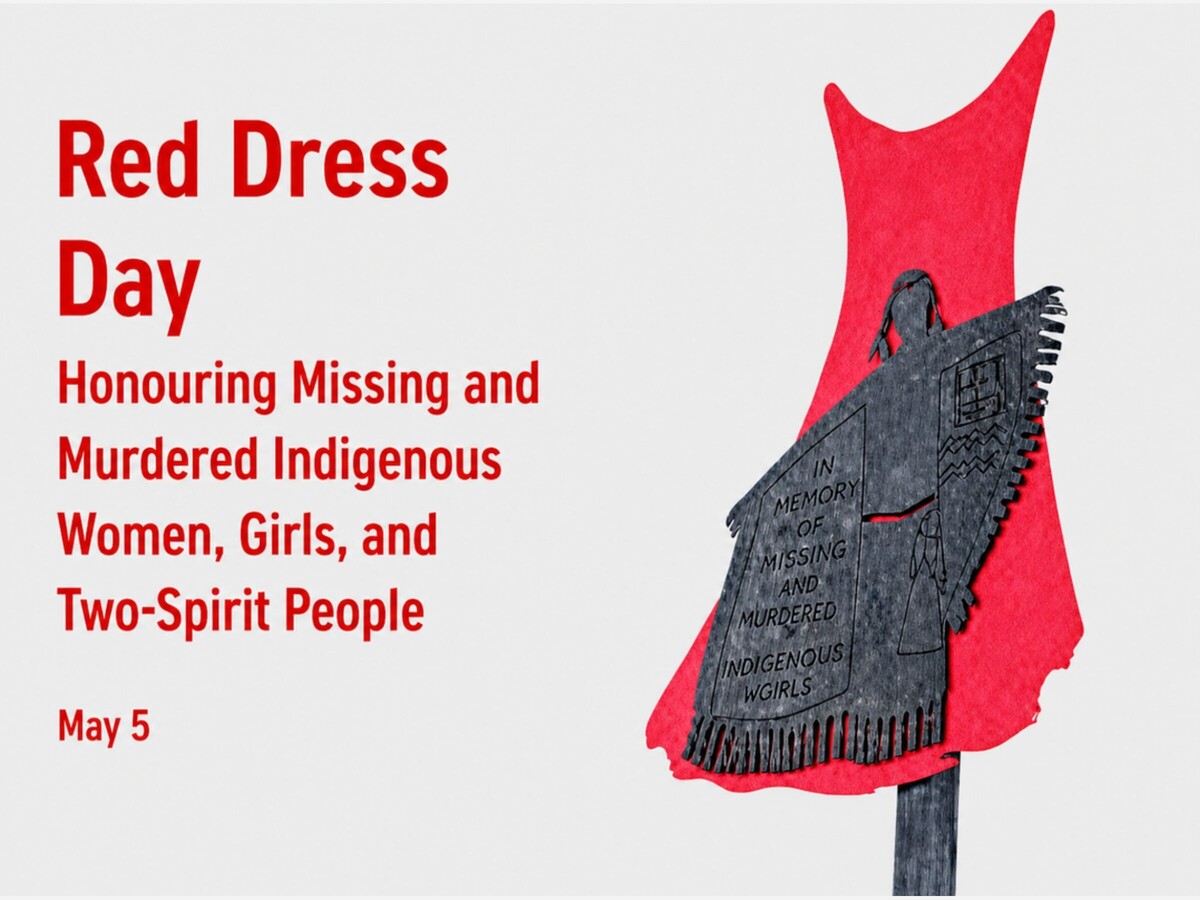



On May 5, 2026, communities across Minnesota and the United States mark the National Day of Awareness for Missing and Murdered Indigenous Relatives, a day that exists not as symbolic observance alone, but as a public reckoning with a crisis that has persisted across generations. It is a day grounded in remembrance, but equally in accountability. It is a day that forces institutions, policymakers, and the broader public to confront a set of realities that are both well-documented and historically neglected.
The crisis of Missing and Murdered Indigenous Relatives, often referred to as MMIR or MMIP, is not new. It is not episodic. It is not confined to isolated jurisdictions or individual cases. It is systemic in origin, structural in its persistence, and measurable in its impact. Across the United States, Indigenous women and girls experience rates of violence that far exceed national averages, with some regions reporting rates up to ten times higher than other demographics . These figures, while frequently cited, still fail to fully capture the scope of the issue due to longstanding gaps in data collection, jurisdictional fragmentation, and inconsistent reporting practices.
Minnesota has emerged as one of the focal points in this national crisis. The state’s demographic composition alone does not explain its prominence. Indigenous people represent approximately 1.1 percent of Minnesota’s population, yet their representation in missing persons and homicide data is disproportionately high. In 2025, 732 Indigenous individuals were reported missing in the state, with an average of 63 individuals missing on any given day . Among those cases, women and girls accounted for more than 64 percent. In homicide data, Indigenous victims have represented between 4.4 percent and 5.6 percent of total cases in recent years. These numbers are not statistical anomalies. They are indicators of systemic exposure to risk, compounded by institutional limitations in prevention, response, and resolution.
To understand the present moment, it is necessary to examine both the historical context and the policy landscape that shapes current responses. The origins of the national awareness day itself trace back to the life and death of Hanna Harris, a 21-year-old member of the Northern Cheyenne Tribe, whose disappearance and subsequent murder in 2013 galvanized advocacy efforts and led to formal recognition of May 5 as a day of awareness . Over time, this observance has expanded into a broader movement that includes community-led advocacy, legislative action, and increased public visibility.
Minnesota has positioned itself as a national leader in addressing the crisis, though that designation requires careful scrutiny. Leadership in this context does not imply resolution. It reflects the scale of the problem within the state and the degree to which it has prompted institutional response. In 2021, Minnesota established the Office of Missing and Murdered Indigenous Relatives, the first office of its kind in the nation. Its creation marked a shift toward centralized coordination, data consolidation, and targeted case support. As of 2026, the office has identified more than 250 names of missing or murdered Indigenous individuals connected to Minnesota .
The existence of such an office is significant, but its impact is best understood through its operational realities. Early in its development, the office assisted with only a handful of active cases. By May 2026, that number had grown to more than 20 ongoing cases, reflecting both increased capacity and increased demand. The growth in caseload does not indicate a worsening crisis alone. It also reflects improved identification, reporting, and willingness among families and communities to engage with state systems that have historically been viewed with skepticism or distrust.
Policy interventions have expanded alongside institutional development. In 2025, Minnesota introduced legislation aimed at improving data access for the MMIR Office, allowing it to obtain sensitive information from corrections, medical, and investigative databases. The intent behind such measures is clear. Effective response requires accurate and comprehensive data. Without it, cases remain fragmented across agencies, and patterns remain obscured.
The state has also introduced the Gaagige-Mikwendaagoziwag Reward Fund, a program designed to incentivize information sharing by offering financial rewards for tips related to missing or murdered Indigenous relatives. The creation of the fund reflects an acknowledgment that traditional investigative approaches alone have not been sufficient. Community engagement, supported by tangible incentives, is being positioned as a critical component of case resolution.
Public awareness efforts have taken on additional forms, including the introduction of a specialized license plate featuring a red handprint. The symbolism is intentional and rooted in community meaning. The red handprint has come to represent both the silencing of Indigenous voices and the visibility of those who have been lost. Revenue generated from these plates supports ongoing awareness campaigns and contributes to the reward fund, linking symbolic recognition with material support.
Despite these developments, the structural challenges remain substantial. Jurisdictional complexity continues to hinder coordination between tribal, state, and federal authorities. Cases involving Indigenous individuals often cross multiple legal boundaries, each governed by distinct rules and responsibilities. This fragmentation can delay investigations, complicate data sharing, and reduce accountability. While recent policy efforts aim to address these gaps, their effectiveness will depend on sustained implementation and interagency cooperation.
Equally significant is the issue of data integrity. For decades, Indigenous individuals have been misclassified or omitted entirely in law enforcement and public health records. This has resulted in underreporting and inaccurate assessments of the crisis. Efforts to improve data collection are underway, but they require consistent application across jurisdictions. Without reliable data, policy responses risk being misaligned with actual needs.
The role of community advocacy remains central to both awareness and policy change. Organizations such as the National Indigenous Women’s Resource Center have played a key role in elevating the issue to national prominence, organizing events, and advocating for legislative reforms. In Minnesota, community-led events have become integral to the annual observance of May 5. These gatherings serve multiple functions. They provide space for remembrance, create opportunities for public education, and maintain pressure on institutions to act.
The annual remembrance ceremony at the Minneapolis American Indian Center stands as one of the most visible expressions of this work. The reading of names, often exceeding 250 individuals, is not a symbolic gesture alone. It is a form of documentation. Each name represents a case, a family, and an unresolved question. The act of reading these names publicly ensures that they are not reduced to statistics. It reasserts their presence within the public record.
Across the state, additional events reinforce this collective effort. Community walks, educational forums, and documentary screenings provide multiple entry points for engagement. These events are not uniform in scale or structure, but they share a common objective. They seek to transform awareness into sustained attention and attention into action.
The significance of May 5 extends beyond a single day. It sits within a broader framework of advocacy that includes the National Week of Action, observed from May 4 to May 8 in 2026 . During this period, organizations and communities intensify their efforts to influence policy, increase visibility, and mobilize public support. The timing is strategic. Concentrated advocacy within a defined window can amplify impact and create momentum for legislative change.
At the center of this movement is a fundamental question of accountability. Who is responsible for addressing the crisis, and how is that responsibility measured? The answer is not confined to any single institution. It spans multiple levels of government, law enforcement agencies, public health systems, and community organizations. Each plays a role, and each is subject to evaluation based on outcomes rather than intentions.
For Minnesota, the path forward will require sustained investment in both policy and practice. The existence of specialized offices and programs is a necessary step, but not a sufficient one. Effectiveness will be determined by measurable improvements in case resolution rates, reductions in disparities, and increased trust between communities and institutions.
Trust remains a critical variable. Historical experiences have shaped perceptions of law enforcement and government agencies within Indigenous communities. Addressing the MMIR crisis requires not only technical solutions but also relational ones. Engagement must be consistent, transparent, and responsive to community needs. Without trust, even well-designed programs may fail to achieve their intended outcomes.
The broader public also plays a role in shaping the trajectory of this issue. Awareness is often framed as an individual responsibility, but its impact is collective. Public understanding influences political priorities, funding decisions, and institutional behavior. When awareness translates into sustained attention, it can alter the conditions under which policy decisions are made.
As Minnesota observes May 5, 2026, the significance of the day lies not only in its commemorative aspects but in its capacity to direct focus. It provides a moment to assess progress, identify gaps, and reaffirm commitments. It also serves as a reminder that the crisis it represents is ongoing.
The work of naming, which is central to the day’s observance, is also central to the broader effort. Naming individuals ensures that they are recognized within the public record. Naming systemic issues ensures that they are addressed with specificity. Naming institutional responsibilities ensures that accountability is clearly defined.
This editorial does not seek to resolve the complexities of the MMIR crisis. It seeks to present them with clarity, grounded in verifiable data and observable developments. The crisis is measurable. The responses are evolving. The outcomes remain uncertain.
What is certain is that May 5 will continue to function as a focal point for this work. It will continue to bring together communities, advocates, and institutions. It will continue to generate visibility for cases that might otherwise remain overlooked. And it will continue to serve as a measure of progress, or the lack thereof, in addressing one of the most persistent and consequential public safety challenges facing Indigenous communities in Minnesota and beyond.
For MinneapoliMedia, documenting this moment is part of a broader commitment to preserving the realities shaping Minnesota’s civic life. The MMIR crisis is not separate from that life. It is embedded within it. Understanding it requires attention, discipline, and a willingness to engage with difficult truths.
The work continues beyond this day.
MinneapoliMedia | Community. Culture. Civic Life.



Sunny, with a high of 85 and low of 60 degrees. Sunny in the morning, clear overnight.