Image



Minnesota’s 2026 legislative session is becoming one of the clearest modern examples of how political polarization and structural division can simultaneously slow government, narrow policy ambition, and force reluctant compromise.
The Minnesota House currently sits in an exact 67-67 split between Republicans and Democrats, while the Minnesota Senate remains narrowly controlled by Democrats with a 34-33 majority. That mathematical reality has fundamentally reshaped how governing operates inside the State Capitol this year. Every committee vote, procedural motion, floor negotiation, and policy package exists under unusually fragile political conditions where even a single lawmaker can alter the direction of major legislation.
The consequences are now visible across nearly every area of public policy in Minnesota. High-profile ideological priorities have stalled. Major long-term structural issues remain unresolved. Large portions of the legislative calendar have been consumed by negotiations over process, leverage, and political positioning rather than substantive policymaking. Yet at the same time, the tied House has also forced lawmakers into a level of bipartisan engagement that has become increasingly rare in modern American politics. The result is a Legislature operating in a state of permanent tension between paralysis and negotiated functionality.
Unlike previous sessions where one party held clearer governing control, the current political structure offers neither side the ability to move legislation independently. Democrats cannot simply advance their agenda through party-line votes, and Republicans lack the numerical advantage necessary to block every measure outright without consequences. The Legislature is effectively trapped in a governing environment where cooperation is necessary but politically risky.
That risk is intensified by the timing of the session. All 201 legislative seats in Minnesota are up for election in 2026. That reality has amplified partisan caution and reduced lawmakers’ willingness to compromise on controversial subjects that could later become campaign liabilities. In practical terms, legislators are governing while simultaneously preparing for highly competitive elections that could reshape control of the Capitol in either direction.
The absence of an immediate budget crisis has further complicated matters. Because lawmakers successfully passed a two-year state budget during the 2025 session, Minnesota is not currently facing the type of looming government shutdown threat that often forces legislative compromise in divided governments. Without that pressure, lawmakers have more room to delay difficult negotiations, protect partisan messaging positions, and preserve unresolved issues for campaign-season mobilization. That dynamic has created one of the central realities of the 2026 session: many politically difficult issues are being managed rather than solved.
Perhaps the most significant structural shift in 2026 is the effective death of the omnibus bill. For decades, Minnesota was governed through massive, multi-subject packages that allowed for "logrolling": the trading of favors across different policy areas to build a majority. In an evenly divided chamber, this "Grand Bargain" model has collapsed.
Without a clear majority, the risk of a single controversial provision "poisoning" a 500-page bill is too high. Consequently, legislative leaders have been forced to pivot toward narrower, single-subject legislation. While this shift improves transparency, it removes the "grease" that usually allows the wheels of the Capitol to turn. By de-packaging the session, lawmakers have inadvertently made it easier for the opposition to target and kill individual priorities, leading to a session defined by "boutique" successes rather than systemic reforms.
Several major policy debates have effectively stalled under the weight of the tied House structure. Efforts involving expanded gun restrictions, assisted suicide legislation, major immigration-related proposals, and sports gambling legalization have all encountered severe resistance. In many cases, the legislation lacks a realistic mathematical pathway to passage because neither caucus possesses enough crossover support to move the measures through the evenly divided chamber.
Gun legislation has become one of the clearest examples. While Democratic lawmakers and allied advocacy organizations continue pushing for expanded firearm restrictions following years of heightened public concern over gun violence, Republican lawmakers remain firmly opposed to additional limitations involving semiautomatic-style firearms and related regulatory proposals. In a tied chamber, that opposition is enough to halt movement entirely. Even measures that might have advanced under unified government conditions now face near-insurmountable procedural barriers.
Immigration policy debates have exposed similar divisions. Democratic proposals involving protections tied to federal immigration enforcement practices have faced strong Republican resistance amid broader national political tensions surrounding border security, federal authority, and sanctuary-related policy frameworks. As national polarization increasingly filters into state-level governance, compromise on immigration has become politically hazardous for lawmakers in both parties.
The same pattern has emerged around sports gambling legalization. Although sports betting expansion has generated bipartisan interest nationally and has already been adopted in numerous states, negotiations in Minnesota have repeatedly collapsed over disagreements involving tribal gaming rights, tax structures, and regulatory authority. In another political environment, lawmakers may have eventually forced a compromise through majority leverage. In the tied House, unresolved disputes simply stop the process.
Yet while polarization has stalled ideologically divisive legislation, it has also forced lawmakers to concentrate on narrower areas where consensus remains possible. That has produced several bipartisan breakthroughs that likely would not have emerged in the same form under one-party control.
One of the most significant developments this session involved the creation of an independent Office of the Inspector General designed to strengthen oversight of state government operations and fraud investigations. The legislation emerged after years of public concern surrounding accountability failures and fraud-related controversies tied to government-funded programs. The measure succeeded because both parties recognized the political necessity of demonstrating stronger oversight mechanisms to the public. In a divided Legislature where trust in government management has become increasingly fragile, anti-fraud legislation became one of the few areas where broad bipartisan agreement was achievable.
Housing policy produced another example of negotiated compromise. Lawmakers approved a substantial housing package aimed at supporting the development of affordable housing units statewide, but the final legislation reflected the political realities of divided government. Several more aggressive tenant protection provisions and landlord regulations favored by Democratic lawmakers were removed during negotiations to secure sufficient Republican support in the House. The final product was smaller in ideological scope than many housing advocates originally sought, but supporters argued that partial movement on housing affordability was preferable to complete legislative collapse.
Technology regulation involving children and social media platforms also became an area of unusual bipartisan alignment. Concerns about youth mental health, algorithm-driven content exposure, and digital advertising practices targeting minors have increasingly crossed ideological lines nationally, and Minnesota lawmakers found common ground around proposals involving parental consent requirements and restrictions tied to children’s online experiences. That consensus reflected an important feature of the current Legislature: bipartisan cooperation is still possible when lawmakers view an issue as politically safe, broadly understandable to the public, and disconnected from the most polarizing national partisan conflicts.
Nowhere is the structural fragility of the 2026 session more evident than in the bonding bill. Under the Minnesota Constitution, authorizing state debt for infrastructure projects requires a three-fifths supermajority in both chambers. In a 67-67 House, this requirement effectively hands the minority party a total veto over every bridge, road, and water treatment facility in the state.
This "Supermajority Trap" has turned routine infrastructure maintenance into a high-stakes hostage negotiation. Because the minority party holds the "golden ticket" for the bonding bill, they have used that leverage to demand concessions on unrelated policy areas. For Minnesota, this means that essential statewide projects are no longer judged on their engineering necessity or community impact, but rather on their utility as political currency in a tied chamber.
Those long-term challenges remain substantial. Minnesota continues facing serious future fiscal concerns, including projected budgetary pressures later in the decade that lawmakers have largely avoided confronting directly during the current session. Structural questions involving healthcare costs, workforce shortages, and long-term state spending obligations remain unresolved.
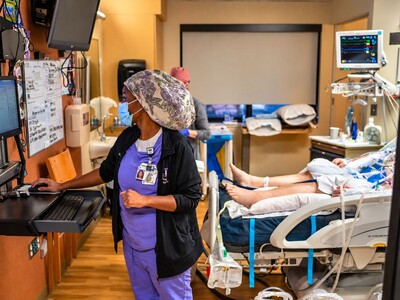
Healthcare funding has emerged as one of the most urgent examples. Hennepin County Medical Center, Minnesota’s largest safety-net hospital system, has faced escalating financial concerns tied to rising uncompensated care costs. As a Level I trauma center, its stability is a statewide necessity, yet funding negotiations have been hampered by the same partisan paralysis affecting the rest of the Capitol. If the 67-67 House cannot agree on a stabilization package, the resulting deterioration of services will be felt by patients from every corner of Minnesota, not just those in the metropolitan area.
Public frustration with the pace of government has grown throughout the session. Many Minnesotans reasonably expect state government to address pressing concerns involving affordability, healthcare access, public safety, and economic stability regardless of partisan balance.
At the same time, supporters of divided government argue that the tied House has imposed an important moderating force. Sweeping partisan agendas have been constrained. Legislators have been forced to negotiate rather than govern unilaterally. However, critics argue that the Legislature has become too structurally constrained to effectively respond to complex modern challenges.
The 2026 session has demonstrated that divided government can still function under pressure, but it has also exposed how vulnerable modern governance becomes when political incentives reward obstruction over long-term policymaking.
Minnesota has long prided itself on a brand of exceptionalism—a "Minnesota Miracle" where the state government finds a way forward even when the nation cannot. The 2026 session is testing that identity to its absolute limit. If a tied Legislature proves incapable of addressing structural healthcare deficits and essential infrastructure, that exceptionalism may finally be replaced by the same brand of permanent gridlock that defines Washington, D.C.
The Capitol is no longer operating primarily as a place where competing parties negotiate broad governing visions into stable compromise. Increasingly, it is functioning as an arena where narrow margins, permanent campaigning, and national political polarization shape every legislative calculation. Minnesota now finds itself testing whether meaningful governance can still emerge from this environment.
The answer remains unfinished; but the clock is ticking on the state's ability to prove that its math doesn't have to equal zero.
MinneapoliMedia | Community. Culture. Civic Life.


Overcast, with a high of 73 and low of 53 degrees. Sunny for the morning, light rain shower for the afternoon, light drizzle in the evening, overcast overnight.