Image



City leaders, labor advocates, disability groups and technology companies find themselves at the center of a growing debate over the future of transportation in Minnesota
On Wednesday, several Minneapolis City Council members joined labor organizations, rideshare drivers, and community advocates to announce plans for an ordinance that would establish business licensing requirements for companies seeking to operate commercial autonomous vehicle fleets within city limits.
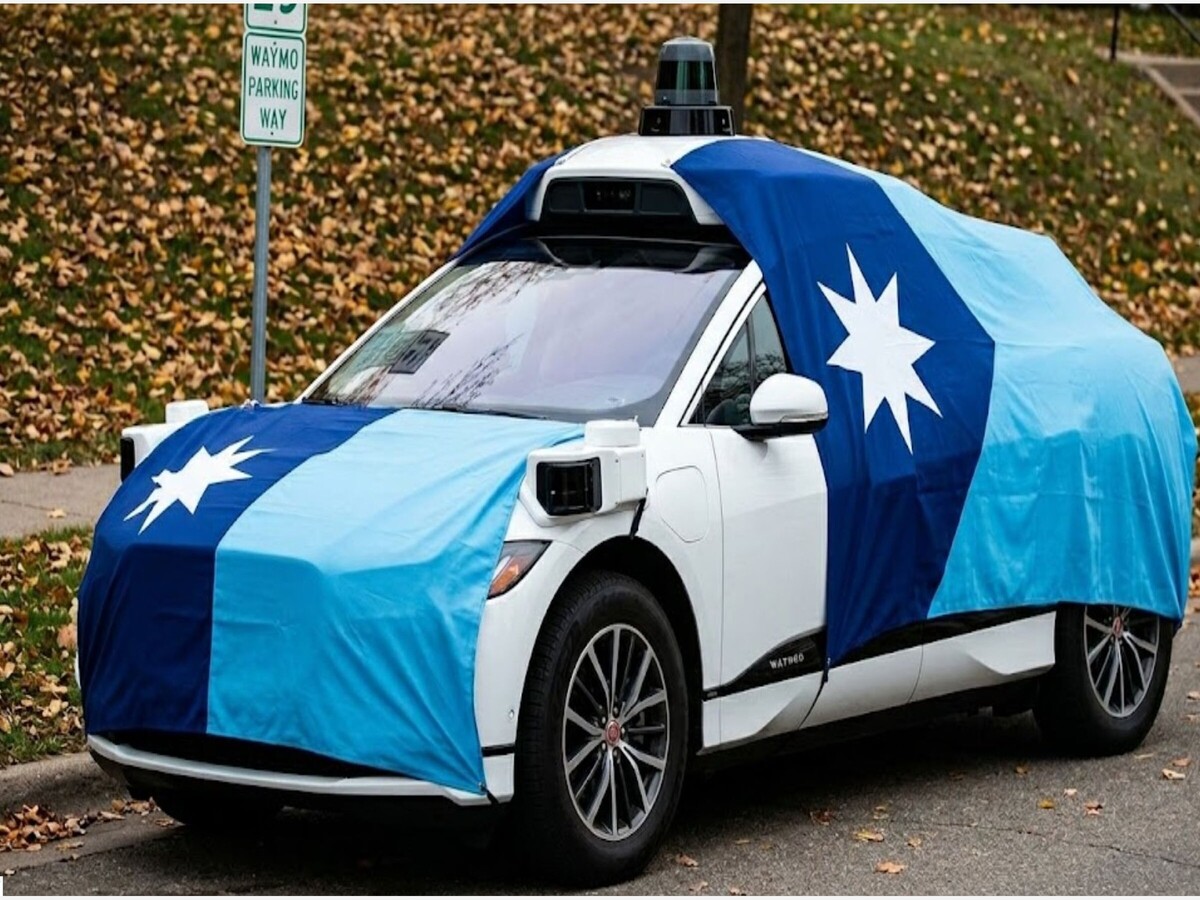
The proposal comes as Waymo, the autonomous vehicle company owned by Alphabet, the parent company of Google, continues preparations for a future expansion into Minneapolis, one of 21 cities currently identified by the company as "up next" for potential deployment.
Supporters of the ordinance say the measure is intended to ensure that local safeguards are in place before driverless commercial services begin operating on Minneapolis streets.
Critics, meanwhile, warn that a patchwork of local regulations could complicate the development of a technology that many believe will eventually become a major part of American transportation.
What is unfolding in Minneapolis is not simply a debate about self-driving cars.
It is a debate about labor, local control, public safety, disability access, economic disruption, and who gets to write the rules governing one of the most significant technological shifts in transportation since the emergence of rideshare services more than a decade ago.
The push for local regulation comes as autonomous vehicle technology advances rapidly across the country.
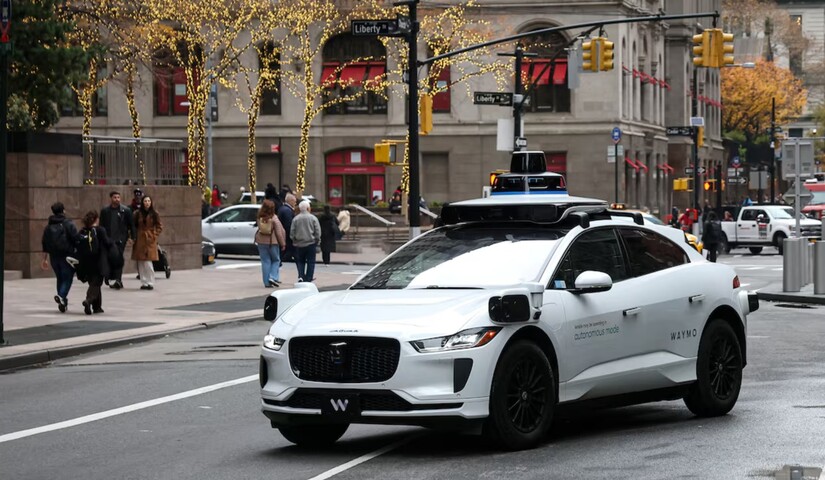
Waymo currently operates commercial driverless ride-hailing services in cities including Phoenix, San Francisco, Los Angeles, and Austin. The company reports that its autonomous vehicles have collectively traveled tens of millions of fully driverless miles and hundreds of millions of autonomous miles overall.
In recent months, Waymo vehicles equipped with mapping and sensor technology have been observed throughout Minneapolis and the broader Twin Cities region. The company has confirmed that Minneapolis is among the markets under consideration for future expansion.
For city officials, that prospect has raised an urgent question: Should Minneapolis wait for state lawmakers to create a regulatory framework, or should local government establish its own rules before driverless fleets arrive?
Council Member Robin Wonsley said waiting could leave the city scrambling to respond after the technology is already operating.
"We were able to accomplish some of the strongest ride-share protections and compensation increases in the country last legislative session, but that hard work stands to be jeopardized if not all out undermined with the entry of driverless or autonomous vehicles coming into Minneapolis," Wonsley said.
The ordinance expected to be introduced at the City Council's June 25 meeting would establish a local licensing framework for commercial autonomous vehicle operators.
While details are still being finalized, supporters say the goal is to create accountability, transparency, and oversight before widespread deployment occurs.
Behind much of the current push lies a labor struggle that predates the arrival of autonomous vehicles.
Over the past several years, Minnesota became one of the nation's most closely watched battlegrounds over rideshare driver compensation. Following a lengthy political fight involving lawmakers, labor advocates, Uber, Lyft, and municipal leaders, Minnesota enacted stronger earnings protections and minimum compensation standards for rideshare drivers.
Many labor advocates now view autonomous vehicle fleets as a potential end run around those gains.
The concern is straightforward.
If transportation companies can eventually replace human drivers with autonomous vehicles, the protections secured for thousands of rideshare workers could become increasingly irrelevant.
That concern has made the issue particularly significant for the Minnesota Uber and Lyft Drivers Association, known as MULDA.
"We are not anti-technology, but we need to make sure that this technology is used responsibly," said MULDA Executive Director Eid Ali.
Ali emphasized that drivers are not seeking to block innovation but rather to ensure that workers, communities, and local governments are not excluded from decisions that could fundamentally reshape transportation employment.
"I'm very confident that we'll have a very thoughtful conversation, and we will come to a point where we're going to have something that we can agree on, which will be a win-win situation for everybody," Ali said.
For labor organizations, the debate is not only about vehicles.
It is about jobs.
Thousands of Minnesotans currently earn income through rideshare platforms, whether as full-time workers or supplemental earners. Autonomous fleets have the potential to alter that workforce dramatically over the coming decade.
Complicating the debate is the absence of a comprehensive statewide regulatory framework.
During the 2026 legislative session, lawmakers considered multiple proposals that would have established statewide standards governing connected and autonomous vehicles. Among them were House File 3513 and Senate File 4618, legislation designed to create permitting structures, safety requirements, reporting obligations, and oversight mechanisms for autonomous vehicle operators.
One of the most controversial components of those discussions involved the question of state preemption.
Under versions of the proposed framework, local governments would have been prohibited from imposing separate permits, licensing requirements, fees, or operational restrictions specifically targeting autonomous vehicles.
Supporters argued that uniform statewide rules would prevent a confusing patchwork of local regulations.
Opponents argued that cities would lose the ability to address local safety concerns and community impacts.
Ultimately, lawmakers did not reach agreement on a final framework before adjournment.
The result is a regulatory landscape that remains unsettled.
Minnesota has not yet adopted a comprehensive statewide system governing commercial driverless vehicle operations, creating uncertainty for both local governments and technology companies seeking clarity about future deployment.
That uncertainty has created an opening for Minneapolis leaders who believe cities should establish local authority while broader state debates continue.
Safety remains one of the central issues in the discussion.
Autonomous vehicle advocates frequently point to data suggesting that self-driving systems may ultimately prove safer than human drivers. Waymo has reported substantially lower rates of injury-causing crashes compared with human-driver benchmarks in markets where its vehicles operate.
Yet supporters of local oversight argue that Minnesota presents unique challenges.
Snow-covered roads, icy intersections, reduced visibility, construction detours, and severe winter weather create operating conditions that differ significantly from many of the Sun Belt cities where autonomous vehicle services first expanded.
Questions also remain about how driverless vehicles interact with pedestrians, bicyclists, emergency responders, road construction zones, and dense urban environments.
Transportation advocacy groups have called for careful scrutiny before large-scale deployment occurs.
Some bicycle and pedestrian advocates have voiced concerns about vehicles stopping in bike lanes, obstructing traffic flow, or creating new safety risks around passenger pick-up and drop-off zones.
Those concerns have become part of a broader national conversation as cities across the United States evaluate how autonomous vehicles fit into existing transportation systems.
While labor and safety concerns have dominated much of the discussion, disability advocates have highlighted another side of the debate.
For many individuals with visual, physical, or cognitive disabilities, autonomous transportation represents a potentially transformative advance in mobility and independence.
People who cannot drive often face transportation barriers that limit employment opportunities, healthcare access, social participation, and daily activities.
Waymo and other autonomous vehicle companies have frequently emphasized partnerships with disability organizations and have argued that driverless transportation can expand mobility options for populations historically underserved by traditional transportation systems.
Even labor leaders involved in the current debate acknowledge those benefits.
"Whether you belong to the disability community or any other community, we need to make sure that everybody is part of the winning team," Ali said.
The challenge facing policymakers is balancing those potential benefits against concerns about worker displacement, public safety, and regulatory accountability.
The Minneapolis City Council is expected to formally consider the proposed autonomous vehicle licensing ordinance during its regular meeting scheduled for June 25 at 8:30 a.m.
The outcome could carry significance well beyond Minneapolis.
As autonomous vehicle technology moves steadily toward broader deployment, cities across the country are confronting many of the same questions now facing Minneapolis.
Who should regulate driverless transportation?
How should communities balance innovation against disruption?
What obligations should autonomous vehicle operators have to local governments?
And how can cities embrace technological change while protecting workers, ensuring public safety, and expanding access for residents who stand to benefit most?
For now, those questions remain unanswered.
But with Waymo's arrival drawing closer and policymakers racing to establish rules before the technology reaches scale, Minneapolis may soon become one of the first Midwestern testing grounds not only for autonomous vehicles, but for the political and economic debates that accompany them.
The driverless future may not have arrived yet.
The fight over it already has.
MinneapoliMedia | Community. Culture. Civic Life.

Sunny, with a high of 73 and low of 49 degrees. Sunny in the morning, clear in the afternoon and evening, smoky haze overnight.