67° and Cloudy
Image



ST. PAUL, MN (July 25, 2026). Minnesota voters are expressing substantially less certainty about participating in the August 11 primary election than in November’s general election, according to a new statewide KSTP/SurveyUSA poll.
The survey found that 45 percent of registered voters said they would definitely vote in the primary. Another 24 percent said they would probably vote, while 3 percent reported that they had already cast a primary ballot.
By comparison, 59 percent said they would definitely vote in the November general election, and 23 percent said they would probably participate.
The findings do not constitute a turnout prediction. They measure voters’ stated intentions several weeks before the primary, and reported intentions frequently exceed actual participation. The results nevertheless reinforce Minnesota’s long-established pattern of considerably lower turnout in primary elections than in November.
SurveyUSA interviewed 1,860 Minnesota adults from July 15 through July 20. Of those respondents, 1,675 were identified as registered voters.
Among registered voters asked about the primary:
The primary-turnout question carried a credibility interval of plus or minus 2.8 percentage points.
KSTP reported a 15-point difference between the proportion definitely planning to vote in November and the proportion definitely planning to participate in the primary.
The poll identified 1,219 respondents as likely primary voters. Among that group, 43 percent said they expected to vote a DFL ballot, 39 percent planned to vote a Republican ballot and 18 percent had not settled on either party’s ballot.
Minnesota voters do not formally register by political party. Primary voters must select one party’s ballot and cannot vote across party lines.
Minnesota Secretary of State records show that primary-election participation routinely falls far below general-election turnout.
KSTP reported that statewide primary turnout has exceeded 20 percent only three times during the past 30 years: in 1998, 2018 and 2020. Turnout in the 2024 state primary was approximately 12.7 percent.
By comparison, Minnesota’s 2024 general-election turnout reached 76.35 percent, with more than 3.27 million voters participating.
That gap illustrates why stated intentions should not be treated as a direct forecast. Although 45 percent of survey respondents said they would definitely participate in the August primary, Minnesota’s historical record suggests that actual turnout could be considerably lower.
Primary participation may nevertheless be affected by several contested statewide races, including party nominations for governor and the open United States Senate seat.
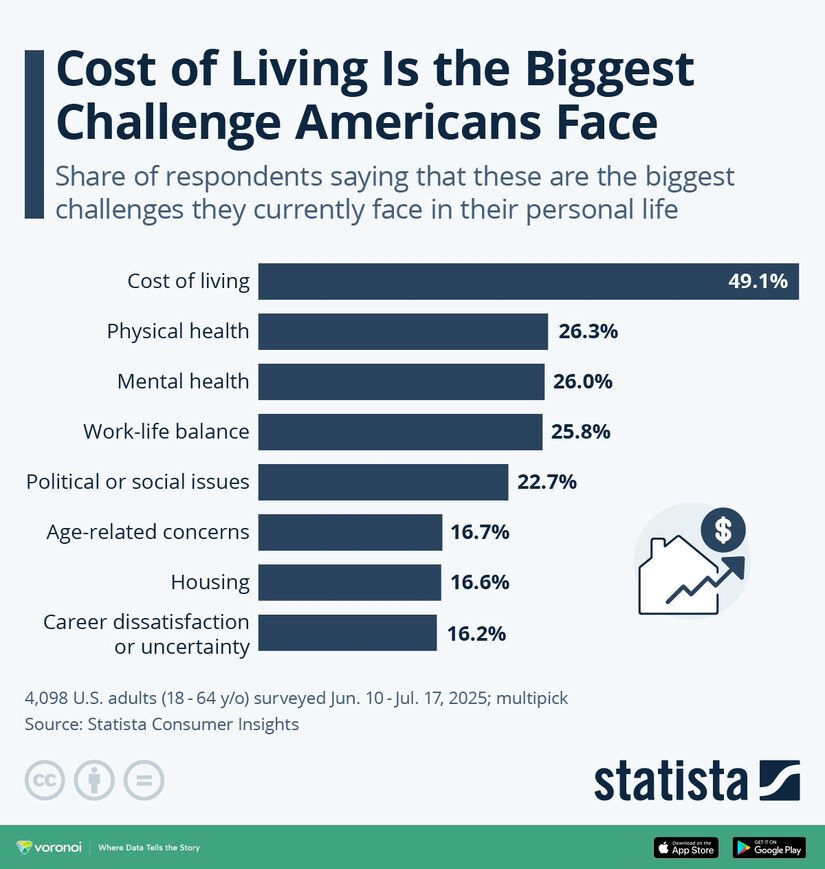
Inflation and the cost of living remained the issue identified most frequently by voters, although its share declined from the previous KSTP/SurveyUSA survey.
Thirty-four percent selected inflation or the cost of living as their most important issue, down from 40 percent one month earlier.
Fraud was selected by 16 percent of respondents, making it the second-most frequently cited concern in the latest survey. Health care followed at 10 percent, while immigration was selected by 9 percent.
Health care and immigration each registered 12 percent in the previous poll.
The apparent movement between categories requires careful interpretation because fraud was not included as an answer choice in last month’s survey. Adding a new option can redistribute responses across the entire list, meaning the decline in inflation, health care or immigration cannot automatically be interpreted as a genuine six-point or three-point change in public concern.
The safest conclusion is that inflation and household costs remain the dominant concern, while fraud emerged as a significant issue when respondents were explicitly offered it as a choice.
The poll found substantial demographic differences in expected November participation.
Eighty-one percent of voters aged 65 and older said they would definitely vote in the general election. Among voters between 18 and 34, that figure fell to 38 percent.
Income also corresponded with voting intentions:
Homeowners also expressed greater certainty than renters. Sixty-five percent of homeowners said they would definitely vote in November, compared with 41 percent of renters.
Those disparities matter because electorates with disproportionately older, wealthier and homeowning participants may not reflect the state’s full population.
Minnesota’s direct-balloting period for the August 11 primary began Friday, July 24. During this period, voters may complete an absentee ballot in person and place it directly into a ballot counter where the service is available.
Eligible voters may also continue requesting absentee ballots by mail. Ballots must be received by Election Day to be counted.
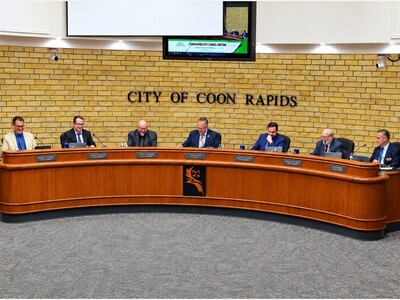
For Coon Rapids residents, direct balloting is available at City Hall during regular weekday hours, with extended voting periods scheduled for Saturday, August 8, and Monday, August 10.
SurveyUSA interviewed 1,860 Minnesota adults between July 15 and July 20. The organization identified 1,675 as registered voters, 1,219 as likely primary voters and 1,387 as likely November voters.
The combined sample was weighted to U.S. Census American Community Survey targets for gender, age, race, education and homeownership.
SurveyUSA describes itself as an independent, nonpartisan polling organization. As with all public-opinion surveys, the results may be affected by question wording, response options, nonresponse and differences between what respondents say they will do and their eventual behavior.
Sources:
MinneapoliMedia | Community. Culture. Civic Life.

Overcast, with a high of 86 and low of 67 degrees. Moderate rain for the morning, overcast in the afternoon,