Image
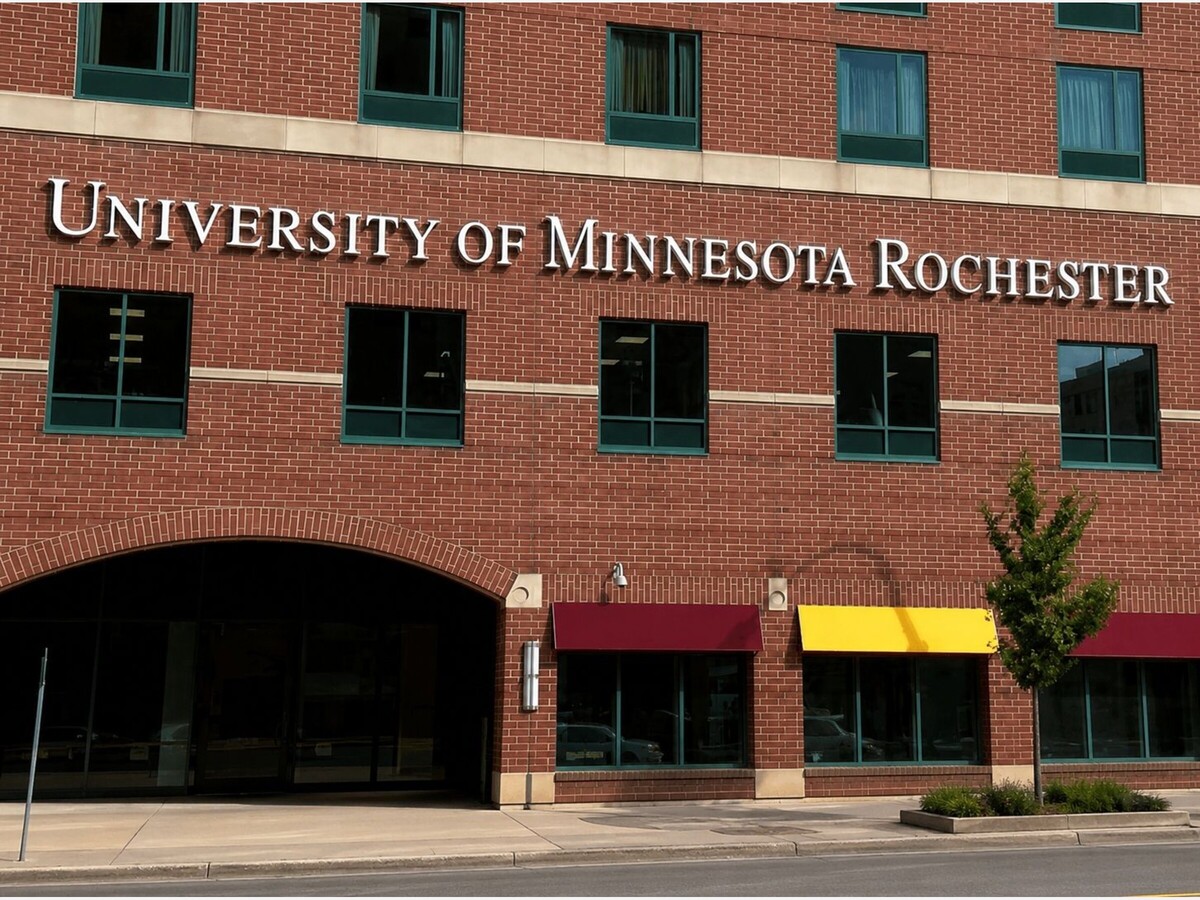



ROCHESTER, MN (June 16, 2026) Twenty years ago, the University of Minnesota Rochester existed largely as an idea: a specialized public university that would leverage Rochester's growing reputation as a global center of medicine, research and innovation to educate the next generation of health care professionals.
Today, that experiment is entering a new chapter.
The University of Minnesota Board of Regents has granted final approval for a $10.4 million academic expansion that will significantly increase the university's presence in downtown Rochester's Discovery District, a move university leaders say is essential to accommodating rising enrollment and strengthening connections between students, researchers, employers and the rapidly evolving bioscience economy surrounding them.
The project will establish approximately 12,600 square feet of new teaching laboratories, classrooms and collaborative learning space within Two Discovery Square, one of the flagship buildings in Rochester's Discovery District innovation corridor. University officials expect the new facilities to be operational by the fall of 2027.
The approval represents far more than a construction project.
It marks another milestone in the transformation of the state's youngest University of Minnesota campus from a small experimental institution into a growing health sciences university positioned at the center of one of the nation's most ambitious medical and biotechnology ecosystems.
University leaders have increasingly pointed to space limitations as one of the most significant challenges facing UMR's continued growth.
Enrollment at the Rochester campus has steadily climbed over the past decade, reaching approximately 1,122 students. The university's long-range strategic plan calls for enrollment to exceed 2,260 students by 2030, a target that would effectively double the institution's current footprint.
That growth has placed mounting pressure on existing academic facilities.
In recent years, UMR has relied on leased instructional space at locations including the Mayo Civic Center to accommodate enrollment increases and laboratory demand. University administrators have repeatedly warned that existing facilities could eventually become a limiting factor in future growth, particularly as the institution expands its science-intensive curriculum.
Unlike many traditional universities, UMR's educational model centers heavily on laboratory-based instruction, experiential learning and direct engagement with health care and research organizations throughout Rochester.
"Our rigorous undergraduate STEM education requires all students to take multiple lab classes to be prepared for their future careers," Chancellor Lori Carrell told local officials while outlining the expansion proposal.
The new facilities are intended to address those capacity constraints while positioning the university for its next stage of growth.
The approved project authorizes UMR to lease and build out approximately 12,600 square feet within Two Discovery Square, a state-of-the-art life sciences and technology building developed and managed by Mortenson as part of Rochester's Discovery District initiative.
Plans call for the creation of advanced instructional laboratories specifically designed to support high-demand science disciplines including biology, chemistry, microbiology and physics.
University officials say the laboratories will provide students with expanded opportunities for hands-on scientific training, an increasingly important component of workforce preparation in health care, biomedical research and biotechnology fields.
The project will also include flexible classroom environments and collaborative learning spaces designed to support team-based instruction, interdisciplinary projects and applied research experiences.
In addition to the new facilities at Two Discovery Square, the expansion includes plans to convert approximately 1,400 square feet of existing classroom space within neighboring One Discovery Square into additional laboratory capacity.
Together, the improvements are expected to significantly increase the university's ability to deliver laboratory-intensive instruction while reducing reliance on temporary off-site classroom arrangements.
The expansion is being funded through a partnership that reflects Rochester's broader strategy of aligning higher education investment with economic development goals.
The total project cost is estimated at $10.4 million.
Under the approved funding structure, the University of Minnesota system will contribute approximately $2.7 million.
The remaining $7.7 million will come from regional and local sources.
The Destination Medical Center Corporation Board has committed $3 million toward the project, citing the importance of workforce development and talent retention within Rochester's growing health innovation sector.
An additional $4.7 million will come from the City of Rochester through revenues generated by a local option sales tax approved by voters in 2012. The funding mechanism was specifically established to support community investments, including higher education infrastructure and projects intended to strengthen Rochester's long-term economic competitiveness.
The financing arrangement underscores how closely the university's future has become intertwined with Rochester's broader development strategy.
The significance of the expansion extends beyond classroom capacity.
By locating new instructional facilities inside Two Discovery Square, UMR is embedding students directly within a research and innovation environment that includes biotechnology startups, private laboratories, health technology companies and entrepreneurial ventures connected to Mayo Clinic and the broader life sciences sector.
Discovery Square was established as a cornerstone of Rochester's Destination Medical Center initiative, the multibillion-dollar public-private effort designed to diversify and expand the city's economy around health care, research, technology and innovation.
Today, the district houses a growing collection of research organizations, biomedical companies and innovation-focused enterprises that increasingly serve as potential employers, internship providers and research partners for university students.
University officials argue that proximity matters.
Rather than separating students from the industries they hope to enter after graduation, the Discovery District model places education, research and employment opportunities within the same physical environment.
"Expanding into Two Discovery Square strengthens our ability to deliver hands-on, immersive learning experiences and deepen collaboration with partners shaping the future of health care and innovation," Carrell said following approval of the project.
For students, that could mean attending a laboratory class in the same building that houses emerging biotechnology companies, startup ventures and research organizations.
For employers, it creates a more direct pathway to future talent.
For Rochester, it reinforces a development strategy built around cultivating a highly skilled workforce capable of supporting continued growth in the medical and life sciences sectors.
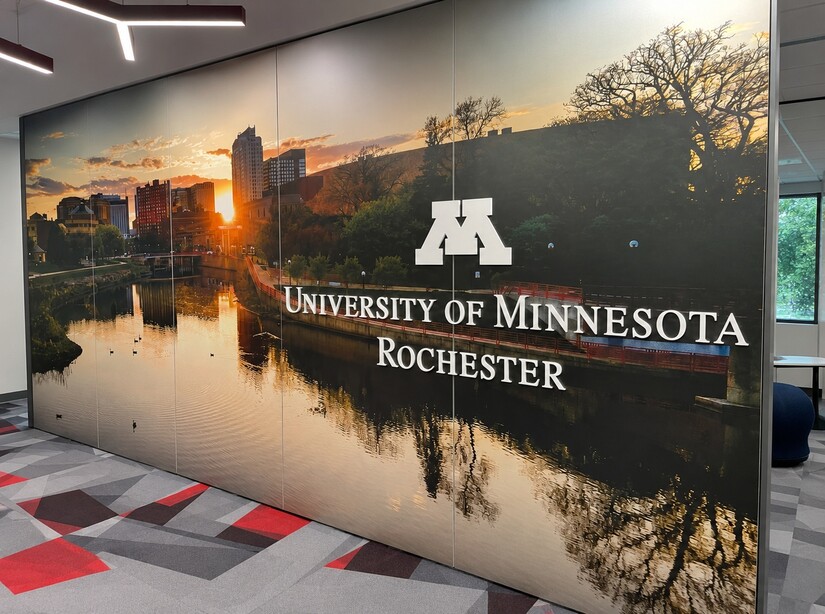
The Discovery Square expansion represents only the first stage of a broader long-term development plan.
University leaders have previously unveiled concepts for a new downtown academic building that would include classrooms, faculty offices and a Learning Innovation Center, along with plans for expanded student housing and recreation facilities near Soldier's Field.
Collectively, those projects would dramatically expand the university's physical footprint while helping accommodate future enrollment growth.
The long-term vision reflects a growing recognition that Rochester's economic future depends not only on attracting businesses and investment but also on educating the workforce needed to sustain them.
As Mayo Clinic advances its own multibillion-dollar expansion efforts and Rochester continues positioning itself as an international hub for health innovation, demand for graduates trained in health sciences, biomedical research and related fields is expected to increase substantially.
The Board of Regents' approval signals confidence that the University of Minnesota Rochester will play a central role in meeting that demand.
For a university founded on the idea that education should be embedded within the community it serves, the new facilities in Discovery Square represent more than additional square footage.
They represent another step in Rochester's effort to connect education, research, innovation and economic development into a single ecosystem designed to prepare students for careers while helping shape the future of Minnesota's health care economy.
Construction and build-out activities are expected to move forward over the coming months, with university officials targeting occupancy of the new facilities by the fall of 2027.
MinneapoliMedia | Community. Culture. Civic Life.


Sunny, with a high of 79 and low of 56 degrees. Sunny for the morning, overcast for the afternoon and evening, patchy rain nearby overnight.


