Image



Published: June 22, 2026
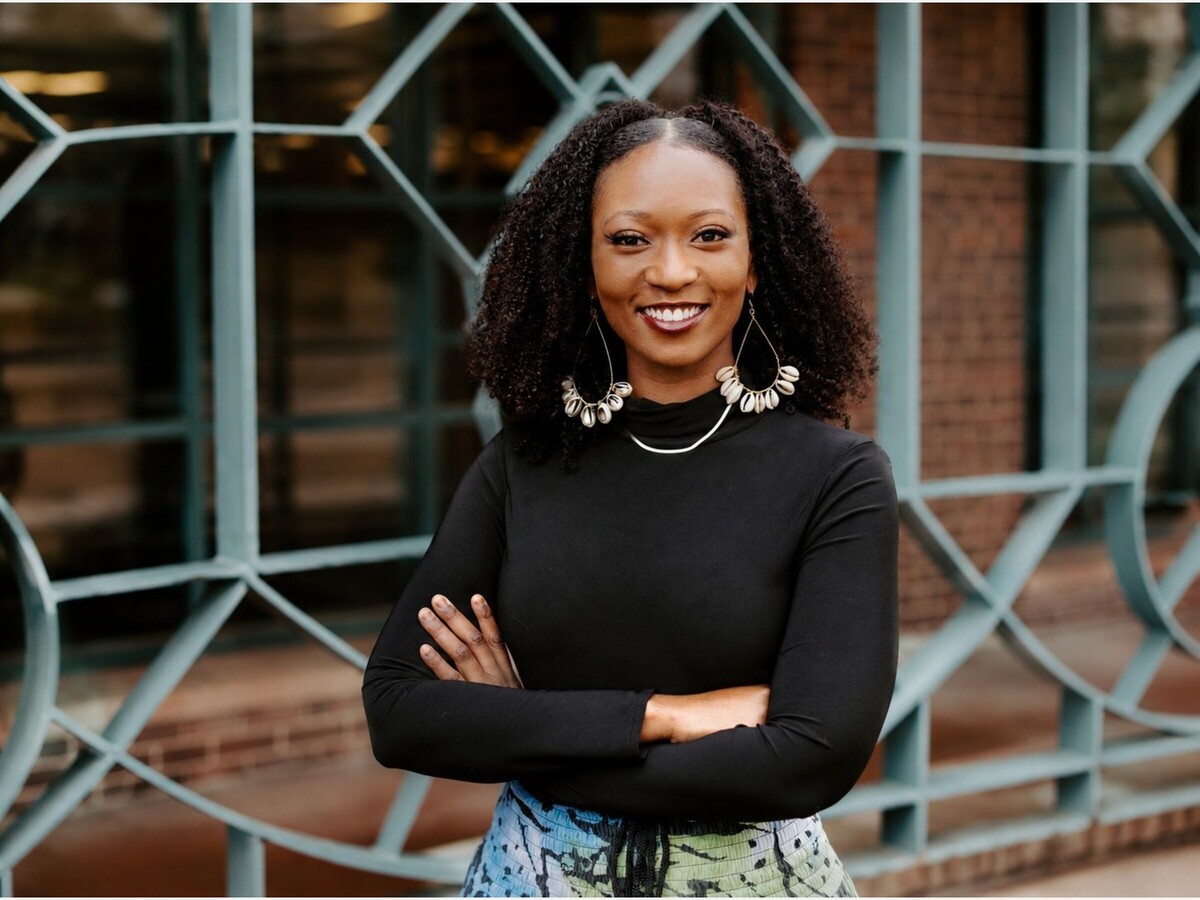
Every so often, a name begins to circulate within the public consciousness long before the individual attached to it ever walks into a room. This introduction does not occur by way of a formal press release, a curated media campaign, or the clinical prediction of a digital algorithm. Instead, the name arrives through a slow, organic accumulation of human testimony.
In the literary circles of the Twin Cities, across the municipal corridors of Hennepin County, and within the experimental workshops of Greater Minnesota, the name Dralandra Larkins has spent years operating in precisely this fashion. A student in a community center mentions a breakthrough in their personal expression. An educator references a framework for emotional safety that bypassed traditional institutional stiffness. A regional cultural venue records an unprecedented depth of engagement within an adult cohort. Over time, these disparate points of contact form a cohesive portrait.
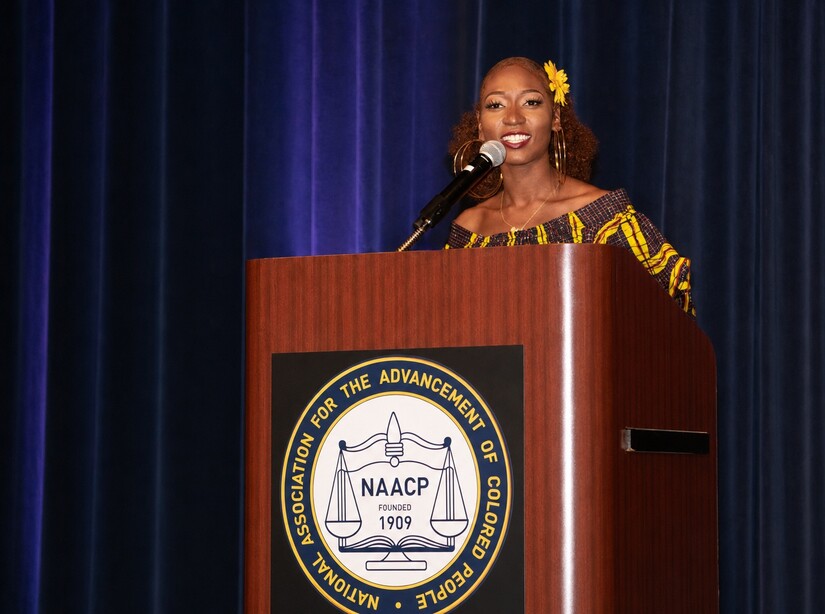
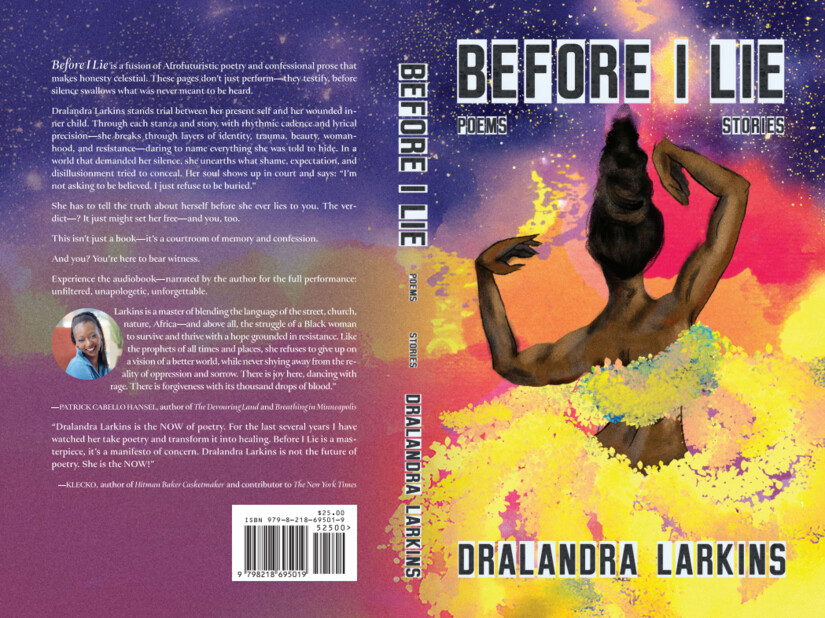
The common denominator across these encounters is consistently one of presence rather than performance. In a contemporary media landscape that heavily incentivizes rapid self-branding, constant visibility, and loud personal assertion, Larkins has constructed a vocation rooted in the inverse. As a Minneapolis-based poet, educator, cultural strategist, and three-time spoken word champion, her public profile is substantial. She is the author of the deeply personal collection, Before I Lie, and a recognized leader in regional creative programming. Yet, an examination of her career reveals that poetry is not the final destination of her work. The craft serves primarily as a vehicle for a more demanding objective: the creation of structural conditions where individuals can safely examine their history, confront systemic silences, and survive the vulnerability of their own testimony.
On a clear spring afternoon in late April 2026, Larkins sat down for an editorial conversation originally scheduled to span the typical thirty-minute window characteristic of public media profiles. The dialogue ultimately extended past seventy minutes. This extension was not driven by conversational indulgence, but by the density of the material under review. Every historical recollection exposed a deeper layer of civic and personal reality underneath. What emerged across the hour was an expansive account of a life spent studying the mechanics of human endurance. It is the narrative of a woman who recognized early that language could be deployed as a physical refuge, who systematically converted the strategies of personal survival into an infrastructure of public service, and who continues to construct spaces throughout Minnesota where the unvarnished truth is treated not as a vulnerability, but as a foundational necessity for historical preservation.
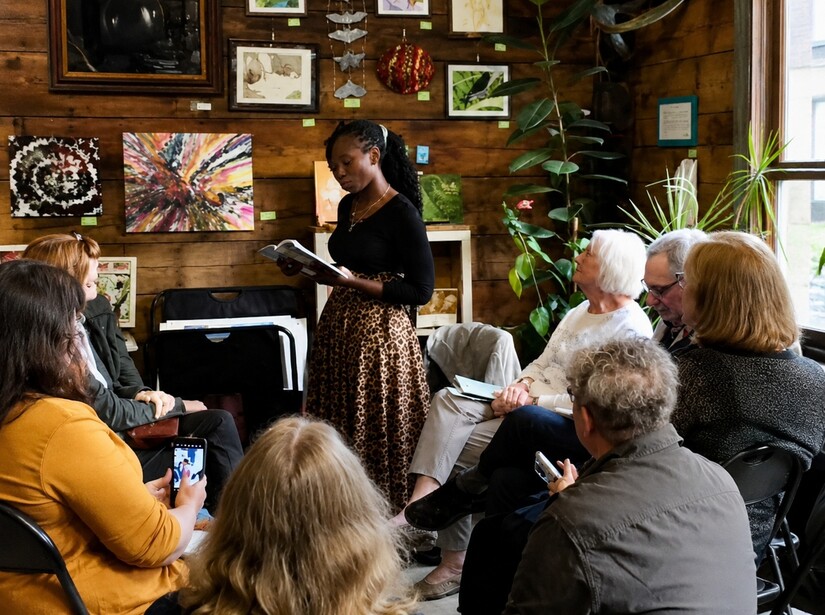
To understand the structural methodology that Larkins brings to her contemporary community projects, one must first map the precise geography of her childhood. Her worldview was not formed inside the theoretical frameworks of academic sociology or artistic institutions, but along a specific and volatile stretch of South Minneapolis. For decades, East Lake Street has served as a living artery of the Twin Cities. It is a commercial and cultural corridor defined by an intense density of immigrant enterprises, grassroots artistic movements, and deep-seated neighborhood histories. It is also an environment that has long borne the material weight of structural disinvestment, intensive over-policing, and the disruptive economic shifts of urban gentrification.
For a young girl navigating this landscape in the mid-2000s, East Lake Street operated as an unyielding and comprehensive laboratory of human behavior. Larkins traveled these blocks alongside her mother, cataloging the sensory details of a community that refused to be reduced to a single, flat description. She watched the complex rhythms of neighborhood survival play out across single city blocks. On one corner, the neighborhood manifested immense joy, economic ingenuity, and communal cohesion. On the next, the devastating physical and social toll of chemical dependency and systemic neglect remained entirely visible.
It was within this exact landscape that Larkins encountered one of her earliest models of community leadership: a local street vendor known universally to residents as Mr. Bean Pie. To a casual commuter passing through South Minneapolis in 2006, the man might have appeared to be an ordinary micro-entrepreneur working a street corner. He stood outside near the intersection of Lake Street and Cedar Avenue dressed consistently in an immaculate, dapper suit, holding his two distinct containers of bean pies, projecting his rhythmic vocal invitation into the ambient noise of the traffic.
To Larkins, however, the performance carried the weight of a profound institutional reality. Mr. Bean Pie was not merely selling a product. He was actively projecting an image of dignity, consistency, and cultural pride into a space that the broader city frequently characterized through the lens of deficit. His presence was an anchor of community memory and neighborhood stability. He demonstrated that leadership did not require an official municipal title or a corporate office. It required a relentless commitment to showing up in the public square with an unshakeable sense of self-respect.
From these early observations, Larkins derived a realization that continues to govern her contemporary strategy as an equity consultant and educator. She discovered that a geographic place, much like a human life, can hold profound beauty and immense struggle at the exact same time without the two realities canceling each other out. The trauma of systemic hardship does not erase the validity of communal joy, and the presence of joy does not diminish the urgency of structural critique. This duality informed her poetic voice, stripping it of easy sentimentality and anchoring it in a gritty, high-density realism. When Larkins writes, she doesn’t merely compose text. She carries the historical memory of South Minneapolis with her. The physical labor and calluses of her grandmothers are embedded directly into the movement of her pen. She approaches her subjects with the profound awareness that simplistic narratives are fundamentally inaccurate, and that real human preservation demands an uncompromised fidelity to complexity.

The turning point where language transformed from an ordinary developmental tool into a literal technology of survival occurred within the walls of a highly dysfunctional childhood home. Growing up surrounded by domestic instability, Larkins found herself exposed to emotional and situational dynamics that far exceeded the analytical capacity of a child. She was surrounded by acute interpersonal crises, economic unpredictability, and behavioral patterns that the adult world routinely refused to explain or validate.
In response to this surrounding chaos, she began retreating into the physical space of the blank page. She would spend consecutive hours writing in notebooks while the ambient noise of familial dysfunction unfolded directly in the background. The external circumstances of her life remained entirely unaltered. The domestic challenges did not disappear, the structural uncertainties remained acute, and the immediate dangers did not miraculously dissolve. Yet, inside the deliberate act of composition, an essential psychological shift occurred. The physical page established an immediate, non-negotiable distance between the young writer and her environment. It created a reliable laboratory of absolute safety and complete autonomy.
"I transported myself somewhere else through poetry," Larkins reflects, analyzing the period with clinical clarity. "I created a world I could survive in, and that is when I realized this isn't just writing. It is survival."
This precise operational definition is critical. Larkins does not describe her early relationship with poetry through the contemporary vocabulary of artistic expression or creative ambition. She describes it as transportation and endurance. She was not pursuing a literary career, seeking professional credentials, or attempting to appeal to an external audience. She was building an alternate reality capable of sustaining her sanity when her immediate domestic reality threatened to overwhelm it.
When an artistic practice originates as an absolute evolutionary requirement for survival rather than a curated performance for public consumption, the creator's relationship to the craft undergoes a permanent alteration. Writing ceases to be about the collection of cultural prestige, the pursuit of publication, or the accumulation of institutional validation. It becomes an exercise in uncompromised honesty. Survival leaves no room for performative formatting or aesthetic deception. It demands an unvarnished, high-density confrontation with raw facts. This internal standard remains completely legible in Larkins' contemporary methodology. Whether she is lecturing to a room of elementary students, consulting with municipal authorities at the Metropolitan Council, or executing a complex spoken word piece on a public stage, her foundation remains identical. She operates not from a posture of academic expertise, but from a baseline of historical necessity. She understands that silence is not a neutral vacuum. Silence is an active, distorting force that routinely attempts to rewrite historical records to favor the powerful.

The transition from utilizing language as a private instrument of personal survival to deploying it as a public infrastructure for communal healing requires a deep understanding of institutional care. Following her development as a writer, Larkins acquired significant professional experience within the rigorous frameworks of municipal social work and public housing bureaucracy. She served for three years as a certified social worker with the Hennepin County Office to End Homelessness, followed by a four-year tenure as an HRA coordinator for the Metropolitan Council, where she managed housing stability metrics and calculated rent assistance allocations for the Section 8 public housing program.
This extensive immersion inside the machinery of public welfare profoundly reshaped her understanding of human vulnerability. It stripped her of any romantic illusions regarding the nature of systemic suffering and replaced them with a deep respect for human boundaries and structural ethics. In the bureaucratic landscape of municipal government, human stories are frequently reduced to standardized forms, data points, and case files. Larkins observed that traditional institutions frequently treat vulnerability as a liability to be managed, regulated, or clinically corrected. Her transition back into the creative arts was driven by a desire to subvert this dynamic, replacing clinical correction with deep, non-coercive listening.
This background informs her critique of one of the most widely deployed clichés in contemporary non-profit, educational, and corporate vernacular: the concept of "creating space." In the modern administrative ecosystem, the phrase is repeated with such frequency that it has been largely hollowed out of practical meaning. For Larkins, however, the architecture of a room remains an exact, operational science. It is grounded in the recognition that individuals do not require elite intervention, clinical fixing, or paternalistic rescue. They require an uncompromised, unhurried hearing.
This structural commitment dictates how Larkins enters any professional space. She maintains an absolute rule regarding the sequencing of vulnerability: she refuses to demand an authentic disclosure from an audience or a classroom that she has not first modeled herself. She does not arrive displaying a highly polished, heavily managed version of her identity. She does not position her expertise above the immediate lived reality of the participants. Instead, she enters by exposing her own historical realities, complete with their remaining complexities and unresolved struggles.
"I don't take it lightly when people trust me with their truth," Larkins states. "For me, holding space starts with honesty. I cannot ask people to be vulnerable if I am not willing to go there first."
This methodology fundamentally challenges the performative dynamics that frequently corrupt public storytelling environments. Traditional creative spaces, educational institutions, and media platforms routinely incentivize a highly dramatic, spectacularized form of vulnerability. They reward the loudest participant, the most shocking narrative of trauma, or the individual capable of delivering a perfectly resolved, emotionally satisfying public testimony. Larkins intentionally structures her rooms to dismantle this economy of performance.
Within her workshops, vulnerability is traced through a much wider, more sophisticated spectrum of behavior. It is recognized in the individual who remains entirely silent in the corner of a room, quietly committing text to a private journal. It is honored in the participant who chooses to read aloud a single, tentative line from a complex poem. It is validated in the simple, quiet act of a person choosing to remain present in a room that challenges their comfort. Larkins explicitly mandates an environment governed by a clear operating principle: no artificial pressures, no mandated outputs, and no performative requirements. The sole metric of success is genuine, unforced presence.
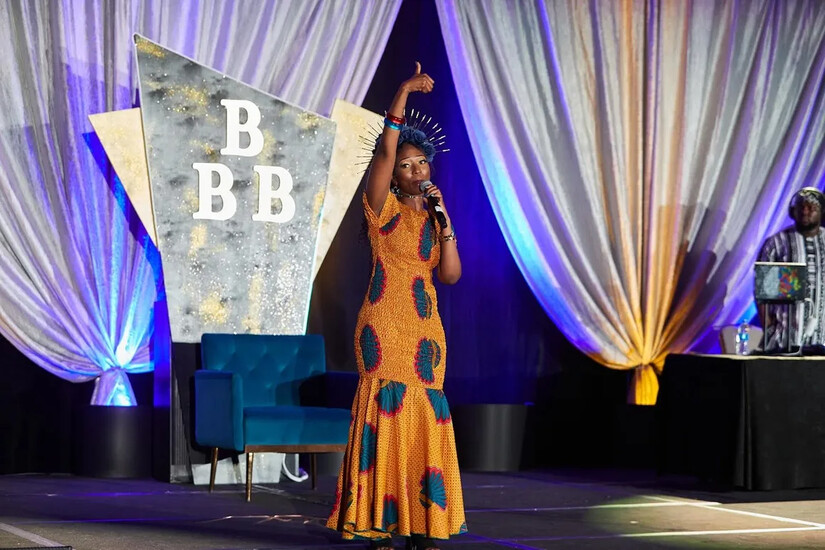
The practical execution of this philosophy was vividly demonstrated during an intensive, six-hour poetry workshop hosted and presented by Lyricality, which Larkins facilitated at the Paramount Center for the Arts in St. Cloud. The cohort was composed entirely of African American adults, bringing together individuals across a massive generational and sociological spectrum, ranging from young adults navigating early employment to elders over the age of sixty. Many of the participants arrived carrying deep-seated cultural reservations regarding public vulnerability. In many traditional Black communities, historical survival has long dictated an outward posture of absolute strength and unyielding endurance. Public emotional disclosure, particularly tears, has frequently been stigmatized as a dangerous exposure of weakness within an unsupportive broader society.
To circumvent these historical defense mechanisms, Larkins introduced an exercise known as the Truth Wall. The operational structure of the exercise is intentionally simple yet highly sophisticated in its psychological architecture. Participants are instructed to write down an acute, deeply personal, and unvarnished truth about their life on a slip of paper. The entry must be entirely anonymous. There are no names attached, no contextual explanations permitted, and no public ownership established. The slips of paper are then folded and placed blindly onto a communal wall. Once the collective truths are gathered, the facilitator has different participants come forward, select a slip of paper at random, and read the anonymous text aloud to the collective room.
By surgically decoupling the raw honesty of the statement from the immediate physical identity of the author, the exercise effectively neutralizes the fear of personal judgment, social exposure, or immediate consequence. What emerged across the subsequent hours completely transformed the institutional atmosphere of the St. Cloud venue. The wall began to act as an uncompromised mirror of the community's hidden internal landscape. One after another, profound, high-density realities were brought into the acoustic space of the room: historical pain carried in absolute isolation for decades, unresolved questions regarding familial rupture, and secret grief that had never before been spoken aloud.
The exercise exposed a critical reality that Larkins has documented across every stage of her career: the vast majority of citizens are consistently carrying an immense weight of unarticulated history beneath the surface of their public identities. This hidden burden is not maintained out of a desire for deception, but out of a legitimate, systemic fear of isolation. Individuals remain silent because they are profoundly afraid that their specific internal realities will result in alienation, misunderstanding, or a total loss of community.
As the anonymous voices continued to echo through the workshop, the participants began to undergo a profound shift in recognition. Individuals sitting across from one another suddenly began to identify their own private struggles within the spoken words of their neighbors. A participant would listen to an anonymous confession of profound grief or deep displacement and realize, with absolute clarity, that their internal landscape was shared by the very people sitting in the same room. Isolation rapidly dissolved into structural solidarity. The physical space ceased to be an ordinary arts venue and transformed into an intentional historical community.
"What I have learned through this work," Larkins observes, "is that people do not actually need perfect words. They need permission. They need permission to be messy, permission to be honest, and permission to be entirely unfinished before they are asked to have their lives completely figured out."

The deep impact of the St. Cloud gathering was preserved in the written evaluations and immediate behavioral transformations that followed the session. One specific evaluation stood out with remarkable historical weight. A female participant, processing her experience, explicitly noted that the six-hour workshop had caused her to open her emotional life like an unread book, disclosing and confronting realities that she had kept locked away in absolute silence for more than fifteen consecutive years.
A decade and a half of carrying an intense interior reality without ever granting it access to spoken language is an immense form of invisible labor. Yet, a brief, structurally sound intervention within a secure public container succeeded in altering that trajectory. This transformation was achieved not through coercive pressure or academic lecturing, but through the deliberate cultivation of a non-threatening, culturally reflective environment. For Larkins, such moments serve as conclusive empirical proof that human healing is fundamentally communal rather than individualistic. It begins the precise moment an individual discovers that their private history is not an isolated anomaly, but a shared human experience.
During the workshop, this dynamic manifested concretely when an adult participant introduced a devastating line into her poem, describing herself explicitly as "the last sibling standing." The author was a mother originally from the South Side of Chicago, and her text was a high-density distillation of generational trauma: a narrative detailing an immediate family structure where almost all of her male siblings had been lost to long-term industrial incarceration, and where the family matriarch had recently passed away. The line carried an immense weight of survival guilt, sudden structural responsibility, and unaddressed mourning.
The moment that specific line was introduced into the room, the collective atmosphere shifted permanently. Instantly, multiple women within the cohort stood up to affirm her text, noting that they too were originally from the South Side of Chicago, and that they too were navigating the exact same reality of being the singular surviving pillars of their fragmented family networks. What had been carried for fifteen years as a unique, shameful, and isolating burden was instantly recognized as a collective, systemic condition. The pain did not vanish, but its structural weight became manageable once it was redistributed across a network of mutual recognition.
This live transformation illustrates the foundational thesis of Larkins' entire career. Storytelling is not an entertainment commodity or a luxury for the elite. It is an indispensable technology of democratic health. The process follows a clear sequence: honest storytelling creates immediate public recognition. Recognition constructs unbreakable human connection. Connection expands the boundaries of social possibility, and possibility functions as the literal foundation for sustainable hope.
This process, while elegant in its theoretical formulation, remains incredibly difficult to execute safely in the field. It demands an immense baseline of professional integrity, an acute awareness of ethical boundaries, and an unyielding commitment to the long-term safety of the participants long after the public event has concluded.
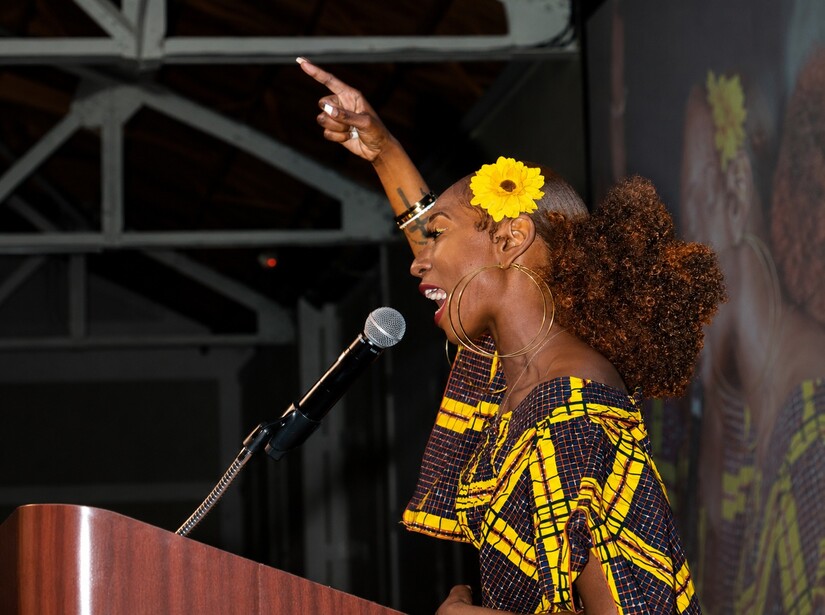
When Larkins evaluates the systemic failures of contemporary institutions, she speaks with the analytical precision of a former municipal administrator. She notes that modern systems of governance, education, and public welfare are routinely designed to prioritize clinical efficiency, standardizing procedures in a manner that systematically deletes the nuanced realities of human text. Traditional city planning, corporate equity frameworks, and legislative chambers operate predominantly through numbers, metrics, and top-down distributions of resources. In this highly clinical process, the actual lived experience of the population is treated as a secondary concern or an aesthetic distraction.
Storytelling, when deployed with high-density accuracy, serves as a direct antidote to this systemic erasure. It exposes the vast, unmapped terrains of human experience that official records routinely ignore. Larkins emphasizes that when a marginalized individual steps to a microphone or commits text to an archival publication, they are engaging in a radical act of institutional counter-reporting. They are entering evidence into the public record that challenges the clean, sanitized narratives of municipal progress.
This perspective is central to how Larkins manages her dual identity as a bureaucratic specialist and a grassroots artist. She recognizes that traditional American culture is profoundly uncomfortable with unresolved emotional weight. Society is designed to move past crises with rapid, industrialized speed. When an urban neighborhood experiences an act of profound structural violence or a community navigates a historic trauma, the institutional response is almost universally focused on a swift return to commercial normalization. The population is instructed to manage their grief privately, to minimize their anger, to containerize their trauma, and to transition immediately back into productive economic units.
Larkins explicitly utilizes her art to disrupt this forced amnesia. Within her poetry residencies and community consultations, she encourages participants to resist the societal pressure toward rapid emotional resolution. She structures her environments to provide an official license to pause, allowing individuals to remain deeply inside their grief or their anger until they have fully mapped its dimensions. She explicitly rejects the paternalistic role of a therapist or a savior, recognizing that such stances merely replicate the hierarchical dependencies of traditional systems. Instead, she functions as a structural architect, specializing in the building and maintenance of a public container that is physically and ethically strong enough to hold raw human truth without allowing it to degenerate into personal harm or public spectacle.
As her national reputation has continued to grow, Larkins has found herself increasingly forced to navigate the complex ethics of public visibility. We occupy a cultural era dominated by digital communication platforms that routinely conflate raw public exposure with genuine personal authenticity. Modern artists, community organizers, and public figures are consistently pressured to convert their deepest personal traumas into public content, utilizing their private pain to generate digital engagement, secure institutional funding, or validate their creative credentials.
During the editing and compilation of her book, Before I Lie, Larkins was forced to confront this exact systemic pressure. The manuscript was designed to be an uncompromising, high-density excavation of her journey, and she had drafted a specific, highly sophisticated short story detailing a harrowing, deeply personal encounter with domestic violence involving her immediate family background. The text was stylistically brilliant, possessed immense emotional weight, and would have undoubtedly been received by the literary market as an incredibly powerful piece of autobiographical writing.
Yet, as the publication deadline approached, Larkins experienced a profound internal resistance that caused her to halt the production process. Upon deep reflection, she recognized that while the story was artistically complete, her internal processing of the trauma remained active and unfinished. She realized that her immediate motivation for publishing the piece was partially corrupted by a lingering, unresolved desire to publicly expose historical actors who had harmed her childhood environment, rather than a grounded intent to offer a healed text to her readership.
With remarkable professional discipline, Larkins made the decision to excercise the short story entirely from the final published book. She refused to sacrifice her private emotional safety for public acclaim or artistic commerce. This decision solidified a critical conceptual distinction that now serves as the literal cornerstone of her pedagogy: the absolute structural boundary between sustainable expression and raw personal exposure.
To enforce this distinction across her workshops, Larkins instructs her students to develop a profound reverence for internal pauses. If an individual experiences a sense of emotional hesitation, somatic shaking, or internal ambiguity when preparing to share a text publicly, her directive is absolute: the author must honor that pause without compromise. The hesitation is not a failure of artistic courage. It is an act of deep internal wisdom. It is a protective boundary indicating that the specific history remains entirely private, and that it is not yet ready to be put on display for public consumption. Larkins demonstrates that absolute honesty and unyielding personal privacy are not competing values. They are indispensable partners in the preservation of human dignity.
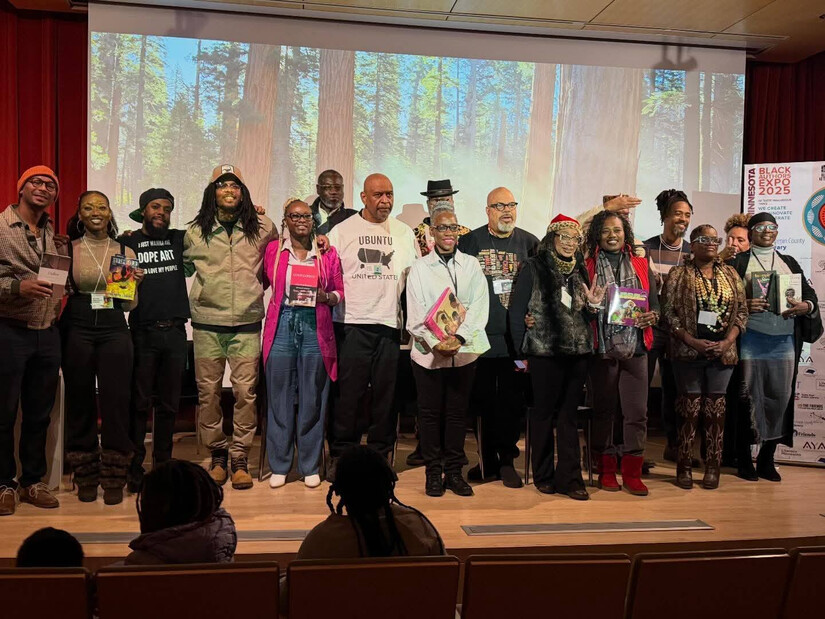
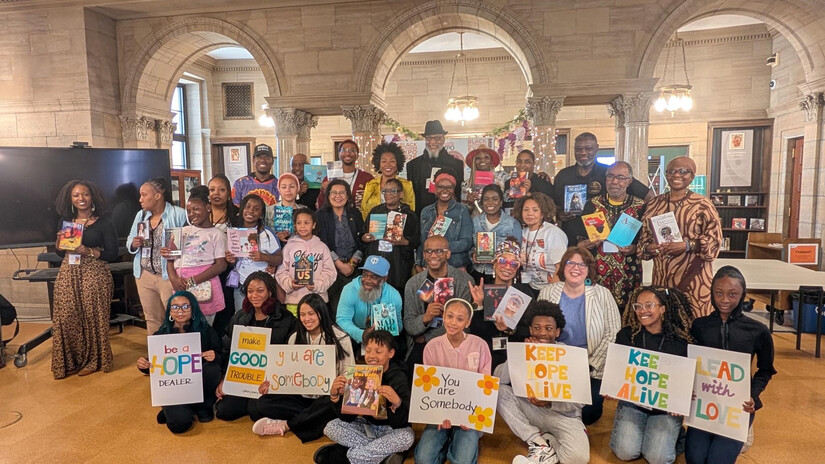
This commitment to personal sustainability reached a definitive crisis point during the execution of the 2026 Minnesota Black Authors Expo, held at the Saint Paul Public Library. Larkins arrived at the historic venue carrying an immense schedule of professional obligations. She was slated to execute a highly anticipated, structurally complex spoken word performance as a formal tribute to the historical legacy of civil rights leader Jesse Jackson. In the economics of the independent literary market, such high-profile festival performances serve as the primary engine for book sales and professional networking. For a self-published African American author who manages every dimension of her own marketing, scheduling, and distribution, refusing to take the stage represents a significant financial and professional risk.
Yet, on the eve of the expo, Larkins recognized that she was navigating a state of profound spiritual exhaustion. She was entirely depleted by the relentless cadence of public visibility and the constant demand to project an energetic, highly charismatic persona for corporate and community audiences. She recognized that if she stepped onto the stage to deliver the tribute, she would be executing a completely mechanical, performative simulation of her art rather than presenting an authentic transmission of truth.
Standing inside the Saint Paul Public Library the following morning, Larkins made the courageous decision to cancel her scheduled performance entirely. She chose to remain physically present at her exhibition table, but she explicitly turned off the performative switch. She refused to engage in the standard sales pitches, she declined to over-smile to attract passing foot traffic, and she completely withdrew from the expected hustle of the convention floor. She simply sat quietly in her chair, anchoring her body in a state of absolute, uncompromised rest, allowing herself to exist within the public space as a regular, unvarnished human being.
The structural consequences of this choice completely defied the conventional laws of market capitalism. Despite her absolute refusal to perform, the universe moved immediately to meet her baseline of presence. Throughout the day, a steady stream of attendees spontaneously approached her table. Her book sales remained remarkably consistent with her historical performance metrics. Complete strangers walked up simply to offer expressions of personal appreciation and solidarity. An independent media representative approached her to conduct an impromptu, high-density interview regarding her literary philosophy.
At one point in the afternoon, two young Black girls stopped outside her display table, staring at her with immense reverence before quietly stating that her mere existence as an independent author in that room had provided them with a profound sense of personal inspiration. Larkins had spent years operating under the internalized systemic myth that her survival, her economic viability, and her human worth were entirely dependent upon her constant, high-energy output. The events at the Saint Paul Expo permanently dismantled that delusion.
"I learned that purpose does not require constant performance," Larkins states, her voice completely leveled. "We have been deeply conditioned by American capitalism to believe that we must constantly over-exert our bodies to justify our space in the world. It is a direct route to absolute burnout and psychological depression. Sometimes, simply choosing to exist in a space with absolute honesty and unvarnished presence is more than enough."
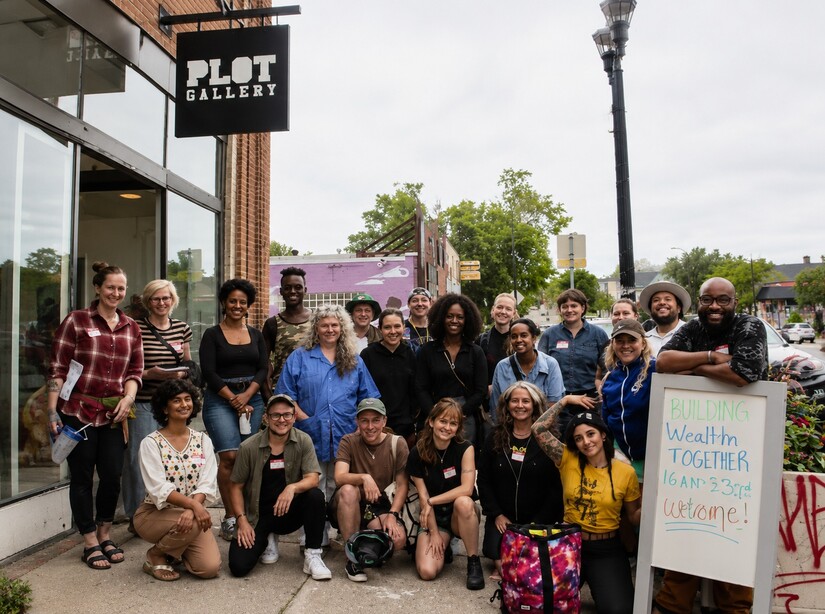
It was during this exact weekend at the Saint Paul Public Library that Larkins experienced an encounter that neatly crystallized her ongoing evolution. While seated at her table, she struck up a spontaneous, deep-form conversation with a fellow exhibitor named Terryann Nash. Nash is a distinguished African American educator, professor, sign language interpreter, and entrepreneur whose career has been dedicated to the service of deaf and hard-of-hearing populations, as well as the creation of culturally affirming artifacts for children.
As the conversation deepened, Larkins chose to speak with complete, unvarnished vulnerability regarding a dimension of her identity that she had historically kept closely guarded from the public eye: her own progressive hearing loss. She disclosed the deep-seated personal insecurities, the persistent professional anxieties, and the quiet internal struggles that accompanied her daily reliance on physical hearing aids. She spoke candidly about her long-deferred plan to enroll in formal American Sign Language classes as a necessary strategy to reclaim her somatic identity and connect directly with the deaf community.
Nash listened to the testimony with absolute, unhurried attention. At the conclusion of the conversation, she reached into her inventory and placed an object directly into Larkins' hands. It was one of her signature, custom-designed Royal Regal Honor dolls, an exquisitely crafted, dark-skinned figure sporting a magnificent, meticulously sculpted afro.
To an outside observer documenting the interaction from a distance, the moment might have appeared to be an ordinary, polite exchange of gifts between two independent vendors on a convention floor. But beneath the surface layer of polite commerce, the transaction carried an immense, almost seismic spiritual weight. For Larkins, the doll operated as an immediate, physical transmission of absolute validation arriving directly from the universe. It was a concrete assertion of her visual and cultural worth, presented at the exact moment she had chosen to lay down her public defense mechanisms. By articulating her raw truth regarding her physical vulnerability, she had instantly cleared out the emotional debris required to receive a profound affirmation of her regal identity.
"When you possess the absolute guts to say the hard thing out loud," Larkins explains, "the universe will move instantly to meet you exactly where you stand. You don't need a massive corporate apparatus to validate your path. You simply need to align yourself completely with the facts of your own life."
This continuous practice of deep listening and mutual validation is precisely what enables Larkins to bridge the gap between regional communities. Nash recently returned from an extensive human rights mission to Ghana, where she spent weeks teaching American Sign Language to deaf children within severely under-resourced schools, while simultaneously building an international infrastructure for independent global authorship. Upon documenting Larkins' unique methodology, Nash immediately extended a formal invitation for her to join the international delegation in 2027, expanding the narrative footprint of the Before I Lie curriculum directly into West Africa. This expansion is not being achieved through the traditional channels of corporate sponsorship or academic positioning. It is developing strictly through the organic alignment of two Black women who refuse to decouple their high-density artistic practice from their profound responsibility of global community care.
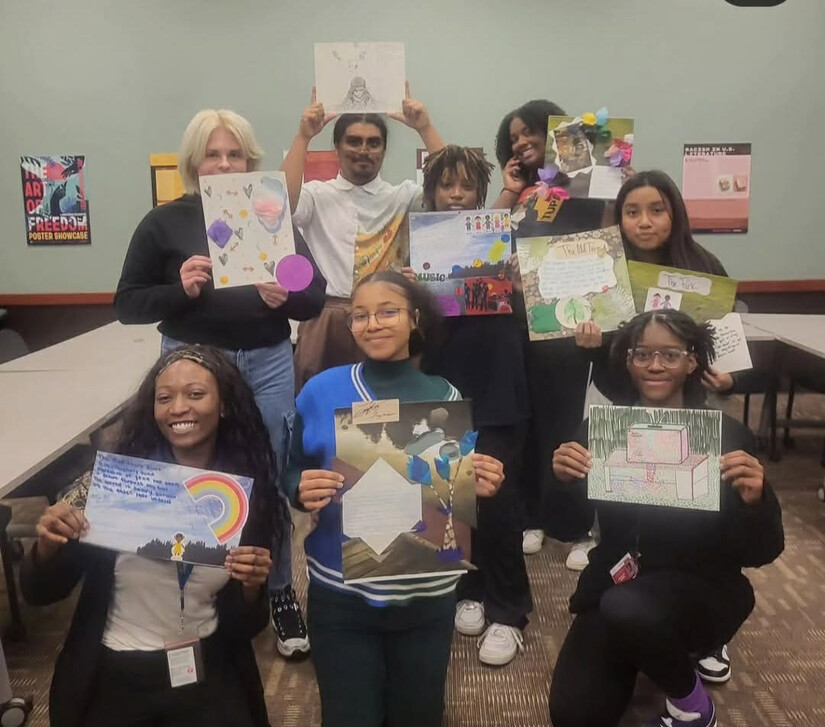
When the topic of conversation inevitably turns toward the concept of legacy, Larkins explicitly rejects the traditional, monument-building definitions favored by institutional hierarchies. She is entirely uninterested in the accumulation of honorary civic plaques, the curation of a permanent institutional archive, or the strategic preservation of her name within the annals of regional history. For Larkins, legacy is treated as an active, live-time science that is systematically executed through daily, localized, and micro-level human intersections.
This perspective is rooted in a profound professional reality: her students are already actively multiplying her work across the state. A primary example is the trajectory of Knox Frederickson, a young writer who enrolled as a senior in high school into one of Larkins' intensive summer poetry residencies at the Loft Literary Center in Minneapolis. Richardson arrived at the institution possessing immense creative raw material but navigating significant hesitation regarding the public validity of his personal narrative.
Throughout the residency, Larkins did not focus on polishing Richardson’s text to meet the standardized aesthetic expectations of the mainstream publishing industry. Instead, she focused entirely on modeling an uncompromised commitment to truth-telling, demonstrating through her own daily presence that a writer must never shrink their voice to accommodate the comfort of an institutional room. Richardson cataloged the lesson with absolute fidelity.
In early 2026, Larkins received an emotional, formal communication from Richardson. Inspired directly by her unyielding example, the young poet had independently compiled, formatted, and published his very first comprehensive book of poetry, explicitly anchoring the entire marketing architecture of the collection in the principles of radical truth and narrative survival that he had documented inside her classroom. Richardson had successfully converted her methodology into an independent engine of cultural production, ensuring that the legacy of South Minneapolis survival text was successfully transferred into a brand-new generation of creative leadership.
"That is the absolute definition of legacy," Larkins notes, her eyes locking with an immense sense of fulfillment. "Legacy is not about institutional ownership. It is about generational continuation. It is the profound satisfaction of watching your blueprint travel out into the world inside another human body, recognizing that a young person is standing completely upright in a room because you chose to tell the truth when it was dangerous."
This generational transfer is precisely why Larkins maintains a profound, unshakeable sense of hope regarding the future of urban communities, even when navigating an era characterized by intense civic division, institutional exhaustion, and systemic volatility. Her optimism is not derived from an abstract, sentimental theory of human progress. It is grounded in the concrete behavior of the youth she encounters daily across her educational residencies, such as her current multi-lingual poetry program at the Twin Cities International Schools, where she works extensively with East African immigrant and refugee children.
These students, despite navigating the intense pressures of cultural displacement, economic navigation, and systemic marginalization, consistently display a fierce, uncompromised commitment to linguistic clarity. They remain entirely unconditioned by the polite, self-censoring codes of adult society. They approach the physical page with a blunt, high-density honesty that routinely cuts directly through the sanitized rhetoric of contemporary institutional life. They refuse to stay quiet about their history, they fearlessly interrogate the contradictions of the world around them, and they consistently use their text to demand an authentic accounting from the structures of power. For Larkins, these young writers function as a living assurance that the historical record of the community will never be completely erased.
By the time the editorial conversation in South Minneapolis finally drew to a natural close, the late afternoon sun had shifted completely across the room, marking the passage of an extraordinary block of oral history. Neither participant had checked a clock or attempted to accelerate the cadence of the inquiry. The dialogue had deliberately traveled through the complex terrains of structural childhood dysfunction, the physical geography of Lake Street, the precise ethics of public housing management, the somatic realities of progressive hearing loss, and the generational mechanics of independent literary legacy.
Yet, as the tape machine recorded its final signals, it became completely clear that every single chapter of the narrative was connected by a singular, unyielding theme: the rigorous reclamation of the human voice. Not the voice of public spectacle, not the voice of market-driven performance, and not the voice of institutional management. But the raw, high-density, uncompromised transmission of lived human text.
As Larkins prepared to exit the building to return to her ongoing work in the field, she was greeted outside the entrance by a small cluster of elementary students who had gathered early, waiting with immense anticipation for the arrival of "Ms. D" long before the official start of her evening community session. The children did not know her as a three-time spoken word champion, a celebrated grant recipient of the Regional Arts Council, or a prominent equity consultant to municipal agencies. They knew her simply as the adult who looked them directly in the eyes, who treated their early stories with absolute seriousness, and who built rooms where they could lay out their internal worlds without the slightest fear of judgment or erasure.
In an increasingly digitized world currently navigating the rapid expansion of artificial intelligence, a landscape where truth and deception are routinely manufactured on the exact same production lines, the baseline of human survival demands an uncompromised return to raw, somatic, and historical facts. The clinical algorithms of technology can simulate a flawless poetic structure, generate an efficient administrative metric, or mimic the aesthetic cadences of public inspiration. But it can never replicate the gritty, hard-won authority of a human being who has looked directly into the face of structural silence and chosen to speak anyway. That unyielding commitment to historical preservation remains the permanent hallmark of Dralandra Larkins’ journey. It is a work that will continue to systematically rewrite the cultural record of Minnesota, one unvarnished truth at a time, for generations to come.

Local stories matter. Subscribe free to MinneapoliMedia and receive independent news, community reporting and important updates from Minneapolis, the North Metro and communities across Minnesota.
SUBSCRIBE FREE: https://minneapolimedia.town.news/subscribe
MinneapoliMedia | Community. Culture. Civic Life

Sunny, with a high of 93 and low of 67 degrees. Sunny in the morning, clear overnight.