66° and Clear
Image
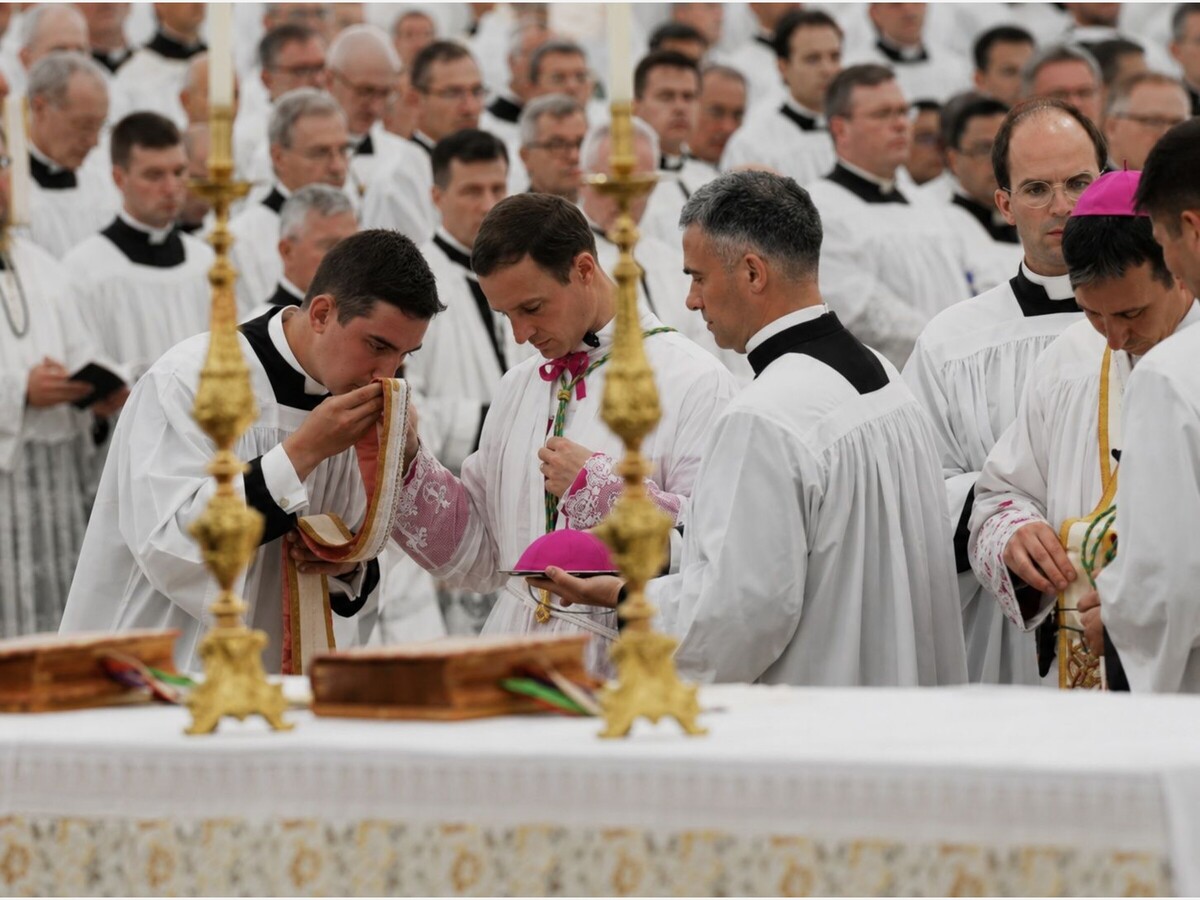
Father Marc Hanappier, center, attends his consecration ceremony as bishop in a tent set up outside the Society of St. Pius X seminary, in Econe, Switzerland, Wednesday, July 1, 2026 | Baz Ratner/AP Photo.



VATICAN CITY (July 2, 2026)
In one of the most consequential ecclesiastical rulings in nearly four decades, the Vatican on Thursday formally declared that the Society of Saint Pius X (SSPX), the traditionalist Catholic organization founded more than 50 years ago in opposition to reforms of the Second Vatican Council, has entered into formal schism with the Roman Catholic Church.
The decree, issued by the Vatican's Dicastery for the Doctrine of the Faith with the approval of Pope Leo XIV, follows the unauthorized consecration of four bishops one day earlier at the Society's international seminary in Écône, Switzerland. Vatican officials concluded that the ordinations constituted a deliberate rejection of papal authority, transforming what had long been described as an "irregular canonical situation" into a formal rupture with the Church.
The declaration marks the first major doctrinal crisis of Pope Leo XIV's pontificate and effectively ends decades of intermittent efforts by successive popes to reconcile one of Catholicism's most prominent traditionalist movements with Rome.
For Catholics in Minnesota, where the Society maintains nine churches and chapels, the Vatican's decision carries immediate pastoral and canonical implications.
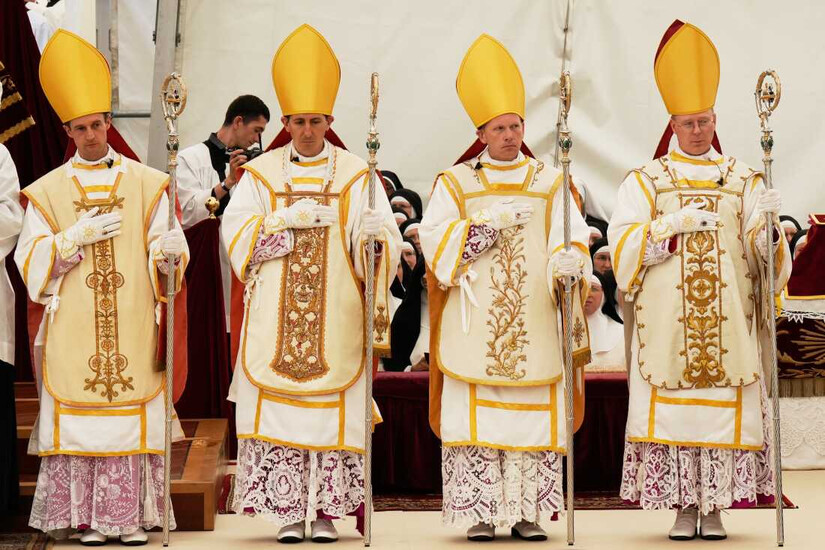
The immediate catalyst occurred on Wednesday, July 1, when the Society proceeded with the episcopal consecration of four new bishops despite repeated warnings from the Vatican not to do so.
The four newly consecrated bishops are Michael Goldade, Marc Hanappier, Michel Poinsinet de Sivry, and Pascal Schreiber. The ceremony was performed by Bishop Alfonso de Galarreta, assisted by Bishop Bernard Fellay, both longtime leaders within the Society.
Under Catholic canon law, no bishop may consecrate another bishop without an explicit papal mandate. Canon 1382 of the Code of Canon Law provides that such an act incurs automatic, or latae sententiae, excommunication.
According to Vatican officials, Pope Leo XIV personally appealed to SSPX leadership before the ceremony, urging them not to proceed in order to preserve ecclesial unity. The Society nevertheless moved forward with the ordinations.
Within twenty-four hours, the Holy See responded with a decree formally recognizing the Society as being in schism.
While unauthorized episcopal consecrations have long carried automatic canonical penalties, Vatican officials said the Society's latest actions represented something more profound than an isolated violation of Church law.
The Dicastery concluded that the SSPX had demonstrated a persistent refusal to recognize the governing authority of the Roman Pontiff and had therefore formally separated itself from full communion with the Catholic Church.
The decree formally excommunicates the bishops who participated in the unauthorized consecrations and declares that the Society itself now exists outside the visible communion of the Catholic Church. It also reverses important pastoral concessions previously extended by Pope Francis during ongoing reconciliation efforts, including permissions relating to certain sacramental ministries that had been granted in hopes of eventual reunion.
The Vatican further warned that Catholics who knowingly and formally adhere to the Society in opposition to the authority of the Pope likewise place themselves in a state of schism under canon law.
Church officials emphasized, however, that occasional attendance at an SSPX Mass does not automatically constitute schism. The decisive factor is whether an individual consciously rejects communion with the Pope and the Catholic Church in favor of allegiance to the Society.
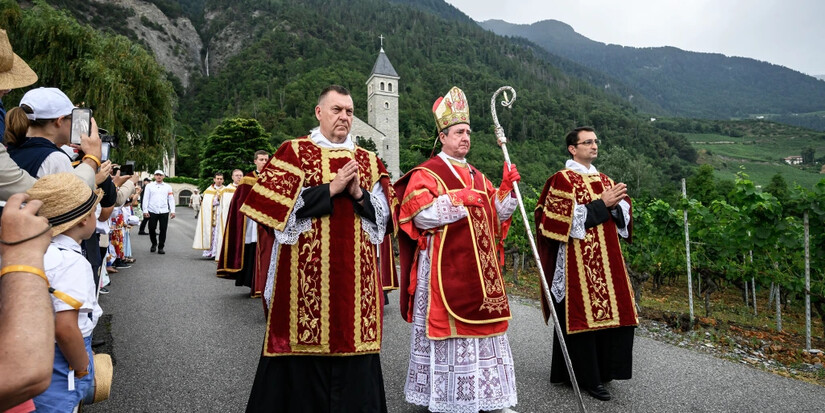
The roots of Thursday's declaration stretch back to the years immediately following the Second Vatican Council, the landmark assembly of Catholic bishops convened between 1962 and 1965.
Founded in 1970 by French Archbishop Marcel Lefebvre, the Society of Saint Pius X emerged as a movement determined to preserve what it viewed as traditional Catholic doctrine and liturgical practice in the face of sweeping reforms adopted by the Council.
Among the reforms most strongly opposed by the Society were the wider use of local languages rather than Latin in the celebration of Mass, expanded dialogue with other Christian communities and non-Christian religions, and Vatican II's teachings concerning religious liberty and the Church's engagement with the modern world.
The conflict reached an earlier breaking point in 1988 when Archbishop Lefebvre consecrated four bishops without the permission of Pope John Paul II.
Those consecrations resulted in automatic excommunications and prompted Pope John Paul II to declare that Lefebvre had committed a schismatic act.
In 2009, Pope Benedict XVI lifted the excommunications of the surviving bishops in an effort to reopen dialogue. Pope Francis later extended limited faculties allowing SSPX priests, under specific conditions, to validly hear confessions and assist at marriages, gestures widely interpreted as efforts to encourage reconciliation rather than endorsements of the Society's canonical status.
Despite years of negotiations, however, fundamental disagreements over the authority and teachings of the Second Vatican Council remained unresolved.
Minnesota has long been one of the Society's strongest centers in the United States.
The SSPX maintains nine churches and chapels throughout the state, including the Church of the Immaculate Heart of Mary in St. Paul and St. Robert Bellarmine Catholic Church and Academy in St. Cloud.
Those congregations now find themselves directly affected by the Vatican's ruling.
Speaking with MPR News, Susan Mulheron, Chancellor for Canonical Affairs for the Archdiocese of Saint Paul and Minneapolis, said the decree removes years of uncertainty surrounding the Society's ecclesiastical status.
For many Catholics, she noted, the SSPX had occupied an ambiguous position, neither fully reconciled with Rome nor formally declared outside the Church. Thursday's decree establishes a clear canonical boundary regarding the Society's relationship with the Catholic Church.
Archdiocesan officials are expected to continue providing guidance to parishioners seeking clarification about participation in SSPX communities and the practical implications of the Vatican's ruling.
Church leaders have also emphasized that the Vatican's action should not be interpreted as a rejection of Catholics who worship according to the Traditional Latin Mass.
Numerous diocesan and religious communities throughout the world continue to celebrate the older liturgy with Vatican approval while remaining fully united with the Pope.
The dispute concerns questions of ecclesiastical authority and communion rather than liturgical preference alone.
For decades, the Society of Saint Pius X occupied an unusual position in global Catholicism, existing outside ordinary ecclesiastical structures while successive pontiffs continued searching for a path toward reconciliation.
Thursday's decree signals that those efforts have reached their end, at least for now.
For Pope Leo XIV, it represents the defining institutional challenge of his young pontificate.
For the Society of Saint Pius X, it marks the culmination of a conflict that began more than half a century ago with disagreements over the future direction of the Catholic Church.
And for traditionalist Catholics around the world, including those worshipping in Minnesota, the Vatican's declaration establishes a new and unmistakable line between preserving ancient liturgical traditions and remaining in full communion with the See of Rome.
MinneapoliMedia | Community. Culture. Civic Life.



Sunny, with a high of 83 and low of 53 degrees. Partly Cloudy during the morning, patchy rain nearby in the afternoon, overcast in the evening, clear overnight.