Image
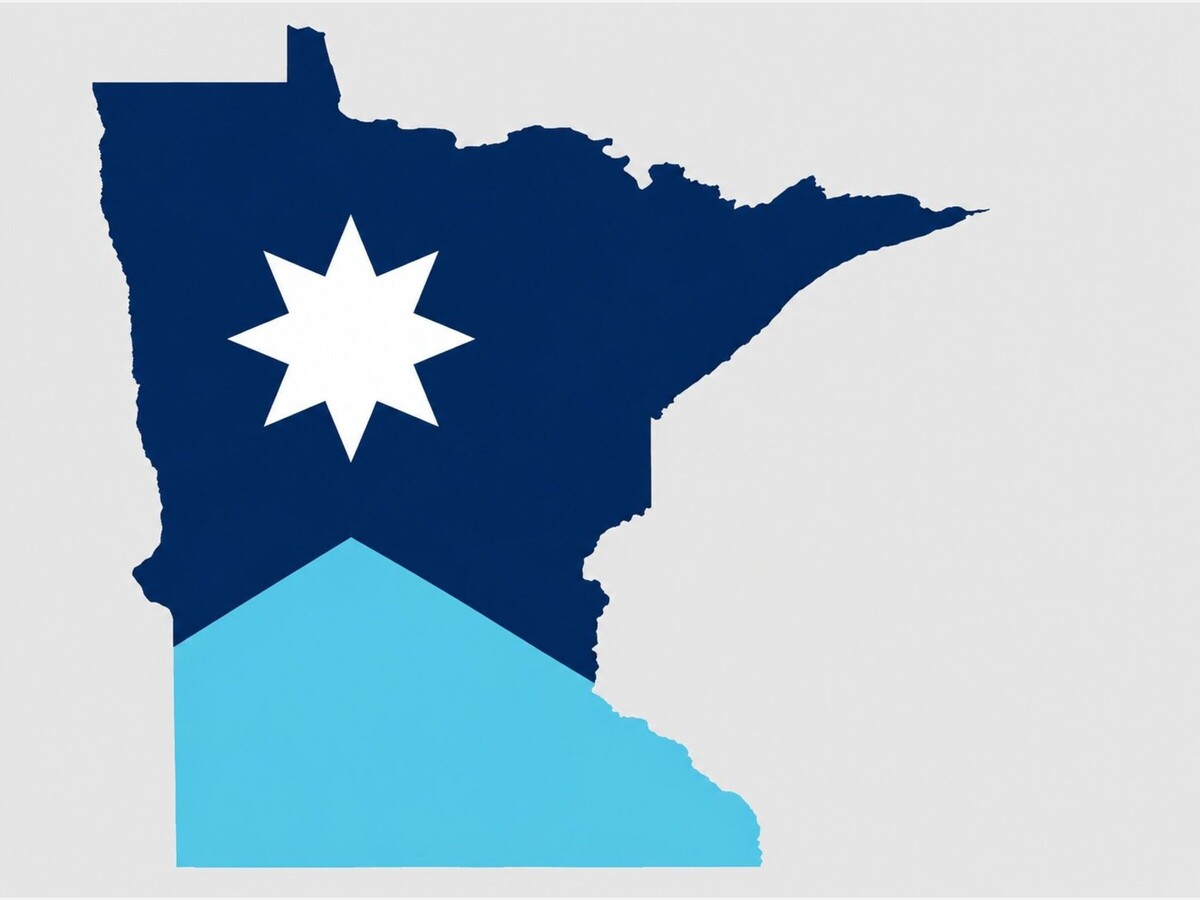



The numbers are moving in the wrong direction. The trend has persisted for a decade, and communities across the nation are already experiencing the direct consequences of allowing highly contagious, preventable diseases room to resurge.
Data from the Minnesota Department of Health reveals that during the 2024–25 school year, 5.7 percent of Minnesota kindergartners held a non-medical exemption from the measles vaccine. A decade prior, that figure stood at 2.9 percent. Concurrently, overall coverage for the measles, mumps, and rubella (MMR) vaccine among kindergartners hovered near 87 percent, well below the 95 percent threshold public health experts cite as necessary to maintain robust herd immunity.
Subsequent data for the 2025–26 school year confirms that vaccination rates continued their downward slide while non-medical exemptions rose. State health tracking shows that this vulnerability is unevenly distributed across Minnesota. While some school districts retain strong immunization rates, specific pockets, individual schools, and localized communities fall dangerously short of basic coverage targets.
Nationally, the pattern is equally clear. Federal reports show that 4.2 percent of U.S. kindergartners received an exemption from at least one required vaccine during the 2025–26 academic year, up from 3.6 percent the previous year. That accounts for roughly 155,000 children, with the overwhelming majority covered by non-medical opt-outs. National MMR coverage slid to 92.4 percent, exposing entire regions to avoidable health crises.
That decline would demand urgent attention in any circumstances, but 2026 has proven to be an extraordinary year for public health risks.
By mid-August, the United States had recorded 2,566 confirmed measles cases, marking the single largest annual surge the nation has witnessed in over 35 years. Minnesota investigated 17 confirmed cases through late June. Notably, state health authorities confirmed those cases originated from domestic exposures rather than international travel, proving that the virus is actively circulating within domestic networks.
This reality forces a necessary legislative conversation: Does Minnesota’s current exemption policy strike a fair balance between personal freedom and public safety?
Under current state law, children entering school or child care must show proof of immunization or secure an exemption. Medical exemptions are properly granted when a licensed physician certifies that a vaccine is medically contraindicated or when lab results confirm existing immunity. Those provisions are essential. No child who faces a genuine medical risk from a vaccine should ever be compelled to receive one.
However, Minnesota Statute 121A.15 grants a far broader allowance for non-medical exemptions. A parent or guardian needs only to submit a notarized statement asserting that immunizations conflict with their conscientiously held beliefs. The statute requires no consultation with a pediatrician, no verification of an established religious doctrine, and no formal education regarding disease risks. The notarized signature alone settles the matter.
That framework demands rigorous legislative review.
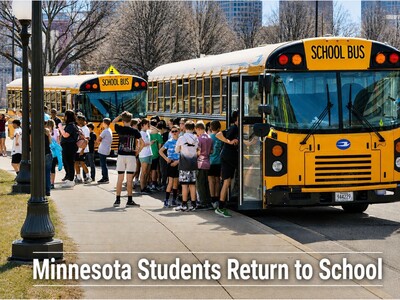
Respecting parental authority over a child’s health care is a foundational principle, but public policy cannot treat vaccination as a purely private decision. Decisions involving airborne, highly communicable pathogens carry immediate collective consequences. Children sit side-by-side in classrooms, ride crowded buses, share cafeterias, and gather on playgrounds. They return home to newborn infants, elderly grandparents, and family members undergoing medical treatments that weaken immune defenses.
School immunization statutes were never intended to extend state control over everyday family life. Instead, they were designed around a straightforward civic principle: when hundreds of children gather daily in public institutions, preventing infectious outbreaks becomes a shared community obligation.
Measles illustrates this reality with dangerous clarity. It ranks among the most infectious viral pathogens known to medicine. A single infected individual can transmit the virus simply by breathing or coughing, and airborne particles remain infectious in enclosed spaces long after the person has departed. Once immunizations drop below critical thresholds, controlling an outbreak becomes exceptionally difficult.
Minnesota has seen how quickly local vulnerabilities transform into active outbreaks. The state documented 75 domestic measles cases in 2017, followed by 70 cases in 2024, centered heavily in the Twin Cities metropolitan area. Another 26 cases followed in 2025. The confirmed cases recorded in 2026 confirm that transmission remains an ongoing threat.
Addressing this problem requires a change in tone as much as policy. Parents who harbor doubts about vaccines should not be mocked, dismissed, or labeled as anti-science. Scorn has proven completely ineffective as a public health strategy.
Parental hesitancy stems from diverse sources. Some families struggle with confusing online information, while others harbour deep-seated mistrust of governmental agencies or pharmaceutical industries. Some hold legitimate worries about potential side effects, and many have encountered healthcare systems where their concerns were brushed aside. In an era dominated by rapid digital communication, misleading claims often reach parents long before a medical professional has a chance to offer grounded context.
Public health agencies cannot rebuild trust if they treat every hesitant parent as a single monolithic block.
Consider Minnesota's Somali community, where public health leaders and local physicians have spent years working through persistent anxieties surrounding the MMR vaccine. Lasting progress in those neighborhoods has required consistent outreach from trusted community members, culturally respectful dialogues, and doctors willing to listen and explain without condescension.
Vaccine hesitancy is not unique to any single demographic. It exists across political affiliations, income levels, religious traditions, and geographic boundaries. The key takeaway is that institutional trust must be earned through deliberate, patient engagement.
Busy clinic routines complicate that effort. A brief five-minute exchange at the tail end of a well-child exam cannot undo months of continuous online exposure. Medical systems need to dedicate time to explain how vaccines operate, outline real risks alongside proven benefits, and clarify how safety monitoring functions. Parents deserve clear, respectful answers to difficult questions.
Yet offering respect and open communication does not mean Minnesota must maintain one of the most permissive exemption systems in the nation.
State lawmakers have already introduced measures to reform the law. Senate File 3439 proposes eliminating the conscientious-belief exemption specifically for the MMR vaccine. That measure passed the Senate Health and Human Services Committee in March 2026 and advanced to the Education Policy Committee, alongside its House companion, House File 3239. A broader proposal, Senate File 4458, seeks to remove conscientious-belief exemptions for all required school immunizations.
Neither bill has passed into law, leaving the existing notarized opt-out fully intact.
These proposals spark difficult debates over personal liberty, religious freedom, and parental rights. Lawmakers must weigh those principles carefully. Yet acknowledging individual rights does not resolve the policy dilemma. The Legislature must ultimately decide how much preventable risk a community should bear inside shared public spaces.
A middle path exists between outlawing all non-medical exemptions and leaving the door wide open.
Minnesota could mandate that any parent seeking a non-medical exemption first complete an educational consultation with a qualified healthcare provider. That conversation would review the medical risks of the target diseases, explain vaccine safety data, detail the operational rules that force unvaccinated students to stay home during active school outbreaks, and outline emergency protocols.
Such a requirement would not remove a parent's ultimate choice. It would simply ensure that any decision to opt out is fully informed.
Additionally, the state could require parents to renew non-medical exemptions annually rather than allowing a single document to cover a child's entire school career. Lawmakers could also improve public reporting by making school-level vaccination rates easily accessible to parents while fully protecting individual student privacy.
Further, state leaders should expand funding for community clinic networks that maintain direct, trusted relationships with underrepresented populations.
Policy must also account for logistics. Not every under-vaccinated child represents a firm ideological stance. The Minnesota Department of Health notes that many children lag behind on shots due to missed clinic appointments, lack of transportation, insurance gaps, or misplaced medical records. State systems must differentiate between intentional opt-outs and families facing administrative barriers to care.
Statewide immunization averages often hide severe local risks. A state may look safe on paper, yet contain individual schools or neighborhoods where coverage drops dangerously low. Protection depends on localized density. When unvaccinated children cluster in the same classrooms, sports teams, or houses of worship, the conditions for a localized outbreak increase significantly.
Independent studies examining states that tightened or eliminated non-medical exemptions demonstrate that policy changes yield measurable results. Research shows that removing broad non-medical exemptions leads to clear gains in kindergarten vaccination rates, including a four-percentage-point increase for MMR coverage over several years, with minimal shift toward fraudulent medical exemptions.
That evidence belongs at the center of legislative debates, alongside the legitimate concerns of parents who worry about expanding state authority.
The solution is not to ignore the concerns of either side. It is possible to honor parental rights while recognizing that contagious diseases create obligations that standard medical choices do not. A parent deciding on a non-contagious condition makes a private choice. A parent deciding whether to send an unprotected child into a school where hundreds of children interact daily makes a decision that impacts the entire community.
Minnesota must decide if a basic notarized form, obtained without professional consultation or medical instruction, provides adequate protection for its school-children.
The Legislature should resolve this issue using medical evidence rather than partisan rhetoric. Public officials must avoid turning routine immunizations into another ideological battlefield. Healthcare providers should listen to patient concerns without judgment, and state leaders must ensure vaccines remain free and easy to access for every family.
In return, the state should expect that opting out of community health protections requires more effort than signing a paper in front of a notary.
The trend lines are undeniable. Kindergarten vaccination rates are dropping, non-medical exemptions are climbing, and measles continues to reappear in Minnesota communities. National exemption figures have hit historic highs, and measles cases across the country have reached levels unseen in decades.
Waiting for a major public health crisis to strike before reforming state law is not a policy that respects parental choice. It is a failure of leadership.
Minnesota does not have to choose between respecting parents and safeguarding its children. It can, and must, do both. That work begins with accessible medical care, honest public communication, and a legislature ready to update state laws to match modern public health realities.

Local stories matter. Subscribe free to MinneapoliMedia and receive independent news, community reporting and important updates from Minneapolis, the North Metro and communities across Minnesota.
SUBSCRIBE FREE: https://minneapolimedia.town.news/subscribe
MinneapoliMedia | Community. Culture. Civic Life

Sunny, with a high of 81 and low of 61 degrees. Sunny for the morning, patchy rain nearby overnight.