67° and Cloudy
Image




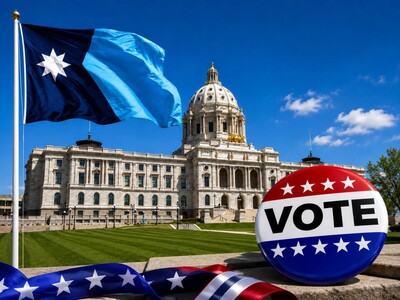
The direct-voting period began Friday, July 24, eighteen days before the primary. It represents a significant change from the traditional in-person absentee process used earlier in the election calendar.
Every county is required to provide at least one location where the new early-voting procedure is available for statewide elections.
Under Minnesota’s traditional in-person absentee system, a voter completes an absentee-ballot application, receives a ballot and returns it inside an envelope. A ballot board later reviews the envelope before the ballot can be accepted.
During the new early-voting period, voters complete a shorter certificate, receive their ballots and place the completed ballots directly into a ballot counter.
The process more closely resembles voting at a polling place on Election Day. Results remain confidential and cannot be reported until polls close.
Voters should consult their county or municipal election office because locations and operating hours vary by jurisdiction.
Minnesota voters may still request absentee ballots by mail without providing a specific reason.
Voters who choose mail delivery should allow enough time to receive, complete and return their ballots. Ballots must reach the appropriate election office by the statutory deadline to be counted.
Residents can use the Minnesota Secretary of State’s website to request a ballot, confirm their voter registration, locate an early-voting site, review a sample ballot or track a mailed absentee ballot.
Eligible residents who are not registered may register when voting by providing approved proof of residence.
The August 11 primary will decide which candidates advance to the November 3 general election.
Depending on where they live, voters may see contests involving federal, state, county, judicial or municipal offices.
Minnesota’s partisan primary ballot requires voters to select candidates from only one political party in the partisan section. Voting for candidates from more than one political party can invalidate that portion of the ballot.
The nonpartisan section is separate and may contain judicial or local contests.
Sources:
MinneapoliMedia | Community. Culture. Civic Life


Overcast, with a high of 86 and low of 67 degrees. Moderate rain for the morning, overcast in the afternoon,