82° and Light rain
Image
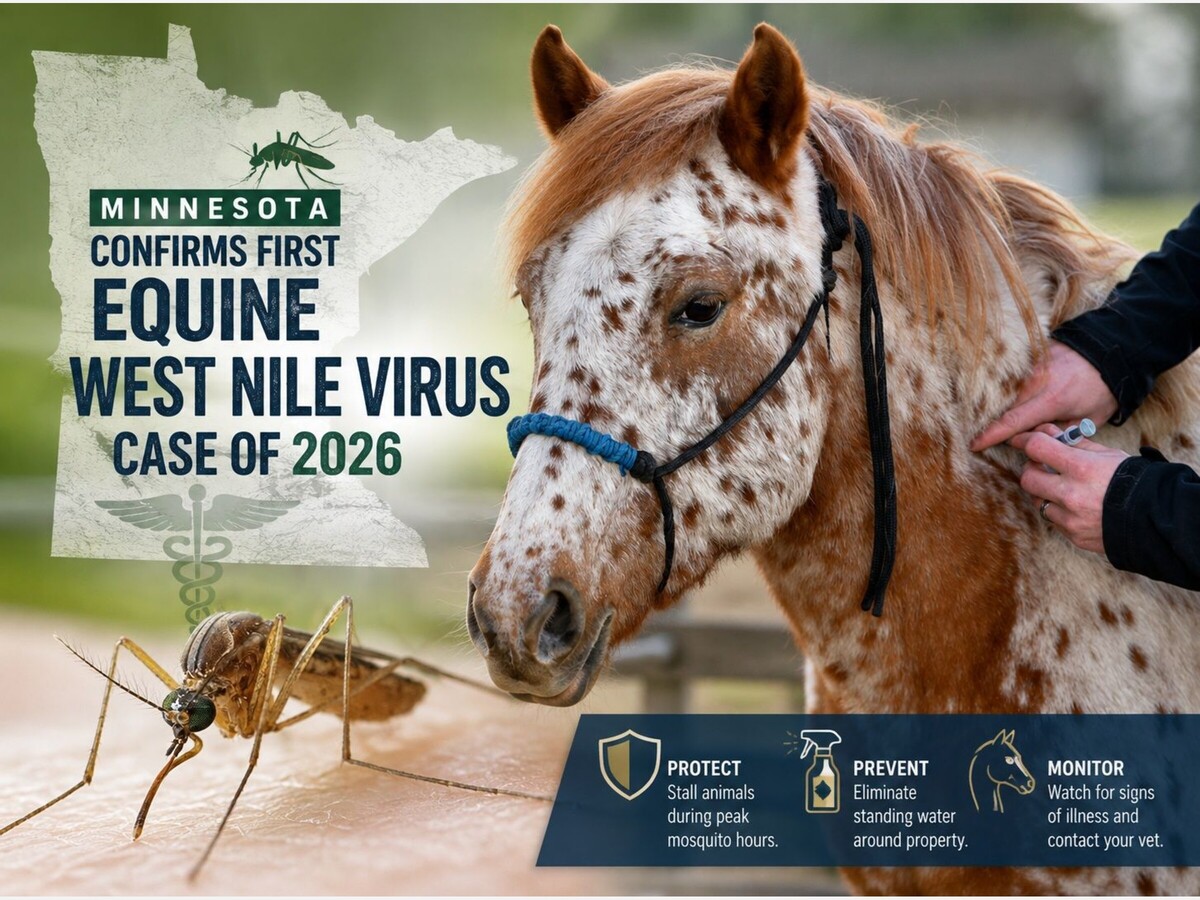



The infection was identified in an unvaccinated 3-year-old standardbred gelding in Polk County, according to the Minnesota Board of Animal Health.
The horse developed moderate weakness and loss of muscle coordination and fell during a neurological examination. Its veterinarian began supportive treatment, and the animal showed improvement within several days.
West Nile virus circulates between infected birds and mosquitoes. A mosquito that feeds on an infected bird can transmit the virus to a horse or person through a later bite.
An infected horse cannot transmit West Nile virus directly to another horse or to a person.
The virus can cause inflammation of the brain and spinal cord. Mildly affected horses may recover completely, but severe infections can result in lasting neurological damage or death.
The mosquito species responsible for spreading West Nile virus are particularly active during July and August, making late summer an important period for prevention.
The Board of Animal Health said most equine infections reported in Minnesota occur in horses that are unvaccinated or have not received all recommended vaccinations. Owners should consult a veterinarian about initial vaccinations and any necessary boosters.
Horse owners can also reduce risk by removing standing water where mosquitoes reproduce.
Recommended precautions include changing drinking-trough water every week, draining stagnant puddles, mowing long grass and removing old tires, cans and other objects that can hold rainwater.
Screens should be installed and maintained over stable doors and windows where appropriate. Mosquito repellents approved for horses can provide additional protection when used according to label instructions.
Owners should contact a veterinarian promptly if a horse develops weakness, poor coordination, muscle tremors, difficulty standing, fever or other neurological symptoms.
Veterinarians and laboratories are required to report non-negative West Nile virus test results in animals to the Minnesota Board of Animal Health.
Additional information is available from the Minnesota Board of Animal Health.

Local stories matter. Subscribe free to MinneapoliMedia and receive independent news, community reporting and important updates from Minneapolis, the North Metro and communities across Minnesota.
SUBSCRIBE FREE: https://minneapolimedia.town.news/subscribe
MinneapoliMedia | Community. Culture. Civic Life


Light drizzle, with a high of 85 and low of 67 degrees. Light drizzle in the morning, light rain in the afternoon, overcast for the evening, light drizzle overnight.