76° and Overcast
Image



Kyler Murray, whom Head Coach Kevin O’Connell named the starter earlier in August, leads a quarterback room that also includes McCarthy, veteran Carson Wentz and Brosmer.
The Vikings said it is the first time in at least a decade that the team has kept four quarterbacks on its initial 53-player roster.
The decision provides extensive experience and developmental depth at the sport’s most important position, but every additional quarterback occupies a roster place that cannot be used to strengthen another position.
Minnesota enters the regular season with only eight offensive linemen, four outside linebackers and five cornerbacks on the initial roster.
The roster decision does not change Minnesota’s declared starting quarterback.
O’Connell named Murray the starter August 11 after an offseason and training-camp competition with McCarthy. Murray is preparing to make his Vikings debut September 13 when Minnesota hosts the Green Bay Packers.
Murray, the first overall selection in the 2019 NFL Draft, enters his eighth professional season.
The opening game contains an additional connection. Green Bay’s defense is coordinated by Jonathan Gannon, Murray’s former head coach with the Arizona Cardinals and a former Vikings assistant.
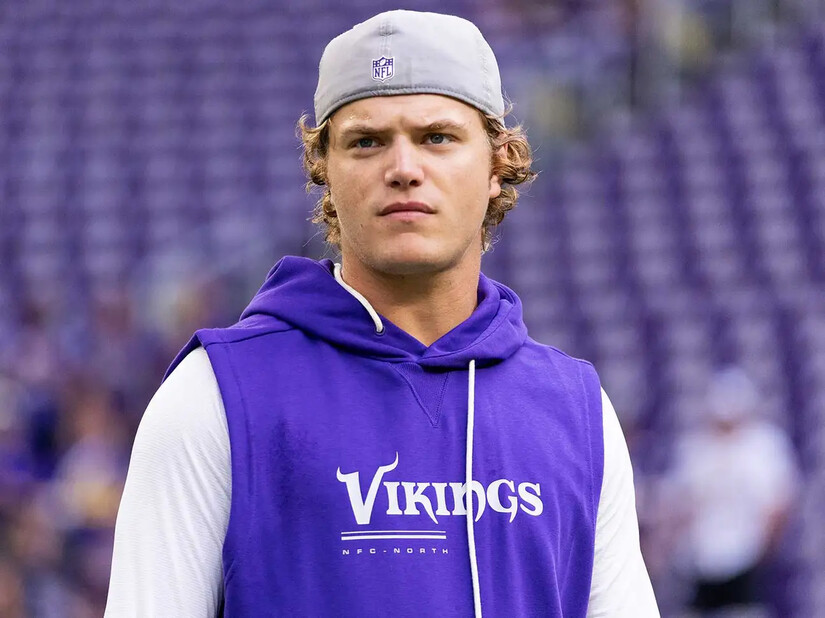
McCarthy, selected 10th overall by Minnesota in 2024, enters his third NFL season. He made 10 starts during the 2025 campaign but was held out of the final 2026 preseason game because of an ankle injury.
The Vikings’ decision to keep him confirms that he remains part of the organization’s plans despite losing the starting competition to Murray.
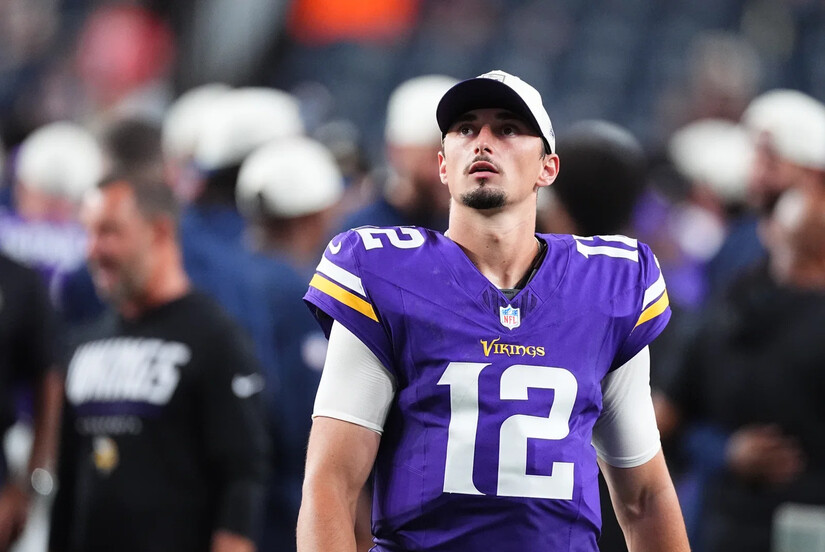
Brosmer’s inclusion was the least predictable decision in the quarterback room.
The former Gophers quarterback entered the NFL as an undrafted free agent in 2025 and became the first undrafted rookie quarterback to start a game for the Vikings.
He appeared in seven games and made two starts during his rookie season, completing 47 of 71 passes for 328 yards. He threw four interceptions and did not record a touchdown pass.
His first start came against Seattle in Week 13. He later started against Detroit and entered other games in relief of McCarthy and Wentz.
Brosmer’s difficult moments, including the four-interception performance in Seattle and preseason struggles this summer, raised questions about whether Minnesota would expose him to waivers while attempting to return him to the practice squad.
The Vikings instead protected him on the active roster.
The decision indicates that Minnesota continues to value his familiarity with O’Connell’s offense and believes another team might have claimed him if he had been waived.
Wentz returns after making five starts for Minnesota in 2025 before undergoing season-ending shoulder surgery.
The veteran has made 99 regular-season starts during his career. He gives the Vikings an experienced option if Murray is injured or unavailable.
Murray, Wentz and McCarthy were each selected among the first 10 players in their respective NFL drafts:
Keeping all four reduces the risk of being forced to find a quarterback unfamiliar with the offense during the season. It also creates continuing questions about how practice repetitions and game-day roles will be divided.
The emergency third-quarterback rule may influence how Minnesota handles its weekly active roster, but the team must still decide which quarterbacks dress for individual games.
Minnesota retained its projected starting offensive line:
The three initial reserves are tackles Ryan Van Demark and Caleb Tiernan and guard Joe Huber.
That leaves the Vikings with limited depth behind the starting group.
Backup center Michael Jurgens was placed on injured reserve with a designation to return. He must miss at least four regular-season games before becoming eligible for activation.
Huber could serve as the temporary backup center, although the Vikings may make another move after evaluating players released by other teams.
Minnesota also traded offensive lineman Walter Rouse to New England. The Vikings sent Rouse and a 2027 seventh-round selection to the Patriots in exchange for a 2027 sixth-round pick.
Seventh-round center Gavin Gerhardt was among the offensive linemen waived.
Aaron Jones and Jordan Mason lead the running-back room after producing 747 and 809 yards from scrimmage, respectively, in 2025.
Sixth-round rookie Demond Claiborne secured the third running-back position. Zavier Scott was waived, while Jermar Jefferson was waived with an injury designation.
Rookie fullback Max Bredeson made the roster as Minnesota begins the post-C.J. Ham era.
Bredeson, a fifth-round selection from Michigan, gives the offense a traditional lead blocker who can also provide a receiving option from the backfield.
The Vikings kept six wide receivers:
Bell earned a roster position after joining the team as an undrafted rookie.
Jefferson remains the central figure in Minnesota’s passing game, while Addison and Jennings provide experienced options around him.
The roster provides six receivers, but the final weekly combinations may change depending on special-teams roles, injuries and the game plan.
Minnesota retained T.J. Hockenson, Josh Oliver, Ben Yurosek and Gavin Bartholomew.
Rather than choose between Yurosek and Bartholomew for the final position, the Vikings kept both.
Maintaining four tight ends may allow O’Connell to use heavier offensive formations, particularly while the team develops its running scheme under Assistant Head Coach Frank Smith and offensive line coach Keith Carter.
Marshall Lang and Matt Lauter were waived. Bryson Nesbit was waived with an injury designation.
The Vikings kept four outside linebackers:
Tyler Batty was placed on season-ending injured reserve after suffering a torn anterior cruciate ligament.
His injury reduces Minnesota’s depth at a position responsible for pressuring quarterbacks, setting the edge against the run and contributing on special teams.
The Vikings could search the waiver wire or sign a veteran after teams across the league complete their roster reductions.
Minnesota retained Blake Cashman, Eric Wilson, Jake Golday and Ivan Pace Jr. at inside linebacker.
The six defensive linemen on the initial roster are:
Isaiahh Loudermilk was among the most notable players released.
Williams made the initial roster for the second consecutive season, while Orange provides another young developmental option.
The group carries upside but relatively limited established starting experience compared with some previous Vikings defensive fronts.
Minnesota kept Byron Murphy Jr., Isaiah Rodgers, Chuck Demmings, James Pierre and Zemaiah Vaughn.
Murphy and Rodgers are expected to lead the group. Pierre brings additional NFL experience, while Demmings and Vaughn provide younger depth.
The Vikings waived Tre Hawkins, Bryce Phillips and Jarod Washington. Marcus Allen was waived with an injury designation.
Five cornerbacks represent a relatively lean group for a defense that regularly requires multiple defensive backs. Safeties and versatile defenders such as Josh Metellus may help provide coverage flexibility.
The initial group of safeties includes:
Harrison Smith was not included on the initial roster, leaving open the question of whether the longtime Vikings safety will return.
Smith’s absence is one of the most significant unresolved matters surrounding the roster.
The six-time Pro Bowl selection has spent his entire NFL career with Minnesota and has been one of the most recognizable players of the franchise’s modern era.
The Vikings have not closed the door on a possible return. His status may depend on health, roster space, contract considerations and discussions between Smith and the organization.
Tavierre Thomas was released, while Kahlef Hailassie was waived.
The Vikings retained their established long snapper, Andrew DePaola, and kicker, Will Reichard.
Rookie Brett Thorson won the punting position over veteran Johnny Hekker.
Hekker, one of the most accomplished punters of his generation, was released after the preseason competition.
Choosing Thorson gives Minnesota a younger and potentially less expensive option, but it also means moving away from Hekker’s experience as a punter, holder and postseason performer.
The 53-player roster announced Sunday is not necessarily the group Minnesota will carry into its opening game.
The Vikings can claim players waived by other teams, sign released veterans, move players to injured reserve and establish a practice squad.
Players who were waived must generally pass through the league’s waiver process before they can sign with a practice squad. Veterans whose contracts were terminated may sign elsewhere without being claimed.
Minnesota must also determine whether it needs immediate additions at outside linebacker, offensive line, cornerback or safety.
The four-quarterback decision could be temporary if the Vikings are waiting for a trade opportunity or protecting Brosmer while evaluating the league’s waiver activity.
For now, however, Murray, McCarthy, Wentz and Brosmer all remain part of Minnesota’s active roster as the Vikings turn from preseason evaluation toward their September 13 opener against Green Bay.

Local stories matter. Subscribe free to MinneapoliMedia and receive independent news, community reporting and important updates from Minneapolis, the North Metro and communities across Minnesota.
SUBSCRIBE FREE: https://minneapolimedia.town.news/subscribe
MinneapoliMedia | Community. Culture. Civic Life


Overcast, with a high of 77 and low of 55 degrees. Partly Cloudy for the morning, sunny in the afternoon, overcast in the evening,