57° and Clear
Image



MINNEAPOLIS, MN (August 25, 2026)
When Mhonpaj Lee was a child, farming did not look like freedom.
It looked like waking early, working through heat, mosquitoes and ticks, and walking crop rows that seemed to stretch beyond their visible end. It meant helping her family prepare food the night before going to market, setting up tents the next morning and doing whatever labor was necessary because eight children had to be fed on the limited income their parents brought home.
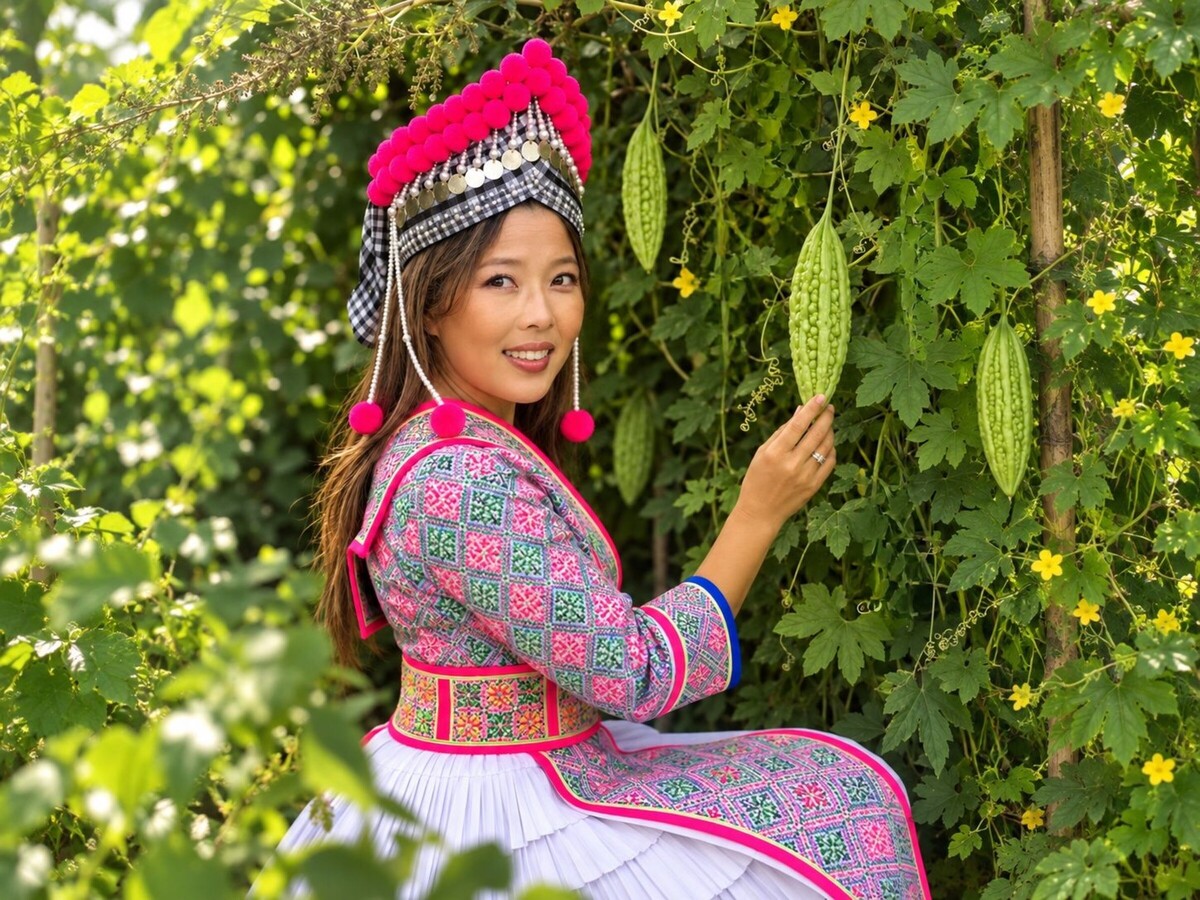
The family did not take vacations to Disney World. Restaurant meals were so unusual that Lee still remembers going to McDonald’s once because an older sister was dating someone who took them there. Her mother sewed clothes for the children, sometimes producing outfits that Lee thought looked like pajamas or fluffy dresses with gathered ankles.
The children wore what they had, kept their shoes clean and continued wearing them for years. They ate food grown and prepared at home. Lee did not fully understand that the family was poor because her parents worked to make deprivation feel ordinary and manageable.
“You never knew that you were living in poverty,” she said.
Her parents wanted something different for their children. In their understanding, farming was the unforgiving work people did when more secure opportunities were unavailable. They wanted Lee to obtain an education, enter a respected profession and work indoors, preferably somewhere with air conditioning and dependable benefits.
Lee wanted that, too.
She considered medicine and law. She studied hard, pursued college and began preparing for a professional life far removed from the fields she had spent her childhood trying to escape.
Today, a certified-organic farm carries her name.
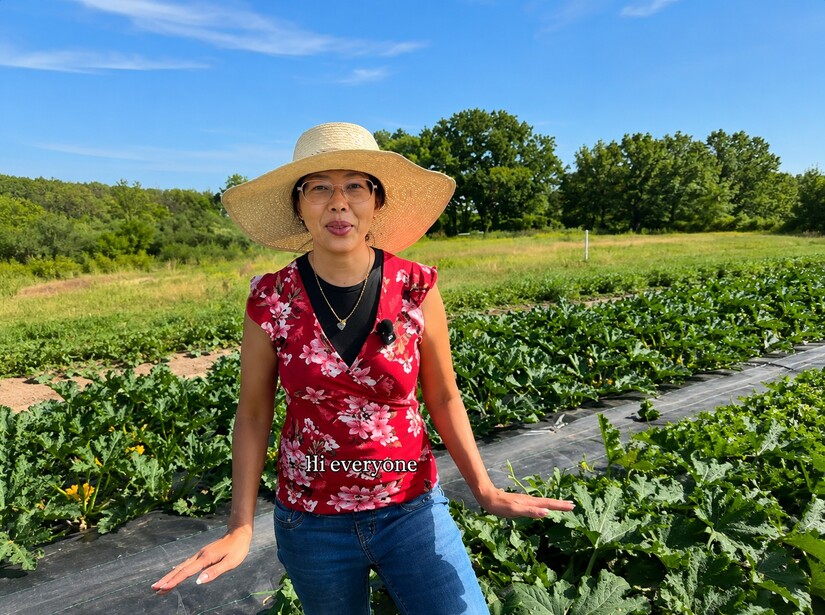
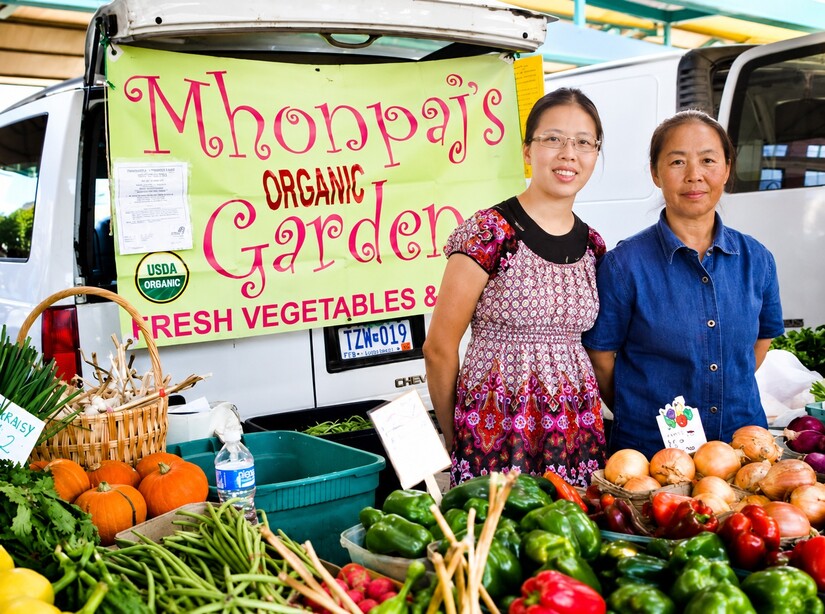
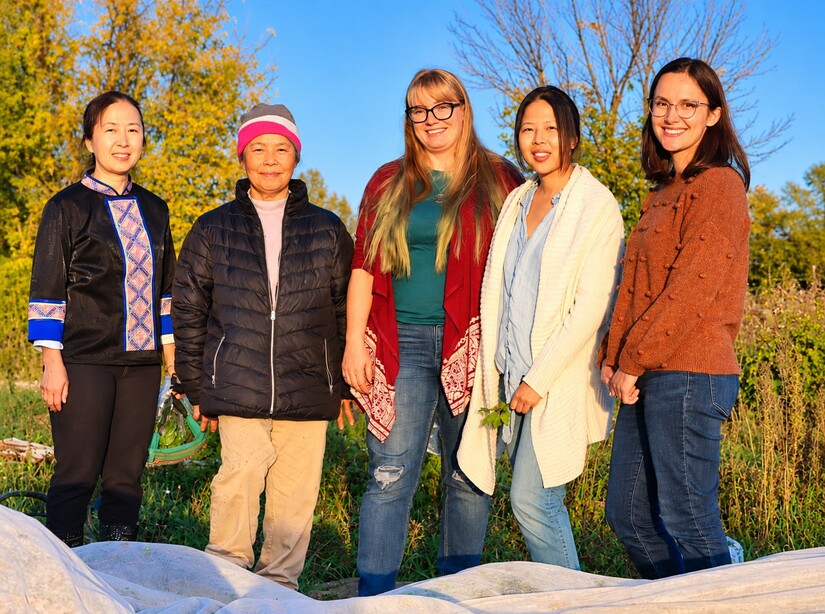
Mhonpaj’s Garden, the mother-daughter operation run by Lee and her mother, May Lee, became Minnesota’s first Hmong-owned certified-organic farm in 2010. The family grows vegetables, herbs, bedding plants and other crops on land in the eastern Twin Cities region.
Behind the certification and rows of produce is a story about war, migration, poverty, health, grief and an adult daughter’s decision to reconsider everything she thought she understood about her parents’ work.
Lee says her name refers to a flower, an association she also connects with cross-pollination. That meaning is appropriate for someone whose life now moves among agriculture, health education, real estate, family history and community advocacy.
“Mhonpaj represents a culmination of hardship,” Lee said. “I carry the DNA of my dad, my hero, a Hmong veteran who was never fully recognized by the United States government. I feel like that is who I stand for, the lineage where the blood of somebody who is no longer here still has a legacy that lives through me.”
For Lee, returning to agriculture was not the fulfillment of a childhood dream. It was an act of what she calls “unconditional love.”
Her father’s life sits at the center of that story.
Lee is the daughter of Hmong refugees from Laos. Her father fought during the conflict commonly known as the Secret War in Laos, when Hmong soldiers supported the United States during the Vietnam War era. He was wounded, Lee said, and carried the physical effects of war throughout his life.
As a child, she could see the evidence of an injury on his shoulder. She also remembers that he had difficulty with one knee. Even after the family arrived in the United States, his body continued to bear the consequences of the conflict he had survived.
Like many Hmong veterans and their families, he came to the United States expecting that his service would be recognized and that the country he had supported would help his family build a secure future. Lee remembers a different reality.
Her father worked because he had no practical alternative. The family survived through physical labor, resourcefulness and the expectation that everyone would contribute.
Lee recalls her mother working without equipment that many American farmers would consider basic. Before the family could afford proper boots, she said, her mother wrapped plastic bags around her feet. Without a car, she walked from the family’s public housing community at Mount Airy to appointments at Bethesda and carried necessities home while learning English and raising eight children.
The Lees farmed rented ground for years. They could grow food on it, but it did not belong to them. Each season carried the instability of cultivating land on which their future was never completely secure.
The entire family participated. Lee remembers helping with cucumbers, working at markets and preparing food for sale. Market days required labor long before customers arrived. Tents, produce and prepared foods had to be made ready, transported and arranged.
As a child, Lee experienced farming primarily through its physical demands. She remembers looking across rows of cucumbers and feeling that the work would never end. After falling asleep, she would sometimes dream about the crop waiting for her.
“I knew that I wanted to work in air conditioning,” she said.
Her determination to find a different future appeared early. At 14, Lee sought an opportunity with the Science Museum of Minnesota. She remembers traveling there on her own, learning the exhibits and explaining subjects such as trilobites to visitors.
She wanted knowledge and access to a world larger than the one poverty seemed prepared to assign her.
“I just wanted to do everything I could to learn,” she said.
Her understanding began to change in college.
During an educational trip to Honduras, Lee met an agricultural engineer she remembers as Daniel. He was working with sustainable agriculture in economically disadvantaged communities, including using methane as an energy source.
Lee remembers him describing what happens when a country’s most educated people take their abilities elsewhere rather than returning to serve the communities that formed them.
“We take our talents and we leave the country,” she recalled him saying. “All the engineers and scholars never give back to our community. We take our best talent, and we give it to corporate.”
The observation stayed with her. Lee had spent years imagining education as her route away from farming. Now she began questioning whether leaving her community behind was the only measure of success.
Her health was also changing.
College dining introduced her to a routine of pizza, pasta and processed food that differed sharply from the fresh meals her family prepared at home. She gained weight and developed digestive problems. The experience pushed her to reconsider her academic direction and concentrate on health education and physical fitness.
She became a fitness instructor on campus and studied the relationships among food, movement, environmental conditions and long-term health. The education that was supposed to carry her away from farming gradually gave her a reason to return.
She began to understand that her parents possessed knowledge no university classroom had taught her.
The food they grew was not merely evidence of poverty. It was one of the reasons the family had survived poverty. The meals they cooked were not proof that they could not afford restaurants. They represented nutrition, cultural continuity and self-reliance.
The family’s commitment to organic production was also shaped by illness. Lee believes her grandmother’s cancer was connected to years of exposure to pesticides while farming conventionally. That experience influenced the family’s decision to pursue organic methods and strengthened Lee’s interest in the relationships among agriculture, human health and the environment.
Her mother and one of her sisters later spent years researching Hmong herbs traditionally used during the postpartum period. Lee said the work involved scientific partners who helped identify and document the plants, including through DNA analysis.
The project was also an act of preservation. As elders die and younger generations grow further removed from farming, knowledge about culturally important plants can disappear with them.
The garden became a place where inherited knowledge and formal education could meet.
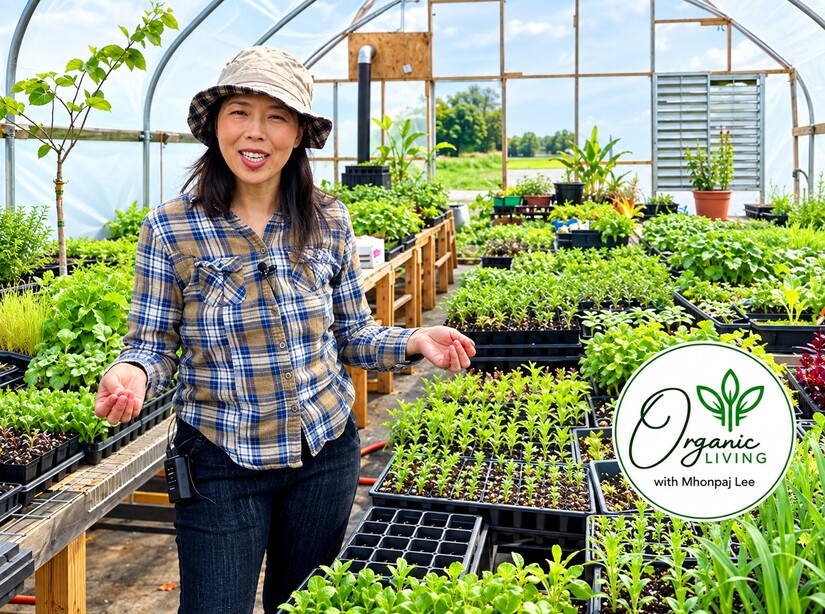
Agriculture also brought Lee back into close partnership with her parents.
Her father continued working into old age despite injuries and physical hardship. Lee remembers watching him labor in extreme heat, pulling heavy loads and refusing to allow discomfort to stop him. He grew squash and other produce, took food to market and found particular satisfaction in giving part of his harvest away.
Lee recalled that he would return home disappointed when an organization could not accept some of his produce. He had grown the food because he wanted someone who was hungry to eat it.
Even after developing a hernia, she said, he continued to farm.
Looking at him, Lee found it difficult to justify abandoning her own obligations.
“I said to myself, ‘I have no excuse for not waking up early,’” she recalled.
Her father carried the same insistence into her education. When Lee nearly completed a master’s degree in leadership but considered walking away after a professional disappointment, he continued asking about the credential.
“You already walked the stage, but where’s the degree?” she remembers him telling her.
He kept calling until she completed the remaining course.
Lee earned the degree, but advancement within established institutions did not unfold as she expected. While working at Hennepin County Medical Center, she became involved in her union and advocated for interpreters serving patients who spoke Hmong, Somali, Spanish and other languages.
She believed she was speaking honestly about the needs of workers and patients. She came to believe that such advocacy reduced, rather than improved, her opportunity to move into management.
“I didn’t know that when you speak from your heart, you make enemies,” she said.
When the leadership opportunity she had prepared for did not materialize, Lee confronted a painful question. She and her husband had pursued education, credentials and the path they had been told would lead to security. Still, they struggled to find institutions that recognized the full value of what they could contribute.
Their answer was entrepreneurship.
Their responsibilities had begun early. Lee said that after her husband’s father died of cancer, she and her husband assumed responsibility for helping his younger brothers move toward adulthood. They helped them with school, employment and the transition into family life. Lee also helped care for her mother-in-law, who had diabetes.
To build an independent livelihood, Lee worked overnight as a sushi chef while moving into real estate. Her husband developed experience in financial services, lending, carpentry and construction.
Together, they began assembling the knowledge required to purchase, finance and improve property.
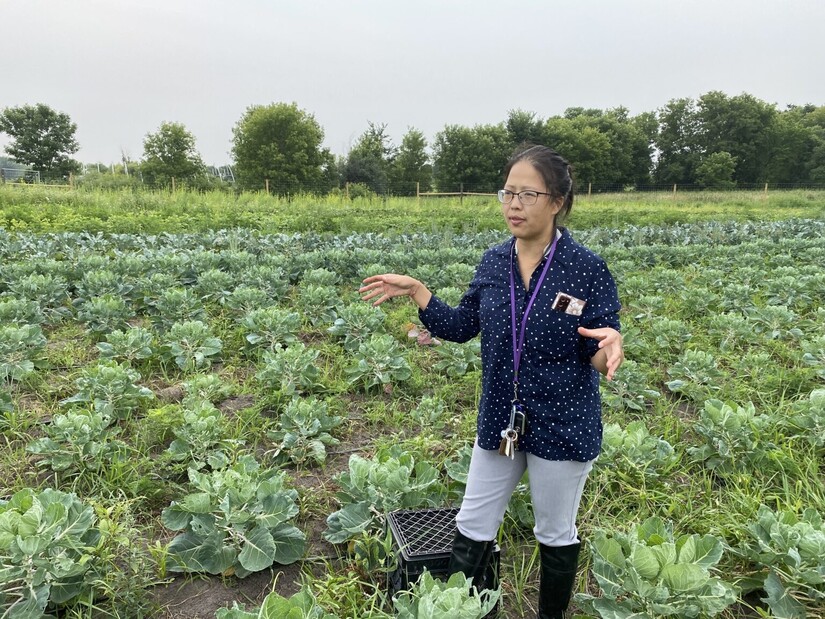
For Lee, real estate was not a departure from agriculture. It was a response to one of the most persistent problems she had witnessed among immigrant and emerging farmers.
They knew how to grow food. Many did not know how to acquire secure access to land.
She named her brokerage Inspire Access Realty.
“If you don’t think you can get to your dream, I will help you with your business planning and your goals,” she said.
Lee said she participated in advocacy supporting a $20,000 grant for qualifying first-time farmland buyers. She also said she has helped approximately 24 families gain access to land, including Hmong, West African, Ethiopian and Spanish-speaking families.
Her assistance does not necessarily end with a property transaction.
Farmers may need to understand wells, zoning, financing, business planning and the infrastructure required to make rural property productive. Lee said she helps clients navigate those questions because she has faced many of them herself.
Her family eventually committed its savings to approximately 20 acres in the eastern Twin Cities region. Houses and development have since moved closer to the property, increasing the temptation to sell land that has become more valuable.
There are moments when exhaustion makes that option attractive.
Lee and her husband are raising five children. They balance the farm, their careers, household responsibilities and the continuous reinvestment required to sustain an agricultural operation. Money earned from the farm frequently returns to the land through equipment, structures and new production.
Some evenings, Lee imagines selling everything, moving into a smaller townhouse and concentrating only on the needs of her immediate household.
Then she remembers what ownership means.
Her family spent years farming other people’s property. Her parents came to the United States after displacement and built their lives without the security they had expected. The land Lee now farms is demanding and expensive, but it is also somewhere the family can finally call home.
“That feeling of being homeless all the time, not having a place,” she said. “Finally, we have something we can call home. We could actually settle down.”
That experience has defined her professional purpose. She wants other farmers, particularly those from immigrant communities, to understand that land ownership is possible and to have someone who can help them navigate the process.
“Our legacy is about access,” she said.
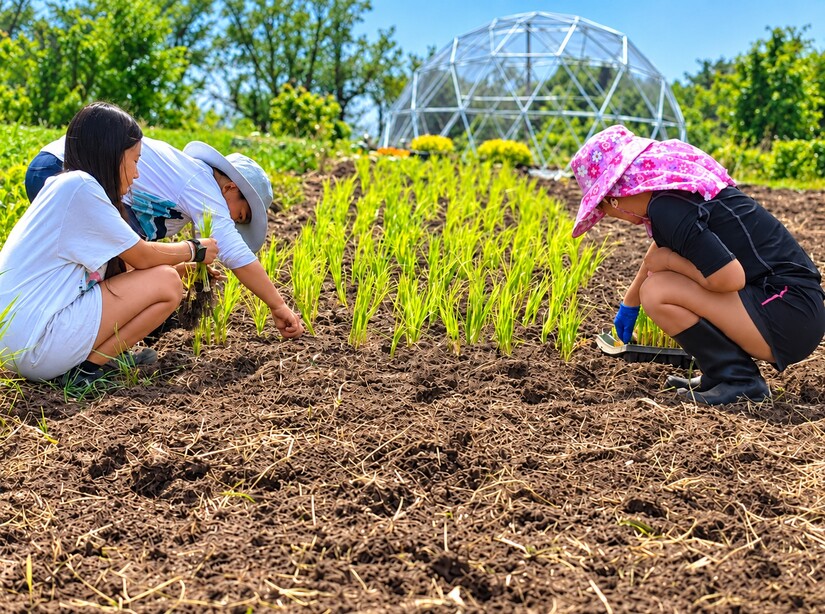
The farm has also become a place where Lee’s mother can continue working, grieving and teaching.
May Lee is now in her 70s. Outsiders sometimes question why she is still farming rather than retiring. Her daughter sees the work differently. Farming keeps her physically active, mentally engaged and connected to the husband she lost.
“That’s the way she’s grieving,” Lee said. “That’s her healing.”
This is where Mhonpaj Lee’s understanding of farming moves beyond production and commerce. The land is inseparable from her family’s cultural and spiritual traditions.
Lee describes herself as someone who once approached life through strategy, evidence and practical analysis. She was skeptical about some traditional Hmong spiritual practices. The death of her father altered how she understood grief and the relationship among family, nature and spiritual well-being.
After his death, Lee struggled with exhaustion and later learned that she was anemic. She sought help from an aunt who practices as a Hmong shaman.
During the consultation, Lee said, her aunt used a penny as part of a traditional spiritual practice. When the coin stood on its edge, the experience became a turning point in Lee’s understanding of the traditions she had previously questioned.
“That was my first encounter with what spirituality and healing meant,” she said.
For Lee, the experience did not replace her formal education or her interest in science. It opened another way of understanding how people seek grounding, meaning and connection when grief overwhelms them.
She also began noticing small occurrences in the fields that felt significant.
After her father died, a single corn plant appeared in the middle of a planting of mustard greens. Her mother discovered another solitary corn plant inside her greenhouse.
Lee understands that an animal could have carried the seeds. She does not offer the plants as scientific proof of anything. In her grief, however, they felt like the quiet presence of her father.
“I feel like Dad planted it there,” she remembers thinking.
The experience helped her recognize that agricultural knowledge within her family has always contained more than instructions about planting and harvesting. It includes observing animals, interpreting seasons, honoring ancestors, responding to illness and remaining grounded during periods of loss.
Her mother continues teaching her about plants used in Hmong healing traditions. A greenhouse built through a small grant years earlier now shelters herbs connected to that knowledge. Each plant preserved there carries language, memory and a relationship with elders who may no longer be present to explain it.
Lee finds similar lessons in the natural world. Monarch butterflies travel great distances before gathering in their wintering grounds. Salmon return to the waters from which their lives began. She sees in those migrations a recurring movement toward home.
That pattern helps her understand her father’s death and the Hmong funeral tradition of guiding a person’s spirit toward the ancestral homeland.
“We all return back where we came from,” she said.
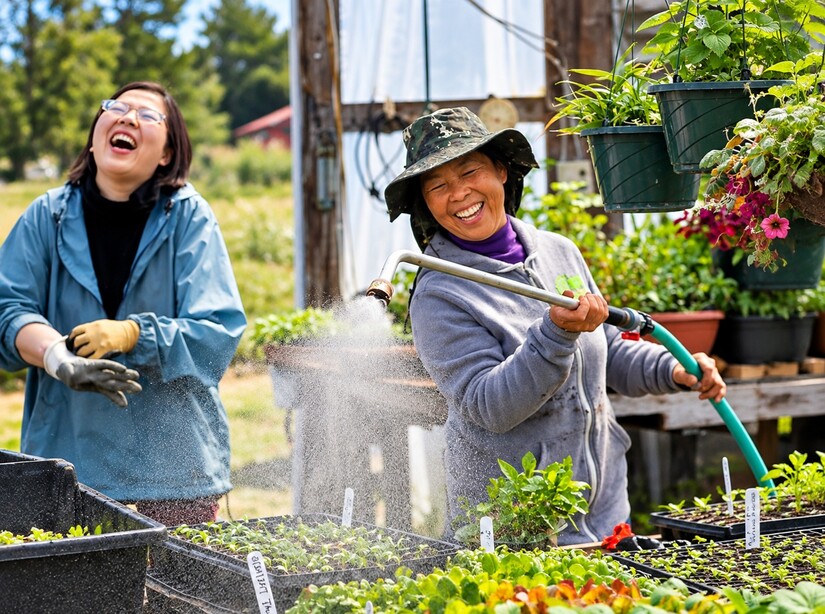
The title of the Food Tank program, “Celebrating Minnesota’s Farmers: A Love Story,” holds a complicated meaning for Lee.
The love she describes is not a sentimental attachment to picturesque fields. It is the love that remains after heat, debt, fatigue, uncertainty and physical pain have removed any romantic understanding of agriculture.
It is the love that caused a wounded father to grow food he could give to people who were hungry. It is the love that kept a mother working after migration, poverty and the loss of her husband. It is the love that brought a daughter back to work she once believed she had to escape.
Lee does not conceal the cost.
Her family has experienced burnout. Farming in Minnesota means contending with a short growing season, high heating expenses and unpredictable weather. She wants to build a larger greenhouse and botanical garden where her mother’s plants can remain protected without being moved indoors and outdoors as the seasons change.
Still, Lee and her husband continue imagining what could be built. One evening, she said, they stayed awake until midnight discussing the possibility of training 20 farmers to purchase land within a year.
To relatives, their plans can sound improbable. To Lee, the ideas are extensions of the same mission.
“We’re going to save the world from hunger,” she said, laughing at the scale of the ambition but not withdrawing it.
Food, in Lee’s world, is also an expression of hospitality.
When Haven Worley, a member of the Food Tank production team, came to film her, Lee stopped the work until her visitor had eaten. She prepared cucumber and papaya salad, bitter melon with eggs, burgers and zucchini harvested from the farm.
The meal demonstrated what Lee believes contemporary life too often removes: time to prepare fresh food, sit with another person and talk.
“That’s what I’m talking about,” she said. “Taking time out of your day, cooking fresh food and talking to someone.”
She does not measure the farm’s success solely through revenue. If it eventually produces substantial wealth, she said, she will use the money to build the greenhouse and pursue other projects she imagines. For now, much of what the family earns is reinvested in the operation.
The larger return is visible in the families who obtain land, the children who encounter food at its source and the knowledge her mother can pass forward.
Asked what she hoped people attending the celebration would remember after leaving Pohlad Hall, Lee did not offer instructions for shopping at a farmers market or selecting organic produce.
She asked people to believe in themselves and in their children. She warned against allowing poverty, displacement or other people’s expectations to determine what a family believes it can accomplish.
She also asked for unconditional love toward farmers and toward one another.
“When you act as if everyone is your brother or sister, we wouldn’t have homelessness and we wouldn’t have people without enough to eat,” she said.
Her professional mission can be stated plainly: use real estate to help keep people from becoming homeless and use farming to help keep people from going hungry.
The scale of hunger in a country with abundant food continues to trouble her. So does the number of people who sacrifice their health to jobs that provide income but leave them physically depleted.
Her mother’s experience remains a warning. Years of repetitive cleaning work damaged her hands and arms, Lee said, resulting in numerous medical procedures and the possibility of permanent disability. Watching that sacrifice convinced Lee that employment should never be allowed to consume the person performing it.
“Love yourself,” she said. “Don’t let your own job kill you. Pursue what you love, and stand up for what you believe in.”
Lee once thought education would rescue her from farming. Instead, education helped her understand what farming had already given her.
The fields contain the refugee history her family carried from Laos, her grandmother’s knowledge of plants, her mother’s labor, her father’s faith in his daughters and the food that allowed eight children to grow without fully recognizing how little money their parents possessed.
The farm carries Lee’s name, but the life inside it belongs to generations.
Her father did not live to see every part of the future she is trying to build. Before his death, however, he assembled a scrapbook for each of his eight children. Lee said he preserved photographs, family records and details of their childhoods, including notes written in Hmong.
He documented the family’s history as though he understood that one day his children would need evidence of where they began.
Lee now sees her work in much the same way.
A farm can preserve a seed. A greenhouse can preserve an herb. A scrapbook can preserve a language. A piece of land can give a displaced family somewhere to remain.
And a daughter who once wanted nothing more than to leave the fields can return to them, not because the hardship has disappeared, but because she finally understands what her parents were trying to keep alive.

Local stories matter. Subscribe free to MinneapoliMedia and receive independent news, community reporting and important updates from Minneapolis, the North Metro and communities across Minnesota.
SUBSCRIBE FREE: https://minneapolimedia.town.news/subscribe
MinneapoliMedia | Community. Culture. Civic Life



Sunny, with a high of 67 and low of 43 degrees. Sunny in the morning, clear in the afternoon and evening,