57° and Clear
Image
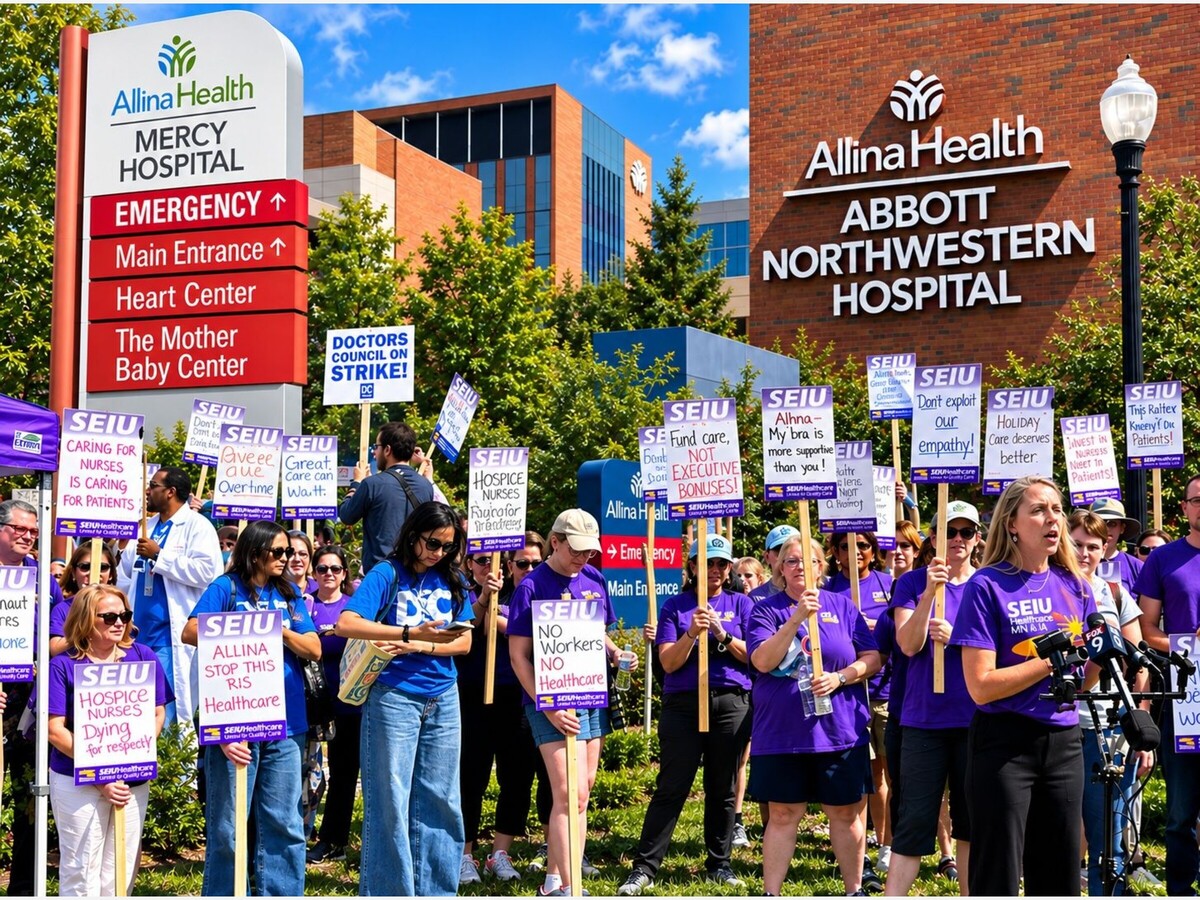



The physician walkout overlaps with a separate seven-day strike involving more than 60 Allina hospice nurses.
The two labor actions involve different bargaining units, contracts and workplace responsibilities. Their simultaneous timing nevertheless places renewed attention on staffing, compensation and clinical decision-making inside one of Minnesota’s largest healthcare systems.
The physicians work in areas that include hospital medicine, obstetrics, psychiatry and critical care. They are represented by the Doctors Council branch of the Service Employees International Union.
Union representatives say Allina’s compensation proposal would leave some doctors earning less than they currently receive.
The physicians are also seeking a stronger voice in decisions affecting staffing, schedules and patient care.
Allina says negotiations have produced progress and argues that any agreement must account for rising healthcare costs and the long-term financial sustainability of the hospitals.
The company has said contingency plans are in place to maintain patient services during the strike.
Patients should not assume an appointment or procedure has been canceled unless contacted by Allina. Anyone scheduled for care should confirm directly with the hospital or clinic.
Emergency departments remain available for urgent and life-threatening conditions.
The physician strike is unusual because doctors historically have been less likely than nurses or other healthcare employees to organize unions and conduct work stoppages.
That pattern has changed as physicians increasingly work as employees of large hospital systems rather than owning independent practices.
Employed doctors may have limited control over staffing levels, patient loads, scheduling, administrative requirements and business decisions that shape clinical care.
The hospice nurses began their strike Friday after more than a year of bargaining.
They provide care in private homes, assisted-living communities and skilled-nursing facilities. Their work includes pain and symptom management, medication coordination and support for patients and families during the final stages of life.
The nurses’ dispute involves staffing, compensation, workload and working conditions. Because hospice nurses travel between patients rather than working on a single hospital unit, their operational concerns differ from those of physicians at Mercy and Unity.
The overlapping strikes should not be treated as one combined bargaining dispute. Each group must negotiate its own agreement.
Their convergence, however, demonstrates that dissatisfaction exists across multiple professional levels of Allina’s workforce.
The physicians’ strike is scheduled to last four days. The hospice nurses announced a seven-day walkout.
A temporary strike does not resolve either contract. Negotiations must produce agreements that union members and Allina accept before the disputes fully end.
The immediate measure of Allina’s contingency planning will be whether patients experience delays, transfers or changes in scheduled care.
The longer-term issue is whether the parties can reach contracts addressing employee concerns without weakening access to healthcare in Coon Rapids, Fridley and the broader Twin Cities region.

Local stories matter. Subscribe free to MinneapoliMedia and receive independent news, community reporting and important updates from Minneapolis, the North Metro and communities across Minnesota.
SUBSCRIBE FREE: https://minneapolimedia.town.news/subscribe
MinneapoliMedia | Community. Culture. Civic Life



Sunny, with a high of 66 and low of 43 degrees. Sunny in the morning, clear in the afternoon and evening,