51° and Overcast
Image



MINNEAPOLIS, MN (September 18, 2026).
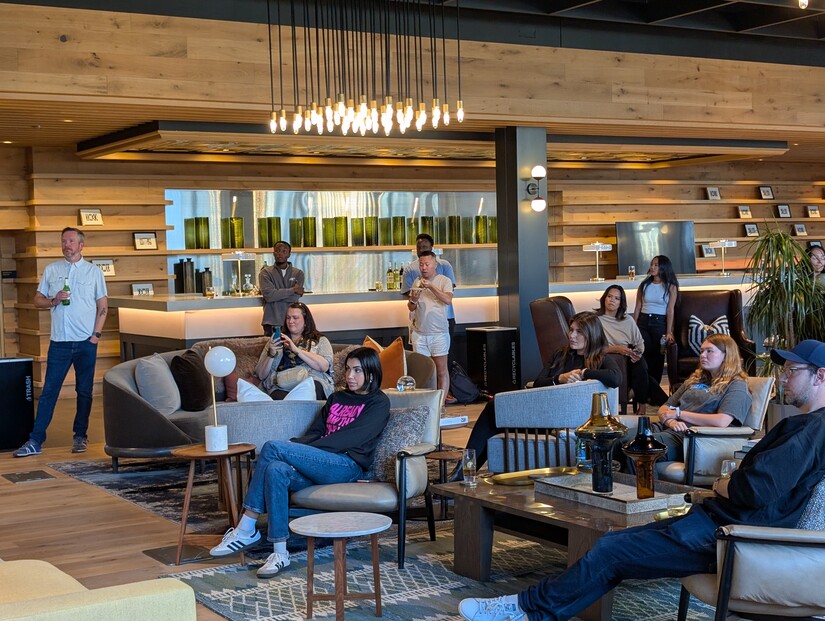
Before festivalgoers would begin moving among Nicollet Mall, Peavey Plaza, The Dayton’s Project, Minneapolis City Center and Loring Park Friday morning, the people who built MODE by Flickr gathered inside The Library at Dayton’s and explained why they brought it to Minneapolis.
Available buildings and favorable logistics helped. So did a collection of downtown blocks that could accommodate the festival. But the organizers said Minneapolis also gave them room to attempt something they had been imagining for nearly a decade: a photography festival that would extend beyond gallery walls, convention booths and classrooms and allow people to enter, explore and photograph the experience.
City leaders also encouraged them to think bigger.
MODE, which runs September 18 through 20, brings together photography, public art, music, equipment demonstrations, workshops, artist presentations and large-scale installations across several downtown venues. Some activities require festival credentials, while much of the outdoor experience is open to the public.
Flickr and SmugMug, both part of the family-owned company Awesome, want MODE to become an annual Minneapolis institution.
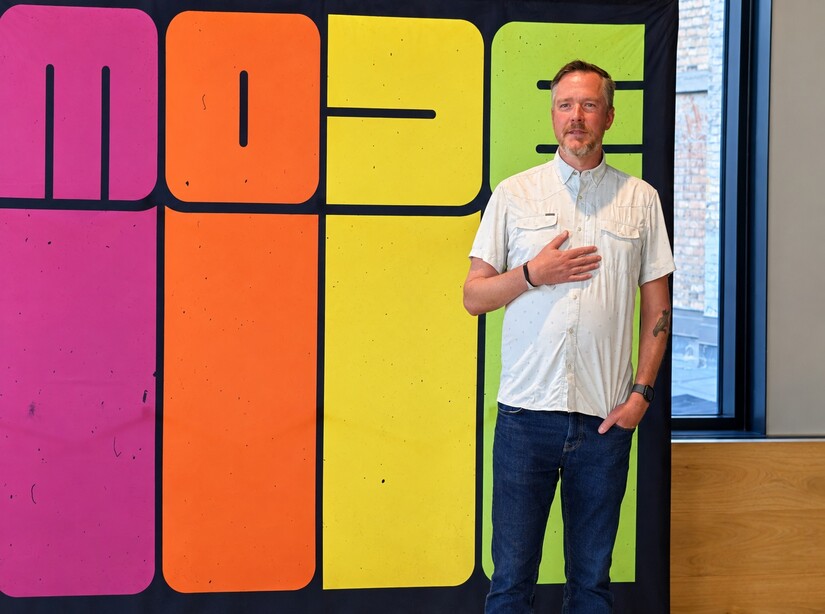
For Flickr President and Awesome President and Chief Operating Officer Ben MacAskill, the idea began with a frustration that followed him home from Sundance.
“I’ve been dreaming about this for 10 years,” MacAskill told guests at Thursday’s media preview.
He had watched filmmakers, actors, critics and audiences gather around cinema and wondered why photography, one of the world’s most accessible and influential creative forms, did not have a comparable cultural gathering.
For years, he waited for someone else to create one.
Eventually, he concluded that Flickr would have to do it.
“We work with all the photography brands,” MacAskill said. “We don’t exclude any of those.”
Flickr’s worldwide community and SmugMug’s network of photographers and customers gave the company a way to bring camera manufacturers, working photographers, artists, educators, software developers and the general public into the same festival without requiring allegiance to one brand or one photographic tradition.
Work on the festival began in earnest about two years ago. Its leaders considered several American cities, including destinations more commonly associated with major creative events.
They deliberately went in another direction.
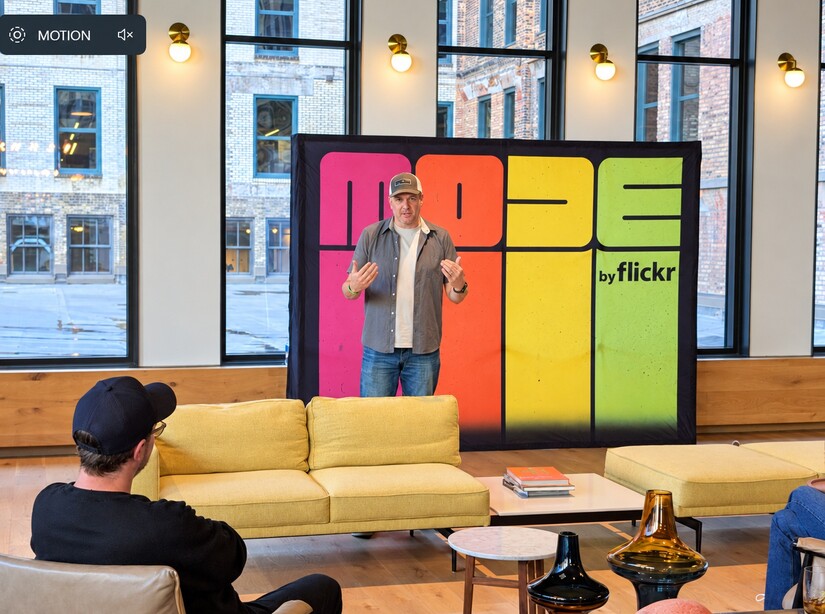
Alastair Jolly, global brand manager and head of ambassador relations for SmugMug and Flickr, said MODE did not want to become one more event competing for attention in New York, Los Angeles or Las Vegas.
The team wanted a city where the festival could establish its own identity, develop relationships and grow over time.
“We want to do this festival here every year,” Jolly said.
Minneapolis had the infrastructure expected of a major American city, including hotels, transportation, sports venues and an international airport. The MODE team also found a cultural history that it believed had not received enough national recognition.
Jolly cited Minnesota’s musical legacy, including Prince, Bob Dylan and Minneapolis-raised guitarist Cory Wong, who is scheduled to perform Sunday night at Loring Park. He also pointed to the region’s arts community, natural environment and conservation work.
His understanding of Minneapolis deepened as the festival team spent time here.
“Prior to MODE, I didn’t know much about Minneapolis,” said Jolly, who is based in Scotland.
He acknowledged that, from an international perspective, Minnesota could be regarded as part of America’s so-called flyover territory. Working on MODE changed that perception.
The festival’s leadership began meeting artists, photographers, educators, public officials and organizations. They learned more about Minneapolis’ food, music, business and arts communities, as well as Minnesota’s environmental identity.
They also encountered a city government willing to consider unusual requests.
MacAskill said other cities had offered attractive possibilities, but Minneapolis distinguished itself through the size of the proposed downtown footprint and the city’s willingness to let organizers use public spaces creatively.
He contrasted that support with Austin, Texas, where South by Southwest, despite its scale and history, operates within a relatively constrained area. MODE stretches across multiple downtown blocks and venues.
Organizers were permitted to imagine installations flowing through Nicollet Mall, into Peavey Plaza, through City Center and The Dayton’s Project, and down toward Loring Park.
When the team proposed placing large reflective forms around existing public art, MacAskill expected the city to object.
Officials encouraged the idea.
“They’ve been really great at saying yes to our wild ideas and encouraging us to be creative,” he said.
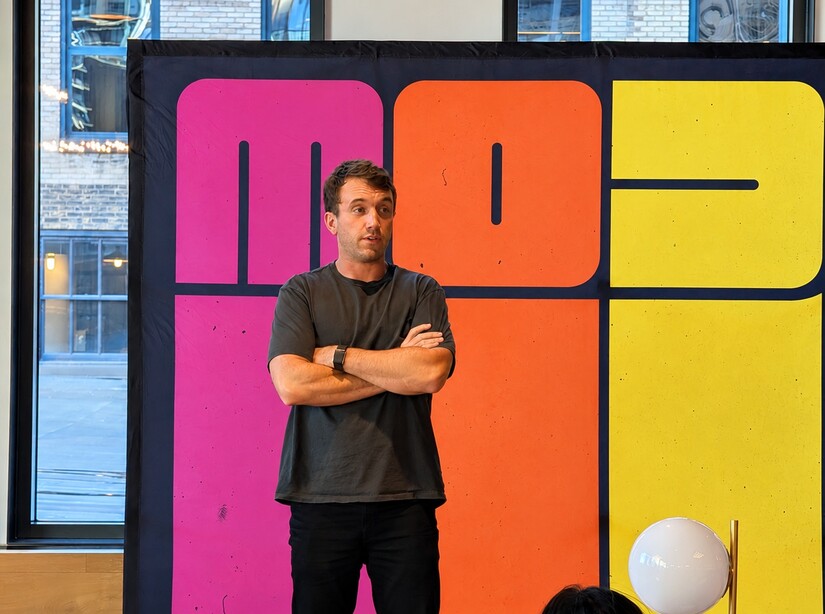
For Gabe Fraboni, founder of the production company PHNTM and MODE’s festival and creative director, the assignment required more than organizing a collection of attractive photographs.
A photography festival could easily become a series of images displayed on walls. Fraboni wanted visitors to participate in the experience.
“It needed to be photographable,” he said.
That decision shaped the festival.
MODE includes galleries, presentations and workshops, but Fraboni also wanted visitors to encounter light, reflection, movement, scale and color. Installations along Nicollet Mall draw from the physical language of a camera, including lenses, sensors, mirrors, filters and reflected light.
Inside City Center, artists explore optics, light bending and other visual effects. Outdoors, the existing architecture, public spaces and Minneapolis skyway system become part of the experience.
Fraboni said the skyways gave the team natural points of connection and separation that a conventional festival site could not provide. Nicollet Mall also offered an urban corridor already designed around pedestrian activity, making it possible to build a festival that visitors could discover as they moved through downtown.
Fraboni dislikes convention centers because they separate an event from the life of its host city.
MODE places the festival inside that life.
Its attractions appear within a functioning downtown, where office workers, residents and people who did not purchase festival passes may encounter installations simply by walking through the area.
That openness matters to the organizers.
“There’s a reason it’s open,” MacAskill said. “We want people to fall in love with photography again, or fall in love with photographers.”
MODE is not intended only for professional photographers or people who own expensive equipment. Someone taking a carefully composed portrait, experimenting with a camera for the first time or stopping for a selfie is still participating in the visual culture the organizers hope to encourage.
Fraboni considers photography especially powerful because it helps preserve nearly every other artistic discipline. Concert design, dance, sculpture, performance and temporary public installations can disappear when the moment ends. Photography allows them to travel beyond their original place and time.
His challenge was to create an event as varied as the medium itself.
MODE’s program reaches across documentary, portrait, landscape, conceptual, environmental, commercial, street and adventure photography. Music and late-night programming are also part of the schedule, reflecting the many cultural environments in which photographs are made.
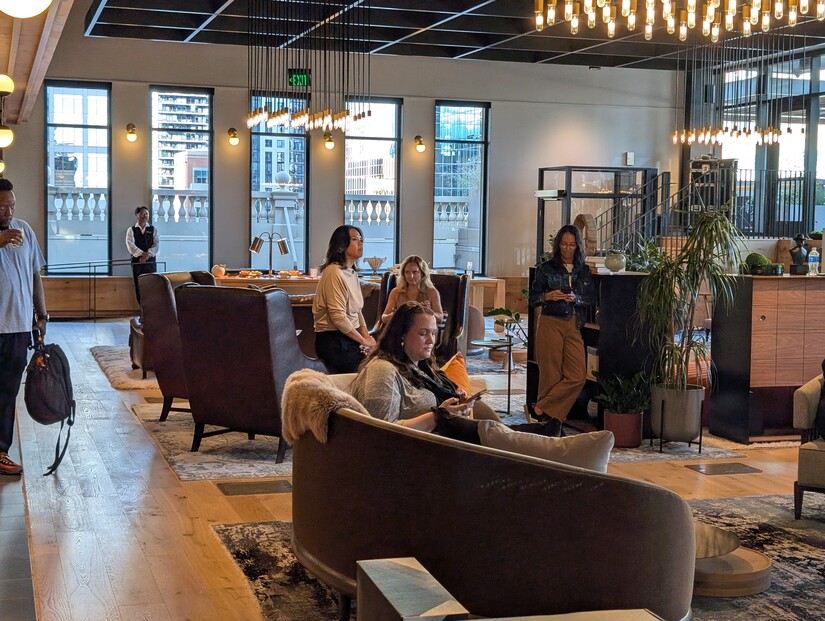
Organizers repeatedly emphasized that they did not want MODE to arrive in Minneapolis, occupy downtown for three days and leave without forming local relationships.
The festival hired Minneapolis-area photographers to lead workshops, create work and help visitors see the city through local eyes. It also incorporated regional musicians, artists, production workers and other creative professionals.
Approximately 350 people were working across the festival site, Fraboni said, with more than 200 of them local.
MacAskill described Minneapolis as one of the country’s richest cities in culture, talent and artistic legacy.
“One of the great art cities. One of the great music cities,” he said.
MODE distributed complimentary tickets through university photography programs and programs serving high school seniors. Organizers said they wanted young people considering creative careers to gain access to working professionals, equipment and artistic experiences that might otherwise remain beyond their reach.
The festival also commissioned legacy pieces intended to remain with the city after the temporary installations are removed.
Jolly said MODE sought to combine internationally recognized talent with people already producing important work in Minnesota.
The balance will not be perfect in the first year, he acknowledged. Organizers expect to learn from this inaugural festival and make changes if MODE returns.
Ticket sales alone will not determine whether they consider the weekend successful.
Jolly wants to see people moving through Nicollet Mall with cameras in their hands, photographing the installations and one another.
Fraboni wants the festival to draw attention to Minneapolis itself.
MacAskill wants enough people to attend, participate and support MODE for the organization to afford a second year. If that happens, he believes the festival can continue for decades.
“If we get to do year two, then we are golden from there,” he said. “I think we can build for 20, 30 years.”
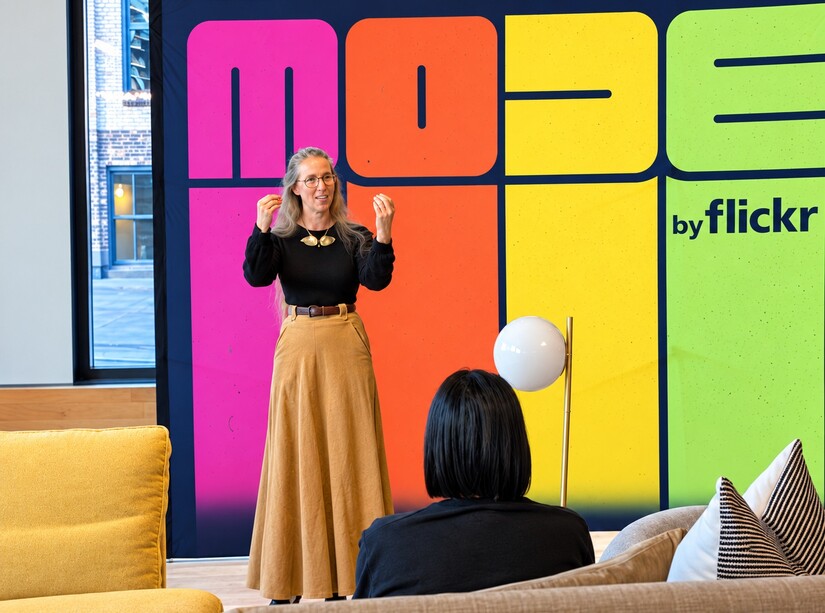
Artist and author Brooke Shaden arrived at MODE with work grounded in community, impermanence and the emotional meaning of letting go.
Shaden frequently appears in her own conceptual photographs, but she does not regard the person in the finished image as herself.
Once she steps before the camera, she enters a character. When she later examines the image, she separates herself from the body and face shown in the composition.
“I just look at it as a separate person,” she said. “That’s not me anymore.”
Her work is carefully planned. She determines the pose, clothing, color, setting and conceptual meaning before beginning a shoot, sometimes completing the photography within minutes.
For Shaden, photography is a vehicle for reaching the finished idea.
That distinction informs her views on generative artificial intelligence. When Shaden learns that an image was generated rather than physically created by a person, she said her connection to it disappears.
“I lose all connection to it,” she said.
She believes art carries evidence of human experience, effort and transformation. The artist places something of herself into the process instead of pursuing only a visually impressive result.
“I think we’re losing that, and it’s really sad,” she said.
Her current work grows from four years as a foster parent. The experience required her to love children while knowing that separation could arrive quickly.
She is developing a project about impermanence and what it means to love another person without believing that love creates ownership.
At MODE, Shaden’s artist residency is organized around “murmurations,” the moving formations created when birds gather and travel through the sky.
She sees that natural phenomenon as a metaphor for the festival. Photographers and artists with different disciplines and ways of seeing the world gather temporarily, exchange ideas, experiment and then depart.
One of her MODE projects invites attendees to become part of a composite public artwork. Another features dancers performing in specially designed lighting while photographers document the movement. A third allows participants to print their work, fold it into an origami bird and add it to an installation.
That final act asks photographers to release control over what they have made.
In someone else’s hands, the photograph becomes part of another work.
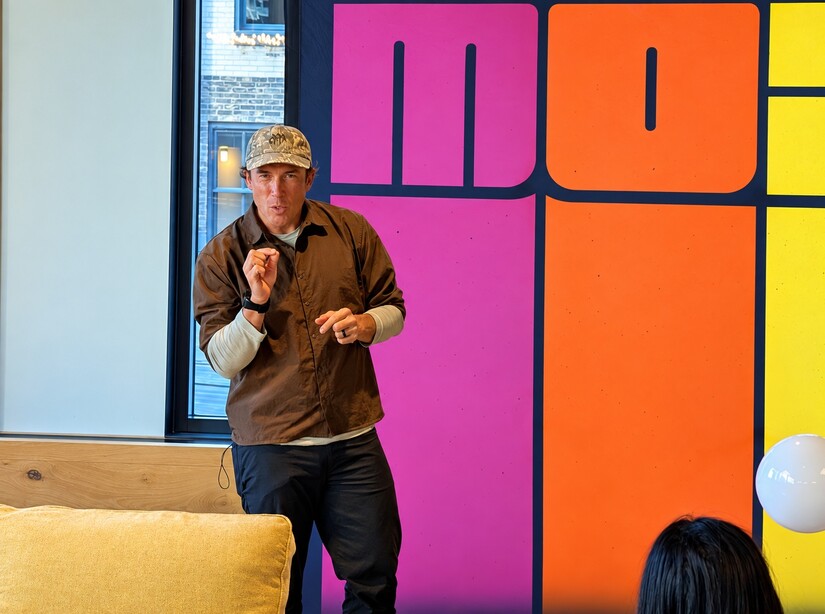
Photographer and filmmaker Chris Burkard arrived in Minneapolis less than two days after returning from Greenland.
He had spent 10 days traveling through a remote part of the country, following a trail used by Inuit people for thousands of years and documenting reindeer migration, freezing conditions, the Northern Lights and the seasonal transformation of the landscape.
Burkard has built much of his career by traveling toward cold, isolated and physically demanding places that many people would prefer to avoid.
When asked what discomfort allows him to see that comfort does not, he spoke first about safety.
Discomfort forces people to recognize what they require in order to feel secure, he said. At home, when food, warmth and familiar routines are readily available, it is easy to move through life without examining those needs.
In the field, the calculation changes.
Burkard must remind himself that he is fed, prepared and safe even when he is cold, frightened or physically exhausted.
“It’s too easy to go through life on autopilot when I’m at home and everything’s going good,” he said.
Those difficult situations give him a brief view into conditions that may represent ordinary life for someone else.
During the Greenland journey, the cold and isolation were temporary challenges for him. For generations of people who traveled through that landscape, they were part of life.
Burkard said photographers have a responsibility to return from such places with something that makes distant environments understandable to people who may never see them.
He described himself as an advocate and a witness.
His images often place a human figure inside a vast landscape. That compositional choice is intentional. It restores people, he said, to their proper scale.
“It’s not all about us,” Burkard said. “It’s about the places that we get to experience.”
Some of those experiences have carried significant danger.
When Burkard was about 22, he traveled to Russia on assignment with athletes and other members of a magazine team. Problems with the validity dates on his journalist visa led to approximately six hours of interrogation, a night in detention and deportation from Russia to South Korea.
He returned after the visa became valid.
Burkard described Russia as the place where he had felt most afraid, partly because he was young and inexperienced. Yet he does not regard the experience as something he would remove from his life.
He has accumulated scars, broken bones and frightening encounters while pursuing stories in difficult places.
“Life is meant to be lived a little dangerously,” he said, adding that appropriate risks are sometimes necessary to tell meaningful stories.
Travel transformed more than his career. It changed his understanding of other communities, increased his empathy and reshaped his political views.
Burkard said he grew up in a small California community where the prospect of traveling internationally once seemed economically impossible. He now photographs partly for members of his family who have not had the same opportunity to see the world.
“When I shoot, I shoot for them,” he said.
MODE continued planning during a period when Minneapolis was again being defined nationally by images of confrontation and unrest.
Jolly said the team had been preparing to promote MODE around December and January but concluded that a celebratory campaign about photography would have been inappropriate while the city was experiencing serious trouble.
“So, we held off on promoting it,” he said.
The delay created challenges for the festival’s public awareness campaign, but organizers said it did not weaken their commitment to Minneapolis.
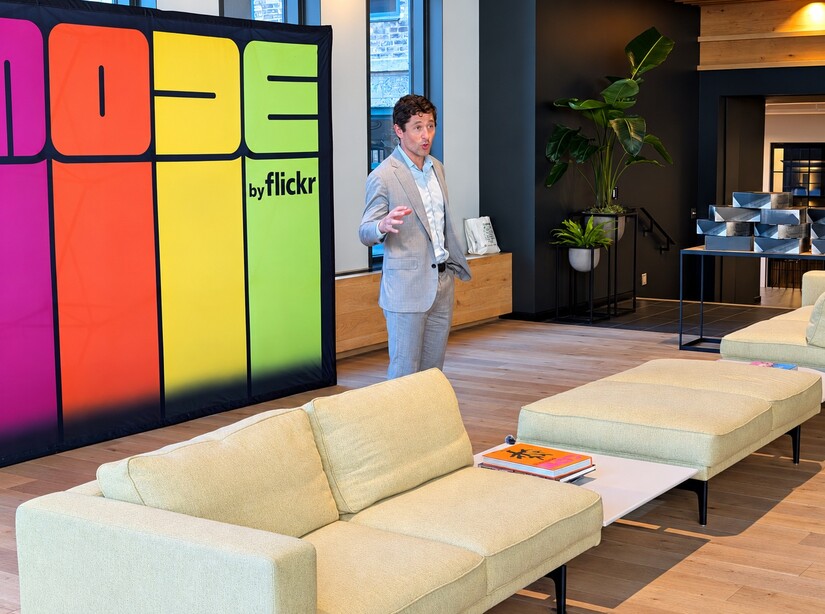
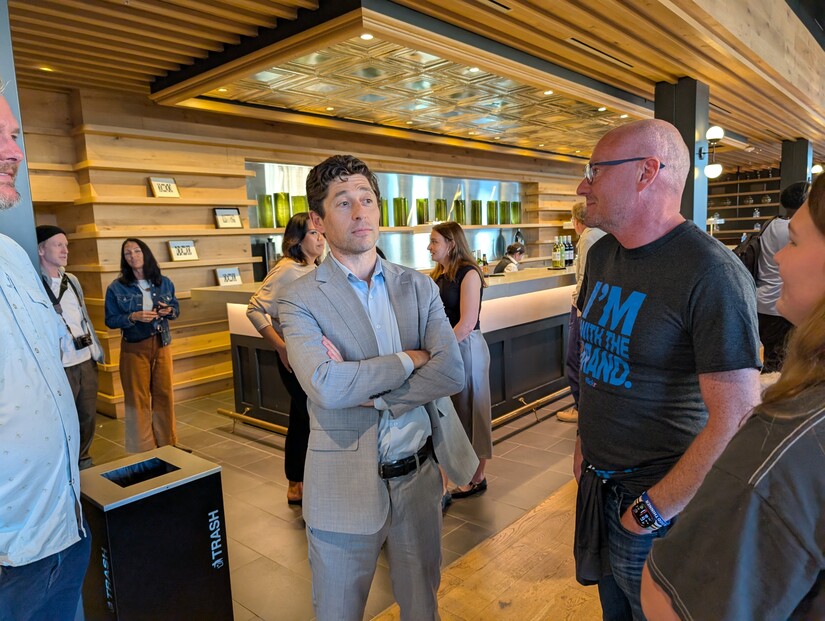
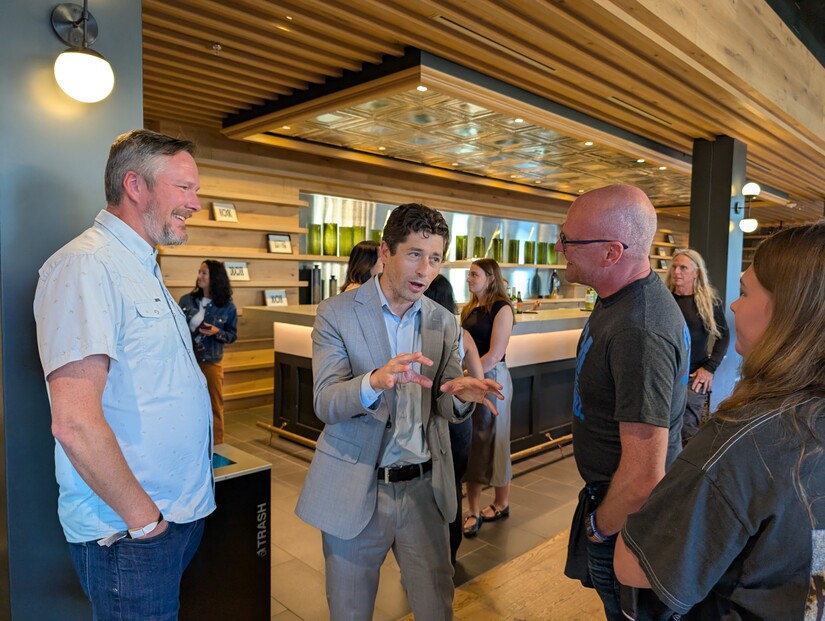
Minneapolis Mayor Jacob Frey addressed that decision during the preview.
Frey said the city had been “invaded” during Operation Metro Surge by what he described as 3,000 to 4,000 federal immigration and Border Patrol agents. Images circulating nationally made Minneapolis appear unsafe, he said, and several conventions and major events withdrew.
“They jumped ship and went somewhere else,” Frey said.
MODE chose to stay.
“What Flickr did, what MODE did, what all of you said was, ‘No, actually, we’re doubling down,’” Frey told organizers and guests.
He said the festival recognized that Minneapolis was exactly the kind of city where community-oriented art could carry additional significance.
Frey recalled MODE’s initial presentation to the city and said the vision immediately felt suited to Minneapolis. It had a clear identity centered on photography, yet it could also create opportunities for music, food, performance and other forms of public participation.
He connected the festival to the city’s plans for Nicollet Mall, telling attendees that the corridor would be pedestrian when MODE returns.
“We’re going even further,” Frey said, “because this is exactly the kind of moment and exactly the kind of city where we can even further showcase the kind of community-oriented art that we’re all aspiring to achieve.”
He predicted that MODE would build upon itself year after year.
“We’ll all look back at this moment and see where the seeds were originally planted,” Frey said.
The inaugural MODE festival begins with several questions that can only be answered once people fill the sidewalks, classrooms, galleries and performance spaces.
Can a major photography festival attract professionals, hobbyists, families, students and downtown visitors without placing the entire experience behind industry credentials and expensive barriers?
Can installations distributed across public and private spaces make downtown feel connected rather than fragmented?
Will internationally recognized artists and commercial partners work alongside local photographers, musicians, students and production professionals in a way that makes Minneapolis more than a backdrop?
And will MODE’s promise to return develop into the long relationship its organizers envision?
The first year will not provide every answer. Organizers expect mistakes and know they will discover what works only after people begin moving through the festival.
By Thursday evening, however, before the official opening, people were already stopping to photograph installations along Nicollet Mall.
That early response offered a glimpse of what MODE came to accomplish: give people a reason to look again.
For three days, downtown Minneapolis will become a place where photographs are displayed, created, discussed and tested against the city around them. Visitors will use photography to recognize other people, examine landscapes, preserve performances and decide what deserves to be remembered.
MODE’s leaders did not choose Minneapolis because they believed the city’s story was finished.
They chose it because they believed they could build something here, be seen here and return.

Local stories matter. Subscribe free to MinneapoliMedia and receive independent news, community reporting and important updates from Minneapolis, the North Metro and communities across Minnesota.
SUBSCRIBE FREE: https://minneapolimedia.town.news/subscribe
MinneapoliMedia | Community. Culture. Civic Life


Overcast, with a high of 64 and low of 48 degrees. Overcast during the morning,