63° and Clear
Image
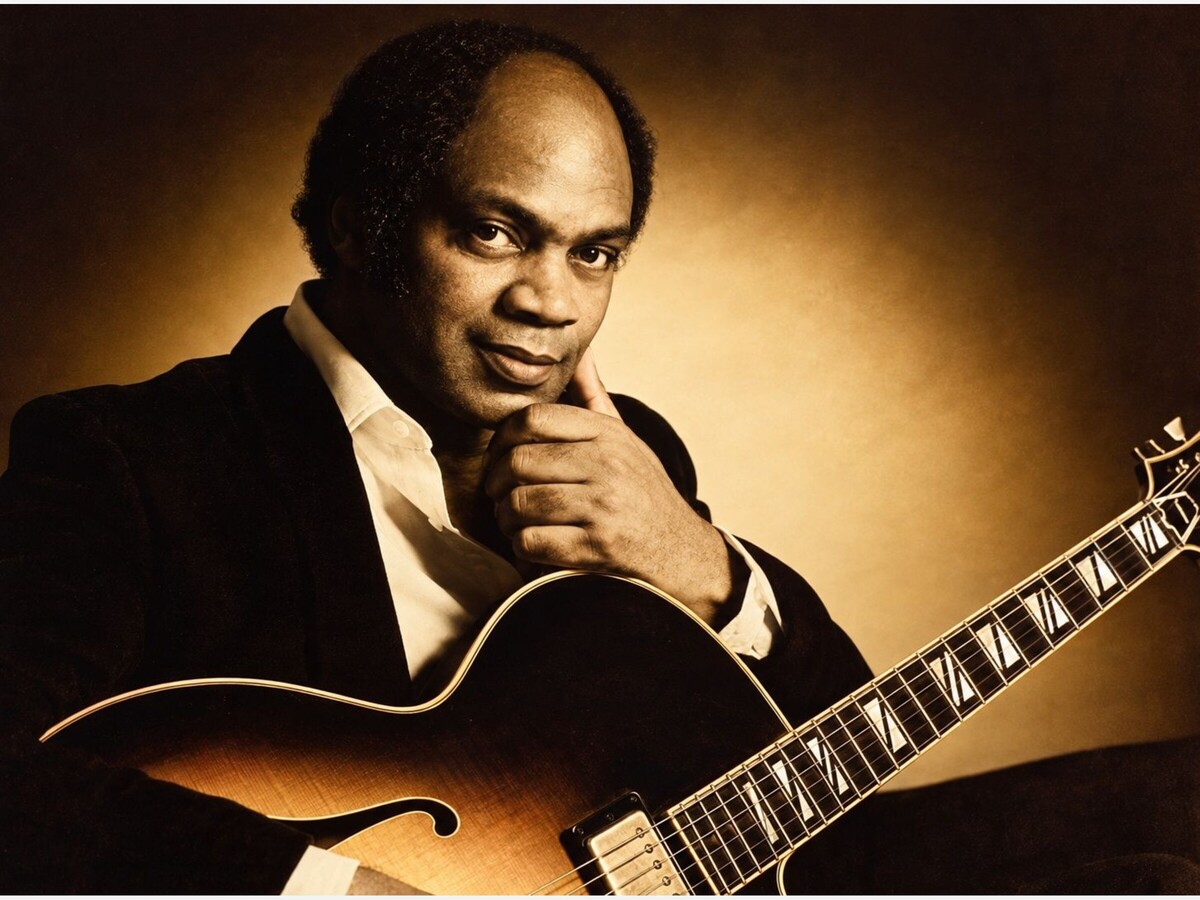



That economy of space is where Eric Gale lives.
You find him not in speed or flourish, but in the quiet authority beneath a melody and the discipline of a musician who possessed the technique to play anything, yet chose only what the arrangement demanded. You find him in music remembered across generations, and in liner notes where his name sits in modest type, even as his touch defines the sound itself.
Born in Brooklyn, New York, on September 20, 1938, Gale would have turned 88 today. Though he died in 1994 at age 55, he left behind a recorded legacy so vast that generations of listeners have experienced his artistry without ever knowing his name.
His guitar lives inside the definitive work of Grover Washington Jr., Bob James, Roberta Flack, Aretha Franklin, Quincy Jones, Paul Simon, Nina Simone, and Patti Austin. As a founding member of Stuff, he helped anchor a seminal rhythm unit alongside Cornell Dupree, Richard Tee, Gordon Edwards, Steve Gadd, and Christopher Parker.
Those credits secure his historical standing. They do not fully articulate why his playing mattered.
Eric Gale made the music around him more beautiful.
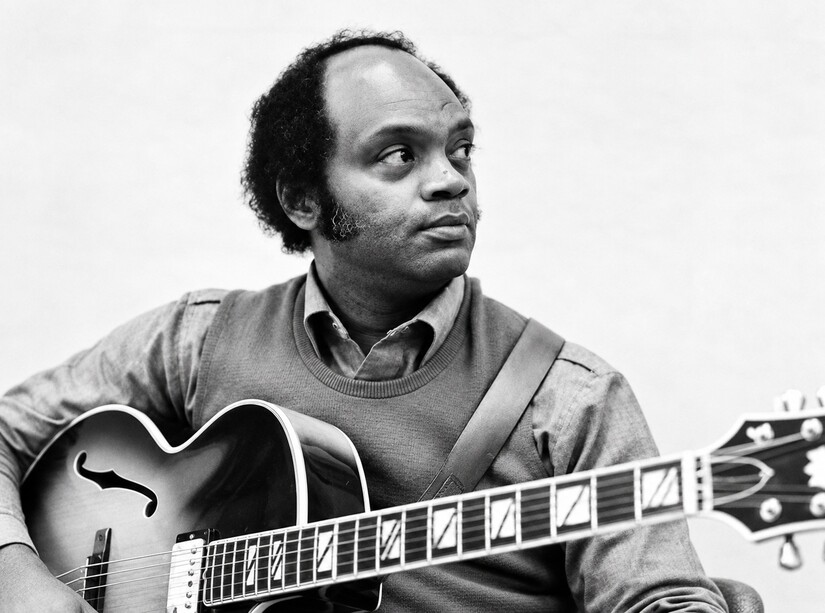
Many session musicians enter a recording date determined to establish their presence. Gale entered determined to listen.
He possessed the technique of a master soloist and the confidence to operate as an architect of space. His instrument could bite, plead, or lock seamlessly into a rhythm track. He could make a single, perfectly voiced chord feel like the structural pivot of an entire arrangement, carrying within one bent note the combined weight of gospel, blues, and urban rhythm and blues.
What he never did was mistake volume or velocity for feeling.
To hear Gale collaborate with Bob James is to observe two distinct musical sensibilities achieving complete synthesis. James designed immaculate, expansive jazz-fusion frameworks built on lush electric keyboards and intricate horn charts. Gale supplied the visceral, ground-level gravity beneath that studio architecture.
On “Angela,” the Bob James composition immortalized as the theme to Taxi, Gale’s entry demonstrates this mastery. Where another fusion guitarist might have saturated the track with rapid runs, Gale responds with brief, blues-infused fills and delicate microtonal bends. He gives the polished production its lingering urban melancholia, proving that sophistication and raw emotion are not mutually exclusive.
His work with Grover Washington Jr. revealed the same instinct. Across landmark releases including Mister Magic, Feels So Good, and Winelight, Gale constructed the harmonic foundation from which Washington’s saxophone could ascend. He understood accompaniment not as self-effacement, but as an active, disciplined dialogue.
When Washington phrased, Gale listened. When Gale answered, he did so without crowding the line.
That generosity anchored Stuff. The band’s power relied not on individual virtuosity, but on absolute collective commitment to the groove. Gale and Dupree interlocked guitar parts with mathematical precision and instinctual soul, eliminating the boundary between rhythm and lead. Every instrument conversed. None competed.
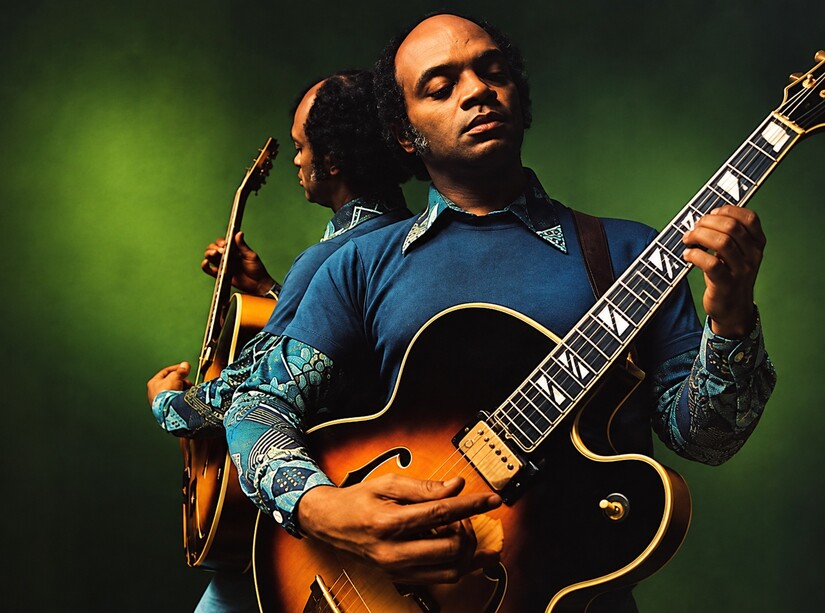
It would be an error, however, to view Gale solely through the lens of his sideman credentials.
His solo catalog demonstrates a composer and bandleader of expansive emotional breadth. Nowhere is that identity more fully realized than on Ginseng Woman, the 1977 album produced by Bob James.
The Japanese character of Ginseng Woman does not reside only in Paula Scher’s cover design. It can be heard in Gale’s guitar.
On the title track, Gale’s phrasing bears an unmistakable kinship with the koto, the Japanese plucked-string instrument whose expressive power comes not from density, but from touch, resonance, pitch inflection, and the silence surrounding each note.
Gale does not merely perform against a Japanese-inspired visual concept. He enters its musical atmosphere. The precise attack of his notes, the delicate bending of pitch, and the way each phrase is allowed to hover and decay recall the koto’s ability to make a single plucked string feel like a complete statement. His guitar almost seems to be speaking Japanese.
This is not imitation in the shallow sense. Gale does not reduce Japanese tradition to an ornamental effect. He reaches toward its sensibility. He understands that a note can derive its power from what surrounds it, that silence is not the absence of music, and that restraint can communicate more than display.
On the title track, he strokes the guitar as though approaching each string with a calligrapher’s concentration. The notes are not poured across the arrangement. They are placed. Each one leaves a mark, recedes, and prepares the space for what follows.
Listeners familiar with the koto may recognize the connection immediately. The album cover gives the eye a Japanese room. Gale’s guitar gives the ear a Japanese inflection. Together, they make Ginseng Woman feel less like a borrowed visual theme than a carefully realized tribute.
The effect becomes more striking when placed beside “Red Ground,” Gale’s own composition, with its raw, syncopated drive. The movement between the title track and “Red Ground” reveals the breadth of his musical vocabulary. He could inhabit elegance without becoming ornamental and enter the groove without sacrificing subtlety.
Subsequent albums like Multiplication, Part of You, and Touch of Silk proved that accessibility did not require the compromise of musical sophistication.
Even with his own name on the jacket, Gale declined to dominate the mix. His albums remained open conversations. Horns, percussion, keyboards, and strings received room to breathe. He led as he accompanied: by listening closely and elevating the ensemble.
His generosity was not an act tailored for employment. It was his fundamental musical character.
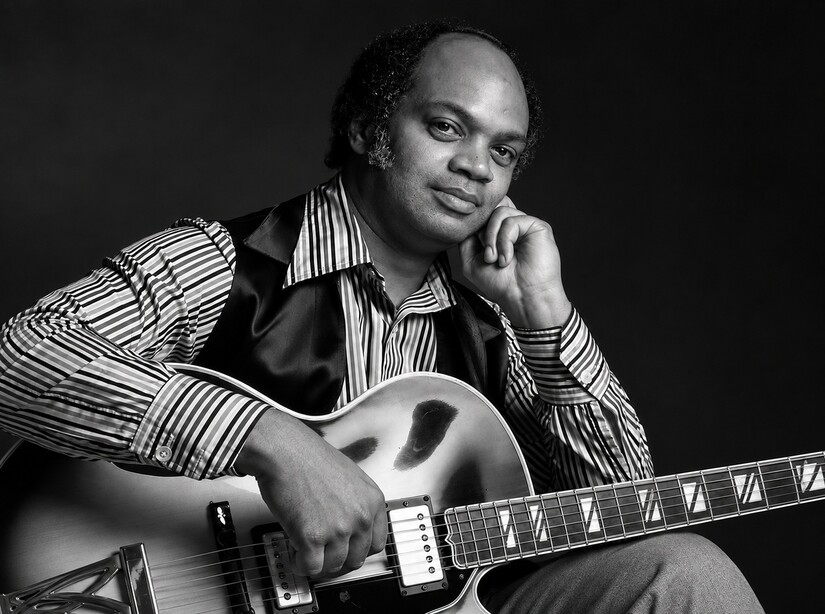
Of all Gale’s recordings, his interpretation of “With You I’m Born Again,” from 1980’s Touch of Silk, remains his most instructive masterclass in phrasing.
Composed by Carol Connors and David Shire, the piece was popularized as a vocal duet by Billy Preston and Syreeta Wright, a performance defined by explicit lyrical dialogue. Gale faced the challenge of translating a narrative so tied to words into a purely instrumental medium.
He did not attempt to replicate the vocalists. He uncovered the song's internal voice.
He approaches the melody with striking restraint. There is no anxiety to showcase technique, no urge to decorate the theme until its meaning dissolves. He allows the line to arrive as if remembered rather than executed.
His tone carries both softness and experience. The notes do not sound naive. They sound resilient, bearing the subtle weight of a musician who understands that renewal gains its meaning only because something was previously broken or worn.
Gale avoids theatricality. He plays love as recognition. He allows one phrase to lean gently toward the next, permitting a note to vibrate without forcing a dramatic climax. Where other guitarists might offer a flurry of notes to signal passion, Gale finds the single note without which the melody falls apart.
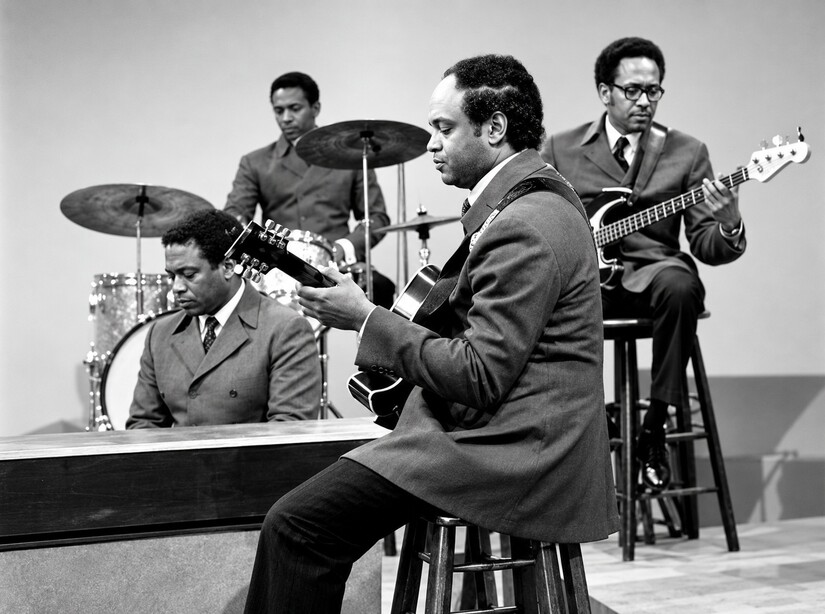
Popular music culture routinely elevates the voice at the microphone or the name printed in bold across the front cover. It is far less disciplined at honoring the session architects who built the groove from the floorboards up.
Gale lived in those foundational depths.
He was not overlooked because his contribution was subtle. He was overlooked because he integrated so completely into the music that his presence felt like nature. Remove Gale’s guitar from those classic CTI, Kudu, and Warner Bros. tracks, and the structure shifts: the arrangements lose their warmth, the rhythm loses its quiet momentum, and the music ceases to breathe in quite the same way.
His long collaborations with the industry's most exacting leaders reflected more than professional reliability. They reflected elite musical judgment.
Eric Gale understood that the true measure of a musician is not how much space they occupy, but how much beauty they leave behind in the space they were given.
The hands have stilled. The guitar is silent. But drop the needle, let the melody rise, and listen.
There he is.

Local stories matter. Subscribe free to MinneapoliMedia and receive independent news, community reporting and important updates from Minneapolis, the North Metro and communities across Minnesota.
SUBSCRIBE FREE: https://minneapolimedia.town.news/subscribe
MinneapoliMedia | Community. Culture. Civic Life



Sunny, with a high of 86 and low of 59 degrees. Sunny in the morning, clear for the afternoon and evening,