53° and Overcast
MINNEAPOLIMEDIA NEWS | Minnesota Congressional Election Results Bring New Leadership to Second District as Incumbents Retain Seats Across the State



Matt Little wins the open Second Congressional District seat, Kelly Morrison, Betty McCollum and Ilhan Omar secure reelection, and the First District remains unresolved in a contest separated by only 324 votes.
MINNEAPOLIS, MN (November 4, 2026).
Minnesota's congressional delegation is taking shape following Tuesday's general election, with voters electing a new representative in the Second Congressional District while returning several incumbents to Washington.
Democrat Matt Little won the open Second District seat, succeeding Angie Craig, who did not seek reelection after pursuing a U.S. Senate campaign.
Elsewhere, Democratic Representatives Kelly Morrison, Betty McCollum and Ilhan Omar won reelection, while Republican Representatives Tom Emmer, Michelle Fischbach and Pete Stauber retained their seats.
The outcome in Minnesota's First Congressional District remains unresolved, with Democrat Jake Johnson holding a narrow 324-vote lead over Republican incumbent Brad Finstad in unofficial results.
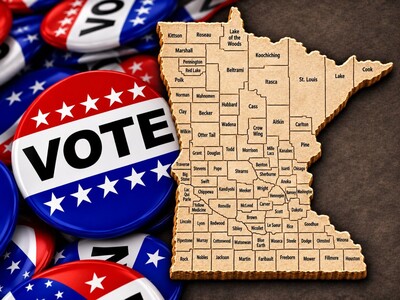
The elections will determine how Minnesota's eight congressional districts are represented during the next two-year term of the U.S. House of Representatives.
Matt Little wins open Second District seat
Little defeated Republican state Sen. Eric Pratt in the Second Congressional District, which includes communities in the southern Twin Cities metropolitan area and portions of southeastern Minnesota.
According to unofficial results from the Minnesota Secretary of State, Little received 213,653 votes, representing 57.15%, while Pratt received 159,829 votes, or 42.76%.
The victory keeps the district in Democratic hands following Craig's departure.
Craig had represented the district since 2019, after defeating Republican incumbent Jason Lewis in the 2018 election.
Little's victory establishes a new period of representation for communities that include parts of Dakota, Scott, Le Sueur, Rice and Washington counties.
His responsibilities will include federal legislation affecting transportation, healthcare, education, public safety, housing and economic development.
The transition will also require establishing congressional office operations and constituent services.
Kelly Morrison wins second term in Third District
Democratic Representative Kelly Morrison won reelection in Minnesota's Third Congressional District, defeating Republican Tyler Bass.
The unofficial statewide results showed Morrison receiving 242,079 votes, or 64.04%, compared with 135,505 votes, or 35.85%, for Bass.
The district includes portions of the western and northern Twin Cities metropolitan area, including communities in Hennepin and Anoka counties.
Morrison's reelection is significant for residents of the northwest metropolitan region, where federal decisions involving transportation, housing, healthcare and economic development intersect with rapidly changing suburban communities.
Her next term will provide an opportunity to continue constituent services and legislative work while responding to the district's changing needs.
Betty McCollum retains Fourth District seat
Representative Betty McCollum won another term in Minnesota's Fourth Congressional District, defeating Republican Paul Wikstrom.
The Secretary of State's unofficial results showed McCollum receiving 245,699 votes, or 73.07%, while Wikstrom received 90,068 votes, or 26.79%.
McCollum has represented the district since 2001.
Her continued service gives Minnesota an experienced member of Congress with a long record in federal appropriations and public policy.
The Fourth District includes Saint Paul and surrounding communities in Ramsey and Washington counties.
Residents will continue looking to their congressional representative on issues involving transportation infrastructure, housing, public services and federal investments.
Ilhan Omar wins reelection in Fifth District
Democratic Representative Ilhan Omar won reelection in Minnesota's Fifth Congressional District, which includes Minneapolis and surrounding communities.
Omar received 262,702 votes, representing 76.48% of the unofficial total.
Republican John Nagel received 55,765 votes, or 16.23%, while independent candidate DeVelle Jackson received 24,110 votes, or 7.02%.
The result returns Omar to Congress for another term.
The Fifth District includes communities with significant immigrant populations, diverse neighborhoods and substantial needs involving housing affordability, transportation, public safety and economic opportunity.
Omar's next term will take place during a period of continuing national debate over immigration enforcement, federal spending and executive authority.
For district residents, congressional representation also involves constituent services, assistance navigating federal agencies and advocacy for local priorities.
Republican incumbents retain Sixth, Seventh and Eighth Districts
Republican Representative Tom Emmer won reelection in the Sixth Congressional District, defeating Democrat Doug Chapin.
Unofficial results showed Emmer receiving 204,705 votes, or 55.73%, compared with Chapin's 162,213 votes, or 44.16%.
The district includes portions of central Minnesota and the northern and western metropolitan region, including areas of Anoka County.
Republican Representative Michelle Fischbach also secured reelection in the Seventh Congressional District, defeating Democrat Erik Osberg.
Fischbach received 214,505 votes, or 64.88%, compared with Osberg's 115,805 votes, or 35.03%.
The district encompasses much of western Minnesota, including agricultural communities where federal farm policy, rural healthcare and infrastructure remain important concerns.
In the Eighth Congressional District, Republican Representative Pete Stauber defeated Democrat Trina Swanson.
Stauber received 190,743 votes, or 53.06%, while Swanson received 168,350 votes, or 46.84%.
The Eighth District includes northeastern Minnesota and other northern communities where mining, natural resources, manufacturing, tourism and infrastructure are important economic issues.
First District remains too close to call
The First Congressional District is the only Minnesota U.S. House contest remaining unresolved in Wednesday morning reporting.
Johnson holds 163,057 votes, compared with 162,733 for Finstad.
The 324-vote margin means the final result could depend on the completion of post-election procedures and any recount required under Minnesota law.
Election officials must follow the established canvassing and certification process before the result becomes official.
Neither candidate should be described as the certified winner at this stage.
What the results mean for Minnesota
Minnesota's congressional delegation represents communities with widely differing economic and demographic characteristics.
The state's districts include urban neighborhoods, growing suburbs, agricultural regions, industrial communities and areas where natural resources play a major role in local economies.
Their representatives will confront federal decisions involving healthcare, housing, transportation, education, taxation, immigration and government spending.
The delegation's effectiveness will depend not only on party affiliation but also on the ability of individual members to address constituent concerns and participate in legislative work.
Minnesota's representatives will also be expected to provide oversight of federal agencies and help residents navigate federal programs.
For communities such as Coon Rapids, Brooklyn Park and other North Metro municipalities, the election results reinforce the importance of understanding which congressional district serves a particular address.
Federal representation varies across county and municipal boundaries.
Residents should use official district information rather than assume that an entire city or county is represented by one member of Congress.
A new congressional term approaches
The election has produced one confirmed change in representation through Little's victory in the Second District, while several incumbents have secured additional terms.
The First District remains the major unresolved question.
As Minnesota prepares for the next Congress, attention will turn toward committee assignments, legislative priorities, constituent services and the relationship between federal policy and local needs.
The results remain unofficial until completion of the required certification procedures.
For voters, the conclusion of the election marks the beginning of another period of accountability.
The representatives chosen Tuesday will now be expected to translate campaign commitments into legislative decisions and public service.

STAY CONNECTED TO MINNEAPOLIMEDIA
Local stories matter. Subscribe free to MinneapoliMedia and receive independent news, community reporting and important updates from Minneapolis, the North Metro and communities across Minnesota.
SUBSCRIBE FREE: https://minneapolimedia.town.news/subscribe
MinneapoliMedia | Community. Culture. Civic Life