74° and Clear
Image
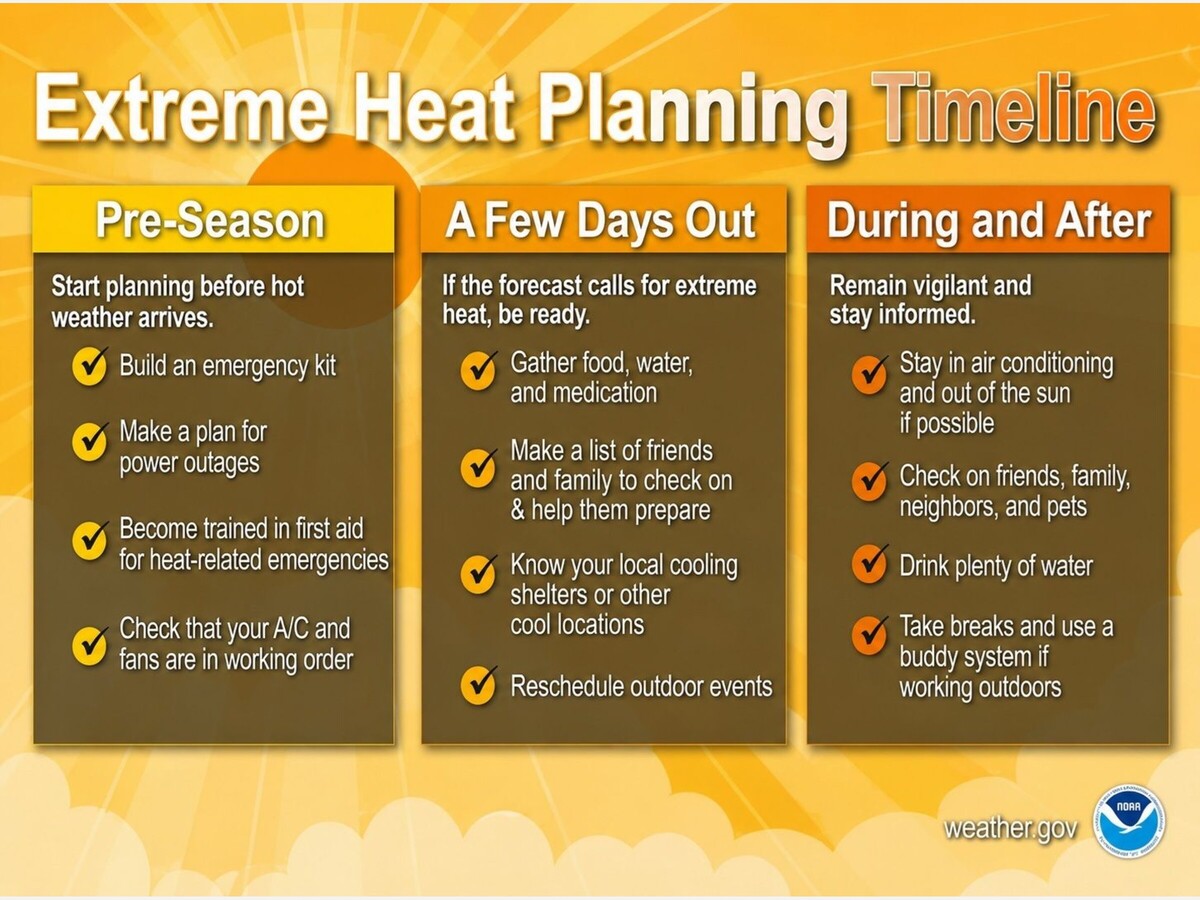



Brooklyn Park officials are urging residents to prepare now for what forecasters say could become the region's first significant heat event of the summer, with temperatures expected to climb to 95 degrees Monday and humidity pushing the heat index to between 100 and 102 degrees across much of the Twin Cities metropolitan area.
The City of Brooklyn Park issued a public safety advisory over the weekend encouraging residents to take preventive measures before the hottest conditions arrive. Officials warned that prolonged exposure to high temperatures and humidity can quickly lead to heat-related illnesses, particularly among older adults, young children, people with chronic medical conditions, outdoor workers and residents without access to air conditioning.
The advisory comes as the National Weather Service Twin Cities forecasts a surge of hot, humid air across central and southern Minnesota. While the forecast air temperature is expected to reach the mid-90s, high humidity will make it feel considerably hotter, creating conditions that can overwhelm the body's natural ability to cool itself through perspiration.
According to the National Weather Service, the heat index combines air temperature and relative humidity to estimate how hot conditions actually feel to the human body. As humidity increases, sweat evaporates more slowly, making it more difficult for the body to release heat. When the heat index exceeds 100 degrees, the risk of heat cramps, heat exhaustion and, in severe cases, heat stroke increases significantly during prolonged outdoor activity.
Although Minnesota is more often associated with winter storms and subzero temperatures, extreme heat is the leading weather-related cause of death in the United States, according to the National Weather Service. Many heat-related illnesses develop gradually, making them particularly dangerous for people who may not immediately recognize the warning signs.
"Now is the time to prepare," the City of Brooklyn Park said in its advisory, encouraging residents to stay hydrated, reduce outdoor activity during the hottest part of the afternoon, wear lightweight, light-colored clothing, use sunscreen and look out for neighbors who may be especially vulnerable to the heat.
City officials also reminded residents to never leave children or pets unattended inside parked vehicles, where temperatures can rise to life-threatening levels within minutes, even when outside temperatures appear manageable. The National Highway Traffic Safety Administration warns that vehicle interiors can heat rapidly, creating dangerous conditions regardless of whether windows are partially open.
Public health officials emphasize that the greatest danger during heat events is often not the air temperature itself but the combination of heat and humidity.
The National Weather Service classifies heat index values near or above 100 degrees as conditions requiring increased caution, particularly for individuals performing strenuous work or recreation outdoors. Construction workers, landscapers, delivery personnel, athletes and anyone spending extended periods outside face elevated risks if adequate hydration and rest breaks are not maintained.
Older adults are also among the most vulnerable because many medical conditions and medications reduce the body's ability to regulate temperature. Infants and young children, whose bodies heat more quickly than adults, are similarly at increased risk during prolonged exposure.
Health officials encourage residents to recognize the early symptoms of heat exhaustion, which may include heavy sweating, dizziness, weakness, nausea, muscle cramps and headache. Individuals experiencing these symptoms should move to a cool location, drink water and seek medical attention if symptoms worsen or do not improve.
Heat stroke represents a medical emergency. According to the Centers for Disease Control and Prevention, warning signs include confusion, altered mental status, loss of consciousness, seizures or a body temperature of 103 degrees or higher. Anyone suspected of suffering heat stroke should receive immediate emergency medical assistance by calling 911 while efforts are made to cool the individual.
Brooklyn Park officials are encouraging residents to think beyond their own households.
Checking on older neighbors, family members and friends who live alone can help prevent tragedies during extreme heat. Residents without functioning air conditioning are encouraged to spend time in air-conditioned public buildings such as libraries, community centers, shopping centers or other public facilities during the hottest hours of the day. Hennepin County also maintains information about cooling resources available during periods of dangerous heat.
Officials recommend drinking water regularly throughout the day rather than waiting until thirst develops, postponing strenuous yard work or exercise until the early morning or evening, wearing loose-fitting clothing and taking frequent breaks in shaded or air-conditioned locations if outdoor work cannot be avoided.
Pet owners are also encouraged to ensure animals have continuous access to fresh water and shade and to avoid walking dogs on asphalt or concrete during peak afternoon temperatures, as pavement surfaces can become significantly hotter than the surrounding air.
While this week's heat wave is expected to be short-lived, emergency managers say extreme heat events are becoming an increasingly important public safety concern across Minnesota. Climate data show that periods of prolonged heat and humidity are occurring more frequently than in previous decades, placing additional emphasis on preparedness, public education and neighborhood support.
Brooklyn Park's advisory reflects a broader recognition that extreme heat is not simply a weather event but a public health emergency that requires community action.
"Brooklyn Park is stronger when we look out for one another," the city said in its message to residents.
As temperatures climb toward triple-digit heat index values Monday afternoon, officials say the most effective response remains one of the simplest: prepare early, stay informed and make sure the people most vulnerable to the heat are not facing it alone.
Sources: City of Brooklyn Park public safety advisory; National Weather Service Twin Cities forecast and heat safety guidance; Centers for Disease Control and Prevention heat illness guidance; National Highway Traffic Safety Administration vehicle heat safety information; Hennepin County emergency preparedness resources.
MinneapoliMedia | Community. Culture. Civic Life.


Sunny, with a high of 94 and low of 64 degrees. Sunny for the morning, clear overnight.