Image




One day after Canada ignited the knockout stage with the most significant victory in the history of its men's national team, the 2026 FIFA World Cup delivered an unmistakable message: the Round of 32 would not be governed by reputation, historical pedigree, or global rankings. Instead, the tournament's first full slate of single-elimination fixtures produced ninety-minute examinations of resilience, composure, and psychological endurance, leaving several traditional powers scrambling to survive while ambitious challengers rewrote the competitive landscape.
Monday's schedule stretched from Texas to Massachusetts before concluding beneath the lights in Monterrey, Mexico, where three Round of 32 matches collectively transformed the complexion of the tournament. Brazil escaped one of the competition's most disciplined tactical performances with a stoppage-time winner against Japan. Paraguay produced the tournament's first seismic upset, eliminating four-time world champion Germany in a penalty shootout after one of the grittiest defensive displays of the competition. Morocco then completed another remarkable chapter in its modern World Cup renaissance, eliminating the Netherlands on penalties after forcing extra time with a dramatic stoppage-time equalizer.
By the close of Day 19, three additional quarterfinal hopefuls had emerged. Brazil advanced through individual brilliance and persistence. Paraguay advanced through defensive discipline and nerve under immense pressure. Morocco advanced through tactical patience, emotional resilience, and another unforgettable performance from goalkeeper Yassine Bounou. Germany and the Netherlands, meanwhile, joined Uruguay among the tournament's highest-profile casualties, underscoring the unforgiving nature of knockout football, where months of preparation can be undone by a single missed penalty or one defensive lapse. As the expanded 48-team tournament moves deeper into its elimination bracket, the competitive margins continue to narrow. The group stage rewarded consistency over three matches. The Round of 32 demands perfection over ninety minutes, or sometimes one final penalty kick.
|
Match |
Result |
Venue |
Status |
|
Brazil vs. Japan |
2 – 1 |
NRG Stadium, Houston |
Brazil advances |
|
Germany vs. Paraguay |
1 – 1 (3 – 4 PSO) |
Gillette Stadium, Foxborough |
Paraguay advances |
|
Netherlands vs. Morocco |
1 – 1 (2 – 3 PSO) |
Monterrey Stadium, Guadalupe |
Morocco advances |
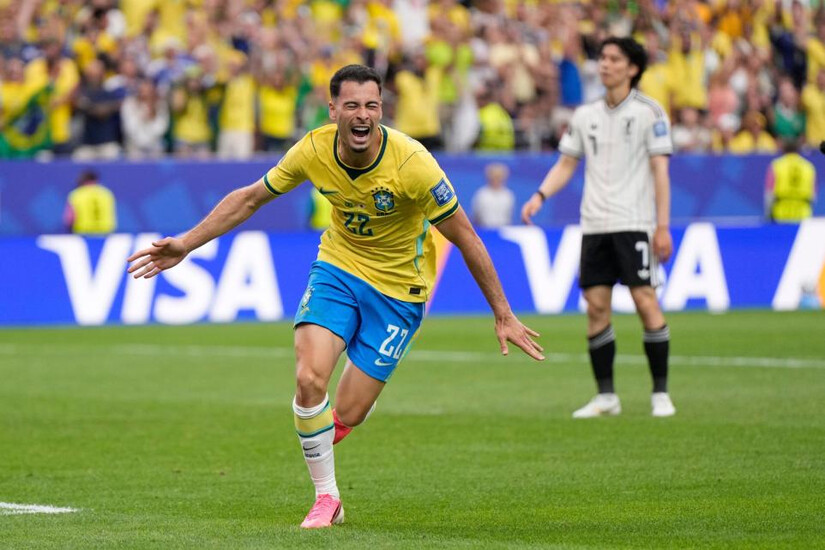
The Round of 32 opened inside Houston's NRG Stadium with a matchup that many expected Brazil to control through possession and superior individual quality. Instead, Japan authored one of the tournament's finest tactical performances before ultimately suffering another heartbreaking World Cup knockout defeat.
From the opening whistle, Hajime Moriyasu's side refused to retreat into a conservative defensive shell. Japan aggressively pressed Brazil's first line of buildup, repeatedly forcing hurried passes and preventing Casemiro and Bruno Guimarães from establishing any rhythm through midfield. The high press immediately unsettled the five-time world champions, whose defenders struggled to progress possession cleanly during the opening exchanges.
The breakthrough arrived in the 29th minute. Attempting to play out from the back under heavy pressure, Brazil surrendered possession in a dangerous area when Japan intercepted an errant pass near the edge of the penalty area. Midfielder Kaishū Sano reacted instantly, driving a composed finish beyond Alisson Becker to hand Japan a deserved 1-0 advantage and silence the heavily Brazilian crowd inside the stadium.
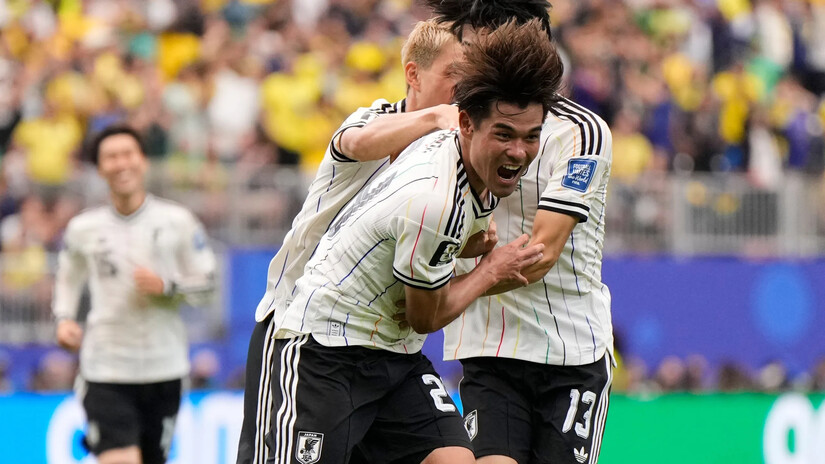
The goal rewarded Japan's relentless work rate and reinforced the tactical identity that had carried the Samurai Blue into the knockout phase. Rather than relying solely on defensive organization, Japan consistently challenged Brazil high up the pitch, disrupting passing lanes and denying the South Americans the time normally afforded to elite technical sides.
Brazil gradually recovered from the early setback but found few clear opportunities before halftime. Vinícius Júnior remained closely marked along the left flank, while Lucas Paquetá frequently struggled to find open channels, leaving Brazil without sustained penetration inside Japan's compact defensive structure.
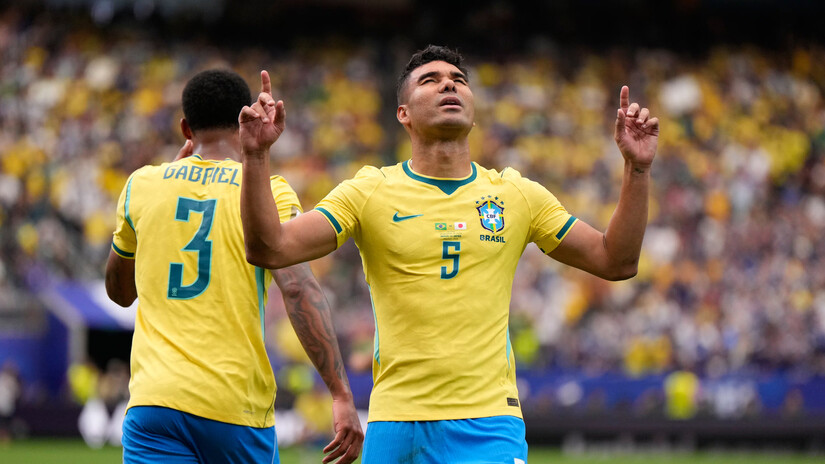
Recognizing the need for greater width and quicker ball circulation, head coach Dorival Júnior adjusted his team's shape during the interval, bringing on Endrick to re-energize the central lane. The tactical adjustment immediately altered the flow of play. Brazil increasingly forced Japan deeper into its own half, generating sustained pressure through a series of corners and second-ball opportunities. The equalizer finally arrived in the 56th minute after one such sequence. A partially cleared corner found Casemiro near the penalty spot. Timing his movement perfectly, the veteran midfielder rose above his marker and powered a header into the corner of the net off a cross from Gabriel Magalhães, restoring parity at 1-1 and shifting momentum firmly toward the South Americans.
Despite ceding the goal, Japan refused to abandon its discipline. The final thirty minutes became an absorbing contest between Brazil's territorial dominance and Japan's organized resistance. Moriyasu introduced fresh defensive legs while asking his side to defend in two compact banks, forcing Brazil to circulate possession patiently rather than attack directly through the middle.
As stoppage time approached, extra time appeared increasingly inevitable. Instead, Brazil produced one decisive moment worthy of its World Cup pedigree. Deep into stoppage time, Bruno Guimarães threaded a perfectly weighted pass through Japan's retreating defensive line. Substitute Gabriel Martinelli accelerated onto the ball, cut inside onto his stronger foot, and curled a precise finish beyond the reach of Zion Suzuki in the 95th minute.
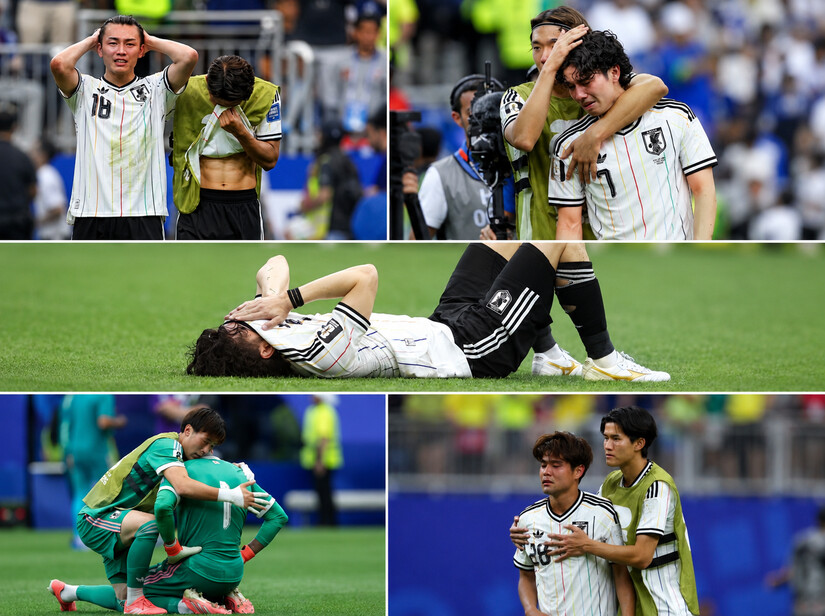
The strike instantly transformed anxiety into celebration. Brazil's players sprinted toward the corner flag while Japan's exhausted squad collapsed to the turf, another remarkable World Cup performance ending in heartbreak rather than reward. For Brazil, the victory preserved its pursuit of a sixth world title. For Japan, it represented another painfully narrow knockout exit despite producing one of the tournament's most courageous tactical displays.
The afternoon session shifted to Gillette Stadium in Foxborough, Massachusetts, where Germany entered as one of the tournament favorites and Paraguay arrived carrying the familiar underdog label that has defined much of its World Cup history. On paper, Julian Nagelsmann's squad possessed superior depth, greater attacking options, and overwhelming statistical advantages. None of those advantages mattered once the match began.
From the opening whistle, Paraguay demonstrated no interest in engaging Germany in an open exchange. Head coach Gustavo Alfaro instead constructed a disciplined defensive framework that compressed the center of the field, denied Germany space between the lines, and invited the Europeans to attack from wide areas. Germany dominated possession almost immediately, but the circulation rarely translated into dangerous opportunities. Joshua Kimmich orchestrated play from deep midfield while Florian Wirtz drifted between Paraguay's defensive lines searching for openings. Kai Havertz repeatedly checked back into midfield to create numerical superiority, yet every promising movement encountered another Paraguayan defender closing the passing lane.
Germany enjoyed long spells with the ball but found little rhythm inside the final third. Paraguay remained patient. Every successful defensive sequence reinforced the South Americans' confidence while increasing German frustration.
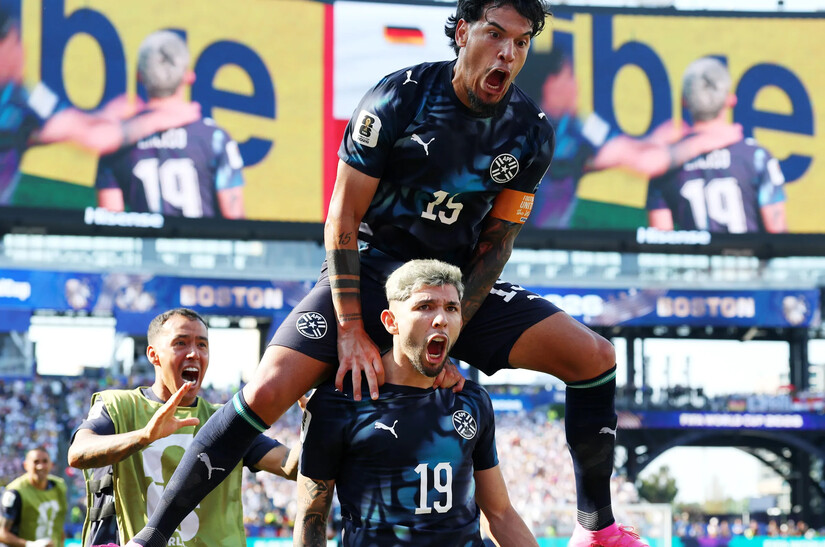
The breakthrough arrived not through sustained possession but through one of Paraguay's greatest strengths: physical transition. During the 42nd minute, Germany failed to lock down a loose second ball, and Matías Galarza quickly recycled possession back into the penalty area, letting young forward Julio Enciso time his run perfectly to head past Manuel Neuer and hand Paraguay a stunning 1-0 advantage.
The goal dramatically altered the emotional balance inside Gillette Stadium. Germany suddenly faced elimination. Nagelsmann responded aggressively during halftime, instructing his fullbacks to advance higher while allowing Wirtz greater positional freedom across the attacking third. The tactical adjustment immediately increased Germany's tempo and eventually produced the equalizer.
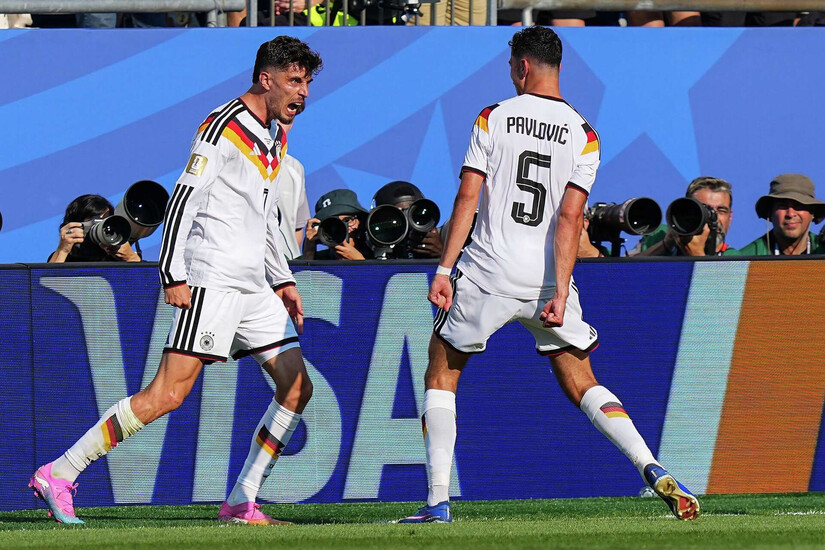
In the 54th minute, Wirtz collected possession near the left touchline before slipping beyond his defender. Rather than delivering a conventional cross, he floated a perfectly weighted delivery toward Kai Havertz, who demonstrated exceptional composure, cushioning the ball before lifting an elegant header beyond Paraguay goalkeeper Orlando Gill to restore parity at 1-1.
Germany appeared poised to overwhelm Paraguay. Instead, the match entered a prolonged battle of endurance. For the remainder of regulation and throughout thirty exhausting minutes of extra time, Germany attacked relentlessly while Paraguay defended with remarkable organization and determination. Junior Alonso and José Canale repeatedly threw themselves into shooting lanes, combining timely interceptions with fearless last-ditch blocks.
Germany generated opportunities through Jamal Musiala, Leroy Sané, and substitute Nick Woltemade, yet every attack encountered another layer of Paraguayan resistance. The Europeans thought they had claimed the win late in extra time when Jonathan Tah headed home from a corner, but the goal was called back by VAR for a foul by Waldemar Anton on the goalkeeper. As fatigue increased, so did the physicality. Late tackles, aerial collisions, and desperate recoveries defined extra time. Three yellow cards were distributed to Germany and three to Paraguay during the match, reflecting the escalating intensity rather than reckless indiscipline.
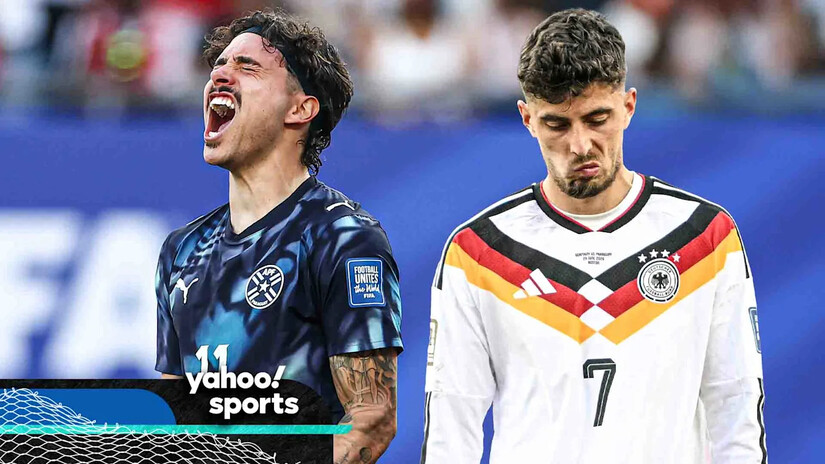
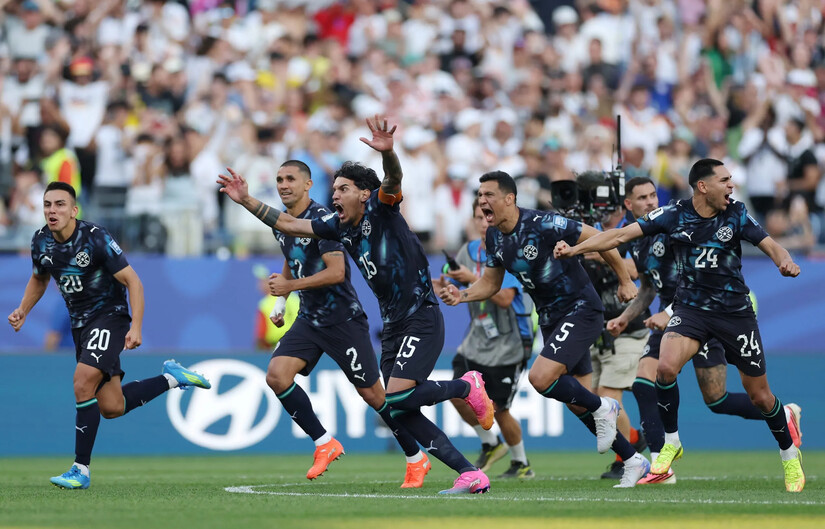
Neither side found a winner, taking the match to a penalty shootout. Historically, penalty shootouts had served as one of German football's greatest competitive strengths, having never lost one in World Cup history. Paraguay erased that history.
The opening penalties were converted confidently before Orlando Gill emerged as the defining figure of the afternoon. The Paraguayan goalkeeper guessed correctly to deny Kai Havertz and Nick Woltemade, placing extraordinary pressure on Germany's remaining shooters. While Manuel Neuer kept Germany's hopes alive by saving a penalty from Antonio Sanabria, Jonathan Tah skied his sudden-death attempt over the woodwork.
Finally, José Canale walked calmly toward the penalty spot with an opportunity to complete one of the nation's greatest football victories. He showed no hesitation, driving his penalty confidently beyond Neuer, sealing a 4-3 shootout victory and sending Paraguay into the Round of 16 while simultaneously eliminating Germany from the World Cup.
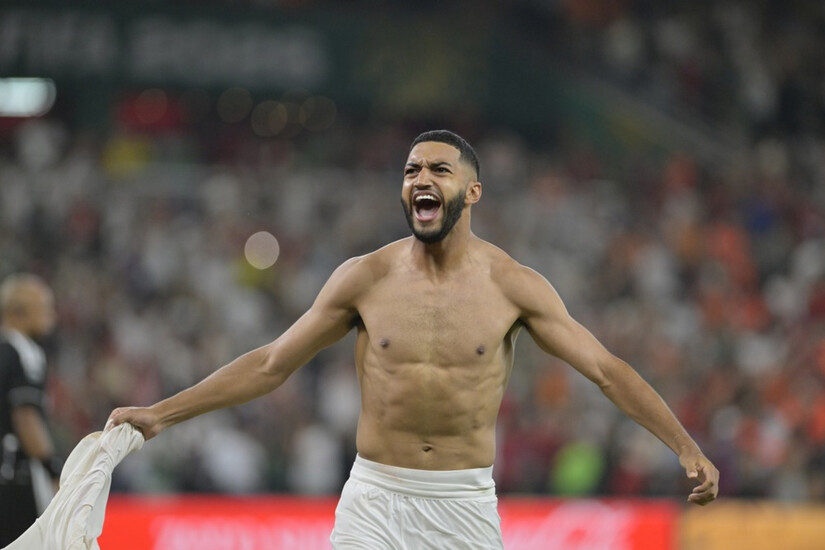
If Paraguay authored the afternoon's greatest surprise, Morocco ensured the evening concluded with another reminder that the remarkable run begun four years earlier was no historical accident. Inside Monterrey Stadium, two of international football's most tactically disciplined nations met in what quickly evolved into one of the tournament's most physically demanding contests.
Ronald Koeman's Netherlands sought to impose control through patient possession and positional rotation. Walid Regragui's Morocco remained committed to the defensive organization and rapid transition play that had already established the Atlas Lions among the world's elite tournament teams.
The opening hour developed into a tactical deadlock. Possession remained almost perfectly balanced while clear scoring opportunities proved exceptionally rare. Achraf Hakimi anchored Morocco's right flank with another commanding performance, rattling the upright early in the second half. The Netherlands attempted to stretch Morocco through Denzel Dumfries and Crysencio Summerville, yet every promising movement encountered disciplined defensive recovery from Chadi Riad and Issa Diop. Neither goalkeeper faced sustained pressure early on.
The breakthrough finally arrived during the 71st minute. A swift Dutch counterattack advanced through midfield when substitute Wout Weghorst won an aerial challenge to free Summerville, who sent Cody Gakpo through near the edge of the penalty area. Given a fraction of space, the Liverpool forward unleashed a powerful low drive that skipped beyond Yassine Bounou and into the corner of the net. For Gakpo, playing just days after his partner confirmed the loss of their unborn child, it was an incredibly emotional breakthrough.
For the first time all evening, Morocco trailed. Rather than panic, Regragui calmly reorganized his side. Additional attackers like Soufiane Rahimi and Chemsdine Talbi entered the match while Morocco gradually increased its territorial pressure without sacrificing defensive balance. Cross after cross entered the剧烈 Dutch penalty area as the Atlas Lions searched desperately for one decisive opportunity.
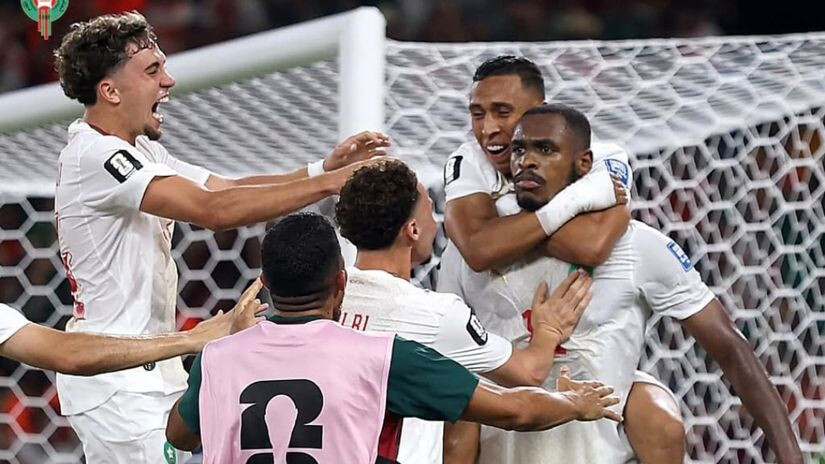
The Netherlands appeared increasingly comfortable protecting its advantage. Then came stoppage time. With virtually every Moroccan player committed forward in the 91st minute, another hopeful delivery ricocheted awkwardly inside the Dutch penalty area. Defender Issa Diop reacted fastest, stabbing the loose ball past Bart Verbruggen off Talbi's left-wing cross to level the match at 1-1 and ignite extraordinary celebrations among Morocco's supporters.
The equalizer carried the contest into extra time. Neither nation found the decisive breakthrough during the additional thirty minutes despite several promising attacks. Fatigue increasingly influenced decision-making as players from both teams battled cramping muscles, though Verbruggen produced an incredible point-blank save to deny Rahimi late. Once again, a World Cup knockout match required penalties.
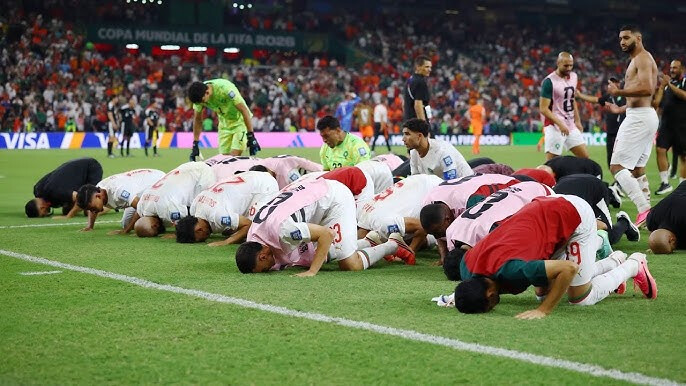
Morocco entered the shootout carrying complete confidence in goalkeeper Yassine Bounou, whose reputation as one of football's premier penalty specialists had already been firmly established on the international stage. He enhanced that reputation further. Despite Neil El Aynaoui hitting the crossbar on Morocco's opening kick, the North Africans recovered through composed finishes from Soufiane Rahimi and Chemsdine Talbi.
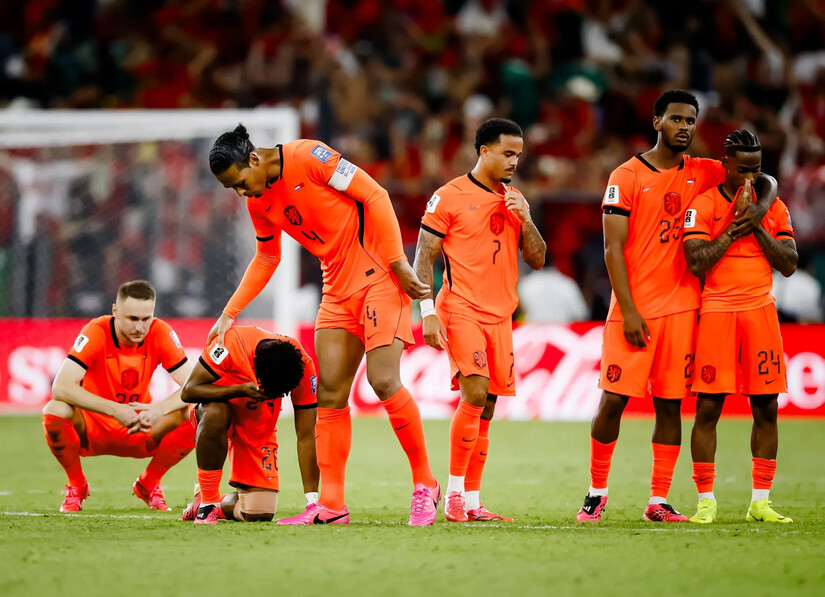
The defining moment arrived when Dutch forward Crysencio Summerville approached the penalty spot. Reading the strike perfectly, Bounou launched to his right and pushed the effort away, immediately shifting the psychological advantage to the Atlas Lions. That left midfielder Ismael Saibari with the opportunity to complete Morocco's progression. Despite enormous pressure, Saibari struck his penalty emphatically into the upper corner, leaving Verbruggen with no possibility of making the save. Morocco had prevailed 3-2 on penalties, booking a Round of 16 clash with World Cup co-hosts Canada in Houston on July 4.
Day 19 reinforced one of the defining realities of the expanded 2026 FIFA World Cup: the margin separating traditional football superpowers from ambitious challengers continues to narrow. Once the knockout rounds begin, historical pedigree provides no measurable advantage beyond kickoff. Tactical execution, emotional composure, and the ability to capitalize on isolated moments increasingly determine tournament survival.
Championship teams frequently distinguish themselves not by avoiding adversity but by responding to it. Brazil provided the latest example. For more than eighty minutes, Japan executed one of the tournament's finest defensive performances. Their aggressive press disrupted Brazil's rhythm, their compact defensive block denied central penetration, and their collective discipline frustrated one of international football's deepest attacking squads.
Rather than abandoning their structure or forcing increasingly speculative attacks, Brazil remained patient. Dorival Júnior trusted both his tactical system and the depth available on his bench. The introduction of fresh attacking legs, combined with subtle positional adjustments across midfield, gradually shifted the game's momentum. Casemiro's equalizer rewarded Brazil's persistence before Gabriel Martinelli delivered the decisive strike during stoppage time. The victory illustrated a recurring characteristic shared by championship-caliber sides: elite teams often require only one defensive lapse to change an entire tournament narrative.
Two of Monday's three matches required penalty shootouts, reinforcing an enduring World Cup truth: penalty kicks represent far more than technical exercises. They are psychological examinations. Throughout regulation and extra time, Germany and the Netherlands largely controlled possession against Paraguay and Morocco. Yet possession statistics became irrelevant once both contests reached twelve yards.
Instead, emotional control replaced tactical planning. Goalkeepers Orlando Gill and Yassine Bounou immediately transformed from final defensive barriers into central protagonists. Their ability to delay movement, interpret body language, maintain composure, and project confidence fundamentally altered the psychological environment confronting opposing shooters. Conversely, experienced international players who routinely convert penalties at club level suddenly appeared hesitant under World Cup pressure. History offered no protection. Germany entered the evening undefeated in every previous World Cup penalty shootout, a history that evaporated completely in Foxborough.
The events of Day 19 further strengthened perhaps the tournament's most significant competitive storyline: African football has moved well beyond the role of occasional disruptor; it has become an established contender. Morocco's elimination of the Netherlands continued the extraordinary consistency demonstrated by African nations throughout the competition.
These achievements are no longer isolated surprises. They reflect decades of investment in youth development, coaching education, tactical sophistication, and professional player development throughout multiple African federations. The expanded World Cup has provided a broader platform for the continent's genuine competitive growth.
Monday's Round of 32 results significantly reshaped the championship bracket while simultaneously eliminating two traditional European contenders.
Brazil now advances carrying renewed confidence after surviving one of the tournament's sternest examinations. The Seleção remain among the competition's leading favorites, although their narrow escape against Japan demonstrated that even elite teams possess little margin for complacency.
Paraguay enters the Round of 16 with extraordinary momentum after producing arguably the tournament's biggest upset. Having already eliminated Germany, Gustavo Alfaro's disciplined squad will approach its next assignment against the France-Sweden winner believing no opponent is beyond reach.
Morocco's reward is equally compelling. The Atlas Lions will now meet Canada in one of the Round of 16's most fascinating tactical matchups on July 4. Canada's relentless pressing and emotional momentum collide with Morocco's defensive discipline, transition efficiency, and proven ability to excel under knockout pressure. Both nations continue pursuing unprecedented achievements within their respective football histories.
MinneapoliMedia | Community. Culture. Civic Life.


Overcast, with a high of 59 and low of 49 degrees. Overcast during the morning,