Image




The Round of 16 reached its definitive, emotionally charged conclusion Monday as the 2026 FIFA World Cup officially compressed its field from sixteen surviving nations down to the final elite eight. Twenty-six days after the largest tournament in soccer history launched across North America, the bracket finalized its most consequential weeding out process to date. The expanded 48-team matrix has now entered the stage where every remaining squad sits exactly three victories away from hoisting the most coveted prize in global sport.
Day 26 unfolded as an extraordinary study in football's unyielding capacity to generate historic triumph and crushing dejection within a compact evening window. In Arlington, an iconic Iberian rivalry delivered ninety minutes of high-stakes tactical tension before Spain finally punctured Portugal's low block in stoppage time, bringing a heavy curtain down on what is widely acknowledged to be Cristiano Ronaldo's final World Cup act. Hours later in Seattle, Belgium turned in a masterclass in attacking efficiency, clinically dismantling host nation United States to extinguish their inspiring home territory campaign.
Unlike the previous knockout stages that relied on penalty shootouts or extra-time blocks, Monday verified that structural patience can operate as a lethal weapon. Spain refused to abandon their geometric possession identity despite lengthy frustration, eventually unpicking the solitary gap required to advance. Belgium, meanwhile, never allowed a partisan home stadium to fracture their positional discipline, systematically exposing defensive tracking errors with cold-blooded execution. The quarterfinal ledger is set, and the tournament enters its absolute premium tier.
|
Match |
Score |
Venue |
Status |
|
Spain vs. Portugal |
1 – 0 |
AT&T Stadium, Arlington, TX |
Spain advances |
|
Belgium vs. United States |
4 – 1 |
Lumen Field, Seattle, WA |
Belgium advances |
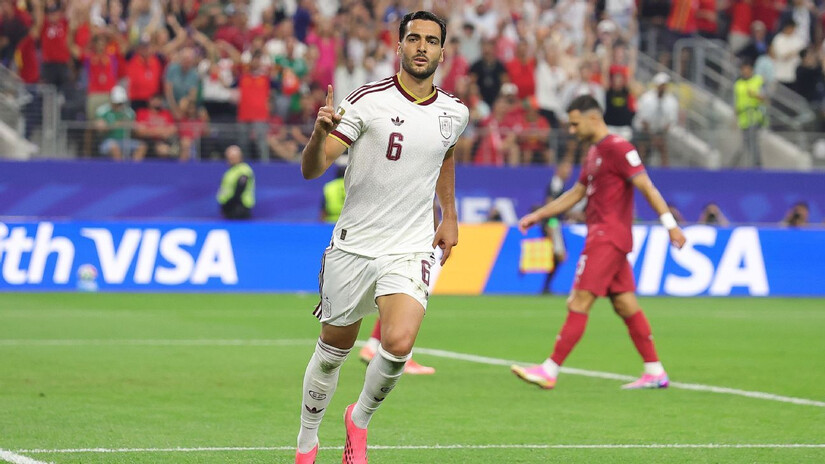
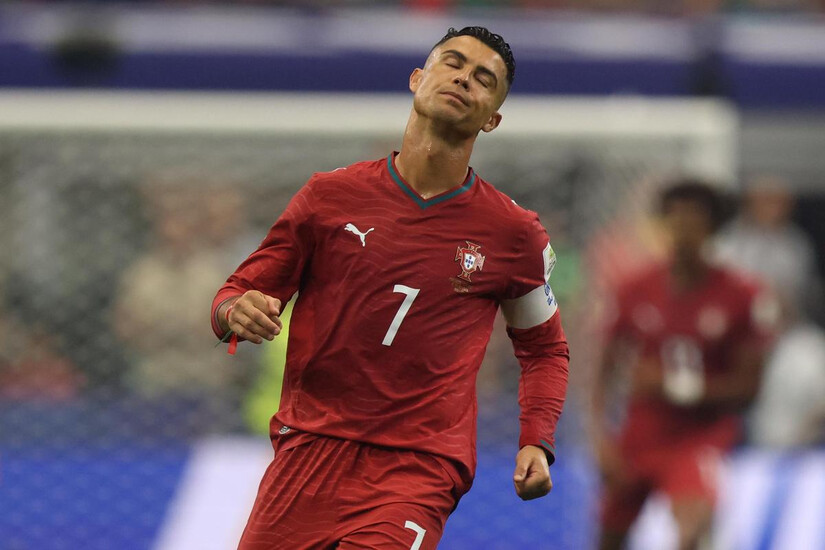
The historical ledger of the Iberian Derby is rich with tactical friction, but few modern encounters carried the immense emotional gravity that accompanied Monday's clash inside AT&T Stadium. For Luis de la Fuente's Spain, the operational directive was clear: rely on their patient, possession-heavy model to systematically tire out an opponent. For Portugal, the afternoon carried the heavy weight of an expiring era. At forty-one years old, Cristiano Ronaldo stepped onto the pitch fully aware that a single mechanical failure would finalize his legendary World Cup history.
The opening half hour developed with intense tactical caution, as neither manager manifested any desire to expose their central lane. Spain assumed high territorial control, utilizing Rodri, Pedri, and Fabián Ruiz to cycle the ball across the middle third. Portugal responded via compact spatial compression; João Palhinha screened passing lanes toward Álvaro Morata, while Bruno Fernandes dropped into a deeper double pivot alongside Vitinha to deny Spain central numerical overloads.
Spain dictated the absolute geography of the pitch, but clear interior scoring opportunities remained restricted by a dense Portuguese backline. Portugal focused their game plan on explosive transitions driven by Rafael Leão and Bernardo Silva. Leão repeatedly tested the Spanish right flank with explosive vertical bursts, forcing Pedro Porro into emergency recovery tracks. At the opposite end, Diogo Costa commanded his box with excellent technical stability, collecting deep crosses and directing traffic to preserve the scoreless tie at the interval.
The secondary half transitioned into total Spanish territorial dominance. As Portugal's midfield engine room expended massive physical reserves tracking extended possession sequences, Rodri began unlocking wider passing lanes to stretch Roberto Martínez's defensive setup. Pedri operated with increasing freedom inside the half-spaces, forcing Portugal into grueling lateral defensive rotations that slowly sapped their mental concentration. Still, Rúben Dias and William Carvalho anchored the box brilliantly, neutralizing long-range looks.
With the clock melting into the final quarter-hour, both benches executed personnel changes. De la Fuente introduced fresh attacking options to target a fatiguing low block, while Martínez prioritized structural safety to push the match toward extra time. The psychological friction inside the stadium rose to absolute maximum tolerances.
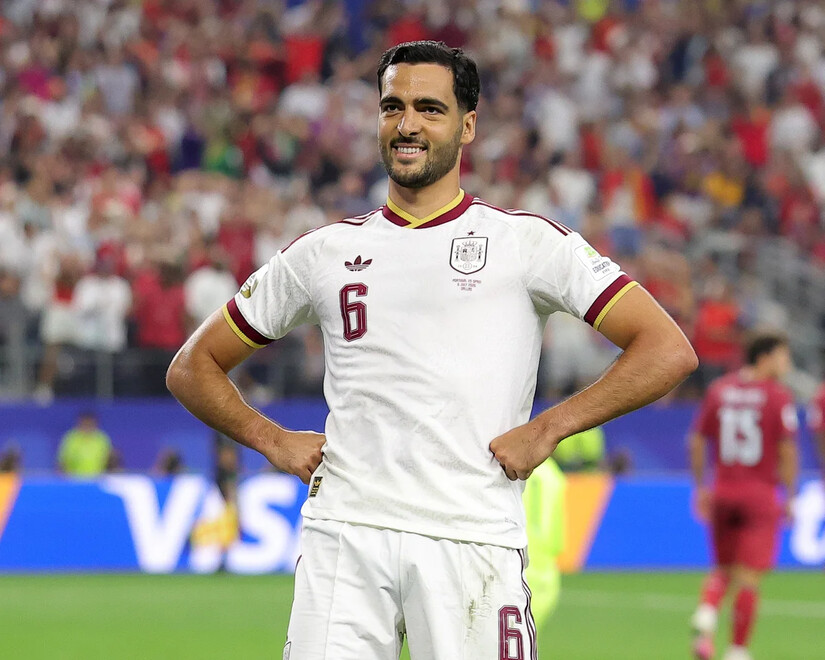
Then, in the 91st minute of play, Spain's positional persistence unpicked the lock. Patiently recycling the ball across the eighteen-yard line, Spain shifted the point of attack rapidly to the right channel. A low, driven ball skipped past the primary tracking defender, allowing Mikel Merino to anticipate the path a fraction of a second ahead of the line. Slicing between Portugal's center backs, Merino executed a low, clinical first-time finish that beat Costa at the near post.

The Spanish bench erupted into wild celebrations, leaving a shell-shocked Portuguese roster to collapse onto the grass. The remaining seconds devolved into frantic disciplinary actions; João Palhinha, Rúben Dias, and Aymeric Laporte all received bookings as challenges flew in under extreme emotional strain. The final whistle confirmed Spain's passage to the final eight, while concurrently bringing an emotional conclusion to Ronaldo's historic World Cup career. The structural fallout was immediate: Roberto Martínez confirmed post-match that he would formally step aside, concluding his tenure with the Portuguese program.
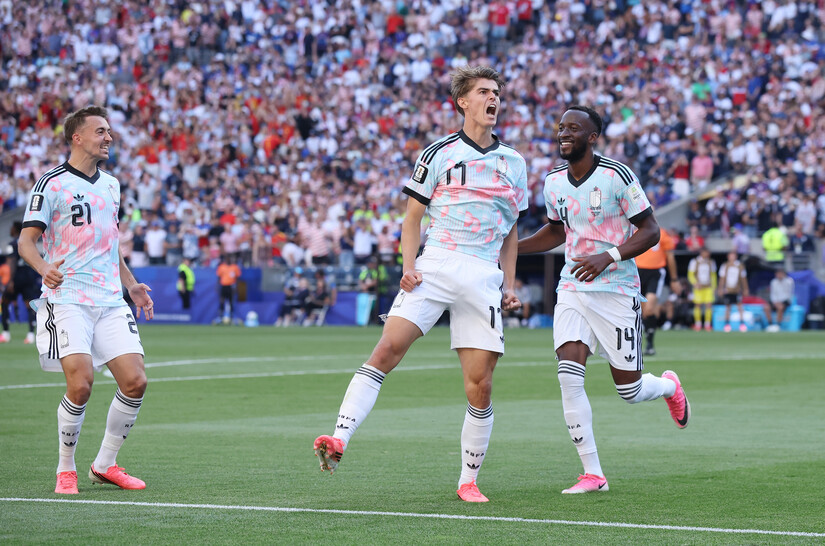
While Arlington was defined by fine positional margins, the evening block at Lumen Field was a display of absolute attacking ruthlessness. A capacity crowd of over 66,000 fans packed the Seattle venue hoping to witness Mauricio Pochettino's United States men's national team book a historic ticket to the final eight. Instead, Rudi Garcia's Belgium unleashed their most explosive offensive exhibition of the summer, clinically dismantling the host nation's defensive structure.
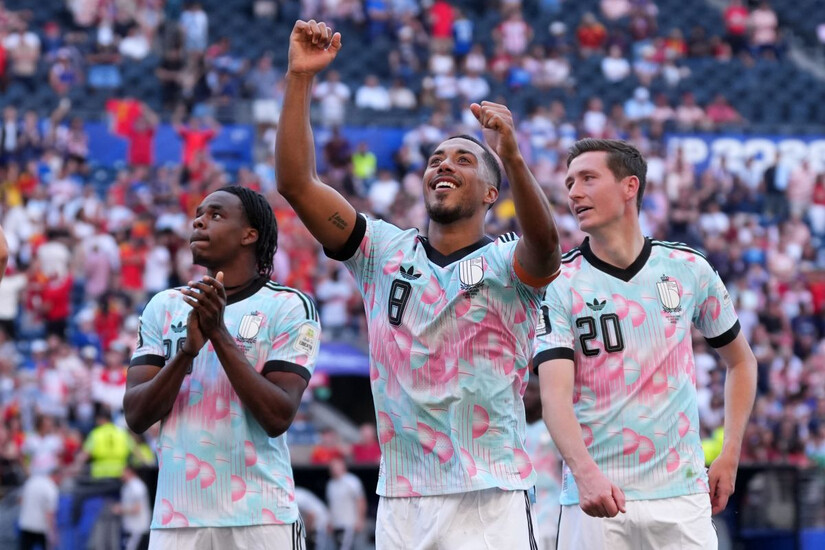
From the opening kickoff, the Red Devils targeted the vacant corridors behind the aggressive American fullbacks. Garcia instructed his side to bypass central midfield battles entirely, using quick vertical releases to isolate wide outlets. The tactical configuration yielded immediate results in the 9th minute when Leandro Trossard and Nicolas Raskin executed a smooth combination down the left flank. Slicing a dangerous low cross into the six-yard box, they found Charles De Ketelaere, who drifted completely unmarked to slot home a close-range opener to make it 1-0.
The United States responded with excellent physical urgency, sustaining their high-velocity front press rather than succumbing to early panic. The host nation gradually wrestled back possession metrics, and their persistence was rewarded in the 31st minute when Folarin Balogun drew a heavy foul near the vertex of the box. Midfielder Malik Tillman stepped over the dead ball, unleashing a curling free kick that deflected off the wall to completely deceive Thibaut Courtois and level the match at 1-1.
The stadium erupted into absolute pandemonium, but the emotional shift was instantly erased by a devastating Belgian counter-punch. Just two minutes after the equalizer, Trossard manufactured dangerous space out wide, delivering a phenomenal cross into the penalty box. De Ketelaere read the flight path perfectly, out-jumping veteran center-back Tim Ream to power an unstoppable header past Matt Freese to reestablish a 2-1 lead before the intermission. The rapid response struck a severe psychological blow, forcing the hosts to chase the game once more.
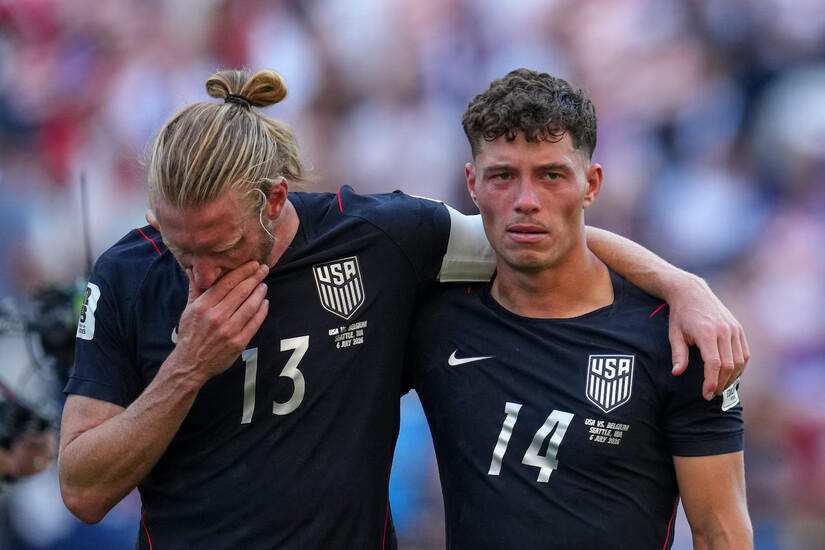
Pochettino committed extra bodies forward after the interval, instructing Christian Pulisic to search for central overloads. Yet the expanded shape presented Belgium's transition game with massive operational targets, and the definitive blow arrived in the 57th minute. Freese advanced aggressively outside his box to clear a deep long ball, but his hurried clearance fell directly into the path of De Ketelaere. The forward showcased elite composure, immediately squaring the ball to Hans Vanaken, who calmly rolled a finish into the empty net to expand the scoreline to 3-1.
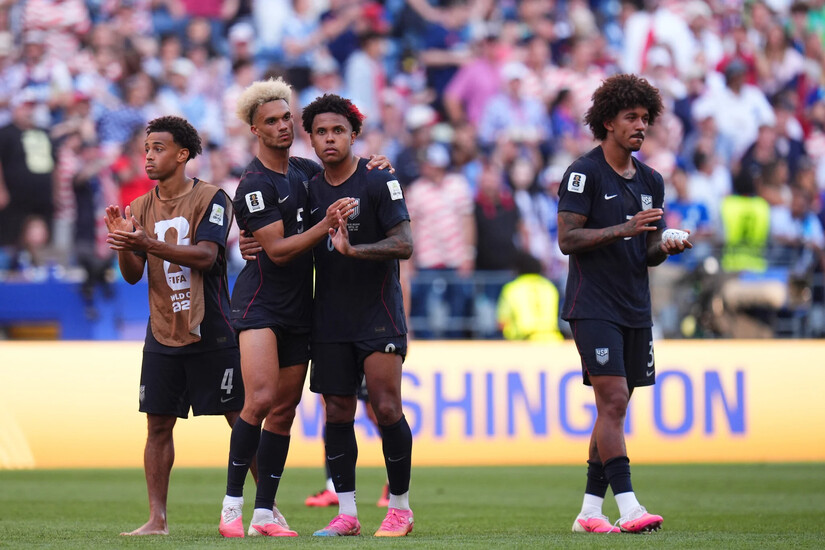
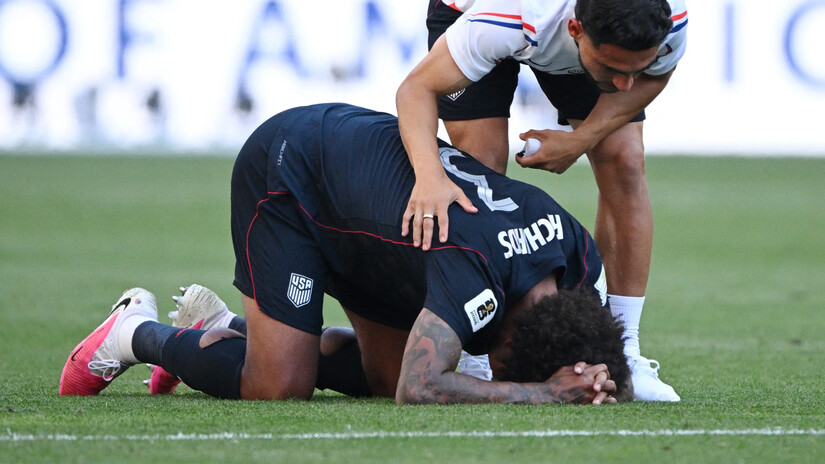
The USMNT fought with great desperation over the final half hour, with Weston McKennie executing heavy challenges in the engine room, but Belgium managed the spatial variables with absolute maturity. Deep into injury time, one final structural error finalized the night: Chris Richards surrendered possession during deep buildup play, allowing Maxim De Cuyper to pinch the ball and feed Romelu Lukaku. The veteran forward utilized a single settling touch before blasting a powerful strike past Freese to complete the 4-1 rout. While the exit brings an abrupt end to an inspiring host run, Pochettino’s program departs having elevated the global stature of the team ahead of future international cycles.
The absolute conclusion of the Round of 16 solidified several critical strategic principles:
The final eight selections are officially locked into the grid. With Morocco, France, Norway, England, Spain, Belgium, Argentina, and Switzerland surviving the multi-week meat grinder, the 2026 World Cup enters its most cutthroat phase. Historical reputations are fully archived; every successive match features a program fully capable of lifting the trophy, where a singular mistake carries permanent tournament termination.
MinneapoliMedia | Community. Culture. Civic Life.



Sunny, with a high of 85 and low of 49 degrees. Sunny for the morning, overcast for the afternoon and evening, clear overnight.