Image
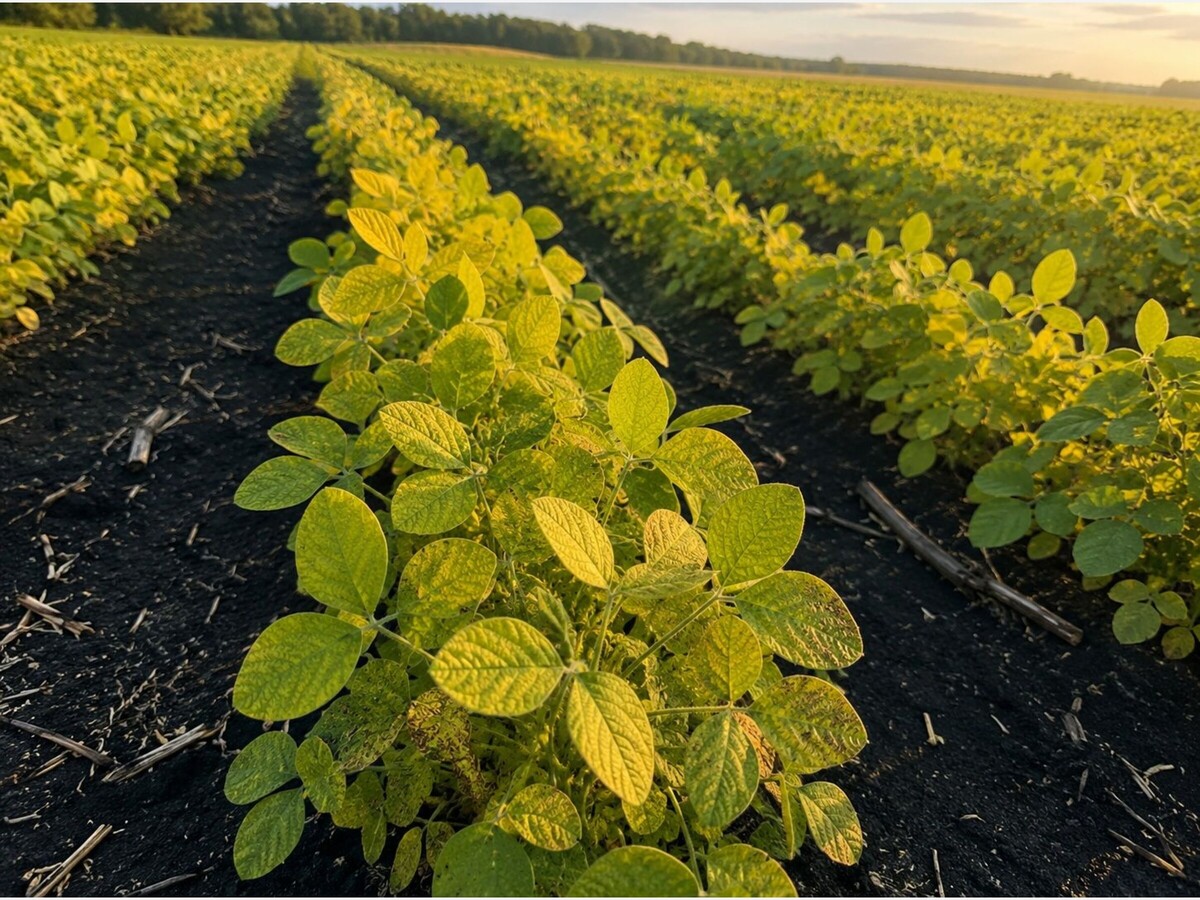



Iron deficiency chlorosis, commonly called IDC, has been appearing in soybean fields in western Minnesota. University of Minnesota crop specialists reported that symptoms emerged earlier than usual in some areas this year, raising the possibility of a particularly difficult season.
The condition does not ordinarily mean that Minnesota soil contains too little iron. Instead, soil chemistry and environmental conditions can prevent soybean plants from absorbing iron in a form they can use.
Without usable iron, plants cannot produce chlorophyll efficiently. Leaves begin turning yellow between veins that remain dark green, growth may become stunted and affected portions of a field can produce substantially lower yields.
IDC is most frequently found in western and southern Minnesota, particularly in low-lying areas with alkaline soil, accumulated salts and calcium carbonate.
Cold or waterlogged soil can worsen symptoms. Soil nitrate levels, bicarbonate concentrations, plant stress, disease pressure and the soybean variety planted can also influence how severely a crop is affected.
University of Minnesota Extension says the condition commonly appears in shallow depressions and around former prairie potholes where salts and carbonates accumulated naturally over time.
Soybean plants sometimes recover as soil conditions change and roots develop. However, severe or prolonged symptoms can limit growth during critical stages and reduce the field’s ultimate yield potential.
Agricultural specialists caution that farmers have relatively few immediate options after IDC symptoms become established.
There is no single treatment capable of correcting every affected field. Management frequently begins before planting, particularly through the selection of soybean varieties rated for greater IDC tolerance.
Farmers can also evaluate drainage, soil nitrate levels, planting practices, seed treatments and field history when developing a longer-term response.
In wet conditions, cultivation may sometimes help soil release carbon dioxide and reduce conditions contributing to the problem. Specialists nevertheless recommend that farmers consult an agronomist before making management decisions because IDC can resemble herbicide injury, plant disease or soybean cyst nematode damage.
Accurate diagnosis is essential because treatments intended for another condition may not address the underlying soil-chemistry problem.
The appearance of IDC comes as soybean producers face elevated costs and limited room for reduced production.
Seeds, fertilizer, fuel, equipment, insurance and financing all contribute to the cost of producing a crop. When commodity prices and operating margins are tight, even a localized yield loss can significantly affect a farm’s annual income.
Severely affected portions of a field may produce only a fraction of the beans harvested from healthy areas. Those weak areas can lower the average yield across an entire farm, even when surrounding plants appear healthy.
IDC is a recurring challenge in the Upper Midwest, but its severity can change considerably from year to year based on soil moisture, temperature, plant genetics and individual field conditions.
Agriculture specialists recommend that producers record where symptoms appear and compare those locations with soil tests and harvest-yield maps.
That information can help farmers select more tolerant varieties and make field-specific decisions before the next planting season.
Scouting also allows producers to distinguish IDC from other causes of yellow or stunted soybean plants.
The University of Minnesota conducts annual soybean variety trials that evaluate yield performance as well as IDC tolerance, protein and oil content, and resistance to certain diseases. Those results can help farmers identify varieties better suited to fields with a history of iron-related problems.
For the current crop, rainfall patterns, temperatures and the duration of soil saturation will help determine whether affected plants recover or sustain lasting damage.
Sources: MPR News, University of Minnesota Extension and University of Minnesota Crop News
MinneapoliMedia | Community. Culture. Civic Life.



Sunny, with a high of 67 and low of 46 degrees. Sunny for the morning, clear for the afternoon and evening,