57° and Clear
Image
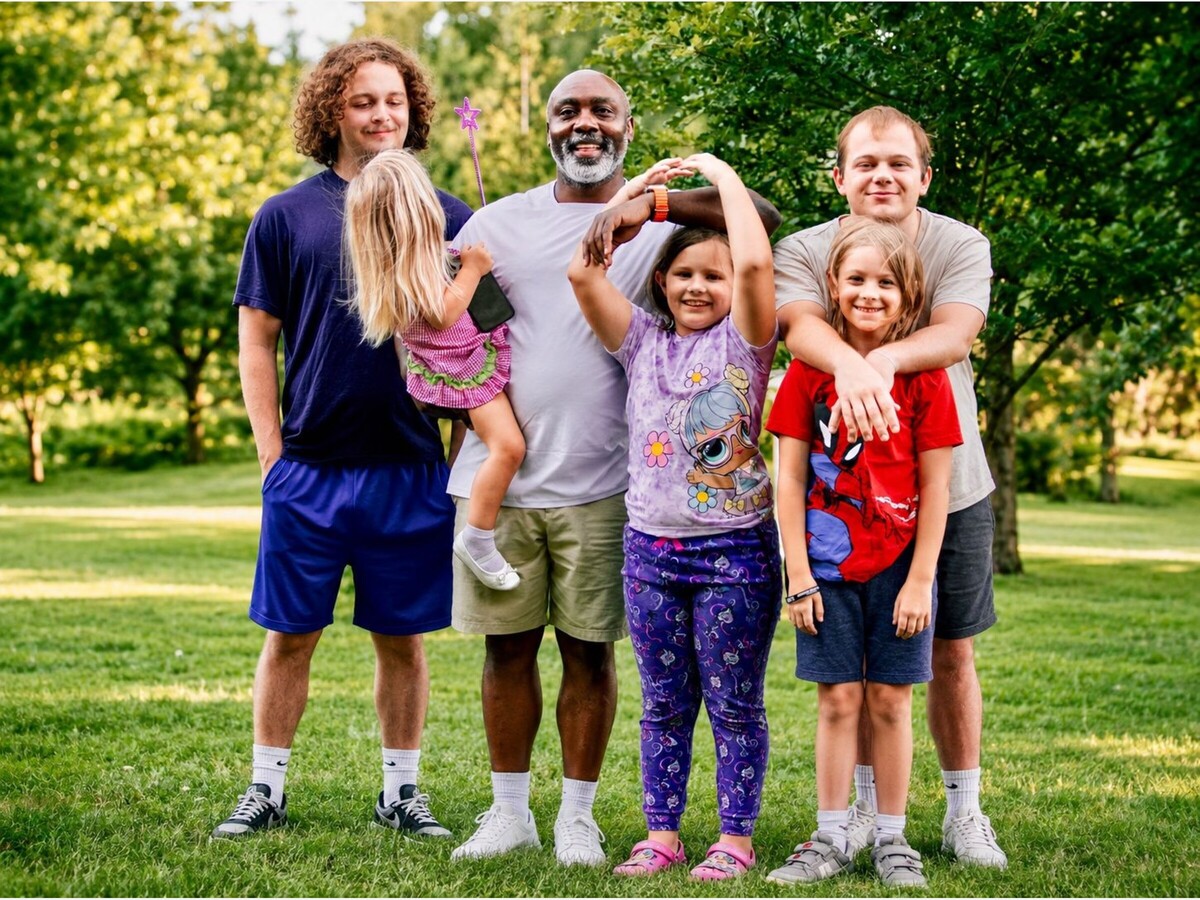



Long before millions knew him as an author, advocate, and single foster father, Peter Mutabazi was a ten-year-old boy running for his life through Kampala. Today, his story stands as a testament to the quiet power of consistency, the restoration of childhood dignity, and the generational ripples of a single act of compassion.
In a quiet corner away from the sudden laughter of his children playing in the next room, Peter Mutabazi leans forward, hands loosely clasped. Millions know him today as an author, humanitarian, and founder of the Now I Am Known Foundation—a man who has reshaped the national narrative around foster care. But when Peter speaks of his origins in rural Uganda and his years on the streets of Kampala, his voice drops to a measured, deeply deliberate calm.
The interview begins as Peter settles in after stepping away from his daily routine with his children. His tone is warm, yet grounded in the reality of a life built on constant vigilance.
Tom Akaolisa:
Peter, welcome to Voices From Across America. It is truly an honor to have you with us. Before the world came to know you as a foster father, an author, and an advocate, there was a little boy growing up in rural Uganda. When you look back at that child, what does childhood actually look like to you?
Peter Mutabazi:
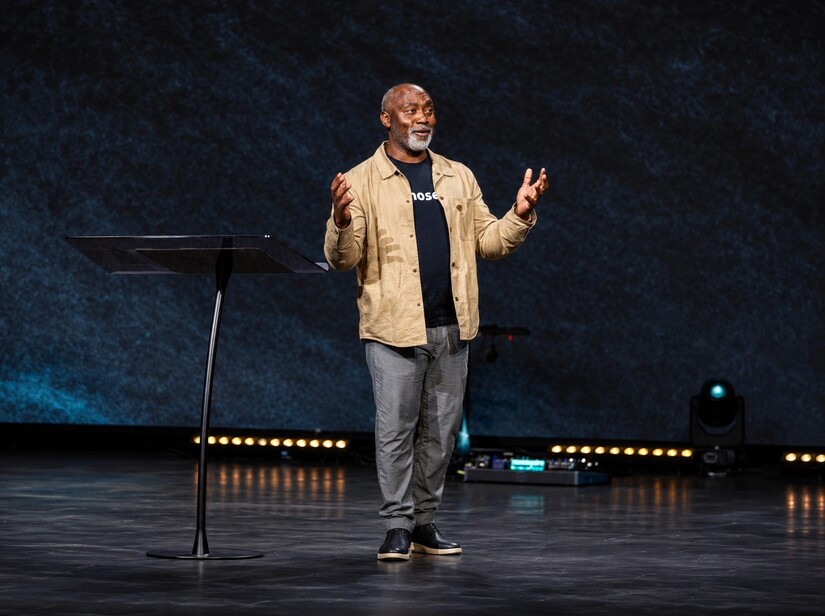
When people hear the word poverty, they imagine having very little. But there is another kind of poverty that is even harder to explain: living without hope because no one around you has it either.
How does a mother say, "Peter, dream," when she cannot feed you for the night? How do you dream when there is nothing around you to compare your life to?
As a kid, I walked three to four miles each way just to fetch water. My family couldn't afford to buy food, so we grew everything we ate—beans, maize, whatever would sustain us for the next six months. Being the oldest meant I had to step up. There was never any time to be a child. I don't even know what it means to be a kid, because I never had the time. The only time I felt like one was at the well—we might play with other kids for a single minute before picking up our water and heading back.
I never slept on a mattress until I was sixteen. I never owned a pair of shoes until I was fifteen or sixteen. But growing up in the village, everyone was in the same boat, so not having shoes didn't feel like a problem.
"How does a mother say, 'Peter, dream,' when she cannot feed you for the night? How do you dream when there is nothing around you to compare your life to?"
Tom Akaolisa:
You’ve spoken about the manual labor, but there was also deep fear at home. When did you begin to realize your home environment wasn’t safe?
Peter Mutabazi:
By the time I was four years old, I began to realize my father was different from other men. He was physically and emotionally abusive in every form you could imagine.
We lived in constant fear. If food was prepared before he came home, we had to eat quickly and hide. If he arrived while we were eating, the food would end up in your face or thrown away. As a little boy, I wanted to please him, but I never had the opportunity. All I ever heard was:
"Peter, you'll never amount to anything."
"You're useless."
"I wish you had never been born."
When those are the last words you hear before sleep and the first words you hear when you wake up, it's miserable. What hurt even more was watching my mother suffer the same abuse. We couldn't even complain about being hungry, because asking for food meant my mother would get beaten for advocating for us. So as a child, you learn to stay silent to protect your mom.
By the time I was ten, I decided to run away. It wasn't because I was looking for a better future—it was because I knew I was going to die at his hands. I thought, Why give him the joy of killing me? I'd rather die at the hands of a stranger.
I went to the bus station and asked a lady, "Which bus goes the farthest?" As a ten-year-old, you have no concept of distance; you just want to go somewhere he can never reach you. I boarded a bus that took me 500 kilometers away to Kampala. That is how my life as a street child began.
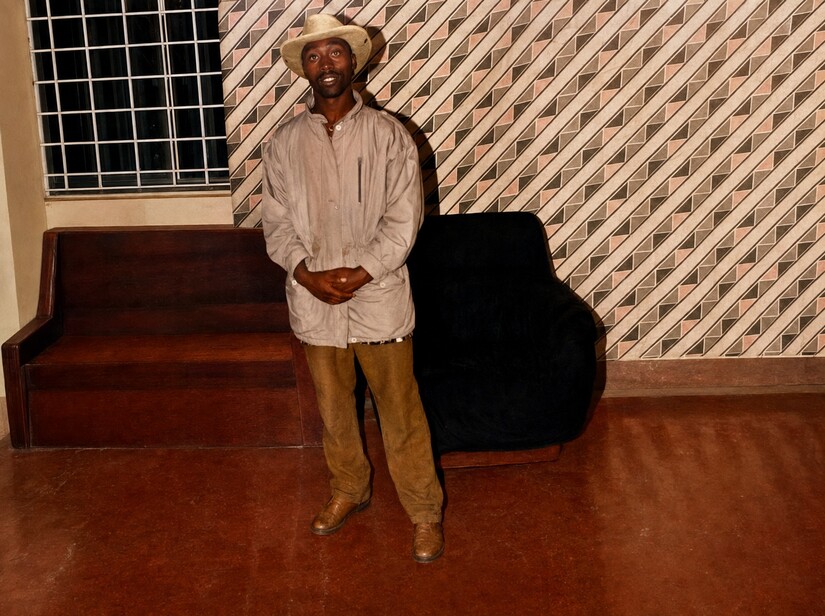
When recalling his five years on the streets, Peter’s cadence shifts. He speaks with frank candor about the psychological survival mechanisms required of a homeless ten-year-old.
Tom Akaolisa:
At just ten years old, surviving on the streets of Kampala alone—what was happening inside you during those years when every single hour was uncertain?
Peter Mutabazi:
In my mind, my life was already ruined anyway, so what was left to protect? I completely surrendered. The abuse on the streets was a hundred times worse than at home, but because it came from strangers, I almost felt they had a right to do whatever they wanted to us.
We never showered. We smelled. We were treated as the scum of the earth. To survive, you had to deny your own humanity.
If someone offered you food, you knew you would pay for it later with abuse or sexual favors. So how do you handle that as a child? You learn to have an out-of-body experience. Physically you were there, but mentally you put your brain somewhere else.
If we had to steal to survive, we couldn't allow ourselves to feel empathy, because nobody had empathy for us. You had to separate who you were from what you had to do.
We slept inside sewer tunnels. Why sewers? Because they smelled so terrible that normal people stayed away, which made them the safest place for us. They were also close to the garbage dumps. Every morning, we had a strategy to race the street dogs to whatever food people had scavenged or thrown away. That was my life for five years.
|
Phase |
Duration |
Psychological Shift & Action |
|
Initial Contact |
Months 1–3 |
Strategic Withdrawal: Expecting abuse, Peter flees every time food is offered. |
|
Pattern Recognition |
Months 4–12 |
Consistency Dismantles Trauma: Food arrives weekly without conditions or demands. |
|
The Horizon Opens |
Month 18 |
Restored Agency: The stranger offers school and the promise of three daily meals. |
Tom Akaolisa:
Your life shifted because one stranger stopped, asked your name, and kept coming back. Why did that initial encounter take so long to break through?
Peter Mutabazi:
Because on the streets, kindness was a red flag. Kindness meant you were in trouble and that a price was coming.
When this man first approached me and asked my name, I was terrified. He gave me food, and I ran away immediately because I was waiting for the abuse to begin. A week later, he came back. He gave me food again, and I ran again.
What slowly caught my attention wasn't just the food—it was the pattern. Every week he came. Every week he greeted me by name. And every week, the abuse I kept waiting for never happened.
His greatest gift was his patience. He fed me for a year and a half before he ever asked me a deep question. For anyone who has survived severe trauma, trust takes time. His consistency slowly dismantled everything trauma had taught me about people.
After a year and a half, he asked me: "Peter, if you had the opportunity to go to school, would you like to go?"
I immediately said no.
In my mind, school was for kids who had moms and dads, kids who were hopeful. My only goal was surviving the next hour. Then he said something that completely changed my thinking: "If you go to a boarding school, you'll have breakfast, lunch, and dinner every day."
I couldn't believe him. Growing up at home, we had chicken on Christmas and beef on Easter—those were the only two days a year we had meat. Otherwise, we were lucky to have a single meal of beans or potatoes. The idea of three meals a day sounded like heaven. I didn't go to school to get an education or become a teacher; I went to school to see if anyone actually ate three times a day!
There was another reason, too. For the first time in my life, someone looked at me and saw potential. My father had spent years telling me I was useless. This man believed otherwise.
When I arrived at the school, I received my first mattress, my first pair of shoes, and my own bed. I worked hard in class not because I loved studying at first, but because I was terrified that if I failed, I would lose the meals and be sent back to the streets.
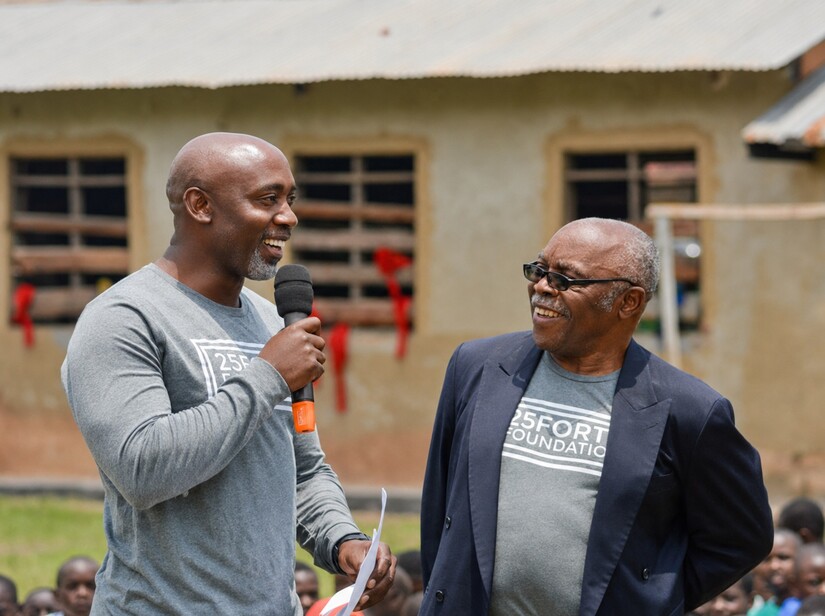
Peter reflects on his decades spent in international relief work across 120 countries, and the pivotal realization in Rwanda that reshaped his understanding of his father.
Tom Akaolisa:
Before becoming a father in America, you spent years serving in conflict zones and refugee communities worldwide. What did those years teach you about healing and your own past?
Peter Mutabazi:
I always looked at my life and thought: If I could survive the abuse at home and on the streets, I can help change the narrative for other children. I’ve served in more than 120 countries—India, conflict zones, refugee camps. Whenever children looked at me working for an international organization, they assumed I couldn't understand them. I always wanted them to know: "I was once exactly where you are."
My turning point for personal healing came while serving in Rwanda after the 1994 genocide.
On my first day there, I saw thousands of bodies. I remember asking myself in horror: "How could human beings hate each other this much?"
Then, a sudden realization hit me like a wall: I carried that exact same hatred toward my own father. I realized that if I held onto that bitterness, I was capable of the same darkness.
Forgiveness wasn't about excusing what my father did. It was about choosing freedom for myself so his actions wouldn't continue to control my future. Forgiving him was one of the greatest gifts I ever gave myself.
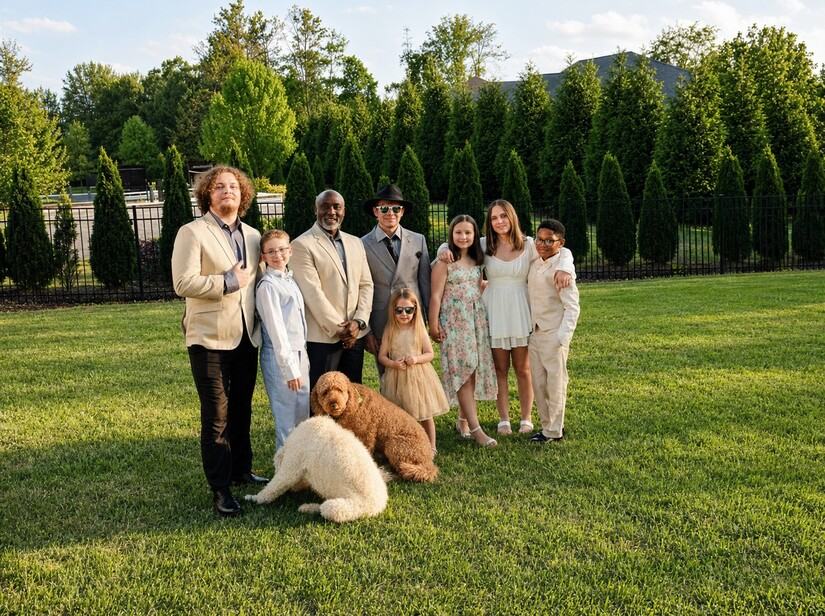
"When I arrived in the United States, I realized I was one of the wealthiest men on the planet based on three simple things:"
Tom Akaolisa:
You eventually built a successful life in the United States. You had stability and career success, yet you felt a persistent void. What was missing?
Peter Mutabazi:
For years, I traveled the world helping kids, but every time an assignment ended, I had to leave them behind. That broke my heart. I wanted to bring that mission into my daily life.
I wanted to be a father, but I believed a lie for a very long time. In every international agency I worked with, the adoptive parents were always married Caucasian couples. In Uganda, as a single male, you couldn't adopt. So I assumed single Black men simply weren't allowed to foster or adopt anywhere.
One day in Oklahoma, I went to a local social services agency just asking to mentor teenage boys in my community.
The social worker looked at me and asked, "Have you ever thought about becoming a foster parent?"
I laughed and said, "I'm not qualified. I'm single."
She smiled and said, "Peter, single people can absolutely foster."
That was on a Monday. By Thursday, I was signed up for licensing classes. I realized we often live behind limitations that aren't real simply because we never stop to ask the question.
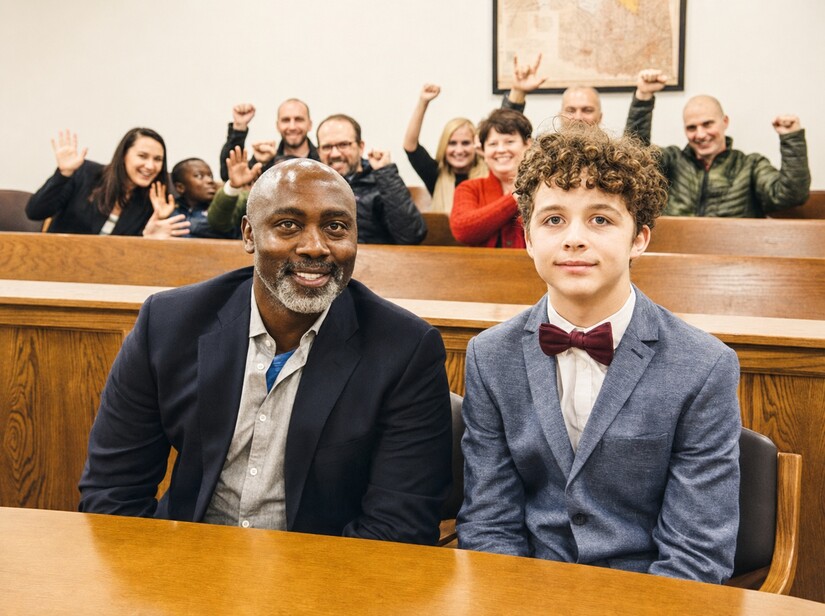
Peter pauses, reflecting on the systemic skepticism he faced when entering the child welfare system as a single Black man.
Tom Akaolisa:
Stepping into the system as a single foster father meant entering uncharted territory. What were the initial reactions from the community and the system itself?
Peter Mutabazi:
The assumptions started on day one. I walked into the licensing class, and someone looked around and asked, "Where's your wife?" I said, "It's just me." They said, "I think you're in the wrong class."
The scrutiny was intense. Background checks felt longer, and there was an underlying skepticism—people waiting to see if I would quit after a month.
When I took my first foster children—who happened to be white—out to a store in Oklahoma, people would look at us with suspicion. I was pulled over or questioned by police over eleven times because strangers assumed a single Black man couldn't legally be taking care of these children.
I had to learn to put on blinders, like the blinders police horses wear in busy cities. If I focused on the skepticism, I would get distracted. Instead of reacting with anger when people asked at the hospital, "When are the real parents coming?" I chose to use it as an opportunity to educate them: "Actually, I am their father."
"Instead of reacting with anger when people asked, 'When are the real parents coming?' I chose to use it as an opportunity to educate them: 'Actually, I am their father.'"
Tom Akaolisa:
Your journey with your son Anthony has touched millions. How did a weekend placement turn into a permanent family?
Peter Mutabazi:
As foster parents, our primary goal is reunification—helping children stay safe until they can return to biological relatives. I had already fostered eleven children who had successfully moved on to family members.
Anthony arrived at my door at three o'clock in the morning. He was eleven years old. When he walked in, I said, "You can call me Mr. Peter."
He looked up at me and asked, "Can I call you Dad?"
I said, "You're only here for the weekend, buddy. I don't think that's necessary."
Then I read his file. Anthony had been adopted by a family years earlier. One day, when he was eleven, they drove him to a hospital, dropped him off, and walked away. They never said goodbye, and they never came back.
When I heard that, I saw my ten-year-old self standing alone at the bus station in Kampala. I knew what it felt like to believe nobody wanted you. In that moment, I looked at him and knew I was never going to let him go.
I told the worker, "He can stay with me forever."
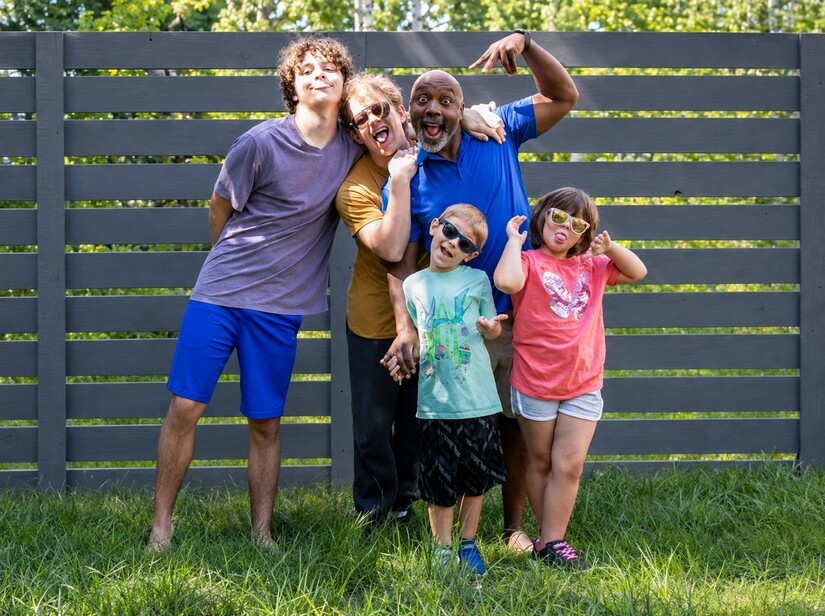
Discussing the work of his foundation, Peter grows animated, emphasizing how small, physical markers of dignity can completely transform a child's psychological trajectory.
|
Common Myth |
Systematic Reality |
|
"Parents of foster kids are inherently bad people." |
Resource Deprivation: Poverty, lack of support networks, and system collapse are frequently the root causes—not a lack of parental love. |
|
"Every child in foster care is looking to be adopted." |
Reunification First: Safe reunification with restored biological families remains the primary goal whenever possible. |
|
"Trauma permanently defines behavioral capacity." |
Resilience & Restoration: Safety, consistent love, and personal dignity unlock deep healing and trust in young people. |
Tom Akaolisa:
Through your foundation, Now I Am Known, you emphasize giving foster children personalized bedrooms and gifts. Why are these simple things so critical to healing?
Peter Mutabazi:
When I was a street kid, I had to move every hour to avoid danger. I belonged nowhere. When I arrived at boarding school and was given my own bed, it was the first time I had a space that was mine. I could sit down without fear of someone hurting me. It gave me a place to dream.
Children in foster care move from home to home carrying their belongings in trash bags. They never feel they belong.
When a new child comes to my home, I ask them: "What would you like in your room?" They look at me like I'm crazy! I tell them, "Pick your favorite bedding. Pick your favorite superhero or plant for the wall."
It’s not about the furniture—it’s about restoring dignity. When a child can close their door and know that space belongs to them, they finally feel safe enough to stop surviving and start dreaming.

As the interview draws to a close, Peter reflects on community, the global perception of African identity, and his newest family milestones.
Tom Akaolisa:
What do you hope adults understand about the child welfare system and our collective responsibility to one another?
Peter Mutabazi:
First, we must stop assuming every parent whose child enters foster care is a bad person. Many love their children deeply but lack resources, housing, or a support network. Poverty is often punished as neglect.
Second, I want to change the narrative surrounding African culture and fatherhood. Growing up, the media always portrayed Africa as solely on the receiving end of aid. But our African heritage taught us the power of the village—that we belong to each other and take care of one another.
As a single father, I rely on that village every day. You might not be able to foster, but can you buy a pizza for a foster family? Can you mentor a kid for an hour?
Lastly, fatherhood isn't about buying expensive shoes—kids don't care about that. They care whether you show up to their games, pick them up from school, and remain present. Presence is what heals.
Tom Akaolisa:
Decades from now, when the children whose lives you have touched look back on your legacy, what do you hope they will say mattered most?
Peter Mutabazi:
I hope they’ll say: "My dad saw the best in me when I couldn't see it in myself. He showed up at my lowest moments, and he exposed me to a world bigger than the one I knew."
My children don't look like me, but love made us family. I hope they carry that empathy into their own lives and always ask: "What do I have that I can share with someone else?"
Just recently, my family grew even more. I officially adopted my eleven-year-old son, and just yesterday, I completed the adult adoption for my twenty-two-year-old son.
One stranger's decision to stop and ask my name forty years ago didn't just save my life—it educated my siblings, gave dozens of foster children a home, and built a legacy of love that will echo for generations. Kindness is never wasted.
Tom Akaolisa:
Peter, thank you for your courage, your work, and for trusting us with your story here at MinneapoliMedia. It has been an absolute privilege.
Peter Mutabazi:
Thank you, Tom. It has been a true pleasure.
STAY CONNECTED TO MINNEAPOLIMEDIA
Local stories matter. Subscribe free to MinneapoliMedia and receive independent news, community reporting and important updates from Minneapolis, the North Metro and communities across Minnesota.
SUBSCRIBE FREE: https://minneapolimedia.town.news/subscribe
MinneapoliMedia | Community. Culture. Civic Life.


Sunny, with a high of 93 and low of 63 degrees. Partly Cloudy in the morning, patchy rain nearby in the afternoon, clear for the evening, overcast overnight.