57° and Clear
Image



The company filed its request with the Eighth U.S. Circuit Court of Appeals after a federal district judge declined to suspend the law while xAI challenges its constitutionality.
Minnesota’s law took effect August 1. It applies to website operators, software developers and others whose products allow users to generate realistic images depicting an intimate body part that did not appear in an original photograph of an identifiable person.
The measure responds to the growing availability of artificial-intelligence tools capable of transforming ordinary photographs into fabricated sexual images. Women and minors have been among the people most frequently targeted by such technology.
Supporters of the Minnesota law argue that the images can be used to humiliate, harass, exploit or intimidate victims even though the depicted conduct never occurred.
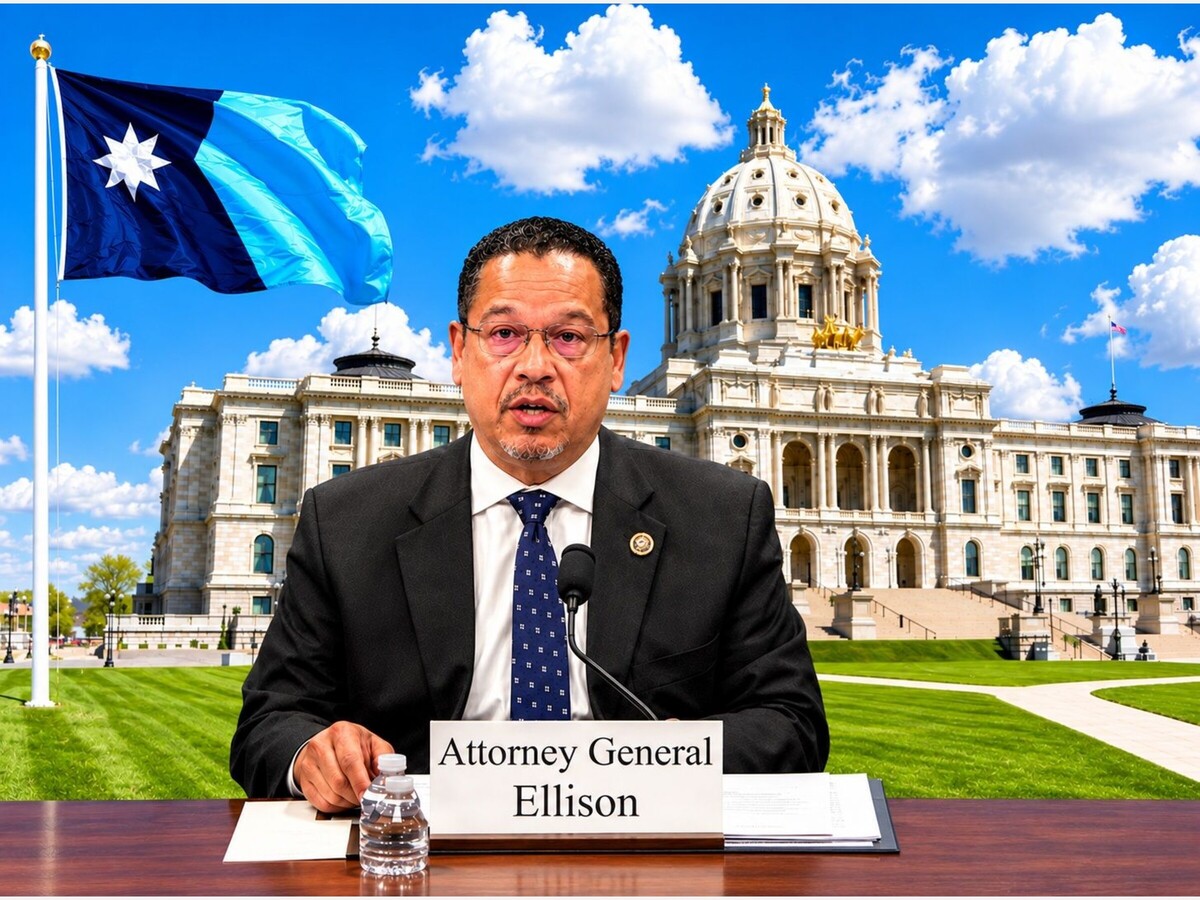
xAI contends that the law restricts expression protected by the First Amendment and places unconstitutional limits on its Grok Imagine image-generation tool. The company wants the appellate court to prevent Attorney General Keith Ellison from enforcing the statute while its lawsuit proceeds.
A federal district judge rejected the company’s initial request for an injunction earlier in September.
U.S. District Judge Donovan Frank found that xAI had waited before filing its lawsuit and seeking emergency relief, weakening its claim that immediate intervention was necessary to prevent irreparable harm.
Frank wrote that if the company genuinely feared such harm, it could have acted sooner to challenge the statute.
In its appeal, xAI disputed the conclusion that it moved too slowly. The company argued that large corporations can require more time to act because numerous decision-makers and competing interests may be involved.
xAI also maintains that Grok Imagine has safeguards intended to prevent users from producing sexualized images of real people without their consent. It says its rules prohibit nonconsensual nude or sexual content and that technological barriers have been installed to enforce those restrictions.
The litigation will test whether Minnesota can impose responsibility on technology providers for image-generation capabilities that may be used to harm identifiable people without violating constitutional protections for speech.
The dispute also raises a practical enforcement question: whether company policies and technical safeguards are sufficient when users discover ways to evade them or when a platform’s tools repeatedly produce prohibited material.
Minnesota has defended the statute as a bipartisan response to significant and rapidly expanding harms. The attorney general’s office said the district court’s earlier ruling recognized the state’s strong public interest in protecting people from nonconsensual fabricated sexual imagery.
Unlike traditional altered photographs, generative artificial intelligence can create large numbers of convincing images quickly, inexpensively and with limited technical skill. A user may need only an ordinary photograph of another person and a written instruction to create a false sexual image.
Once distributed online, those images can be copied and republished across multiple platforms, making complete removal difficult or impossible.
The damage can continue even when viewers know an image is fabricated. Victims may face harassment, reputational harm, threats, employment consequences or emotional distress caused by the unauthorized use of their likenesses.
The Minnesota case could carry consequences beyond the state because it addresses an area in which lawmakers, courts and technology companies are still attempting to establish boundaries.
A decision allowing the law to remain in force could encourage other states to impose similar requirements. A ruling for xAI could limit how states regulate generative-image tools and force lawmakers to use narrower language when addressing nonconsensual deepfakes.
The appeal does not determine whether xAI ultimately will succeed in invalidating the law. The immediate question is whether enforcement should be suspended while the constitutional lawsuit continues.
The case is X.AI LLC v. Keith Ellison, No. 26-2806, before the Eighth U.S. Circuit Court of Appeals.
No ruling had been announced on xAI’s request as of Tuesday morning.

Local stories matter. Subscribe free to MinneapoliMedia and receive independent news, community reporting and important updates from Minneapolis, the North Metro and communities across Minnesota.
SUBSCRIBE FREE: https://minneapolimedia.town.news/subscribe
MinneapoliMedia | Community. Culture. Civic Life



Sunny, with a high of 66 and low of 43 degrees. Sunny in the morning, clear in the afternoon and evening,