57° and Clear
Image
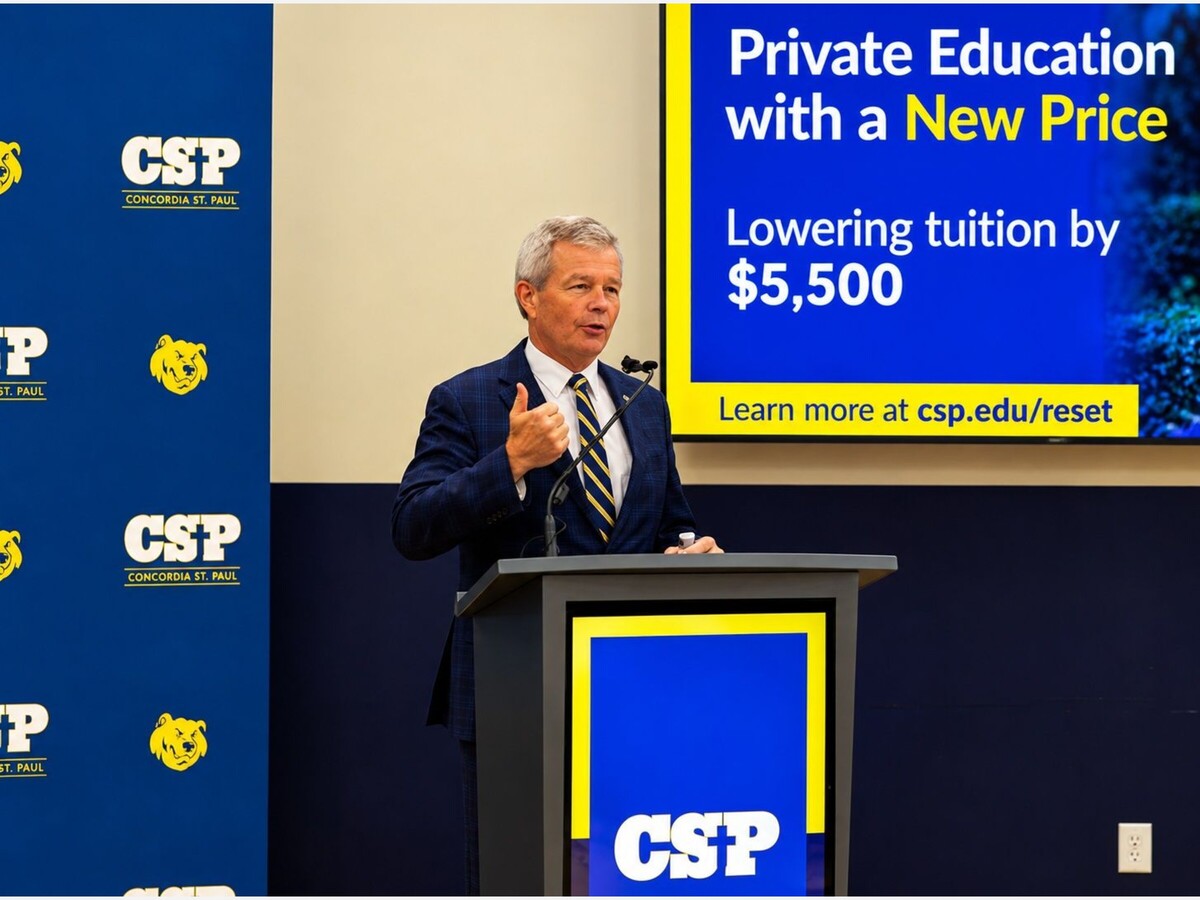



The private university described the 20 percent reduction as a “tuition reset” intended to make its published cost easier for prospective students and families to understand.
The new tuition rate will apply to both incoming students and undergraduates already attending Concordia’s Saint Paul campus.
University President Rev. Dr. Brian Friedrich said the reduced rate brings Concordia’s tuition close to what the institution charged approximately two decades ago.
“We’re rewinding tuition back to 2006 prices,” Friedrich said in announcing the change.
Concordia currently lists in-person undergraduate tuition at approximately $27,200. Reducing it to $21,700 does not include room and board, books, transportation, fees or other expenses associated with attending college.
The university said students will remain eligible for merit scholarships in addition to the lower published price.
Concordia also said it does not plan to eliminate academic programs or reduce its workforce to offset the tuition reduction. Friedrich attributed the university’s ability to lower the price partly to enrollment growth and a broader range of programs that provide multiple sources of institutional revenue.
The university offers approximately 100 academic programs through in-person and online instruction.
The reset addresses a longstanding problem in private higher education: the difference between the tuition price institutions advertise and the amount many students ultimately pay after receiving institutional grants and scholarships.
Colleges sometimes establish a high published price and then offer substantial discounts through financial-aid packages. Although the resulting net cost may be considerably lower, the initial price can discourage students from applying before they learn what assistance is available.
Friedrich said some prospective students see the listed cost and conclude that college, particularly a private university, is beyond their financial reach.
That reaction can have an especially significant effect on students from lower-income households, first-generation college students and families unfamiliar with the financial-aid process.
The tuition reset reduces the amount Concordia must subtract later through institutional discounts while giving families a lower starting figure when comparing colleges.
It does not guarantee that every student will pay less than under the current system. A student’s final cost will still depend on scholarships, grants, financial need, housing choices and other assistance. Families will need to compare complete financial-aid offers rather than published tuition alone.
Concordia has used this strategy before.
The university implemented an earlier tuition reset in 2013. Concordia reports that its enrollment has grown by 87 percent since that change.
Its current strategic plan calls for reaching a total enrollment of 10,000 students by 2030. That figure includes students participating in the university’s expanding collection of undergraduate, graduate and online programs.
The new price also places Concordia’s published undergraduate tuition closer to tuition at the University of Minnesota Twin Cities, although direct comparisons between public and private institutions remain complicated.
Minnesota residents attending the University of Minnesota pay a lower public-university tuition rate, while nonresidents pay more. Financial-aid packages, fees, housing expenses and program-specific costs can also substantially change the amount a student pays at either institution.
Concordia’s tuition announcement comes as colleges across Minnesota and the country compete for a shrinking pool of traditional college-age students while families increasingly question the price and economic value of a four-year degree.
Private institutions face particular pressure because their published tuition commonly exceeds the listed cost at public colleges and universities, even when grants and scholarships later narrow the difference.
The Saint Paul university is betting that a lower and more transparent price will persuade more students to consider applying rather than eliminating Concordia from their searches based on the initial figure.
The reduction takes effect during the 2027–28 school year, giving the university more than a year to incorporate the change into recruitment, financial-aid awards and budget planning.
Current and prospective students should examine Concordia’s full cost of attendance and individual aid offers before determining how the reset will affect them.

Local stories matter. Subscribe free to MinneapoliMedia and receive independent news, community reporting and important updates from Minneapolis, the North Metro and communities across Minnesota.
SUBSCRIBE FREE: https://minneapolimedia.town.news/subscribe
MinneapoliMedia | Community. Culture. Civic Life



Sunny, with a high of 67 and low of 44 degrees. Partly Cloudy in the morning, sunny during the afternoon, clear for the evening,