42° and Clear
Image
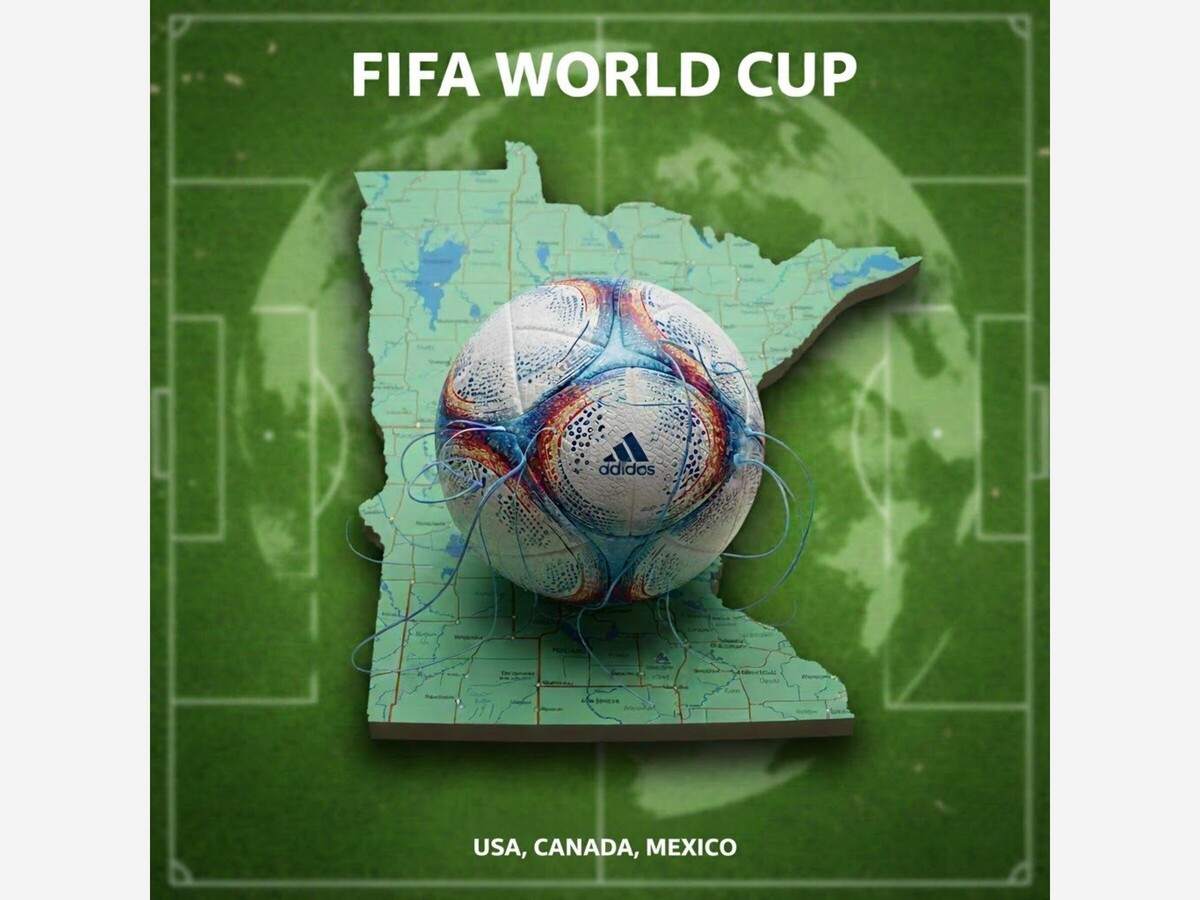



The world’s largest sporting event is no longer approaching. After last Friday’s World Cup Final Draw at the Kennedy Center in Washington the 2026 FIFA World Cup arrived, not in a quiet press release or in FIFA’s incremental updates, but in a single global exhale. Forty eight nations were sorted into their fates, their hopes, their rivals, their stories. The calendar turned from someday to now.
The United States, Canada, and Mexico will host the first expanded 48 team edition, an undertaking of monumental scale. Economists are already predicting spillover effects usually reserved for the Olympic Games. Cities from Seattle to Miami are redrawing operations plans. Airlines are preparing for unprecedented surges. Hotels in host cities are nearly sold out for matches still eighteen months away.
This is a global festival measured not only in goals scored or jersey colors raised to the heavens but in aviation data, hotel occupancy, border crossings, and culinary exchanges. It is the largest peaceful gathering of nations on Earth. And it is happening here, on our continent, in our corridor of the world, within the flight paths and travel arteries that pass directly through the heart of Minnesota.
What happens next is not preordained. And that is precisely where this state must summon its imagination.
Minnesota is not a host state. No referee’s whistle will echo at Allianz Field. No corner flags will flutter under the world’s cameras. But to assume this places Minnesota on the sidelines is to misunderstand the scale of what is coming.
Minnesota sits at a strategic crossroads of the Upper Midwest. The Minneapolis Saint Paul International Airport is already one of the nation’s most connected hubs. Many international fans traveling from Asia, Europe, Latin America, and Africa will pass through MSP before heading to Chicago or Kansas City, the Midwest’s two nearest host cities. Others will choose Minnesota as their base, seeking quieter lodging, more affordable stays, or a broader North American itinerary.
Tourism analysts predict a regional wave. The World Cup is not a city specific phenomenon. It is continental. Fans do not come for a match alone. They come for weeks. They visit national parks, art museums, historic districts, and riverfronts. They rent cabins. They take road trips. They seek experiences that feel authentically American.
In that sense, Minnesota is not merely adjacent to the tournament. Minnesota is part of the map, part of the travel logic, part of the continental story.
We have before us an opening that will not return in our lifetime: an opportunity to sell Minnesota, its economy, its culture, its infrastructure, and its warmth to the world.
What do we want the world to know about Minnesota?
That we are a state with an innovation economy rivaling coastal giants.
That our medical and tech sectors draw global talent.
That our colleges and universities feed an international brain trust.
That our park systems are unrivaled and our arts scene quietly dazzling.
That our food traditions are reshaped and enriched by global diaspora communities.
That the winter that intimidates so many becomes, in our hands, a canvas for creativity where ice serves as a playground, not a barrier.
The world will look to the United States in the summer of 2026. But the U.S. is not monolithic. It is a patchwork of regional cultures, regional identities, and regional ambitions. Minnesota must become part of that story.
The state faces no obligation to sit quietly because FIFA did not place a match within its borders. Instead, Minnesota has the chance to craft an independent narrative, unconstrained by stadium deadlines or FIFA’s logistical machinery. That freedom is itself a gift.
Imagine targeted international campaigns inviting fans to explore the North before or after their matches. Imagine cultural festivals that draw global visitors already in the region. Imagine partnerships between Minnesota United FC, local businesses, and tourism agencies that position Allianz Field as the epicenter of Midwest watch party culture.
We do not need FIFA to hand us a match. We can create a spectacle of our own.
The economic implications for Minnesota are profoundly real.
By the time the final whistle blows in July 2026, the World Cup will have generated billions across North America. Minnesota can capture a significant share of that activity, not by hosting games but by hosting the world.
Our hotels, restaurants, breweries, and retail districts will feel the effects.
Our airports will carry the world’s languages.
Our public transportation systems will carry fans seeking a reprieve from the intensity of host cities.
Our small businesses, from Mexican taquerias to Korean barbecue restaurants to Liberian food markets to Japanese bakeries to Cameroonian cafes, can place Minnesota’s multicultural identity on display.
These nations, including Mexico, Japan, South Korea, Cameroon, France, Germany, Brazil, Argentina, and many more, will take the field in 2026. Minnesota’s diaspora communities will generate the kind of local energy that mirrors the electricity of host cities.
If state and city leaders act boldly, with coordinated campaigns between tourism boards, chambers of commerce, and Minnesota United FC, Minnesota can draw tens of thousands of international visitors who never intended to come here until now.
That is the power of proximity.
That is the power of narrative.
That is the power of a moment when the world’s attention tilts toward your continent and waits to see who speaks.
This opportunity will not knock twice.
If Minnesota approaches 2026 with passive optimism, the moment will pass us by. But if we act with urgency, launching campaigns early, spotlighting our global communities, and inviting visitors to experience Minnesota’s natural and cultural riches, we can turn a year of global sport into a decade of economic momentum.
We can strengthen our hospitality sector, elevate our international reputation, fuel local entrepreneurship, and recast Minnesota as a welcoming and forward looking global hub.
We may not host the matches.
But we can host the world.
That distinction matters.
Because sometimes the states that shine the brightest during world events are not the ones with the stadiums but the ones with the vision.
Minnesota has the rare chance to stand among them.
Let us not waste it.


Sunny, with a high of 53 and low of 30 degrees. Sunny during the morning, clear for the afternoon and evening,