41° and Patchy rain nearby
Image
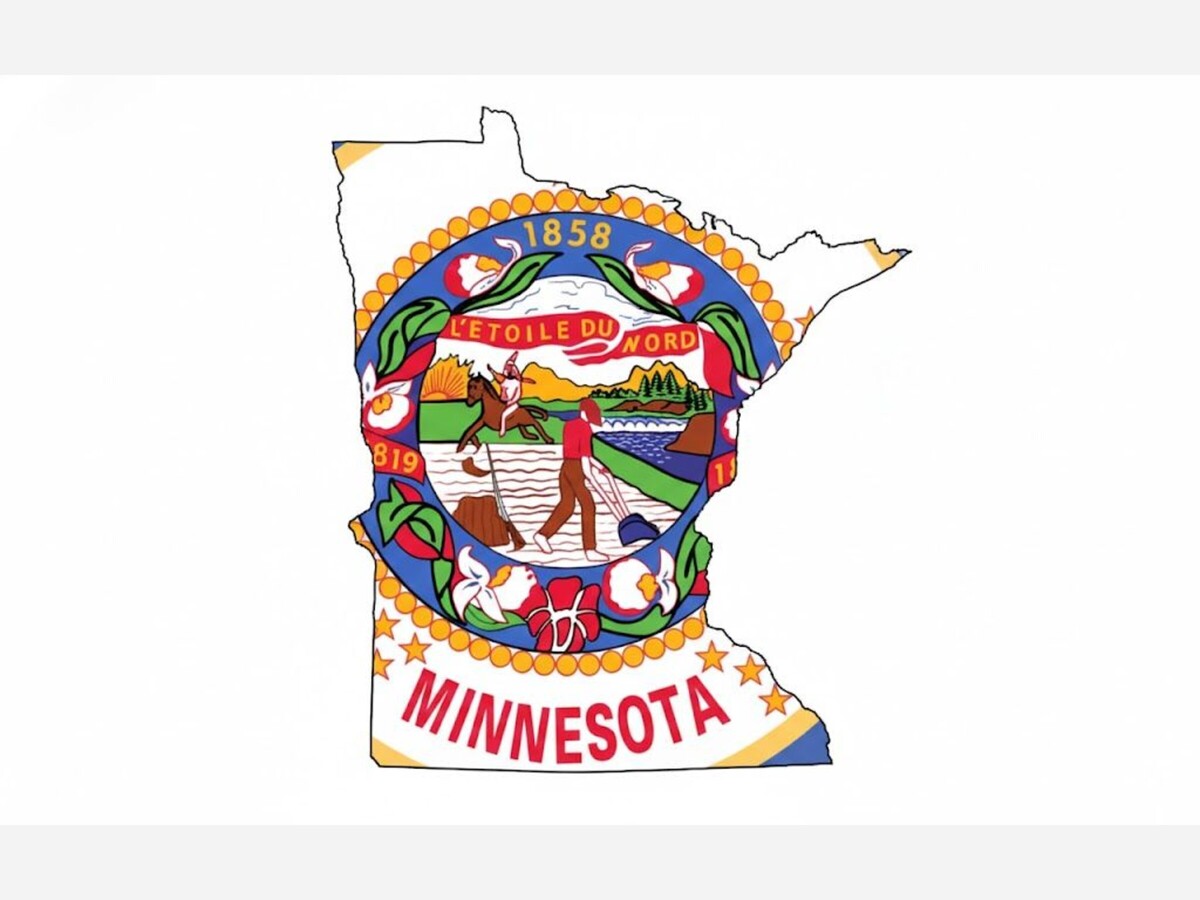



On January 24, 2006, Minnesota woke into a season that did not announce itself with spectacle, but with pressure.
The sky carried the hard, pale light of midwinter, a light that did not warm so much as reveal. Across the state, wind moved with intent, bending treetops, rattling doors, testing roofs and resolve. Snow fell in short, sharp bursts. Sleet stitched itself into the day. In the open country of western Minnesota, gusts rose to near sixty miles per hour, fast enough to flatten drifts into glassy sheets and turn roads into narrow corridors of caution.
It was not a blizzard. It was not the sort of storm that earns folklore or names. It was something more familiar, more Minnesotan than drama: a day that demanded preparation, patience, and a practiced understanding of how to live inside winter rather than fight it.
That was Minnesota in 2006. A place shaped less by moments of crisis than by the accumulation of days that asked something of you.
Twenty years ago, Minnesota occupied a subtle and consequential in-between space.
The state was well past the shock of the early 2000s recession, yet not fully confident in the stability ahead. Manufacturing still anchored many communities, even as the global economy quietly tugged at its edges. Family farms were fewer, but their memory still informed policy, culture, and the sense of responsibility toward land and water.
Demographically, Minnesota was changing, though the language to describe that change had not yet fully caught up. New communities were settling into neighborhoods, schools, and workplaces, reshaping the social fabric not through announcement, but through presence. The work of understanding one another was underway, imperfect and often unspoken.
Politics, too, lived in a quieter register. Polarization existed, but it had not yet hardened into identity. Disagreement still assumed conversation. The Legislature convened not as spectacle, but as process.
On that morning in January, lawmakers gathered in Duluth, along the cold authority of Lake Superior, to take up the early architecture of what would become Minnesota’s Clean Water Legacy Act. They sat in committee rooms with notes, testimony, and drafts, debating phosphorus levels, watershed responsibility, and the long view of stewardship.
It was not glamorous work. It was foundational.
What distinguished Minnesota in 2006 was not unanimity, but method.
There was a belief, still widely held, that government was a tool for maintenance. Not grand reinvention, not constant disruption, but upkeep. Roads. Schools. Water. Public trust.
Clean water was not framed as ideology. It was framed as inheritance. Lakes were not branding assets. They were obligations passed from one generation to the next. To neglect them was not just a policy failure, but a moral one.
That ethic extended beyond legislation. It lived in town halls, in school board meetings, in the way budgets were argued over line by line rather than slogan by slogan. Minnesota had built a reputation for civic seriousness, and in 2006, that reputation still felt earned rather than nostalgic.
That evening, as the wind eased and darkness settled early, people gathered for something else entirely.
At the Xcel Energy Center in St. Paul, the Minnesota Wild took the ice. Nearly nineteen thousand people filled the arena, shedding coats, stamping boots, leaning into ritual. The game was close. The crowd attentive, the outcome narrow.
A 3 to 2 win does not change history. But it does something quieter and just as important. It binds strangers for a few hours into shared attention. It offers release without escape. It reminds a state accustomed to endurance that joy, too, has a place in winter.
This was Minnesota’s rhythm in 2006. Work during the day. Deliberation in committee rooms. Weather endured without complaint. Community gathered at night.
What makes January 24, 2006 worth remembering is precisely that it did not declare itself historic.
There were no speeches meant for posterity. No disasters that demanded national attention. No singular event that would later become shorthand.
Instead, there was wind, and policy, and a hockey game. There was the quiet labor of governance. The steady expectation that institutions would hold. The assumption that tomorrow would come, cold perhaps, but manageable.
History often flatters drama. But states are built by accumulation. On days like this one, when systems were tested gently rather than broken, when decisions were made with an eye toward decades rather than headlines, when winter reminded Minnesotans of their limits and their competence at once.
On January 24, 2006, Minnesota was not announcing itself to the world. It was doing something harder and more enduring.
It was taking care of itself.


Patchy rain nearby, with a high of 44 and low of 33 degrees. Overcast in the morning, partly cloudy in the afternoon and evening, patchy rain nearby overnight.