87° and Sunny
Image
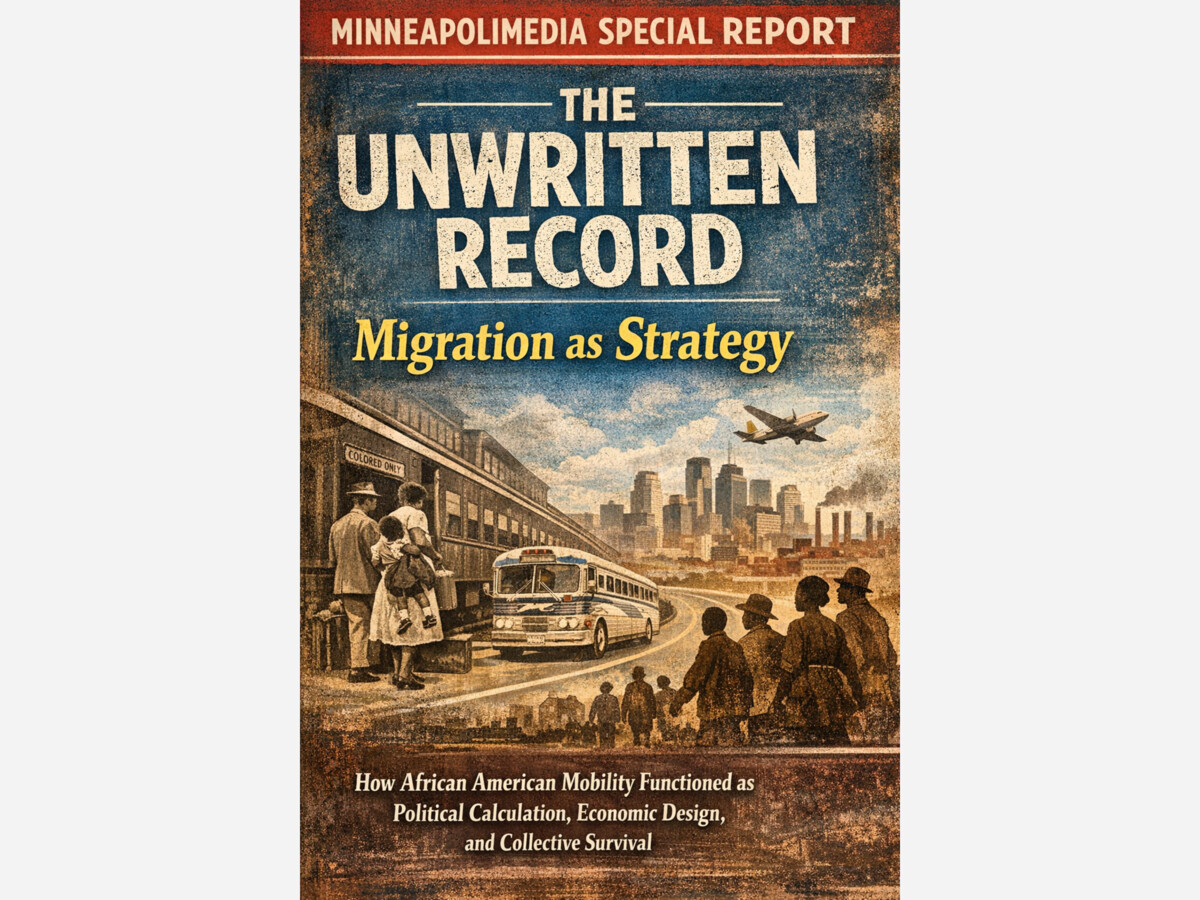



In the winter of 1916, the Illinois Central Railroad carried thousands of African American passengers north from Mississippi and Louisiana. Many held small suitcases. Some carried cardboard boxes tied with rope. Almost all carried addresses written on folded paper.
The addresses were not random.
They belonged to cousins, brothers, church members, former neighbors who had already gone ahead.
The movement that historians now call the Great Migration did not begin as chaos. It began as communication.
Letters circulated through Black newspapers like the Chicago Defender, describing wages in stockyards, factory shifts in Detroit, and domestic work in St. Louis. The Defender’s distribution network extended deep into the South, sometimes smuggled past white authorities who recognized the paper’s influence.
The message was consistent: Come north. There is work.
But migration was not only about work.
It was about voting rights denied in the South. It was about escape from lynching. It was about school access. It was about breathing space from daily humiliation.
Migration was strategy.
Mobility has always been political.
Under enslavement, African Americans were restricted in movement through pass systems and patrol enforcement. The law criminalized travel without written authorization. Slave patrols enforced geographic containment.
Yet mobility persisted.
The Underground Railroad was not a literal railroad but a network of safe houses, coded messages, and coordinated routes. Enslaved people calculated distance, terrain, patrol patterns, and seasonal shifts.
Harriet Tubman made multiple return trips to guide others north, relying on knowledge of geography and trust networks.
Escape was not random flight. It was operational planning.
Movement disrupted economic extraction.
To leave was to challenge the premise of ownership.
After emancipation, mobility continued as newly freed individuals sought land and family reunification.
Freedmen’s Bureau records show thousands of inquiries placed in newspapers seeking relatives sold away before the war. Notices read: “Information wanted of my mother, sold from Richmond in 1857.”
The act of searching required travel. It required literacy or assistance from those who could write. It required crossing county and state lines in a volatile environment.
Mobility was reclamation.
At the same time, many formerly enslaved people attempted to acquire land. Some relocated westward, participating in movements such as the Exoduster migration of 1879, when thousands left Mississippi and Louisiana for Kansas.
The movement followed rumors and letters promising land ownership and reduced violence.
Not all found what they hoped for. But the choice to move was calculated against known risk.
Staying in a place where terror was normalized was also a decision.
Migration weighed probabilities.
Between 1916 and 1970, over six million African Americans relocated from the rural South to industrial centers in the North, Midwest, and West.
This movement occurred in waves.
The first wave coincided with World War I labor shortages. European immigration declined due to the war. Northern industries needed workers. Recruiters traveled south offering train fare and factory jobs.
But migration did not depend solely on recruiters.
Black newspapers functioned as strategic communication hubs. The Chicago Defender regularly published train schedules, job openings, and cautionary advice about unscrupulous employers.
Letters preserved in archives show migrants describing wages with precision: “Two dollars a day steady work,” “Room for rent on 35th Street,” “School for colored children with books provided.”
Families moved in stages. One member would establish employment and housing. Others followed.
Census data reveals the impact. Chicago’s Black population increased from approximately 44,000 in 1910 to over 230,000 by 1930. Detroit’s Black population grew from fewer than 6,000 in 1910 to nearly 120,000 by 1930.
These numbers represent coordination, not drift.
Migration redistributed political power.
The Great Migration altered electoral maps.
In the South, disenfranchisement had largely suppressed Black political participation through literacy tests, poll taxes, and intimidation.
In northern cities, African Americans gained access to voting rights. While discrimination persisted, the ballot became more accessible.
Black voters influenced municipal elections, congressional districts, and labor politics.
This shift affected national policy.
During the New Deal era, African American voters in northern states became an increasingly significant bloc. By the 1930s and 1940s, political parties began recalculating positions on civil rights in response to demographic change.
Migration was demographic leverage.
Movement altered the mathematics of democracy.
Migration did not guarantee freedom from discrimination.
Redlining confined African American migrants to specific neighborhoods. Restrictive covenants prevented property purchase in white districts. Violence often accompanied attempts to cross racial boundaries.
Yet migrants built communities within these constraints.
In Chicago’s Bronzeville, in Detroit’s Black Bottom, in Minneapolis’s Near North neighborhood, African Americans established churches, businesses, newspapers, and cultural institutions.
Spatial concentration produced vulnerability to overcrowding and underinvestment. It also produced political solidarity.
Community density facilitated organizing.
Movement reshaped not only geography, but institution-building capacity.
Minnesota received smaller but significant migration flows.
During World War II, defense industries in Minneapolis and St. Paul attracted African American workers. Migration to Minnesota often followed military service or industrial recruitment.
Archival employment records show African Americans entering meatpacking plants, rail yards, and manufacturing facilities.
Housing restrictions in Minneapolis confined many to specific neighborhoods. Restrictive covenants limited expansion into other districts.
Yet these concentrated neighborhoods became sites of community organization.
Churches formed mutual aid networks. Civic organizations advocated for housing rights. Migrants used geographic clustering as political base.
Migration was not escape alone. It was regrouping.
In the late twentieth and early twenty-first centuries, a reverse migration emerged, with many African Americans relocating from northern cities back to the South.
This movement was also strategic.
Factors included lower cost of living, expanded political representation in southern states, and familial reconnection.
Migration remains adaptive.
Movement continues to reflect calculation about opportunity, safety, and belonging.
Public narratives often frame migration as instability or disruption.
Yet for African Americans, movement has frequently been rational response to structural constraint.
Enslavement restricted mobility.
Black Codes criminalized it.
Jim Crow enforced containment.
Industrialization invited relocation.
Redlining confined settlement.
Mass incarceration removed individuals.
Mobility has been negotiated within constraint.
To move under these conditions required information networks, savings coordination, and risk assessment.
Migration was collective decision-making.
Migration reshaped American culture.
The Harlem Renaissance emerged from southern migrants settling in New York. Chicago blues evolved from Mississippi Delta musicians relocating north. Gospel music traditions traveled with families. Culinary traditions moved along train lines.
Movement carried language, rhythm, memory.
American culture absorbed migration’s imprint.
Migration is often described as reaction.
The record shows it was also design.
African Americans weighed risk, opportunity, and threat. They consulted networks. They read newspapers. They saved wages. They chose departure.
Mobility was political.
To leave a county where voting was suppressed was to seek ballot access.
To relocate from lynching zones was to pursue physical safety.
To move toward industrial centers was to seek wage leverage.
Migration was democratic repositioning.
If systems restrict opportunity in one place, movement becomes rational.
African American migration across centuries reveals a consistent pattern: when confronted with structural closure, communities recalculated geography.
Movement destabilized economic systems dependent on cheap labor. It altered political representation. It reshaped cultural production.
Migration was not surrender.
It was strategy.
And it belongs in the record as deliberate, collective intelligence exercised under constraint.



Patchy rain nearby, with a high of 92 and low of 64 degrees. Sunny for the morning, clear for the afternoon and evening,