Image
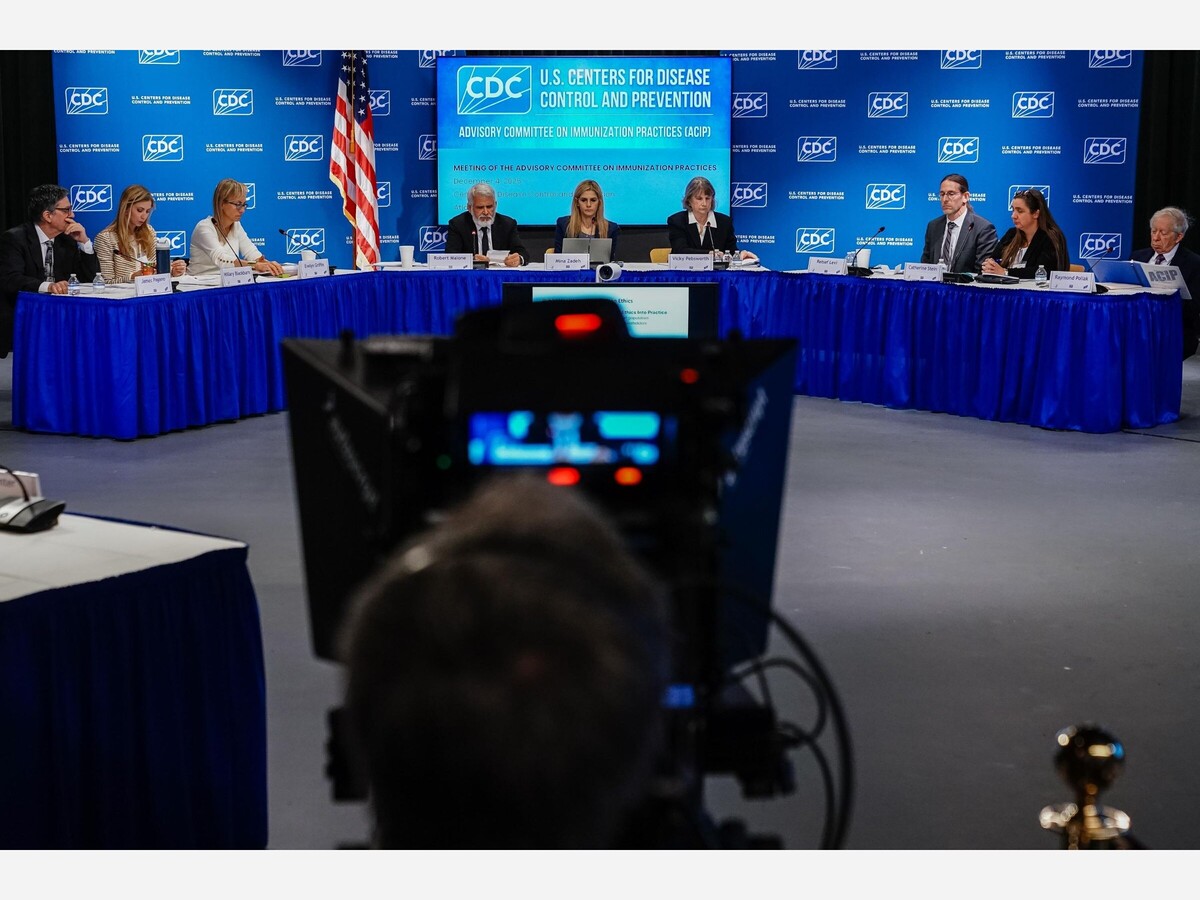



In early February 2026, Morrison, a Democrat representing Minnesota’s 3rd Congressional District, led 47 colleagues in calling on Health and Human Services Secretary Robert F. Kennedy Jr. to rescind the January appointments of Dr. Adam Urato and Dr. Kimberly Biss to the Centers for Disease Control and Prevention’s Advisory Committee on Immunization Practices, widely known as ACIP.
The letter, also led by Reps. Kim Schrier of Washington, Suzan DelBene of Washington, and Brad Schneider of Illinois, argues that the two physicians have publicly expressed views that contradict established vaccine science and risk eroding public trust in the nation’s immunization framework.
At stake is not simply membership on a federal panel, but the credibility of the body that shapes the U.S. immunization schedule.

The Advisory Committee on Immunization Practices, housed within the Centers for Disease Control and Prevention, is the nation’s primary advisory body on vaccine use. After vaccines are authorized or approved by the Food and Drug Administration, ACIP evaluates safety and efficacy data and makes recommendations on who should receive them and under what circumstances.
While its recommendations are technically advisory, they are almost always adopted by the CDC director. Once adopted, they frequently trigger insurance coverage requirements under federal law, including provisions of the Affordable Care Act.
In practical terms, ACIP’s decisions determine which vaccines are recommended for pregnant women, infants, older adults, and immunocompromised patients. Upcoming deliberations include vaccines for respiratory syncytial virus, updated COVID-19 boosters, and seasonal influenza.
For Morrison, who practiced obstetrics and gynecology for more than 20 years before entering Congress, the committee’s authority is not abstract. “Patients trust that the recommendations guiding their care are grounded in rigorous, independent science,” she said in a statement announcing the letter.
The current controversy is rooted in an unprecedented restructuring.
In June 2025, Secretary Robert F. Kennedy Jr. dismissed all 17 sitting ACIP members, describing the action as necessary to “restore public trust” and eliminate what he characterized as “industry profit-taking agendas.” Historically, ACIP members serve staggered four-year terms to ensure continuity and bipartisan scientific expertise.
The wholesale removal marked the first time in the committee’s history that an entire slate of experts had been replaced at once.
In January 2026, Kennedy announced new appointments, including Dr. Adam Urato, a maternal-fetal medicine specialist from Massachusetts, and Dr. Kimberly Biss, an OB-GYN based in St. Petersburg, Florida.
HHS defended the selections, citing the physicians’ clinical credentials and framing the broader overhaul as an effort to return ACIP to what Kennedy has called “gold-standard science.”
Morrison and her colleagues contend that Urato and Biss have taken public positions at odds with the scientific consensus on vaccines, particularly in pregnancy.
According to the lawmakers’ letter and public reporting:
The lawmakers wrote that these views “betray the trust of the American public” and conflict with established medical guidance.
The American College of Obstetricians and Gynecologists and the Society for Maternal-Fetal Medicine both recommend routine vaccination during pregnancy, including COVID-19, influenza, and Tdap vaccines, based on data demonstrating safety and effectiveness in protecting both mothers and infants.
Large-scale studies and post-marketing surveillance have not found evidence of increased miscarriage rates associated with COVID-19 vaccination. These findings underpin the current clinical guidance followed by obstetricians nationwide.
Morrison and her co-signers argue that placing vaccine skeptics on ACIP could undermine adherence to those recommendations, particularly among pregnant patients already navigating heightened anxiety and misinformation.
“Women and children’s lives are at risk when we weaken trust in the evidence,” Morrison said.
The dispute over ACIP reflects a deeper national tension between scientific institutions and political leadership in the post-pandemic era.
Supporters of Kennedy’s overhaul argue that institutional skepticism and transparency are essential to rebuilding confidence after years of polarized debate over COVID-19 policies. Critics counter that replacing experienced epidemiologists and immunologists with figures who have publicly questioned foundational vaccine science risks politicizing a body long insulated from partisan swings.
For Minnesota, the issue carries particular resonance. Morrison is one of the few practicing physicians in Congress with direct experience in maternal health. Her district, stretching across the western Twin Cities suburbs, includes communities where vaccination rates have fluctuated in recent years amid national misinformation campaigns.
Nearly 50 House members have now signed onto Morrison’s letter. Whether HHS will act remains uncertain.
But the fight underscores a central question confronting the country’s public health system: In an era of fragile trust, who decides what counts as settled science?
For Morrison, the answer begins with expertise and continuity.
For Kennedy, it begins with disruption.
The future of ACIP, and the immunization schedule that shapes care for millions of Americans, may hinge on which vision prevails.


Sunny, with a high of 59 and low of 42 degrees. Partly Cloudy for the morning, overcast for the afternoon, clear overnight.