39° and Sunny
Image
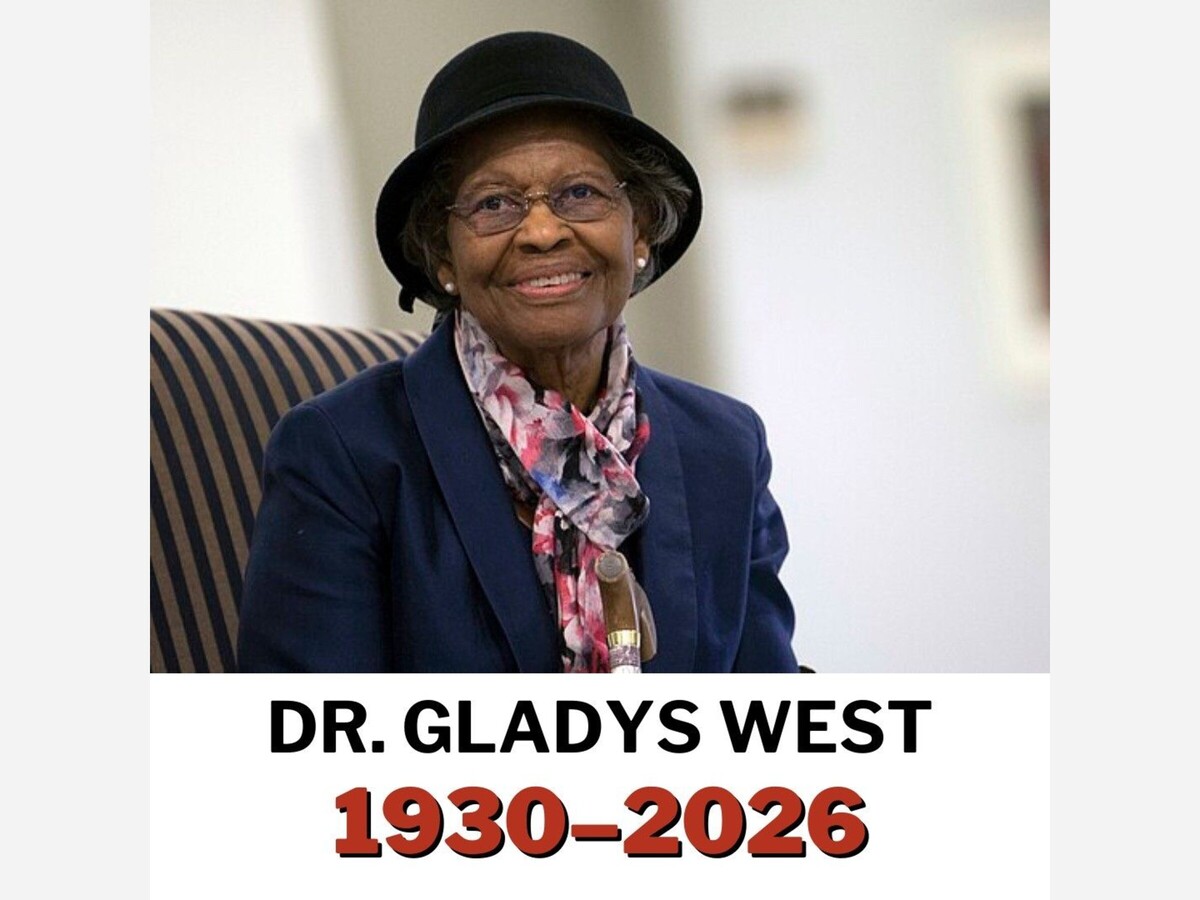



There are lives whose significance announces itself loudly, in speeches, monuments, and headlines. And then there are lives whose significance is so foundational that the world simply begins to rely on them, often without ever learning the name of the person who made such reliance possible. Dr. Gladys Mae West belonged to that second and rarer category. She was not a figure of spectacle. She was a figure of consequence.
The modern world knows where it is because of her.
Every time a plane touches down safely in poor weather, every time an ambulance reaches someone in distress, every time a ship crosses an ocean guided by satellites, and every time a phone quietly displays a location on a map, the legacy of Dr. Gladys Mae West is present. It is embedded not in symbols or slogans, but in mathematics, computation, and truth.
This is her story, not as a footnote, but as a pillar of modern civilization.
Gladys Mae West was born in 1930 in rural Virginia, into a segregated America that had already decided how far a girl like her was expected to go. The boundaries placed around her life were not abstract. They were enforced by law, custom, and economy. For many in her community, the future consisted of farm labor or factory work, often at tobacco processing plants. Higher education was rare. Scientific careers were almost unimaginable.
Yet within that constrained world, Gladys West discovered something expansive. Numbers made sense. Mathematics offered clarity where society offered contradiction. In equations, logic mattered more than identity. Truth did not bend to prejudice.
She excelled in school with consistency and seriousness. That excellence became her passage forward. Scholarships opened doors that segregation tried to seal shut. Each academic achievement carried weight because failure was not an option. She understood early that she would be judged not simply as a student, but as a representative, and that her margin for error would be thinner than most.
She met that reality with discipline and resolve.
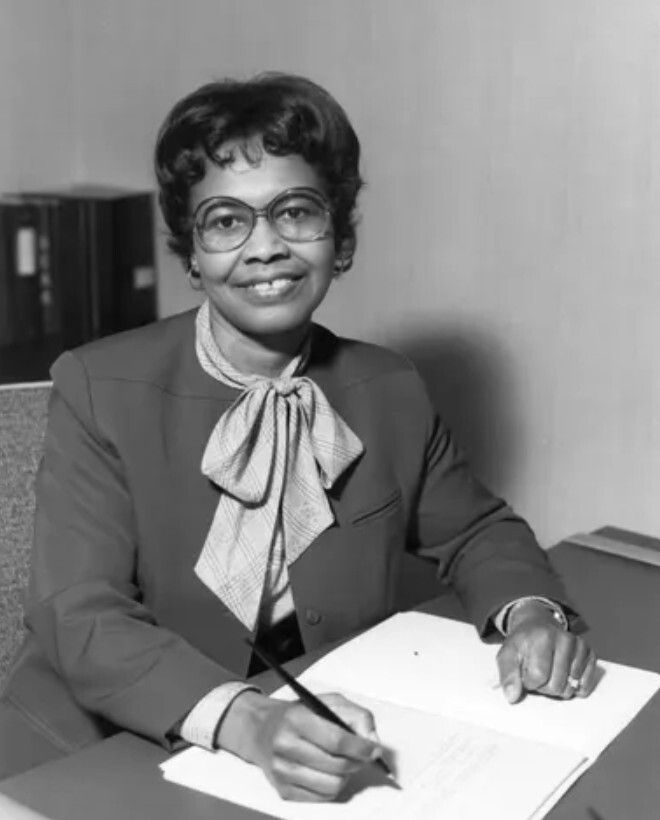
At Virginia State University, a historically Black institution that served as both refuge and proving ground, Gladys West studied mathematics. She was not simply learning a subject. She was acquiring a language that would allow her to speak in spaces where voices like hers were rarely heard.
Even with her credentials, the path forward was uncertain. Jobs within Virginia’s segregated state system often went to white men regardless of qualifications. Talent did not automatically override bias. Opportunity was rationed.
Then, in 1956, a door opened that would change history.
That year, Gladys West joined the Naval Proving Ground in Dahlgren, Virginia, later known as the Naval Surface Warfare Center. It was a hub of advanced research during the Cold War, where science, secrecy, and national security converged. The environment was demanding and unforgiving. Errors had consequences. Precision was not optional.
She entered that world as one of only a handful of Black employees in the entire facility and as one of very few women working in high level mathematical and computational roles. There were no roadmaps for success and no institutional safety nets. She was navigating a space that had not been built with her presence in mind.
She understood that to survive, she would need to be exact. To advance, she would need to be exceptional.
So she became both.
The work Dr. West undertook was among the most complex of its time. Long before personal computers or modern programming languages, she worked with room sized machines, limited memory, and immense datasets. Programs were written with painstaking care. Errors could take days to detect and correct.
Her focus was satellite geodesy, a field that seeks to understand the Earth through measurements taken from space. This was not a purely academic pursuit. It was essential to navigation, defense, and global positioning.
At the heart of the challenge was a deceptively simple question. What shape is the Earth?
The answer is not a sphere. It is not smooth. It is not uniform. The Earth is distorted by gravity, rotation, oceans, tides, mountains, and mass distribution. These distortions matter profoundly when trying to locate an object on the surface from thousands of miles above it.
Satellites cannot function accurately unless they understand the Earth beneath them with extraordinary precision.
Dr. West worked on transforming raw satellite altimeter data into stable mathematical models that accounted for these distortions. She helped calculate variations in Earth’s gravitational field, correct satellite orbits, and adjust for tidal forces that subtly but significantly alter measurements.
This work led to the development and refinement of the geoid, an invisible but essential reference surface that represents the true shape of the Earth as defined by gravity. The geoid allows satellites to reconcile their position in space with exact locations on the ground.
This was not theoretical elegance for its own sake. It was a practical truth.
Without this work, satellite navigation systems would drift, miscalculate, and fail.
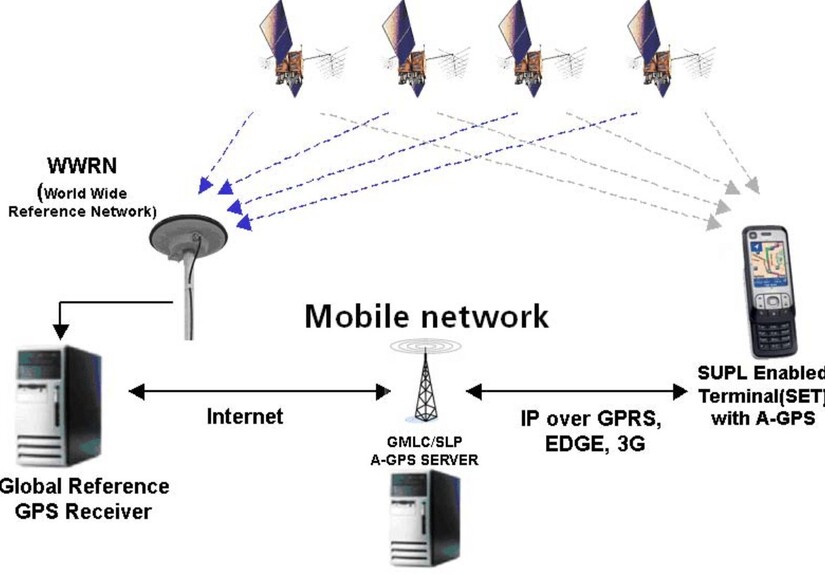
The Global Positioning System is often described in terms of satellites and signals. What is less often explained is that GPS depends fundamentally on mathematics. Satellites do not simply tell us where we are. They calculate it, constantly, against a model of the Earth that must be accurate to within meters or less.
Dr. West’s work provided that model.
Her calculations and programming helped make GPS accurate enough to move from experimental military use to a reliable global infrastructure. Her contributions are embedded deep within the system, invisible but indispensable.
Because of her work, emergency responders can locate people in crisis. Pilots can navigate crowded skies safely. Farmers can practice precision agriculture. Scientists can study climate change with accuracy. Militaries can coordinate operations. Entire economies can move efficiently across continents and oceans.
The modern world orients itself using systems built on the foundations she helped establish.
Over more than four decades at Dahlgren, Dr. West rose into leadership roles. She supervised projects, improved data processing systems, and reduced computational inefficiencies. She planned, documented, and refined programs that others relied upon.
Yet her work remained largely invisible to the public. Much of it was classified or buried in technical reports. Credit was often attributed to teams or systems, not individuals. Recognition was slow and incomplete.
This was not unusual for women like her. They were allowed to build the future, but rarely invited to narrate it.
She did not allow that erasure to embitter her. She remained focused on the work.
After retiring from federal service, Dr. West faced a new challenge. A serious stroke impaired her balance, vision, and hearing. For many, this would have marked a final retreat from professional ambition.
For her, it became another test of resolve.
At an age when most people are encouraged to slow down, she pursued and earned a doctoral degree, completing it at seventy. This was not an act of defiance. It was an expression of identity. Learning was not something she did for recognition. It was something she did because it was intrinsic to who she was.
In later years, recognition finally began to arrive. She was honored by scientific institutions, inducted into halls of fame, and publicly acknowledged as a foundational contributor to GPS technology. These honors mattered, but they also underscored a deeper truth. Her contributions had been essential long before they were celebrated.
History had used her work long before it learned her name.
The United States depends on systems that assume precision. Transportation, aviation, emergency response, national defense, agriculture, and commerce all rely on accurate positioning. Dr. West helped make that accuracy possible.
Her work strengthened American technological leadership during critical decades of the Cold War and beyond. It contributed to national security while also laying the groundwork for civilian applications that transformed daily life.
She helped ensure that when America moves, it moves with confidence.
Globally, the reach of her work is profound. GPS supports humanitarian relief, disaster response, international shipping, aviation, and scientific research. It enables coordination across borders and continents. It helps locate survivors after earthquakes and guide aid to those in need.
Billions of people benefit daily from systems built on the mathematical truths she helped establish.
Her legacy is planetary.
To honor Dr. Gladys Mae West properly is to do more than praise her achievements. It is to correct how we tell the story of progress. It is to acknowledge that modern civilization rests not only on famous names, but on the labor of those who were too often excluded from recognition.
She was not hidden because her work was small. She was hidden because society did not look closely enough.
Her life reminds us that brilliance thrives even in constrained spaces, and that excellence can endure without applause.
Dr. Gladys Mae West helped humanity understand the Earth with unprecedented precision. She gave the world its bearings. She did so quietly, rigorously, and without expectation of reward.
Her mathematics guides us through the air, across oceans, and home again. Her legacy is not carved into stone, but encoded into the systems that sustain modern life.
This is not a story of what she overcame alone, but of what she built for all of us.
She did not simply contribute to history.
She made it navigable.
And that is a legacy worthy of national remembrance.



Overcast, with a high of 50 and low of 31 degrees. Sunny during the morning, overcast for the afternoon, partly cloudy for the evening, clear overnight.