57° and Clear
Image




Champions do not arrive at a World Cup as equals.
Some come with urgency. Some with hope. A few arrive with something heavier. Memory. Expectation. The quiet burden of having already proven what the game demands.
As the reigning European champions, Spain enters the 2026 World Cup carrying a distinction that is both a privilege and test. Spain does not arrive needing to announce itself. It arrives needing to explain itself again.
That tension has defined Spanish football for nearly two decades.
Modern international football cannot be understood without Spain.
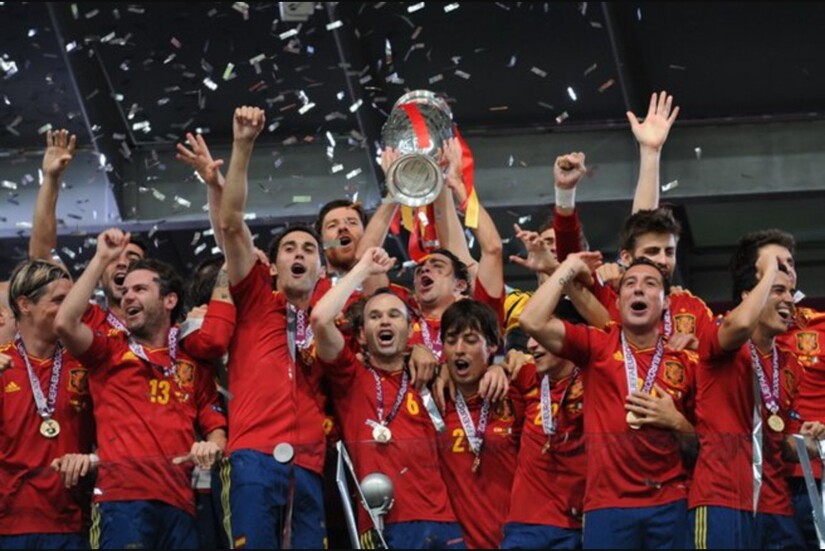
Between 2008 and 2012, Spain did not simply win tournaments. It rewired assumptions. Control became a virtue. Possession became protection. Midfield intelligence became destiny. Spain demonstrated that dominance could be quiet, that violence was not required for authority, that patience could suffocate even the most athletic opposition.
That era created a paradox that still shapes Spain’s every appearance. Spain is forever measured against its own past.
Every new generation is asked whether it is worthy of comparison. Every tournament is framed as return, deviation, or decline. Few nations are asked to carry such a precise memory of how football is supposed to look.
Winning the European Championship again did not end that conversation. It reopened it on new terms.
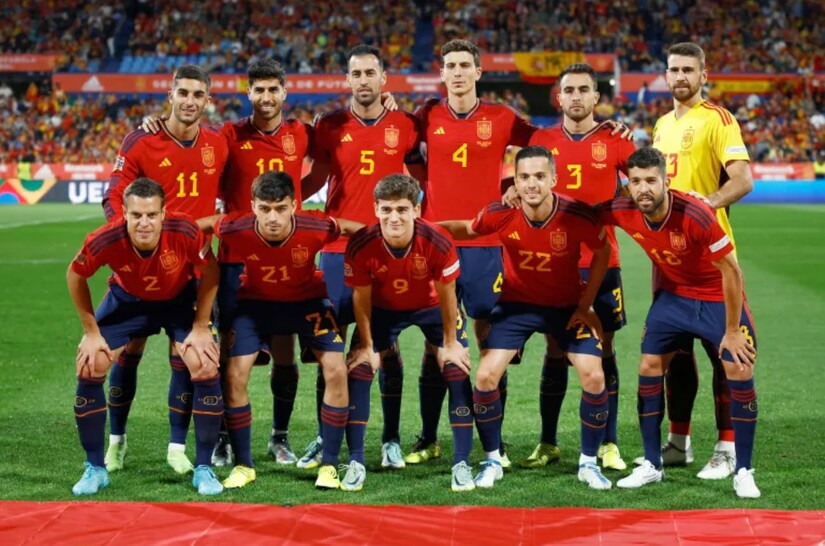
What distinguishes the current Spanish side from its most famous predecessor is not quality, but relationship to risk.
This Spain is more vertical. More willing to attack space. More comfortable allowing games to breathe. Control remains central, but it is no longer sacred. Possession is a tool, not a shrine.
The European title was not won through nostalgia. It was won through evolution.
Spain’s midfield still values intelligence above all else, but it now invites variety. Wingers stretch games rather than merely recycle them. Fullbacks attack moments rather than positions. The press is coordinated, not ceremonial.
Most importantly, this Spain understands tempo. When to accelerate. When to pause. When to absorb pressure rather than deny it.
This is tournament intelligence earned through recent disappointment and careful recalibration.
European champions arrive at the World Cup with a specific kind of pressure.
They are expected to validate continental supremacy on a global stage. They are measured against styles they do not regularly face. Physicality from Africa. Transitional chaos from South America. Tactical unpredictability from emerging regions.
Spain has learned, sometimes painfully, that the World Cup is not an extension of Europe. It is a collision.
The lesson appears to have been absorbed.
Spain no longer tries to impose one rhythm on every opponent. It adjusts without abandoning identity. That flexibility is the true marker of maturity.
Spain’s greatest strength may be its institutional memory of disappointment.
Early World Cup exits. Penalty shootout trauma. Matches dominated but not won. These moments forced Spanish football to interrogate itself without abandoning principle.
That interrogation produced a culture that values process as much as outcome. Youth development that privileges decision-making. Coaching education that emphasizes spatial understanding. A federation comfortable evolving its identity rather than defending it.
Spain does not panic after failure. It studies it.
In a World Cup setting, that discipline matters.
Europe arrives in 2026 with depth, not dominance. France brings power and pedigree. Germany brings reinvention. England brings talent wrestling with expectation. Portugal brings brilliance tempered by uncertainty.
Spain arrives bringing clarity.
It may not have the most physically imposing squad. It may not carry the loudest stars. What it carries is a collective understanding of how to win matches that refuse to open themselves.
That makes Spain dangerous in the later stages of tournaments, when space evaporates and decisions must be correct rather than bold.
Spain no longer claims ownership of football’s future. It has learned the cost of that arrogance.
What it represents now is stewardship.
A reminder that ideas can survive if they are allowed to evolve. That dominance does not require repetition. That identity is strongest when it is flexible.
Spain’s European Championship was not a reclamation of past glory. It was a declaration of relevance on new terms.
The World Cup will test Spain in unfamiliar ways. Long travel. Climate variation. Stadiums designed for spectacle rather than intimacy. Matches that feel less controlled and more volatile.
These are not ideal conditions for a team built on rhythm.
They are, however, conditions Spain now understands how to navigate.
The question for Spain in 2026 is not whether it can play its football. It is whether it can impose its intelligence when the game refuses to be tidy.
European champions arrive at the World Cup under suspicion.
Can it be translated? Can it travel? Can it survive styles that do not care about philosophy?
Spain has answered these questions before, and failed to answer them at times as well. That history is not a weakness. It is preparation.
This Spain does not chase perfection. It chases control of moments.
That is how World Cups are won.
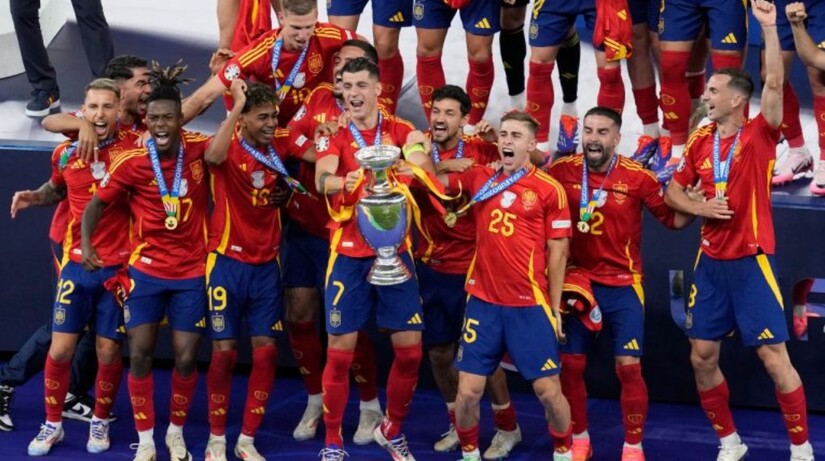
Spain enters the 2026 World Cup carrying Europe’s crown and its own long shadow.
It will not be allowed anonymity. It will not be granted patience. Every match will be framed as a referendum.
Spain is comfortable with that now.
It has learned that championships are not defended by repeating the past, but by understanding why the past worked and when it must be abandoned.
In North America, Spain will not arrive asking to be admired.
It will arrive asking whether intelligence still matters when the world gathers to test itself.
History suggests Spain will not need to ask twice.


Sunny, with a high of 93 and low of 63 degrees. Partly Cloudy in the morning, patchy rain nearby for the afternoon, clear during the evening, overcast overnight.