56° and Clear
Image
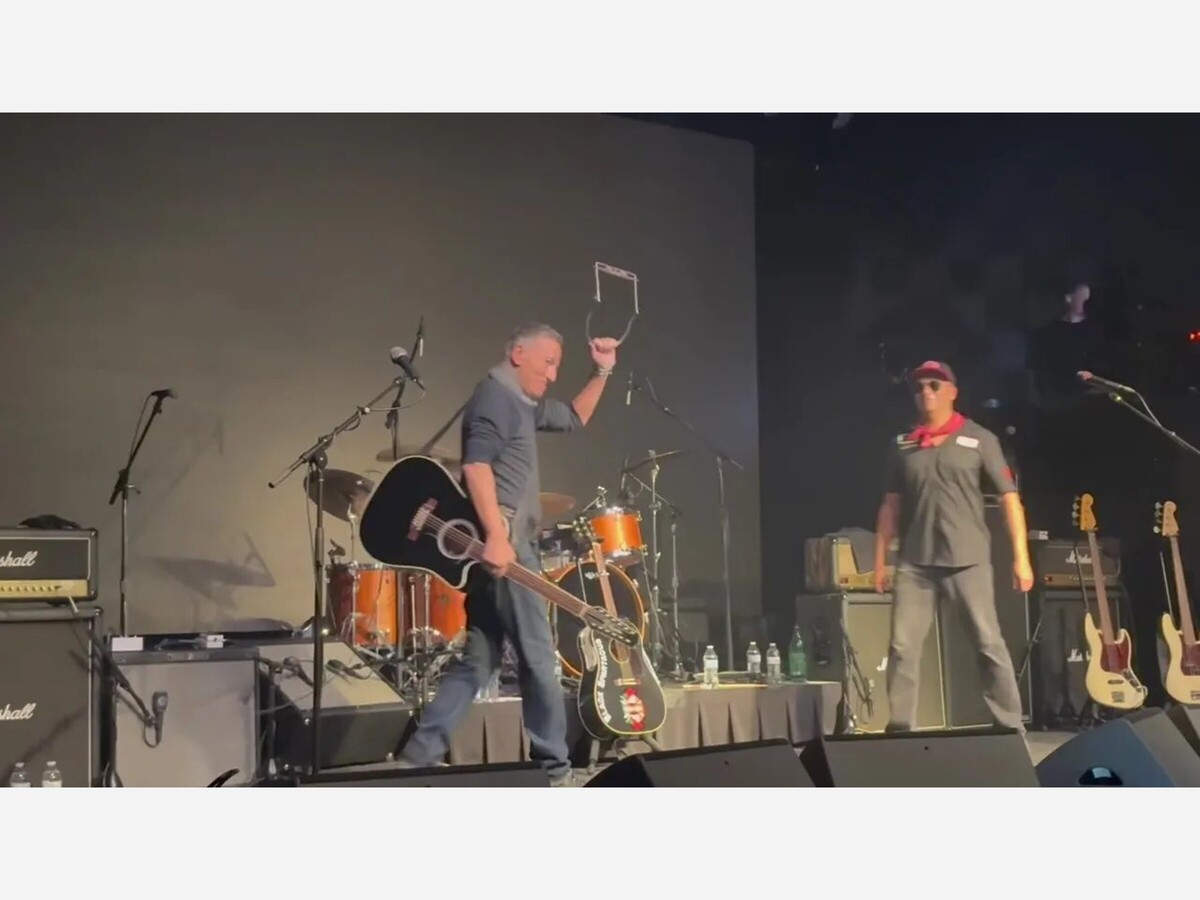



MINNEAPOLIS — On Friday, January 30, 2026, downtown Minneapolis emerged as a focal point of national protest activity as thousands gathered for a coordinated “Day of Action” and general strike. The mobilization followed a sold out benefit concert at the city’s iconic First Avenue nightclub and unfolded against the backdrop of heightened tensions surrounding recent federal immigration enforcement operations in Minnesota.
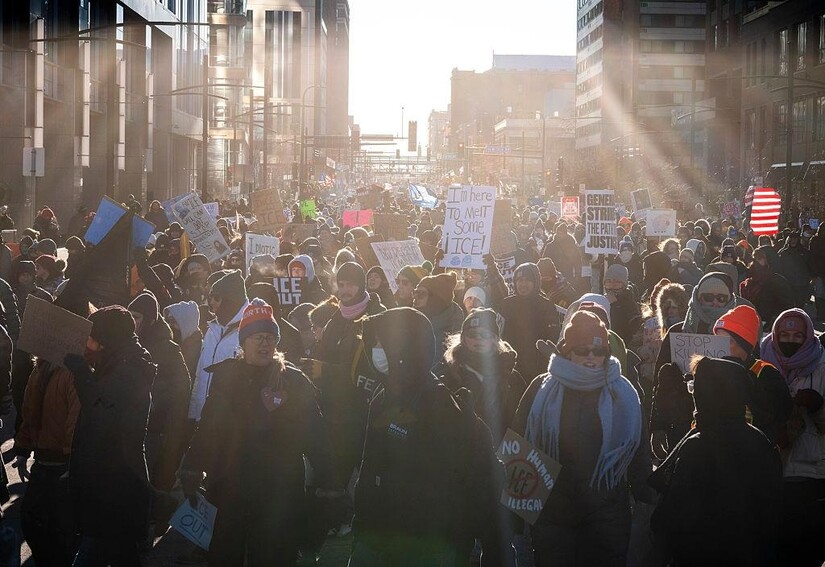
The day began inside First Avenue, where a midday benefit billed as A Concert of Solidarity & Resistance to Defend Minnesota drew a packed house. Headlined by Tom Morello, the concert quickly took on broader significance when Bruce Springsteen appeared as a surprise guest, confirming days of speculation that had circulated online and in local music circles.
According to event organizers and contemporaneous local reporting, Springsteen used the Minneapolis stage to debut a newly written protest song inspired by the week’s unrest, before joining Morello for a performance of The Ghost of Tom Joad. The concert closed with a collective rendition of Power to the People, transforming the venue into what attendees described as both a benefit and a rally.
Organizers said the event raised more than $35,000, with proceeds designated for families affected by recent fatal encounters involving federal agents. Those figures could not be independently verified by MinneapoliMedia at press time but were widely cited by organizers and local outlets covering the show.
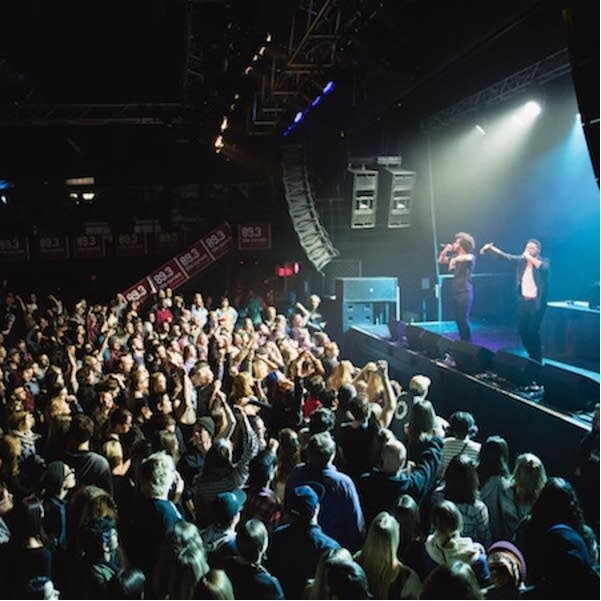
By early afternoon, the energy inside First Avenue spilled into the streets. Protesters began assembling downtown for what organizers called a “Day of Truth and Freedom,” part of a broader national call for coordinated demonstrations and work stoppages.
The coalition behind the Minneapolis action included labor unions, faith leaders, student organizations, and community groups. In public statements, organizers urged participants to refrain from work, school, and shopping for the day as a form of economic protest tied to opposition to Operation Metro Surge, the name given to a recent federal immigration enforcement initiative.
Despite subzero temperatures, crowds filled the downtown corridor. Estimates of turnout varied widely. Organizers placed participation in the tens of thousands, while city officials cautioned that crowd sizes were difficult to verify as marches moved between U.S. Bank Stadium, the Target Center, and Government Plaza.
Similar demonstrations were reported in other major cities including Chicago, Portland, and New York, underscoring the national scope of the action.
Across the Twin Cities, numerous small businesses announced temporary closures in solidarity with the strike. Several business owners cited fear and uncertainty connected to the visible presence of federal law enforcement personnel in the metro area. While officials have not publicly confirmed exact deployment numbers, the perception of a heavy federal footprint became a recurring theme in protest messaging and social media posts throughout the day.
City officials warned of intermittent street closures and transit delays but repeatedly emphasized the importance of peaceful demonstration. Law enforcement statements indicated that officers were focused on crowd management and public safety, with arrests limited to isolated incidents involving blocked roadways or property damage.
The protests were catalyzed by two recent fatal incidents involving federal agents that have drawn intense public scrutiny.
In one case, Renee Good was killed earlier in January during an encounter with immigration enforcement officers. In another, Alex Pretti, identified by family members as a health care worker, died following a separate confrontation later in the month. Details surrounding both incidents remain under investigation, and federal authorities have declined to release full accounts, citing ongoing reviews.
Federal officials have defended the enforcement operations, maintaining that agents are acting within the scope of federal law. Administration spokespeople criticized what they described as celebrity driven misinformation surrounding the protests, while reiterating that immigration enforcement efforts are aimed at individuals with serious criminal histories.
At the same time, the U.S. Department of Justice confirmed that it has opened a civil rights review into at least one of the fatal encounters, a move announced the same day as the Minneapolis protests.
Locally, Hennepin County Attorney Mary Moriarty stated that federal officers are not categorically immune from state law and that her office is assessing whether any state level charges may be warranted once investigations are complete.
For Minneapolis, a city that has repeatedly found itself at the crossroads of national reckoning over policing, protest, and civil rights, Friday’s events carried a familiar weight. What began as a benefit concert inside a storied music venue evolved into a citywide expression of grief, anger, and resolve, linking culture, protest, and civic identity in ways that echoed far beyond downtown streets.
As investigations continue and organizers signal that additional actions may follow, the question now confronting Minnesota’s leaders and residents alike is whether the calls heard in music halls and public squares will translate into lasting policy change or remain another chapter in the city’s long, unfinished struggle with power, accountability, and public trust.

Sunny, with a high of 66 and low of 45 degrees. Sunny for the morning, clear overnight.