58° and Overcast
Image
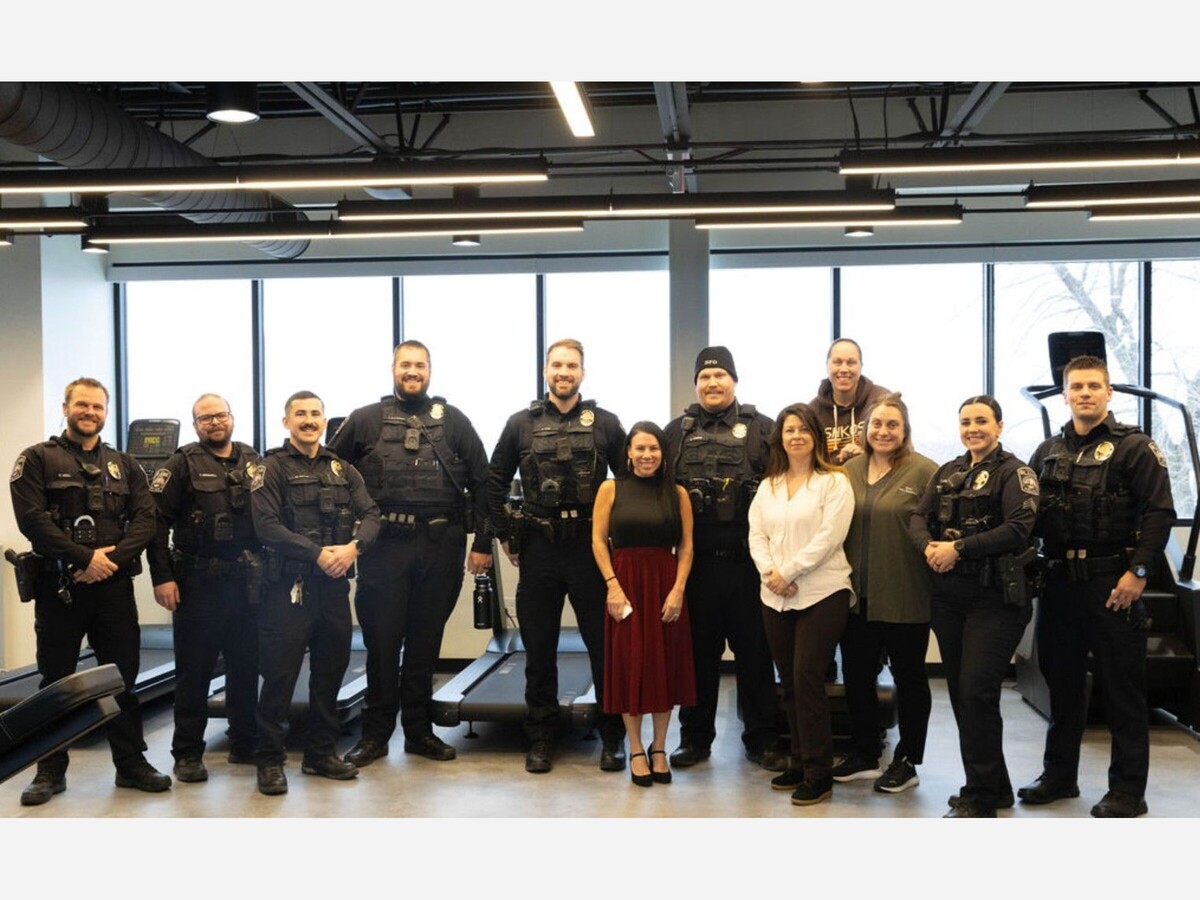



In the north metro city of Blaine, Minnesota, a new partnership between a community wellness center and the Blaine Police Department is quietly reshaping how officers think about recovery, resilience, and long-term health.
The facility at the center of that shift is The PARC (Physical Activity & Recovery Center), a wellness hub that opened in Blaine shortly after Labor Day in 2025. What began as an extension of a youth sports nonprofit has evolved into something more expansive: a community-driven model for holistic health that integrates physical fitness, recovery science, and social connection.
In its March 2026 “Best of Blaine: Community Spotlight,” the Blaine Police Department recognized The PARC as a growing resource not only for residents but also for the officers who patrol the city’s streets.
For a profession where stress can accumulate silently across years of service, the center represents a new concept increasingly discussed in policing and public safety circles: tactical wellness.
The story of The PARC begins more than two decades earlier with the founding of AKA SPORT (Active Kids Association), a youth athletics organization established in 2004 by Minnesota coach and entrepreneur Chris Schulz.
At the time, Schulz set out to create an alternative to the increasingly specialized world of youth sports. His philosophy emphasized multi-sport participation, character development, and a simple but powerful principle embedded in the organization’s curriculum: “Exercise Kindness.”
The program encouraged children not only to stay active but to develop confidence, teamwork, leadership, and empathy.
Over the years, AKA SPORT grew into a familiar presence across the Twin Cities north metro, serving thousands of families through camps, training programs, and youth sports initiatives.
Yet as the organization matured, so did the conversations happening in its hallways and bleachers.
Parents who spent hours watching their children participate in sports began sharing a common experience. They were exhausted. They were stressed. Many were balancing demanding careers, family responsibilities, and declining personal health.
The leadership team at AKA SPORT began to notice something else.
Among those parents were police officers, firefighters, healthcare workers, and other professionals whose careers demanded sustained physical and psychological endurance.
If the organization’s mission had been to build healthy kids, the question soon became unavoidable.
What about the adults?
The answer took shape in the form of The PARC, an adult-centered wellness facility designed to expand the organization’s mission beyond youth athletics.
Rather than functioning as a traditional gym, the facility was built as a community hub for longevity, recovery, and preventative health.
Inside the center, visitors encounter a wide range of services intended to support both physical training and recovery.
These include:
• Strength and cardiovascular training equipment
• Group fitness classes and guided workouts
• Assisted stretching and mobility programs
• Massage therapy and recovery treatments
• Compression therapy systems designed to improve circulation
• Contrast therapy featuring sauna and cold plunge immersion
The facility also hosts a variety of community events ranging from wellness summits to specialty classes such as puppy yoga, designed to make health programming approachable and accessible.
Another major component of the center is GatherWell, an in-house wellness clinic offering diagnostic body scans and blood-based health assessments intended to provide insight into long-term physical health.
For the leadership team behind the center, the goal is not simply exercise.
It is preventative health grounded in scientific research and community connection.
Many of the therapies available at The PARC are part of a growing body of research focused on human performance, recovery, and stress regulation, particularly among high-performance professions such as athletics, military service, and emergency response.
Among the most studied recovery tools is sauna exposure.
Long-term research conducted at the University of Eastern Finland has found strong correlations between frequent sauna use and improved cardiovascular outcomes.
A widely cited longitudinal study published in JAMA Internal Medicine in 2015 followed more than 2,300 middle-aged men for over two decades and found that those who used saunas regularly experienced significantly lower rates of cardiovascular disease and sudden cardiac death.
Researchers attribute these benefits to improved circulation, reduced blood pressure, and cardiovascular conditioning similar to moderate exercise.
For police officers, whose profession carries elevated risks for hypertension and heart disease, these findings are particularly relevant.
Cold water immersion, commonly referred to as cold plunging, has become increasingly common in professional sports recovery programs.
Research published in Sports Medicine and the Journal of Strength and Conditioning Research suggests that cold exposure can reduce muscle inflammation and accelerate recovery following intense physical exertion.
When combined with heat exposure, the process becomes known as contrast therapy.
Alternating between hot and cold environments stimulates blood circulation and may improve the body’s ability to recover from physical stress.
Some researchers also believe that controlled exposure to heat and cold creates a mild physiological stress known as hormesis, which may strengthen the body’s long-term resilience.
For first responders, recovery is not purely physical.
Policing requires constant situational awareness, placing officers in what neuroscientists describe as a “high-beta” cognitive state, characterized by heightened alertness and vigilance.
While essential in emergencies, remaining in this state for prolonged periods can lead to fatigue, burnout, and chronic stress.
Recovery practices such as sauna sessions, breathwork, and cold immersion can help shift the body away from the sympathetic nervous system response commonly described as “fight or flight.”
Instead, they activate the parasympathetic nervous system, sometimes called the body’s “rest and digest” mode.
This shift can improve sleep, emotional regulation, and mental clarity.
For officers finishing a long shift, that transition can be essential.
Since opening its doors, The PARC has quietly become a gathering point for members of the Blaine Police Department.
Officers frequently stop by before or after their shifts to train, stretch, or use recovery therapies.
The facility has begun functioning as what sociologists often describe as a “third space”—a place that exists outside both home and workplace where people can gather informally.
In law enforcement culture, where conversations about stress and mental health can sometimes be difficult, spaces like these can play an important role in building trust and camaraderie.
Officers using the facility often find colleagues already there, creating opportunities for informal connection and conversation that extend beyond the pressures of the job.
Equally important is the interaction between officers and residents who also use the facility.
Training alongside community members in an approachable environment can help humanize both groups, reinforcing the sense that public safety and community wellness are shared responsibilities.
For Melissa Walton, Director of Strategic Partnerships and Community Outreach at The PARC and AKA SPORT, that intersection is central to the facility’s mission.
Walton works at the crossroads between the nonprofit roots of AKA SPORT and the evolving needs of the City of Blaine.
Her role includes building partnerships with public safety agencies, local businesses, and community organizations to ensure the facility remains accessible and welcoming.
The vision is to expand The PARC into a regional center for preventative health and community wellness programming.
That includes continuing to collaborate with Blaine’s police officers, firefighters, and emergency medical personnel, whose work places them under intense physical and psychological demands.
The hope is that by providing recovery tools and social support networks, the facility can help extend careers, reduce burnout, and strengthen long-term health outcomes.
The growth of The PARC also reflects broader cultural shifts in how communities think about health.
Across the United States, wellness is increasingly understood not only as individual responsibility but also as a collective infrastructure built through partnerships between institutions, businesses, and local governments.
In Blaine, a city of more than 70,000 residents in the north metro region of the Twin Cities, that collaborative spirit has long been a defining feature of civic life.
The emergence of a wellness center built from a youth sports nonprofit, now serving residents and first responders alike, illustrates how local initiatives can evolve into community anchors.
It also highlights something simple but powerful.
Communities thrive when people look out for one another.
For the team behind The PARC, the journey is still in its early stages.
Plans are already underway to expand partnerships with local organizations, introduce additional wellness programming, and continue building a space where people from different walks of life can come together around a shared commitment to health.
If the past two decades of AKA SPORT have been about building stronger children, the next chapter may be about something equally important.
Building stronger communities.
And in Blaine, that work now includes helping the people who protect the city find a place to recover, reconnect, and restore the balance that demanding careers can so easily disrupt.
Community members interested in learning more about Blaine’s Community Spotlight program or nominating a local organization can visit: https://www.blainemn.gov/3885/Community-Spotlight


Sunny, with a high of 82 and low of 51 degrees. Sunny for the morning, clear overnight.