71° and Sunny
Image
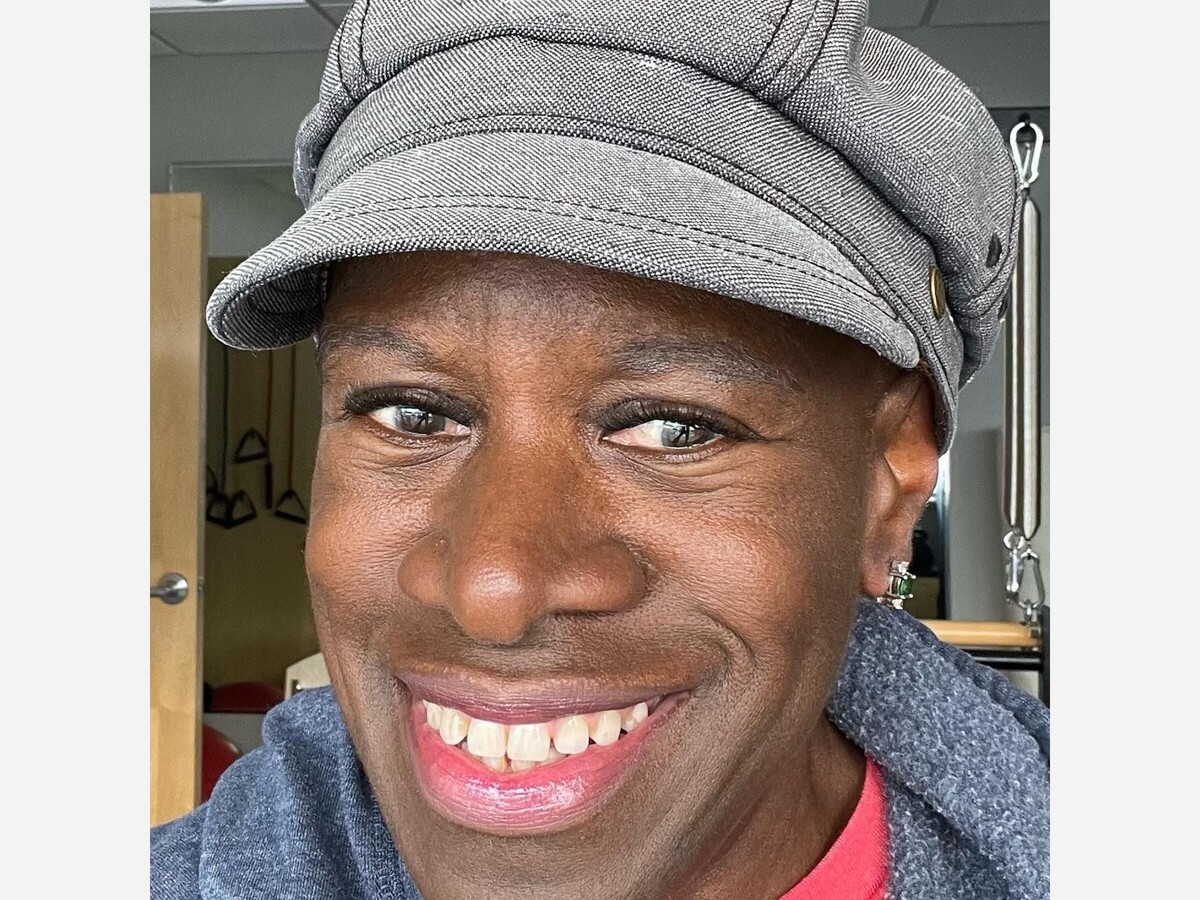





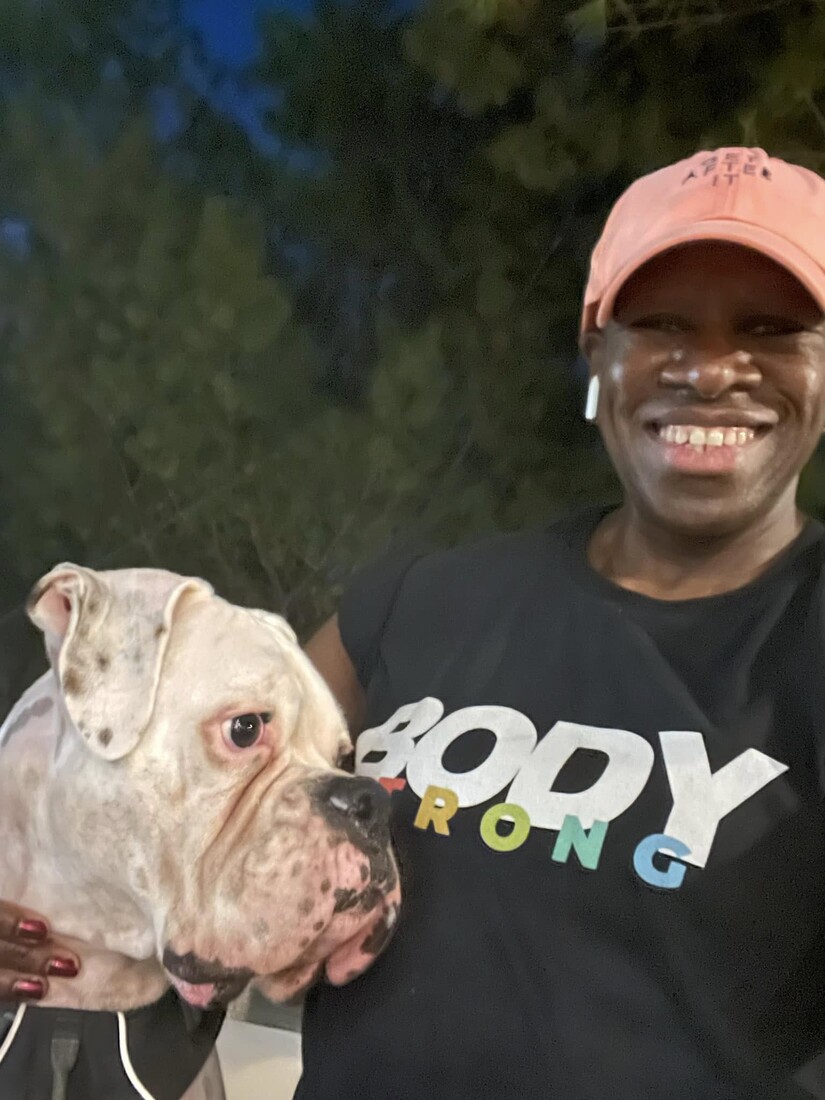
Debra “Deb” White does not speak in slogans. She speaks in lessons earned, tested, and kept.
Over the course of one conversation, she moved with unusual ease between childhood memory, corporate life, physical strength, spiritual grounding, aging, illness, fear, and hope. She spoke about discipline without hardness. She spoke about wellness without cliché. She spoke about service not as charity or branding, but as responsibility. By the end of the interview, what stood out most was not simply the range of her experience, but the internal coherence of it.
Her life has moved through several worlds. Corporate technology. Executive leadership. Personal training. Bodybuilding. Powerlifting. Endurance athletics. Community wellness. Coaching. Lifestyle medicine. Yet none of those chapters felt disconnected from the others. Each seemed to grow naturally out of the one before it.
That is part of what makes Deb White’s story so compelling. It is not a story of reinvention for its own sake. It is the story of a woman who kept listening for what was true, and who, over time, found the courage to build a life around it.
At the center of that life is a conviction both simple and demanding. A person cannot live well by abandoning the self. Not in work. Not in health. Not in community. Not in spirit.
And for Deb White, that understanding was not borrowed from a book or assembled from trend language. It was shaped early, forged in professional pressure, strengthened in the gym, humbled by injury and loss of control, and refined through years of helping others find their way back to themselves.

Long before she became known as a trainer, coach, and wellness entrepreneur, Deb was a daughter in a family where discipline was not abstract. It was daily life.
She is the oldest of four children. Her father worked for Sun Oil Company, and in an era when a Black man rising through corporate leadership carried both distinction and pressure, his advancement meant movement. The family relocated repeatedly. By the time Deb was fourteen, they had moved five times.
That kind of childhood can make a person unsettled. In Deb’s case, it made her adaptive.
She learned early how to enter unfamiliar spaces without collapsing inside them. She learned how to read the room, how to adjust, how to keep going. Moving did not become easy, but it became familiar. So did the need to orient herself quickly, to find stability within change rather than waiting for the outside world to provide it.
Just as important was the environment inside the home. Deb describes her father as deeply disciplined, but his discipline was not merely about obedience. He wanted his children to think. If something happened, it had to be explained. Ownership mattered. Excuses did not. Reflection did.
That framework followed her into adulthood. It trained her to ask harder questions of herself. Why did I do that? What is actually going on here? What am I tolerating, and why? It also gave her a strong internal barometer. Long before she would use the language of alignment, she knew what it meant to feel right within herself and what it meant not to.
That early training would matter immensely once she entered corporate America.

After graduating from the University of Pittsburgh, Deb received an offer from Honeywell in Minneapolis. The significance of the moment was not lost on her. The salary matched what her father had been earning while supporting four children.
She was twenty-four years old.
It was a remarkable beginning, and by any conventional measure, a sign that she had entered the world exactly as she was supposed to. She was educated, ambitious, disciplined, and now professionally rewarded. Honeywell offered opportunity, prestige, and room to grow. She took it seriously.
And grow she did.
Over nine years, she was promoted five times. She moved from being a programmer to a systems analyst within IT, and from there into a strategic information role that placed her between technology, marketing, and sales. She had the rare ability to understand both technical systems and human communication. She could talk to the “computer geeks,” as she put it, and she could talk to the people who did not care how the system worked so long as it produced results.
That gift made her useful in the exact way high-functioning organizations demand. It also placed her in the middle of conflict. When sales wanted a new product to compete in the market, Deb’s job was to evaluate whether the company could produce it profitably and in time. If her analysis showed that the proposed product would lose market share or fail at the price point, she said so.
The executive team might be pleased. The sales staff might be furious.
That became a recurring pattern. She was often both respected and resented. She had influence, but not ease. Success, but not comfort.
Even so, she speaks about Honeywell with nuance, not bitterness. She had meaningful experiences there. She chaired the company’s Women’s Council. She became the first African-American woman to hold that role. She participated in work that stretched her leadership skills and broadened her public voice. Through Toastmasters, she developed as a speaker. She saw how institutions function from the inside. She learned how to negotiate, how to lead, how to bridge worlds that often misread one another.
She also saw the emotional cost of certain kinds of success.

The deeper challenge for Deb was not the difficulty of the work. It was the culture around it.
She had relocated to a city where she knew no one. She was young, engaged but not yet married, and immersed in a corporate environment whose social life never quite fit. Lunches and after-work rituals centered around habits that did not reflect who she was. Cigarettes, beer, bowling, drinking, a kind of collective bonding through routines she could observe but not inhabit.
What she describes here is important, because it was not just about social preference. It was about the slow erosion that can happen when a person feels pressure to belong in ways that require self-distortion.
Deb saw clearly that she did not want work to become her whole identity. She did not want her colleagues’ culture to become her life simply because it surrounded her. She did not want to spend her energy learning how to be a version of herself that the environment found more comfortable.
In her telling, one of the most powerful things she did was also one of the simplest.
She made a life outside the job.
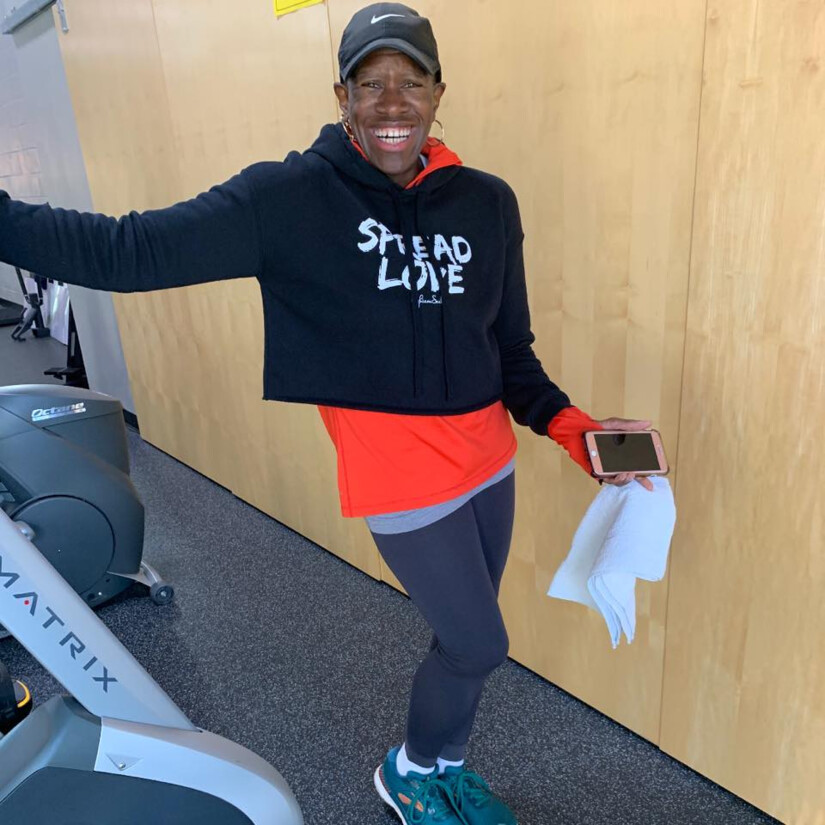
She hired a personal trainer and deliberately chose a gym that Honeywell people did not use. She went somewhere else. Somewhere less polished, more separate, more hers. That decision gave her distance from the corporate orbit. It gave her a place where she did not have to perform. She could sweat. Move. Breathe. Think. Even, as she joked, say a naughty word if she wanted to.
The significance of that should not be understated. For Deb, the gym did not merely become a fitness space. It became a space of reclamation.
That is where she began to recover the self she felt corporate life was asking her to fragment.
It is easy to reduce physical training to the visible. The body changes. The muscles grow. The posture shifts. Deb’s understanding of training is far more complete than that.
As she entered powerlifting and later bodybuilding, she began to experience strength not only as force, but as clarity. The stronger she became physically, the stronger she became mentally. Decisions sharpened. Self-awareness deepened. The old habit of taking care of everyone else while neglecting herself became harder to sustain.
Training changed the way she carried herself in the world. It changed her relationship to her own presence.
That change is crucial to understanding who Deb White became. She did not move from corporate life into personal training because fitness was trendy or because she wanted a lifestyle shift. She moved toward it because in that work she recognized the possibility of becoming whole again.
The body was not separate from the mind. The mind was not separate from identity. And identity was not separate from purpose.
She began to feel what it meant not merely to survive, but to stand inside herself.

One of the most striking passages in Deb’s story comes from her time at Honeywell, when she hosted Dr. Maya Angelou during a leadership conference.
This was not an incidental brush with greatness. It was a four-day period in which Deb had direct exposure to a woman whose words carried authority because they were rooted in a life deeply lived. What stayed with Deb was not celebrity. It was clarity.
When Deb spoke about the environment she was navigating, Dr. Angelou offered a line that remained with her.
If you walk into a room and it does not feel good, if the words spoken there are not aligned with who you are, leave the room.
That advice did more than comfort her. It named something she was already wrestling with. It gave ethical language to a spiritual instinct. You do not have to remain where your soul is being diminished. You do not have to call compromise maturity. You do not have to mistake endurance for alignment.
Deb understood the implication immediately. She could continue down a path that promised status while slowly requiring self-erasure, or she could honor what she knew.
She chose to honor what she knew.
“I would have compromised my soul,” she said.
That may be the central sentence of the interview.
Not because it is dramatic, but because it is honest.
When Deb left Honeywell, others were baffled. Former executives called and asked the same question in different forms: How did you do it? How did you leave? How did you walk away from the money, the structure, the status, and end up happier?
The answer, in essence, was that she had stopped confusing external reward with internal well-being.
P & P Journey’s was born in that space.
The initials stand for personal and professional, and that is no small detail. Deb did not separate the workplace from the self in the simplistic way self-help culture often does. She understood that people carry professional pain into private life and private disconnection into work. The question was never merely how to get people fit. It was how to help them live in ways that felt whole.
For some, that meant coaching them out of jobs or even out of corporate life altogether. For others, it meant helping them identify what within their existing lives could restore a sense of aliveness and contribution. Could they volunteer? Shift roles? Build something alongside the work that nourished them? What, precisely, made them feel good in the deepest sense of the phrase?
Over time, personal training and coaching ran side by side. Now, as Deb herself notes, the work is moving back toward more coaching again, but coaching grounded in everything she has learned about the body, behavior, and the emotional cost of disconnection.
One of the strongest parts of the interview is Deb’s refusal to sentimentalize wellness.
She does not talk about health in the language of perfection. She does not present it as aesthetics, or punishment, or discipline for discipline’s sake. She talks about it as relationship.
Her answer to people who feel overwhelmed is not to overhaul everything at once. It is to find one thing that makes them feel good and build from there. She offered the example of a client carrying stress from every direction: work, caregiving, physical strain, emotional exhaustion. Rather than prescribing a grand plan, Deb started with food. The woman knew she felt better eating differently. That became the entry point. Then came meal preparation. Then came sleep. Then other shifts.
Over three months, the client lost twenty-five pounds, but Deb’s telling makes clear that the real story was not the weight loss. It was the restoration of self-care as a foundation.
That is how Deb works. She does not impose a system from above. She helps people identify the point at which their own lives can begin to feel inhabitable again.

At sixty-five, Deb is not shrinking her vision. She is enlarging it.
Many of her clients are fifty-six and older. She trains her eighty-seven-year-old mother virtually once a week. She works in person with an eighty-six-year-old client. She sees both the need and the opportunity in an aging population that has been taught to think of strength as optional and decline as inevitable.
Her concept of “Wise Heroes” captures this beautifully. She does not want older adults treated as afterthoughts. She wants them seen as people with wisdom, agency, and the capacity for continued strength. She is interested in how community, movement, and muscular strength can work together not just to improve mobility, but to protect cognitive health.
She referenced research linking strength training to better mental clarity and slower progression of dementia and Alzheimer’s. For Deb, this is not a niche concern. It is central to the next chapter of her work.
Can she create spaces where people age with strength, with dignity, and with a renewed relationship to their own lives?
That question now sits close to the center of her mission.

There was another turn in the interview that gave Deb’s philosophy even more gravity.
She spoke about vertigo. About sudden hearing loss in her right ear. About waking up and realizing that the body she had always trusted to respond with precision was suddenly no longer fully under her control.
These experiences humbled her.
They also expanded her compassion.
For someone whose life has been built around bodily awareness, strength, and consistency, the loss of control was not abstract. It was immediate and destabilizing. But even here, Deb did not position herself outside the human condition she addresses in others. She spoke as someone still learning, still adjusting, still being refined by what life asks of her.
That matters.
It means her empathy is not rhetorical. It has been deepened by vulnerability.
When asked whether people are healthier today than when she began, Deb did not hesitate.
No.
In her view, people are more disconnected from their bodies than ever. They want a trainer so they can say they have one. They want to be beaten up in the gym so soreness can stand in for accomplishment. They do not know what it means to inhabit their own bodies with care, curiosity, and attention.
She described a powerful example. A corporate executive came into a Pilates studio and began to cry during a stretch. The physical release triggered an emotional one. The woman got angry. She never returned.
For Deb, the incident was revealing. When people are profoundly disconnected, reconnection can feel threatening.
That insight broadens when she talks about the current climate of fear, especially in Minnesota communities living with anxiety about enforcement, instability, and the larger emotional wear of public life. She spoke of people becoming like frogs in a pot, adapting to conditions that are slowly harming them. She spoke of the need to tell people, no, you are still here. Let us get you back to your confidence. Your spirit. Your strength.
Nobody is coming to save us, she said.
That line is not defeatist. It is a call to agency.

And yet, for all her realism, Deb remains hopeful.
Her hope is grounded in younger generations, in learning, in thought, in the possibility that if people slow down enough to hear themselves, they may still choose differently. She spoke about nieces and nephews in their twenties, about family achievement, about the importance of education and clear thinking. She also spoke movingly about her father’s death, her family’s health challenges in South Jersey, and the environmental realities she believes have shaped them.
Still, she has chosen to remain in Minnesota. She has chosen a life that values sunsets, quiet, balconies, a rocking chair, Monopoly with family, and moments that are small only to people who have forgotten how much life is made of them.
When I asked her what she would like to be remembered for, her answer came with remarkable precision.
First, that she gave people permission to be.
Not to perform. Not to prove. Not to fill every minute. But to be.
Second, that she modeled service through self-care and taught others the importance of taking responsibility for their own well-being.
That is the legacy she wants.
It is not a small one.
Before the conversation closed, Deb named two people she believes deserve broader recognition: Titilayo Bediako of We Win Institute, and Anthony Taylor of Melanin in Motion and ReConnect Rondo.
The choices were fitting. Both reflect the values Deb herself lives by. Community. Cultural grounding. Movement. Restoration. Hope made practical.
When asked whether she would come back for another conversation, she said yes without hesitation.
She should.
Because Deb White is not the kind of person one interviews once and finishes. She is the kind of person whose life keeps opening into larger meaning the longer one listens.
And perhaps that is the clearest measure of the conversation itself.
Not that it produced inspirational quotes, though it did. Not that it covered a great deal of ground, though it did that too.
But that it revealed a person who has spent a lifetime learning how to live without abandoning herself, and who now wants others to know that such a life is possible for them as well.
MinneapoliMedia
Community. Culture. Civic Life.



Patchy rain nearby, with a high of 94 and low of 63 degrees. Sunny for the morning, thundery outbreaks in nearby in the afternoon and evening, clear overnight.